UEG's educational platform for gastroenterology education bringing recordings, courses, guidelines, and more together in one place.
Most popular content
Rate for better recommendations!
Your feedback helps us show you more of what you like and less of what you dislike!
Log in to access this content.
Free for all myUEG account holders. Your access level is set automatically based on your occupation. Medical professionals get full access to all content. If you are a non-medical user, you can only access UEG Week content from congresses you attended.
Not sure what you can access? Learn more about account types.
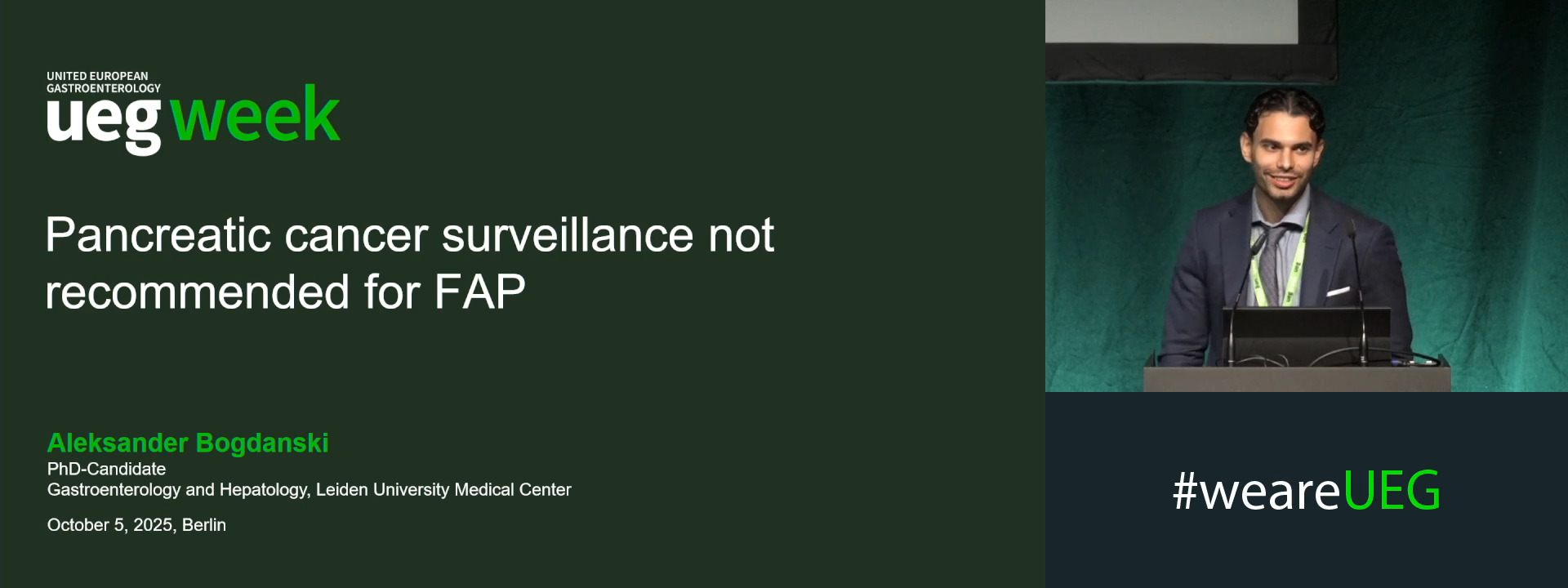
SHOULD PANCREATIC CANCER SURVEILLANCE BE OFFERED TO INDIVIDUALS WITH FAMILIAL ADENOMATOUS POLYPOSIS: RISK AND COST-EFFECTIVENESS ANALYSES
Aleksander Bogdanski 1, Derk Klatte 1, Sobia I. Laghari 2, Alexandra Langers 2, Barbara A.J. Bastiaansen 3, Bert Bonsing 2, Evelien Dekker 3, Jeanin van Hooft 2, N. Jewel Samadder 4, Lodewijk Brosens 5, Lydia van der Geest 6, Lisa Boardman 7, Maartje Nielsen 2, Mariëtte van Kouwen 8, Tanya M. Bisseling 8, Michael Wallace 9, Douglas Riegert-Johnson 9, Monique van leerdam 10
1 Mayo Clinic, Jacksonville, United States|||Leiden University Medical Center, Leiden, Netherlands
2 Leiden University Medical Center, Leiden, Netherlands
3 Amsterdam University Medical Centers, Amsterdam, Netherlands
4 Mayo Clinic, Scottsdale, United States
5 University Medical Center Utrecht, Utrecht, Netherlands
6 Netherlands Comprehensive Cancer Organization (IKNL), Utrecht, Netherlands
7 Mayo Clinic, Rochester, United States
8 Radboud University Medical Centre Nijmegen, Nijmegen, Netherlands
9 Mayo Clinic, Jacksonville, United States
10 Leiden University Medical Center, Leiden, Netherlands|||Netherlands Cancer Institute, Amsterdam, Netherlands
Event
Submission format
Citation
Published
Log in to access this content.
Free for all myUEG account holders. Your access level is set automatically based on your occupation. Medical professionals get full access to all content. If you are a non-medical user, you can only access UEG Week content from congresses you attended.
Not sure what you can access? Learn more about account types.
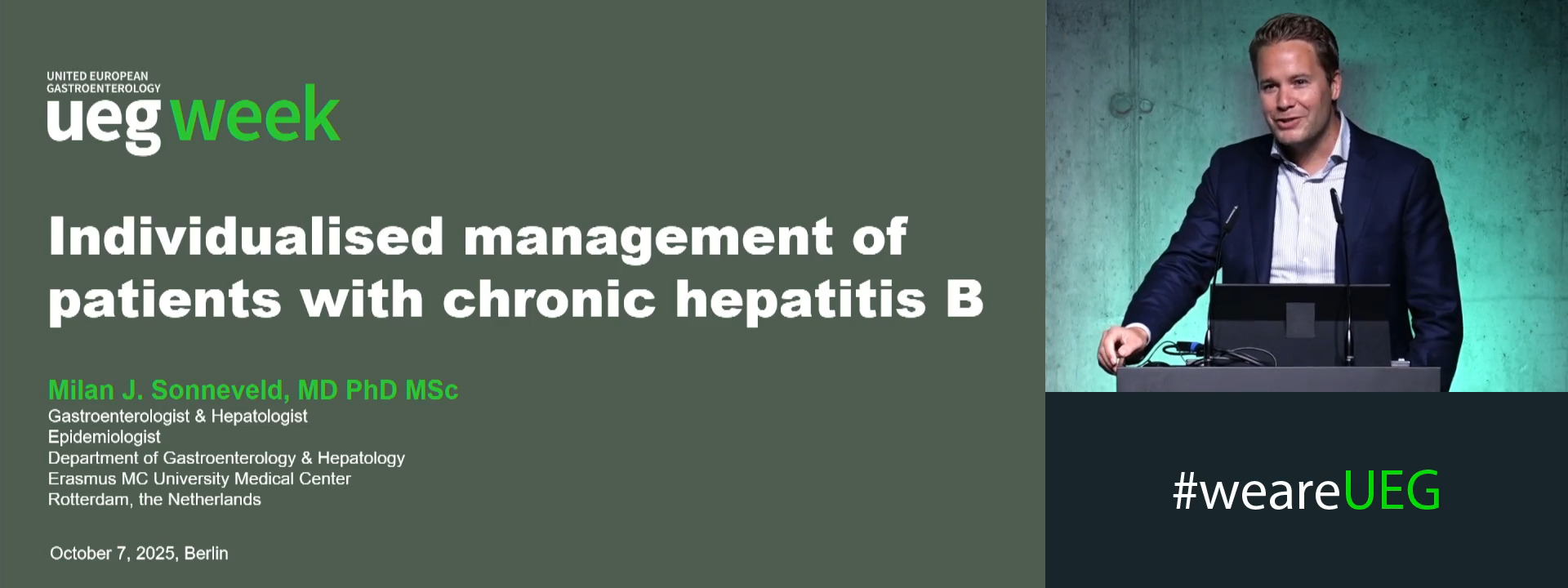
Individualised management of patients with chronic hepatitis B
1 Erasmus MC, Rotterdam, Netherlands
Event
Session
Citation
Published
Log in to access this content.
Free for all myUEG account holders. Your access level is set automatically based on your occupation. Medical professionals get full access to all content. If you are a non-medical user, you can only access UEG Week content from congresses you attended.
Not sure what you can access? Learn more about account types.
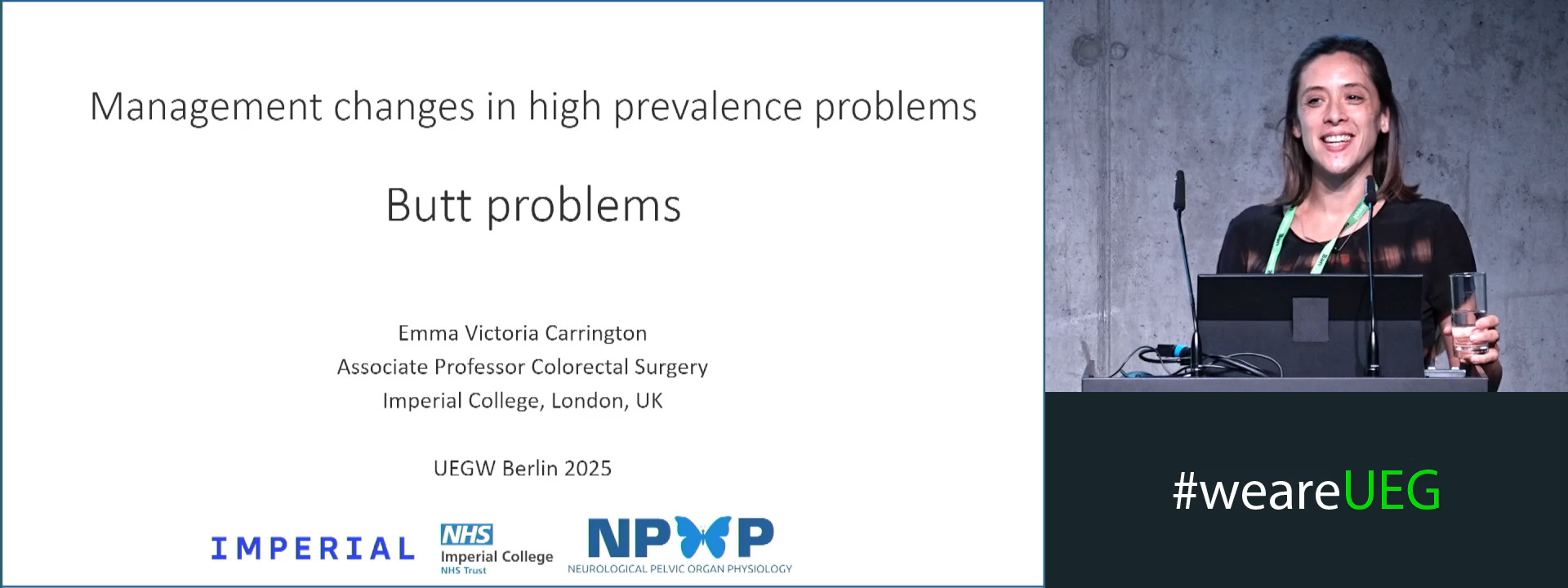
Butt problems
1 University of North Carolina / NCRBSI, London, United Kingdom
Event
Topics
Citation
Published
Log in to access this content.
Free for all myUEG account holders. Your access level is set automatically based on your occupation. Medical professionals get full access to all content. If you are a non-medical user, you can only access UEG Week content from congresses you attended.
Not sure what you can access? Learn more about account types.
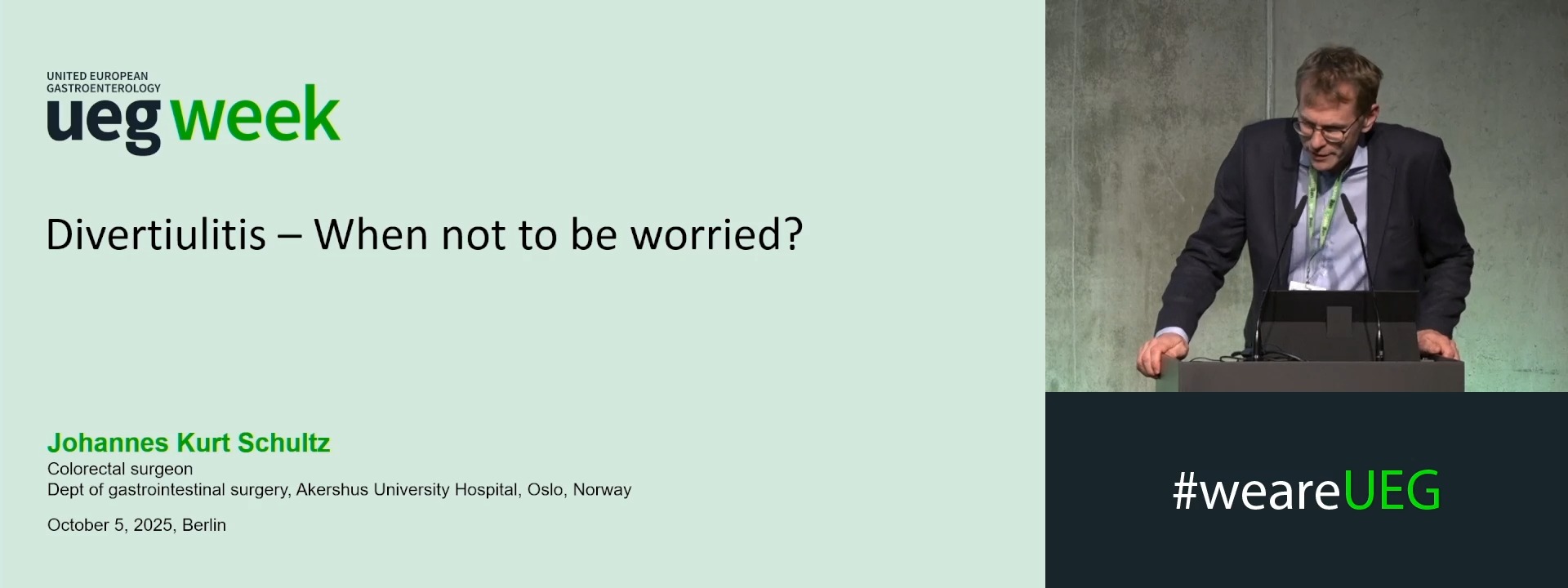
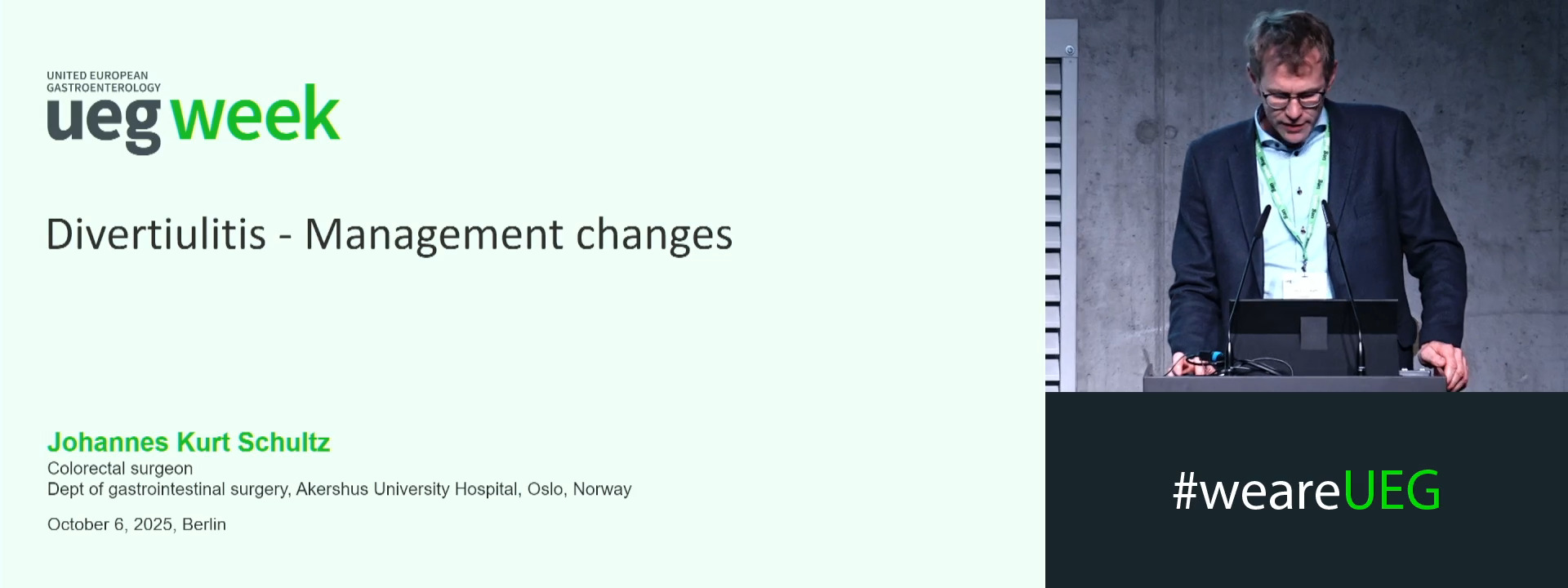
Diverticulitis: When not to be worried?
1 Univertsity of Oslo, Oslo, Norway
Event
Topics
Session
Citation
Published
Log in to access this content.
Free for all myUEG account holders. Your access level is set automatically based on your occupation. Medical professionals get full access to all content. If you are a non-medical user, you can only access UEG Week content from congresses you attended.
Not sure what you can access? Learn more about account types.
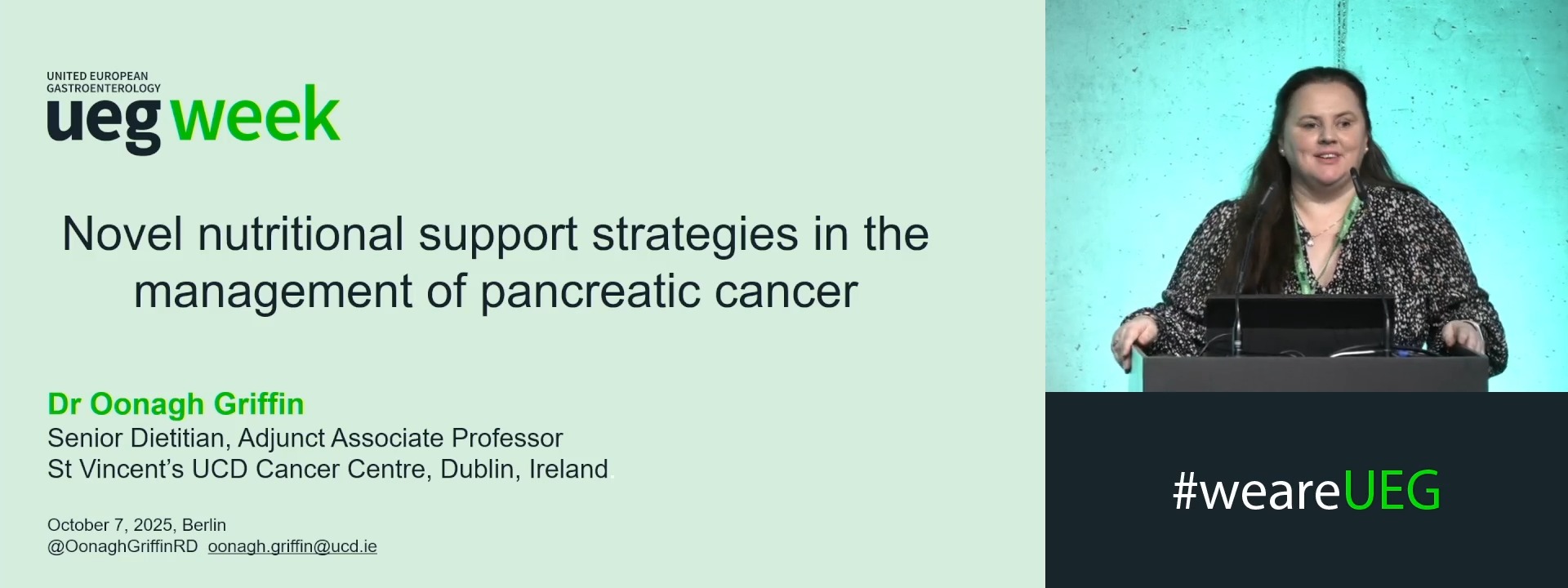
Diverticulitis
1 Univertsity of Oslo, Oslo, Norway
Event
Topics
Citation
Published
Log in to access this content.
Free for all myUEG account holders. Your access level is set automatically based on your occupation. Medical professionals get full access to all content. If you are a non-medical user, you can only access UEG Week content from congresses you attended.
Not sure what you can access? Learn more about account types.
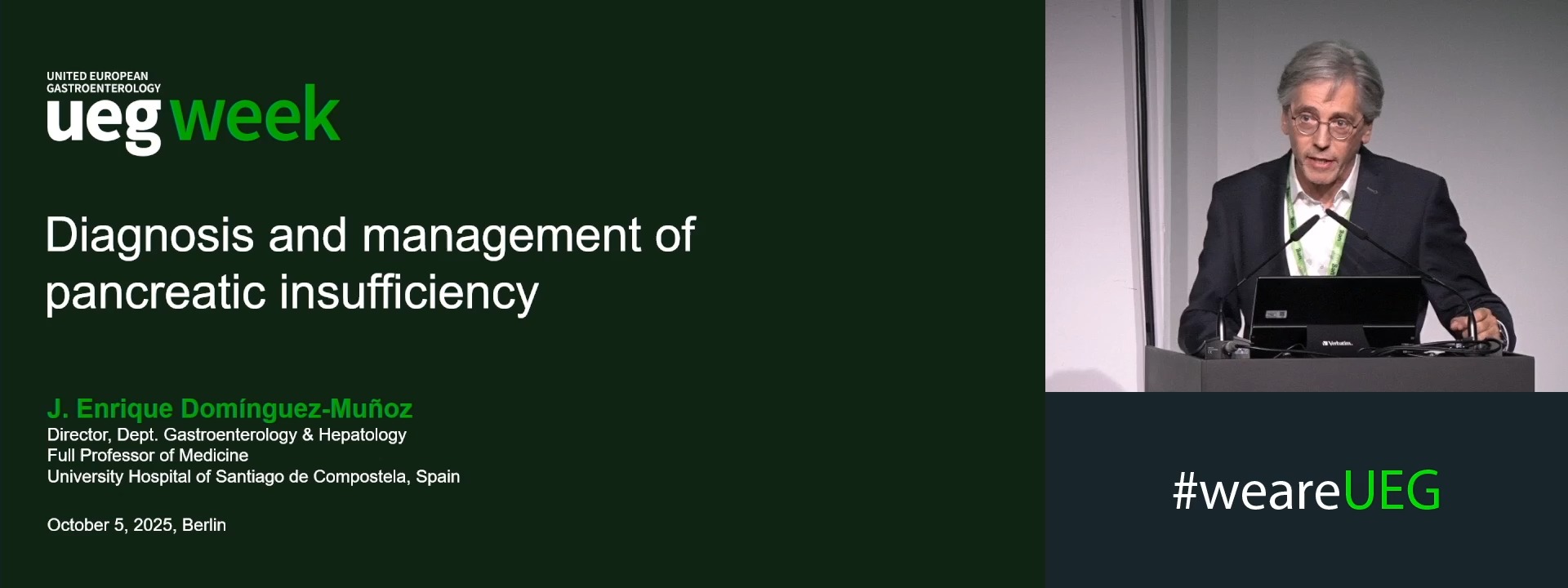
Novel nutritional support in management of PC
1 St Vincent’s University Hospital Dublin, Dublin, Ireland
Event
Topics
Session
Citation
Published
Log in to access this content.
Free for all myUEG account holders. Your access level is set automatically based on your occupation. Medical professionals get full access to all content. If you are a non-medical user, you can only access UEG Week content from congresses you attended.
Not sure what you can access? Learn more about account types.
Diagnosis and management of pancreatic insufficiency
1 University Hospital of Santiago de Compostela - Gastroenterology and Hepatology, University Hospital, Santiago de Compostela, Spain
Event
Topics