UEG's content platform for gastroenterology education bringing recordings, courses, guidelines, and more together in one place.
Trending on Gutflix
Rate for better recommendations!
Your feedback helps us show you more of what you like and less of what you dislike!
Log in to continue.
This content is part of Gutflix. Log in with your myUEG account, or create one free, to watch it.
Not sure what you can access? Learn more about account types.
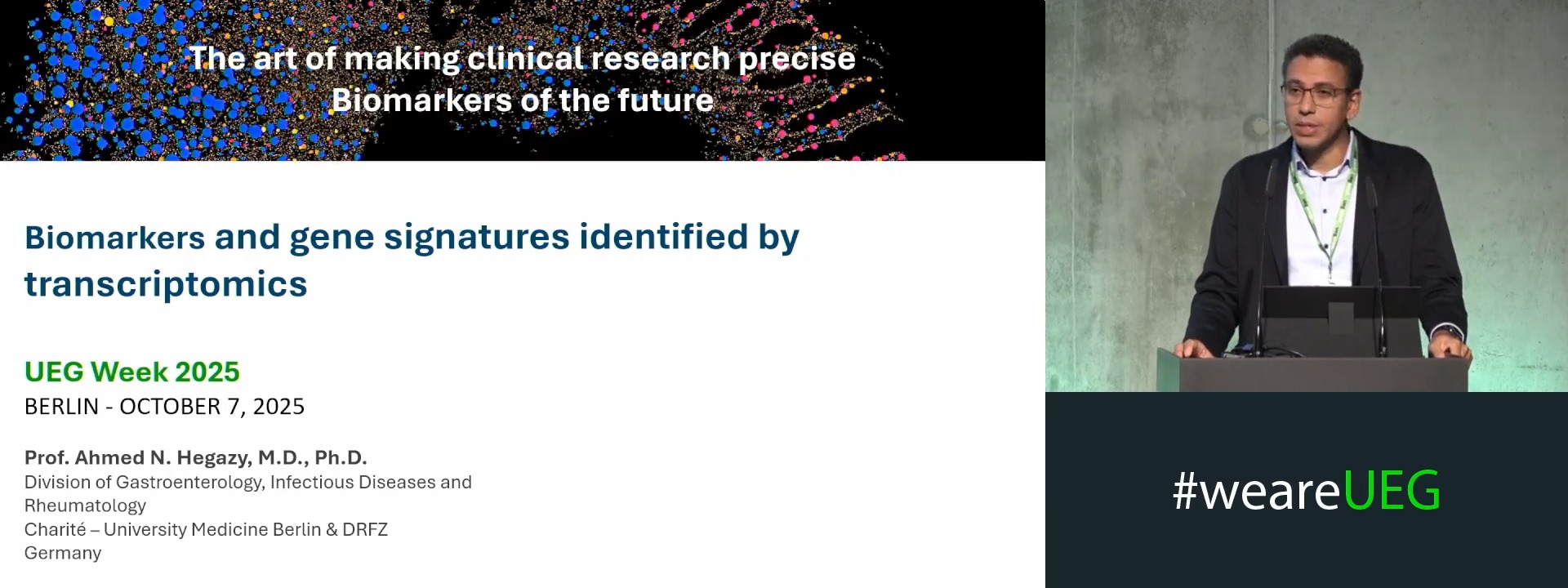
Biomarkers and gene signatures identified by transcriptomics
Affiliations
1 Charité – Universitätsmedizin Berlin, Berlin, Germany
Log in to continue.
This content is part of Gutflix. Log in with your myUEG account, or create one free, to watch it.
Not sure what you can access? Learn more about account types.
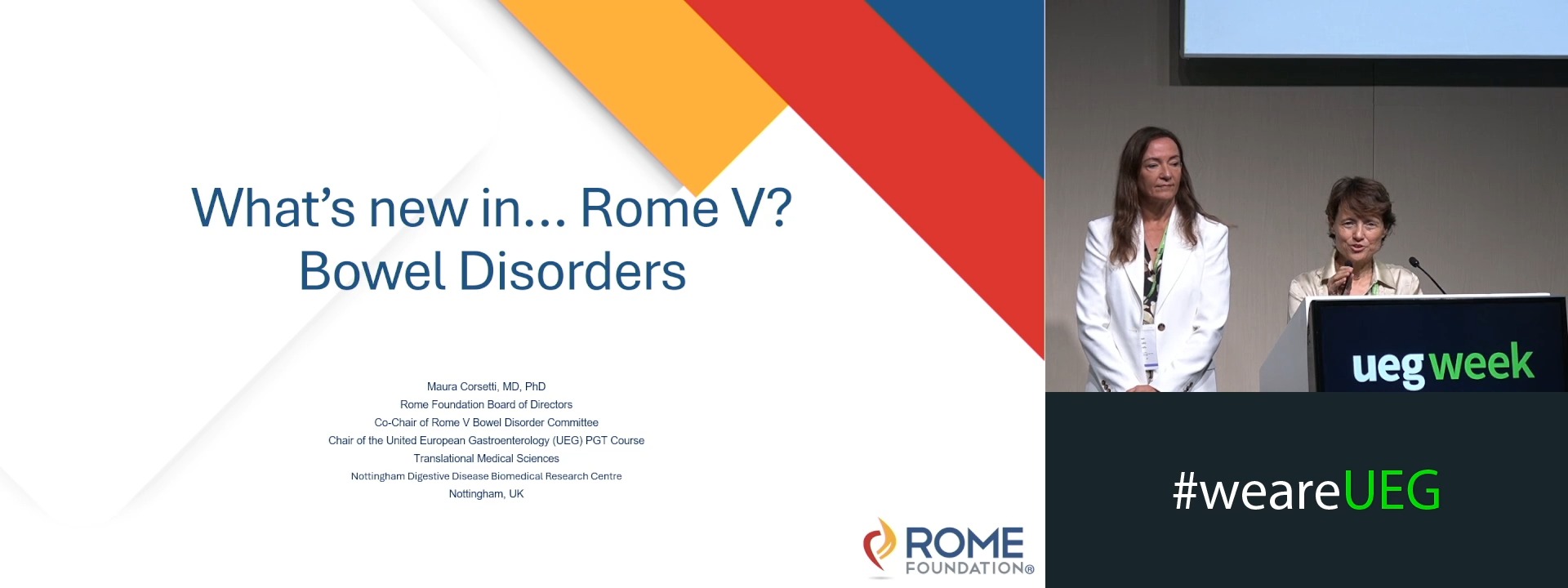
Lower GI disorders
Affiliations
1 University of Nottingham, Nottingham, United Kingdom
Log in to continue.
This content is part of Gutflix. Log in with your myUEG account, or create one free, to watch it.
Not sure what you can access? Learn more about account types.
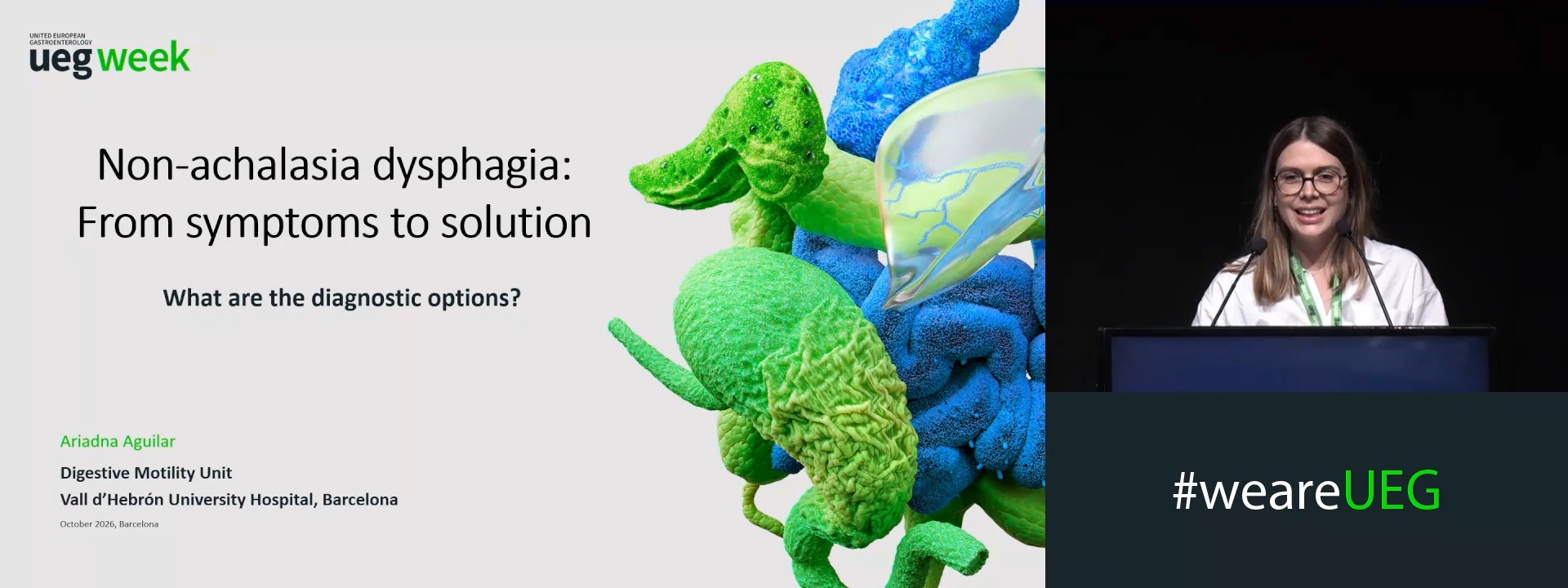
What are the diagnostic options?
Affiliations
1 Hospital Universitari Vall d'Hebrón, Barcelona, Spain
Log in to continue.
This content is part of Gutflix. Log in with your myUEG account, or create one free, to watch it.
Not sure what you can access? Learn more about account types.
Summary: H. pylori and precancerous conditions
Affiliations
1 University of Latvia, Riga, Latvia

Log in to continue.
This content is part of Gutflix. Log in with your myUEG account, or create one free, to watch it.
Not sure what you can access? Learn more about account types.
RISK OF RESIDUAL CANCER AFTER ENDOSCOPIC RESECTION OF EARLY BARRETT’S NEOPLASIA WITH CONFIRMED VERTICAL R1 MARGIN: A NATIONWIDE COHORT IN THE NETHERLANDS
Laurelle van Tilburg 1, Eva Verheij 2, Steffi E.M. van de Ven 1, Sanne van Munster 2, Bas L.A.M. Weusten 3, Lorenza Alvarez Herrero 3, Lodewijk Brosens 4, G Mihaela Raicu 3, Wouter B. Nagengast 5, Jessie Westerhof 5, Gursah Kats-Ugurlu 5, Erik Jan Schoon 6, Wouter L. Curvers 6, Ineke G. van Lijnschoten 7, Alaa Alkhalaf 8, Freek C. P. Moll 9, Pieter Jan de Jonge 1, Martin Houben 10, Jaap S. van der Laan 11, Thjon J. Tang 12, Ariadne H. A. G. Ooms 13, Jacques J. Bergman 2, Roos E. Pouw 2, Lindsey Oudijk 1, Michail Doukas 1, Sybren L. Meijer 2, Marnix Jansen 14, Arjun D. Koch 1
Affiliations
1 Erasmus MC Cancer Institute, University Medical Center, Rotterdam, Netherlands
2 Amsterdam University Medical Centers, Amsterdam, Netherlands
3 St Antonius Hospital, Nieuwegein, Netherlands
4 University Medical Center Utrecht, Utrecht, Netherlands
5 University Medical Center Groningen, Groningen, Netherlands
6 Catharina Hospital, Eindhoven, Netherlands
7 PAMM, Eindhoven, Netherlands
8 Isala Clinics, Zwolle, Netherlands
9 Isala Clinics, Zwollr, Netherlands
10 Haga Teaching Hospital, The Hague, Netherlands
11 Haga Teaching Hospital, Den Haag, Netherlands
12 IJsselland Hospital, Capelle aan den IJssel, Netherlands
13 Pathan BV, St. Franciscus Gasthuis & Vlietland Hospital, Rotterdam, Netherlands
14 University College London, London, United Kingdom