Introduction
Patients with inflammatory bowel disease (IBD) tend to be less physical active, whilst maintaining an active lifestyle has been associated with enhanced disease control, diminished fatigue, and improved quality of life (1,2,3).
Aims & Methods
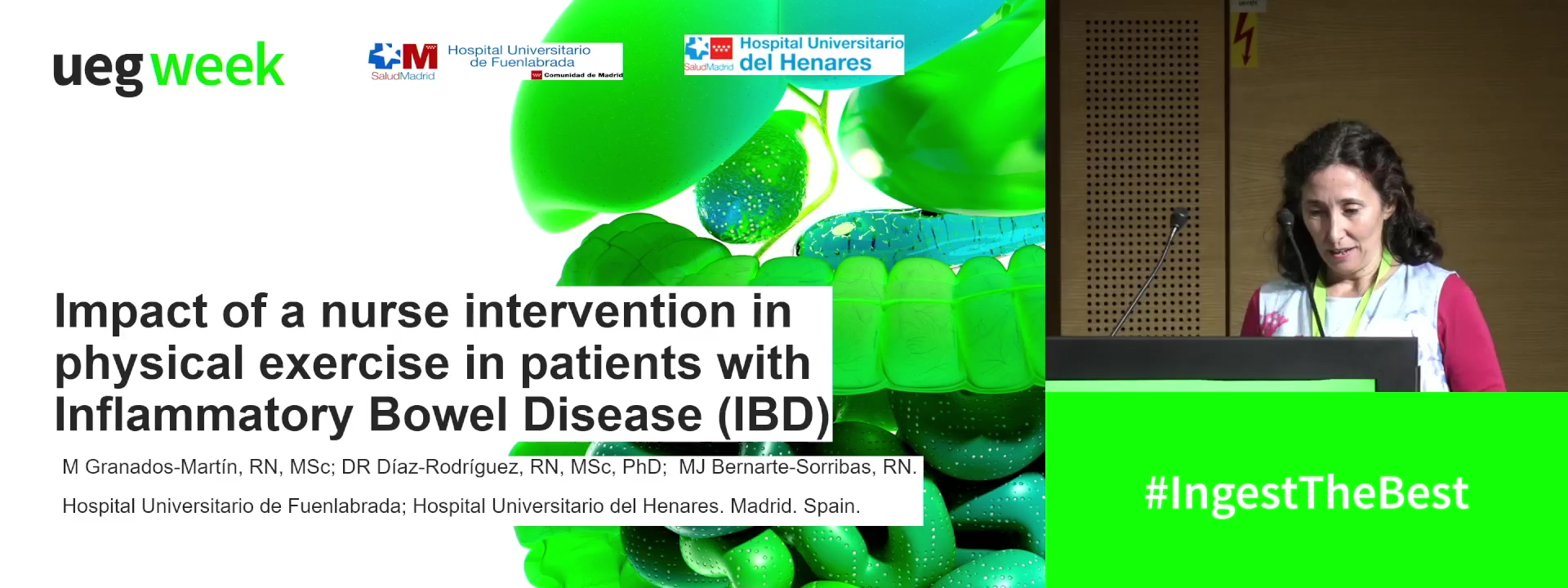
This study aims to evaluate the feasibility and potential impact of a specially designed exercise program for IBD patients.
Patients with IBD participated in a 16-week exercise program based on their individual fitness level, between March and June 2023. All outcomes were measured before and after the program. Body composition included, BMI, muscle mass and fat percentage. Physical fitness was based on performance of the Fundamental Motor Skills. Effect on quality of life, fatigue and disease control was assessed using validated questionnaires. For statistical analyses, a paired t-test or Wilcoxon matched paired rank test was used.
Results
In total 32 patients were included in the exercise program. Mean age was 50.1 years (SD 12.3), 37.5% were male, and 50% had Crohn’s disease (Table 1). The full program was completed by 84.4% of all patients, and average rating of the program was 8.6 out of 10. After 16 weeks, muscle mass improved compared to baseline (P=0.020) and fat percentage decreased (P=0.003). Physical fitness improved significantly; lower body strength and coordination (P=0.006), flexibility (p=0.002), speed and endurance (P<0.001). Quality of life improved with on average 8 points on the Inflammatory Bowel Disease Questionnaire. The program significantly improved fatigue scores (P=0.013). Disease control showed no significant improvement after the program.
Table 1. Baseline characteristics
| Overall (n=32) |
| Mean age, y (SD) |
| 50.1 (12.3) |
| Male |
| 12 (37.5) |
| Smoking | Current | 3 (9.4) |
| Physical activity, d (IQR)a,b | Light / Moderate / High | 4 (2-7) / 2 (1-4) / 1 (0-2) |
| Diagnosis | Crohn's disease | 16 (50) |
| Ulcerative Colitis | 16 (50) |
Median diagnosis age, y (IQR)
|
| 34.5 (25-47.3) |
| Abdominal surgery (Yes) |
| 10 (31.1) |
| Stoma (Yes) |
| 2 (6.3) |
Note: data are described as numbers (percentages) unless stated otherwise.
Abbreviations: CD, Crohn's disease; d, days; IQR, interquartile range; n, number; SD, standard deviation; UC, ulcerative colitis; y, year.
a Physical activity is based on the patients who filled in the questionnaire (n=25)
b Physical activity is categorized in light, moderate and high. Light is walking. Moderate is cycling, exercising at a low intensity level. High exercise is working out or dancing.
Conclusion
This pilot study shows that a specially designed exercise program is feasible and has a positive effect on IBD patients. These findings underline the importance of physical activity in IBD patients and can be used as an initial step towards integrating an exercise program in standard IBD care.
References
1. Fagan G, Osborne H, Schultz M. Physical Activity in Patients with Inflammatory Bowel Disease: A Cross-Sectional Study. Inflamm Intest Dis. 2021;6(2):61-9.
2. Agrawal T, Acquah I, Dey AK, Glassner K, Abraham B, Blankstein R, et al. Prevalence of cardiovascular risk factors in a nationally representative adult population with inflammatory bowel disease without atherosclerotic cardiovascular disease. Am J Prev Cardiol. 2021;6:100171.
3. Mareschal J, Douissard J, Genton L. Physical activity in inflammatory bowel disease: benefits, challenges and perspectives. Curr Opin Clin Nutr Metab Care. 2022;25(3):159-66.
Disclosure
Conflicts of interest: N. Van de Pol, E.H. Visser, D. Leemreis-van Noord, and V. de Jonge have nothing to declare; C.J. van der Woude has received grants from ZonMW, Falk and Pfizer, has received consulting fees from Janssen, Galapagos, and Pfizer, has received payment or honoraria for lectures, presentations, speakers bureaus, manuscript writing or educational events from Ferring and AbbVie and had leadership roles in the European Crohn's & Colitis organisation, United European Gastroenterology council and the Dutch Association for Gastroenterology (NVGE); A.C. de Vries has served on advisory boards for Takeda, Janssen, Bristol Myers Squibb, Abbvie, Pfizer, and Galapagos and has received unrestricted research grants from Takeda, Janssen, and Pfizer outside the submitted work; R.L. West has received payment or honoraria for lectures, presentations, speakers bureaus, manuscript writing or educational events from Ferring, Pfizer, Galapagos, AbbVie and Janssen.