UEG's educational platform for gastroenterology education bringing recordings, courses, guidelines, and more together in one place.
Most popular content
Rate for better recommendations!
Your feedback helps us show you more of what you like and less of what you dislike!
Log in to access this content.
Free for all myUEG account holders. Your access level is set automatically based on your occupation. Medical professionals get full access to all content. If you are a non-medical user, you can only access UEG Week content from congresses you attended.
Not sure what you can access? Learn more about account types.

USE OF INTESTINAL ULTRASOUND TO ASSESS FOR POSTOPERATIVE RECURRENCE IN CROHN’S DISEASE: AN INTERNATIONAL RAND/UCLA APPROPRIATENESS STUDY
Kerri L. Novak 1, Siwar Albashir 2, Mariangela Allocca 3, Anthony de Buck van Overstaeten 4, Paulo Gustavo Kotze 5, Cathy Lu 1, Christian Maaser 6, Giovanni Maconi 7, Remo Panaccione 1, Miguel Regueiro 8, Jordi Rimola 9, Antonino Spinelli 10, Stuart A. Taylor 11, Rune Wilkens 12, Wilhelmus A. Bemelman 13, Noa Krugliak Cleveland 14, Krisztina Barbara Gecse 13, Susan Archer 15, Soushyant Kiarasi 15, Linda J. Cornfield 15, Christopher Ma 16
1 University of Calgary, Calgary, Canada
2 McMaster University, Hamilton, Canada
3 IRCCS Hospital San Raffaele and University Vita-Salute San Raffaele, Milan, Italy
4 Mount Sinai Hospital, Toronto, Canada
5 Pontificia Universidade Católica do Paraná, Curitiba, Brazil
6 University Teaching Hospital, Lueneburg, Germany
7 University of Milan, Milan, Italy
8 Cleveland Clinic, Cleveland, United States
9 Hospital Clínic de Barcelona, IDIBAPS, Barcelona, Spain
10 Department of Biomedical Sciences, Humanitas University, Via Rita Levi Montalcini 4, 20072 Pieve Emanuele, Milan, Italy|||IRCCS Humanitas Research Hospital -, via Manzoni 56, 20089 Rozzano, Milan, Italy
11 University College London, London, United Kingdom
12 Copenhagen University Hospital Bispebjerg, Copenhagen, Denmark
13 Amsterdam University Medical Centers, Amsterdam, Netherlands
14 University of Chicago Medicine, Chicago, United States
15 Alimentiv Inc., London, Canada
16 Alimentiv Inc., London, Canada|||University of Calgary, Calgary, Canada
Conference
Topics
Submission format
Session
Citation
Published
Log in to access this content.
Free for all myUEG account holders. Your access level is set automatically based on your occupation. Medical professionals get full access to all content. If you are a non-medical user, you can only access UEG Week content from congresses you attended.
Not sure what you can access? Learn more about account types.
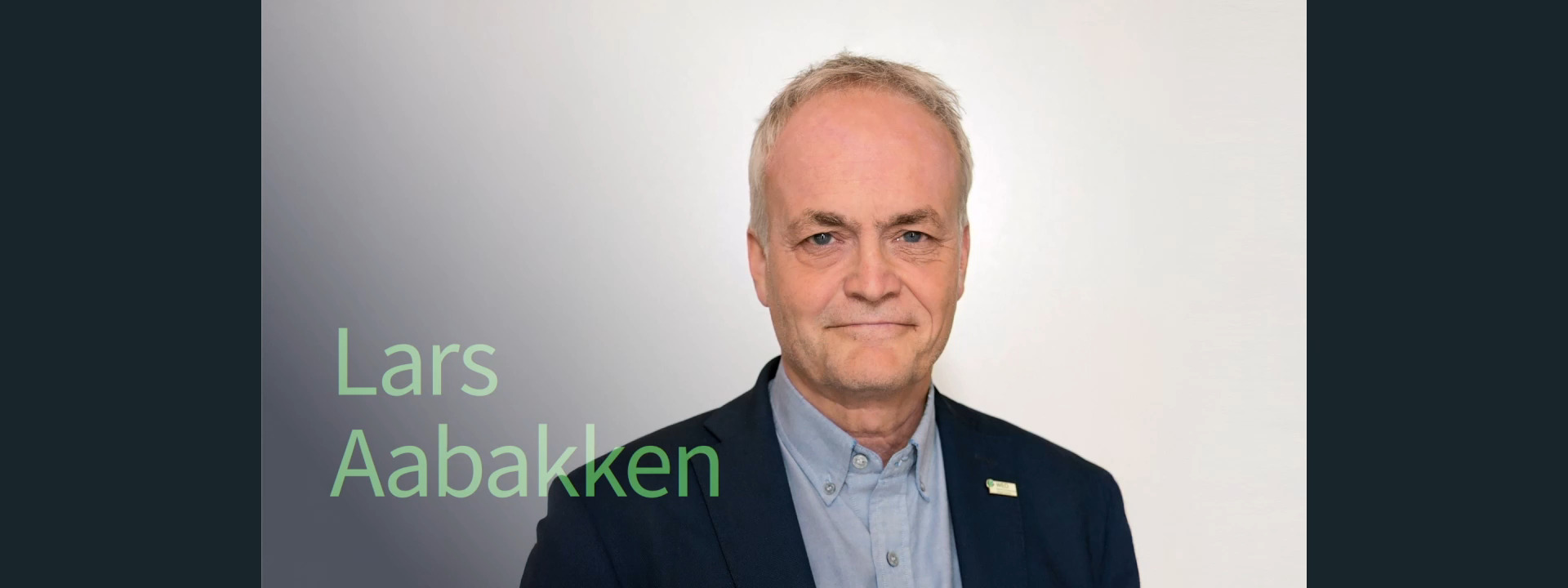
UEG Lifetime Achievement Award
1 Rikshospitalet-Radiumhospitalet HF, Oslo, Norway
Event
Topics
Session
Citation
Published
Log in to access this content.
Free for all myUEG account holders. Your access level is set automatically based on your occupation. Medical professionals get full access to all content. If you are a non-medical user, you can only access UEG Week content from congresses you attended.
Not sure what you can access? Learn more about account types.
INPATIENT AND POST-DISCHARGE THROMBOEMBOLIC EVENTS IN INFLAMMATORY BOWEL DISEASE PATIENTS: 13 YEARS AT A TERTIARY CENTRE
Thomas Matthews 1, Sarah Connor 1, Harry Tyrrell 1, Ryan Wilson 1, Colin Barry 1, Aditya Billur 1, Gayle Bennett 1, Orla Craig 1, Barry Kelleher 1, Jan Leyden 1, Navneet Ramlaul 1, Stephen Stewart 1, Conor Lahiff 1
1 The Mater Hospital, Dublin, Ireland
Conference
Topics
Submission format
Session
Citation
Published
Log in to access this content.
Free for all myUEG account holders. Your access level is set automatically based on your occupation. Medical professionals get full access to all content. If you are a non-medical user, you can only access UEG Week content from congresses you attended.
Not sure what you can access? Learn more about account types.
A COMPARATIVE STUDY OF DIFFERENT BIOLOGICAL DRUGS IN FIRST LINE THERAPY IN CROHN’S DISEASE: A MULTICENTRIC RETROSPECTIVE COMPARATIVE ANALYSIS
Bogdan Podgoreanu 1, Mircea Diculescu 2, Anca-Victorita Trifan 3, Alina Ioana Tantau 4, Ana Maria Singeap 3, Cristian Tieranu 5, Horia-Octav Minea 3, Ana-Maria Buzuleac 3, Lucian Negreanu 6, Remus Florin Popescu 6, Andreea Bota 5, Doina Istratescu 2, Tudor Stroie 2, Letitia Tugui 1, Carmen Monica Preda 2
1 Fundeni Clinical Institute, Bucharest, Romania
2 UMF „Carol Davila”, Clinic Fundeni Institute, Bucharest, Romania
3 Institute of Gastroenterology and Hepatology, Iasi, Romania
4 Iuliu Hațieganu University of Medicine and Pharmacy, Cluj-Napoca, Romania
5 Elias Emerency University Hospital, Bucharest, Romania
6 Spitalul Universitar de Urgenta Bucuresti, Bucuresti, Romania
Conference
Topics
Submission format
Session
Citation
Published
Log in to access this content.
Free for all myUEG account holders. Your access level is set automatically based on your occupation. Medical professionals get full access to all content. If you are a non-medical user, you can only access UEG Week content from congresses you attended.
Not sure what you can access? Learn more about account types.
CHRONIC INTESTINAL PSEUDO-OBSTRUCTION: AN UNCOMMON PRESENTATION OF CELIAC DISEASE
Dorsaf Khouildi 1, Yosra Zaimi 1, Nouha Trad 1, Mensi Asma 1, Shema Ayadi 1, Emna Belhadj Mabrouk 1, Yosra Said 1, Leila Mouelhi 1, Radhouane Debbeche 1
1 Charles Nicolle Hospital, Tunis, Tunisia
Conference
Topics
Submission format
Session
Published
Log in to access this content.
Free for all myUEG account holders. Your access level is set automatically based on your occupation. Medical professionals get full access to all content. If you are a non-medical user, you can only access UEG Week content from congresses you attended.
Not sure what you can access? Learn more about account types.
EVALUATION OF ENDOPLASMIC RETICULUM STRESS IN THE ILEAL POUCH MUCOSA OF PATIENTS WITH ULCERATIVE COLITIS COMPARED TO THE FAMILIAL ADENOMATOUS POLYPOSIS
Leandro Minatel Vidal de Negreiros 1, Lívia Bitencourt Pascoal 1, Lívia Moreira Genaro 1, Bruno Lima Rodrigues 1, Michel Gardere Camargo 1, Maria de Lourdes Setsuko Ayrizono 1, Raquel Franco Leal 1
1 University of Campinas (Unicamp), Campinas, Brazil
Conference
Topics
Submission format
Session
Citation
Published
Log in to access this content.
Free for all myUEG account holders. Your access level is set automatically based on your occupation. Medical professionals get full access to all content. If you are a non-medical user, you can only access UEG Week content from congresses you attended.
Not sure what you can access? Learn more about account types.
FALSIFICATION MATERNAL COMPLICATION OF ULCERATIVE COLITIS (MUNCHAUSEN SYNDROME) AS A CONTINUUM OF FATAL CHILD FACTITIOUS DISORDER (MUNCHAUSEN SYNDROME BY PROXY)
1 Lithuanian University of Health Sciences, Kaunas, Lithuania
Conference
Topics
Submission format
Session