UEG's educational platform for gastroenterology education bringing recordings, courses, guidelines, and more together in one place.
Most popular content
Rate for better recommendations!
Your feedback helps us show you more of what you like and less of what you dislike!
Log in to access this content.
Free for all myUEG account holders. Your access level is set automatically based on your occupation. Medical professionals get full access to all content. If you are a non-medical user, you can only access UEG Week content from congresses you attended.
Not sure what you can access? Learn more about account types.
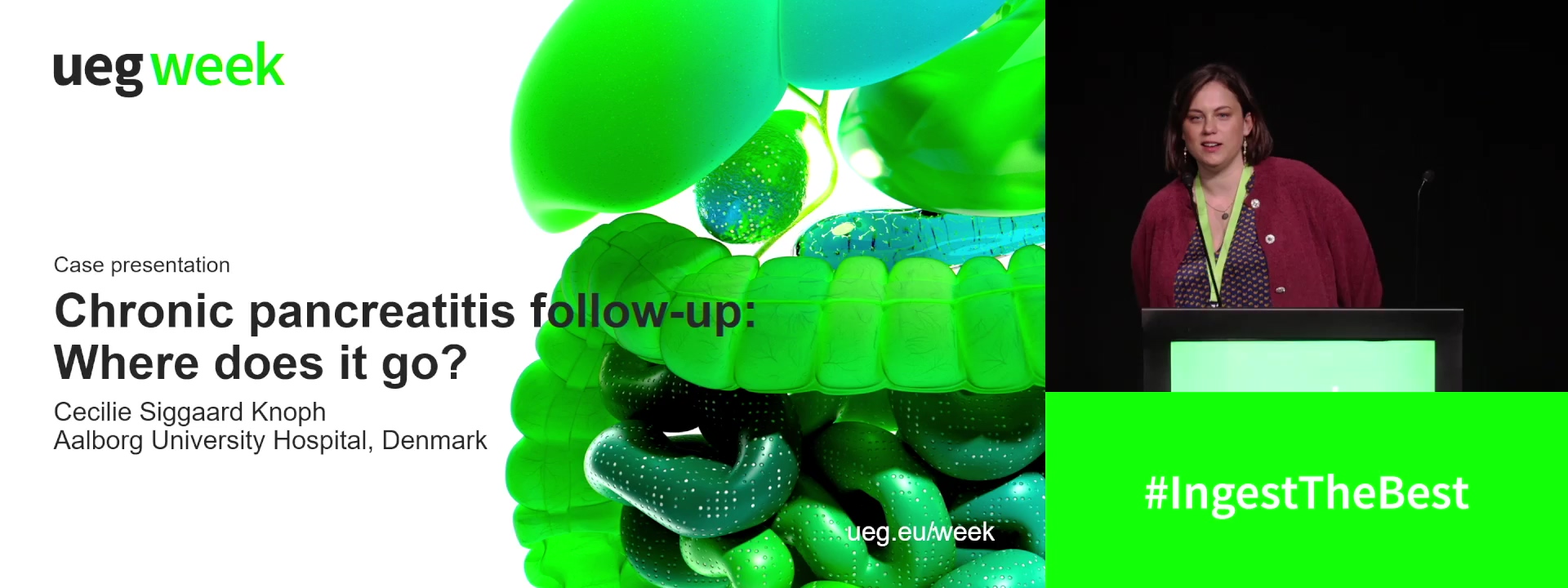
Chronic pancreatitis follow-up: Where does it go?
1 Aalborg Universitetshospital, Aalborg, Denmark
Event
Citation
Published
Log in to access this content.
Free for all myUEG account holders. Your access level is set automatically based on your occupation. Medical professionals get full access to all content. If you are a non-medical user, you can only access UEG Week content from congresses you attended.
Not sure what you can access? Learn more about account types.
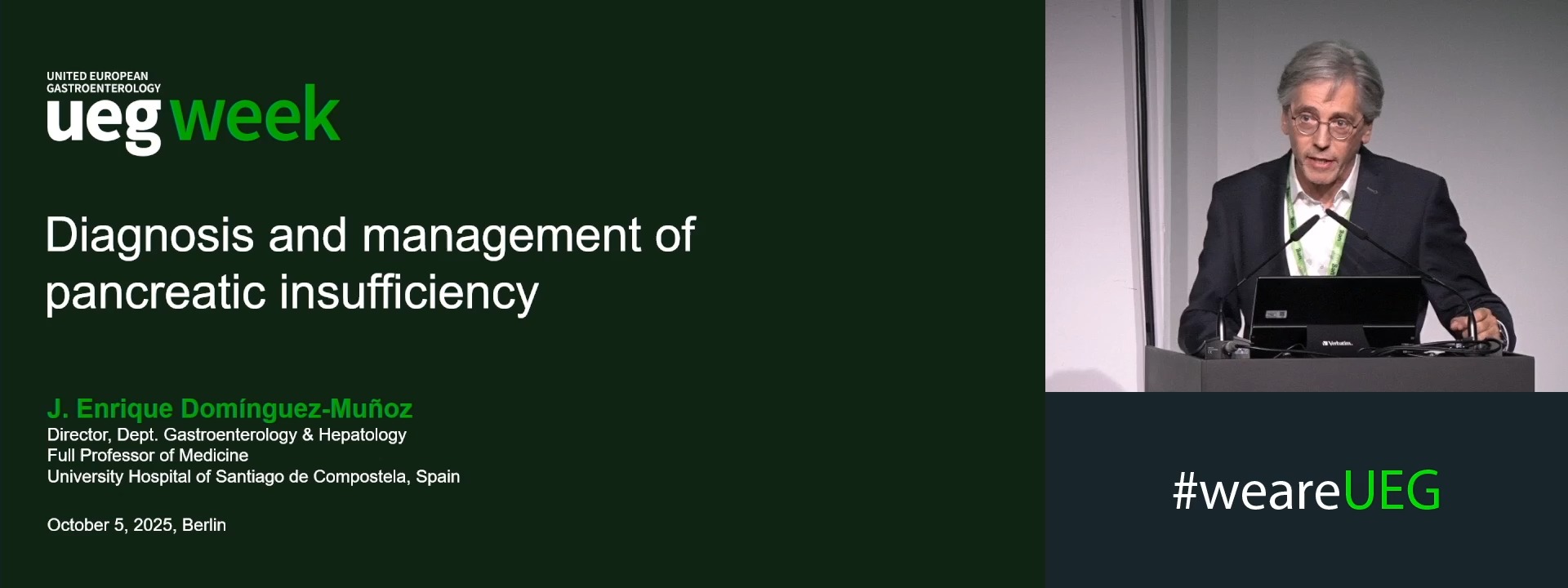
Diagnosis and management of pancreatic insufficiency
1 University Hospital of Santiago de Compostela - Gastroenterology and Hepatology, University Hospital, Santiago de Compostela, Spain
Event
Topics
Citation
Published
Log in to access this content.
Free for all myUEG account holders. Your access level is set automatically based on your occupation. Medical professionals get full access to all content. If you are a non-medical user, you can only access UEG Week content from congresses you attended.
Not sure what you can access? Learn more about account types.
Summary: Liver and pregnancy - Beware of dangerous liaisons
1 Hôpital Erasme (gastro) - Hôpital Erasme (gastro); Maransart/BE, Brussels, Belgium
Event
Topics
Citation
Published
Log in to access this content.
Free for all myUEG account holders. Your access level is set automatically based on your occupation. Medical professionals get full access to all content. If you are a non-medical user, you can only access UEG Week content from congresses you attended.
Not sure what you can access? Learn more about account types.
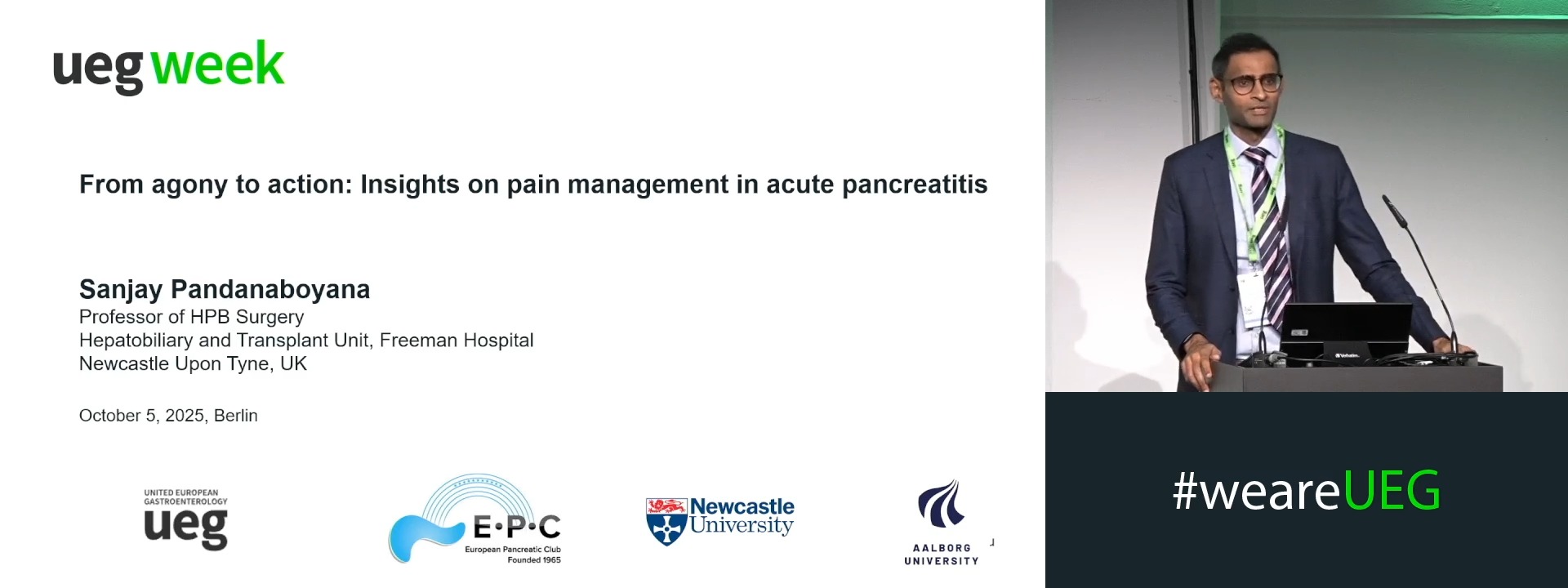
From agony to action: Insights on pain management in acute pancreatitis
1 Freeman hospital, Newcastle upon tyne, United Kingdom
Event
Citation
Published
Log in to access this content.
Free for all myUEG account holders. Your access level is set automatically based on your occupation. Medical professionals get full access to all content. If you are a non-medical user, you can only access UEG Week content from congresses you attended.
Not sure what you can access? Learn more about account types.
The additive value of CA19.9 monitoring in a pancreatic cyst surveillance programme
1 Erasmus University Medical Center, Rotterdam, Netherlands
Event
Topics
Session
Citation
Published
Log in to access this content.
Free for all myUEG account holders. Your access level is set automatically based on your occupation. Medical professionals get full access to all content. If you are a non-medical user, you can only access UEG Week content from congresses you attended.
Not sure what you can access? Learn more about account types.
And now the pancreas is gone: Suspected cancer turns out benign - Gastroenterologist and surgeon
1 Erasmus University MC Dept. of Gastronterology, Rotterdam, Netherlands
2 Sahlgrenska University Hospital instead of Karolinska, Gothenburg, Sweden
Event
Session
Citation
Published
Log in to access this content.
Free for all myUEG account holders. Your access level is set automatically based on your occupation. Medical professionals get full access to all content. If you are a non-medical user, you can only access UEG Week content from congresses you attended.
Not sure what you can access? Learn more about account types.
Novel resection technologies for locally advanced pancreatic cancer
1 Heidelberg University Hospital, Heidelberg, Germany
Event
Topics