UEG's educational platform for gastroenterology education bringing recordings, courses, guidelines, and more together in one place.
Most popular content
Rate for better recommendations!
Your feedback helps us show you more of what you like and less of what you dislike!
Log in to access this content.
Free for all myUEG account holders. Your access level is set automatically based on your occupation. Medical professionals get full access to all content. If you are a non-medical user, you can only access UEG Week content from congresses you attended.
Not sure what you can access? Learn more about account types.

REASONING CAPABILITIES OUTPERFORM LITERATURE EXPOSURE: EVALUATING LARGE LANGUAGE MODELS ON GASTROENTEROLOGY BOARD QUESTIONS
Burcu Gurbuz 1, Hakan Aydınlı 1, Ibrahim Nahit Sendur 1, Petr Vanek 2, Cesare Hassan 3, Henriette Heinrich 4, Cem Simsek 1
1 Hacettepe University, Ankara, Türkiye
2 Palacký University Olomouc, Olomouc, Czechia
3 Humanitas University, Pieve Emanuele MI, Italy
4 Stadtspital Triemli, Zürich, Switzerland
Conference
Submission format
Citation
Published
Log in to access this content.
Free for all myUEG account holders. Your access level is set automatically based on your occupation. Medical professionals get full access to all content. If you are a non-medical user, you can only access UEG Week content from congresses you attended.
Not sure what you can access? Learn more about account types.
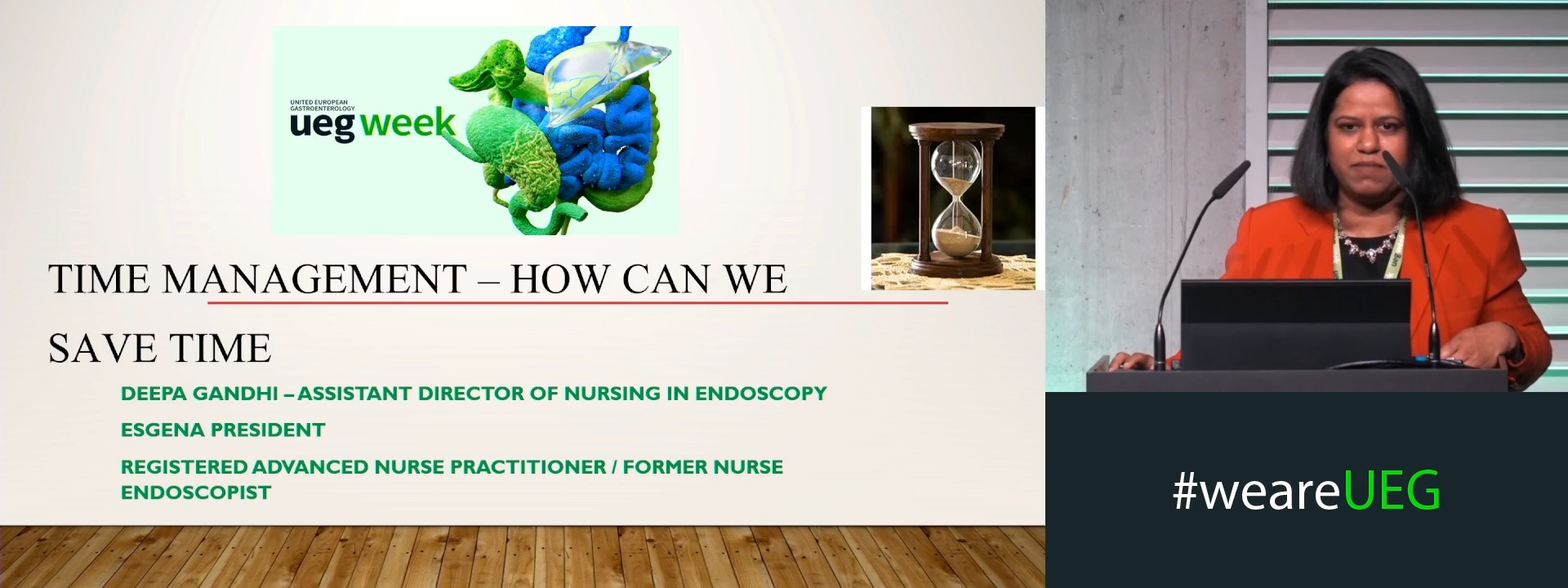
Time management: How can we save time?
1 Mater Misericordiae University Hospital, Dublin, Ireland
Event
Topics
Session
Citation
Published
Log in to access this content.
Free for all myUEG account holders. Your access level is set automatically based on your occupation. Medical professionals get full access to all content. If you are a non-medical user, you can only access UEG Week content from congresses you attended.
Not sure what you can access? Learn more about account types.
IMMUNOREACT 19: IN RECTAL CANCER PATIENTS, PREVIOUS APPENDECTOMY IS ASSOCIATED TO AN ALTERED ANTIGEN PRESENTATION IN THE NORMAL MUCOSA
Anna Matteazzi 1, Melania Scarpa 2, Andromachi Kotsafti 3, Astghik Stepanyan 4, Gaia Tussardi 1, Antonio Rosato 2, Ottavia De Simoni 2, Francesca Bergamo 2, Valerio Pellegrini 5, Ivana Cataldo 5, Ceccon Carlotta 5, Anna Pozza 5, Roberta Salmaso 6, Federico Scognamiglio 4, Cesare Ruffolo 1, Silvia Negro 4, Isacco Maretto 1, Imerio Angriman 6, Chiara Vignotto 1, Luca Facci 1, Giorgio Rivella 1, Quoc Riccardo Bao 1, Andrea Baldo 1, Giulia Pozza 1, Marco Agostini 1, Maurizio Zizzo 7, Beatrice Salmaso 8, Dario Parini 8, GiovannI Pirozzolo 9, Giovanni Bordignon 10, Roberto Merenda 10, Laurino Licia 10, Isabella Mondi 10, Silvio Guerriero 11, Giuseppe Portale 12, Lavinia Ceccarini 12, Michele Antoniutti 12, Laura Marinelli 13, Mattia Barbareschi 13, Giovanni Bertalot 13, Alberto Brolese 13, Giulia Noaro 9, Giulia Becherucci 14, Andrea Porzionato 6, Francesco Cavallin 15, Barbara Di Camillo 6, Gaya Spolverato 1, Ignazio CASTAGLIUOLO 1, Matteo Fassan 5, Marco Scarpa 1
1 Azienda Ospedaliera Universitaria di Padova, Padova, Italy
2 Veneto Institute of Oncology IOV-IRCCS, Padova, Italy
3 Veneto Institute of Oncology (IOV-IRCCS), Padova, Italy
4 Azienda Ospedaliera Universitaria di Padova, Yerevan, Italy
5 Azienda ULSS n 2 Marca Trevigiana, Treviso, Italy
6 University of Padova, Padova, Italy
7 Arcispedale Santa Maria Nuova IRCCS, Reggio Emilia, Italy
8 Azienda ULSS n 5 Polesana, Rovigo, Italy
9 Azienda ULSS n 6 Euganea, Padova, Italy
10 Azienda ULSS n 3 Serenissima, Venezia, Italy
11 Ospedale di Fermo, ASUR 4, Fermo, Italy
12 Azienda ULSS n 7 Pedemontana, Bassano del Grappa, Italy
13 Azienda Provinciale per i Servizi Sanitari, Trento, Italy
14 Azienda ULSS n 1 Dolomiti, Belluno, Italy
15 Independent Statistician, Solagna, Italy
Conference
Topics
Submission format
Citation
Published
Log in to access this content.
Free for all myUEG account holders. Your access level is set automatically based on your occupation. Medical professionals get full access to all content. If you are a non-medical user, you can only access UEG Week content from congresses you attended.
Not sure what you can access? Learn more about account types.
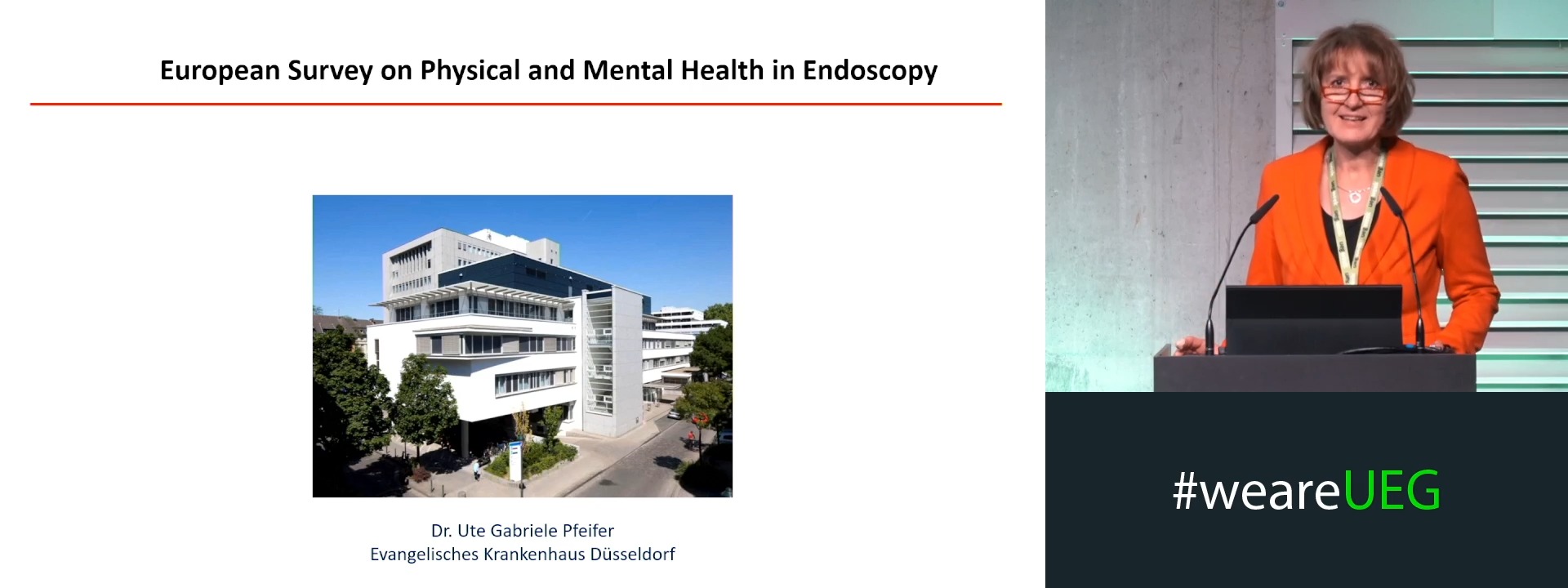
European survey on physical and mental health in endoscopy
1 Evangel. Krankenhaus Düsseldorf Abt. Endoskopie, Düsseldorf, Germany
Event
Topics
Session
Citation
Published
Log in to access this content.
Free for all myUEG account holders. Your access level is set automatically based on your occupation. Medical professionals get full access to all content. If you are a non-medical user, you can only access UEG Week content from congresses you attended.
Not sure what you can access? Learn more about account types.
THE GUT-LIVER AXIS IN INFLAMMATORY DISEASES: WHAT IS THE CONNECTION BETWEEN PRIMARY SCLEROSING CHOLANGITIS AND INFLAMMATORY BOWEL DISEASES?
Lisa Isoard 1, Melvin Airaud 1, Hervé Guillou 2, Frédérick Barreau 1, Nicolas Loiseau 2, Emmanuel Mas 3
1 IRSD, Toulouse, France
2 Toxalim, Toulouse, France
3 CHU Toulouse Hôpital des Enfants, Toulouse, France
Conference
Topics
Submission format
Citation
Published
Log in to access this content.
Free for all myUEG account holders. Your access level is set automatically based on your occupation. Medical professionals get full access to all content. If you are a non-medical user, you can only access UEG Week content from congresses you attended.
Not sure what you can access? Learn more about account types.
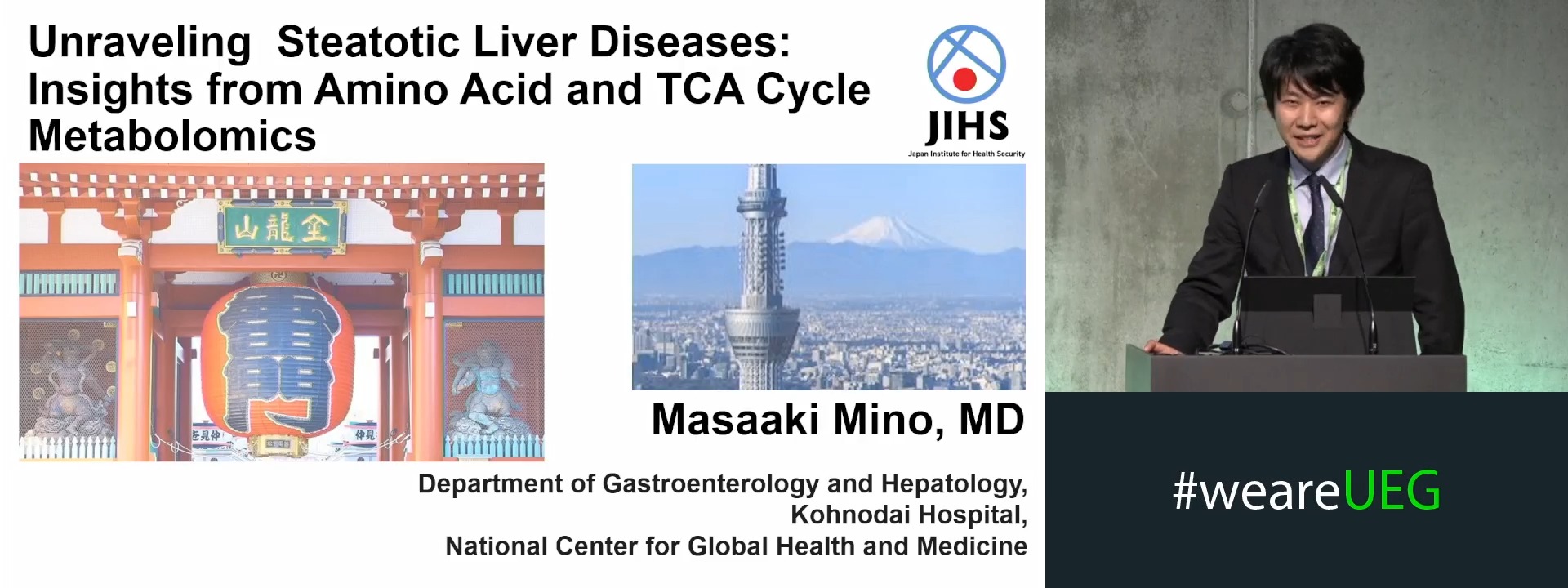
Unraveling Steatotic Liver Diseases: Insights from Amino Acid and TCA Cycle Metabolomics
1 Kohnodai Hospital, National Center for Global Health and Medicine, Kōnodai, Japan
Event
Topics
Citation
Published
Log in to access this content.
Free for all myUEG account holders. Your access level is set automatically based on your occupation. Medical professionals get full access to all content. If you are a non-medical user, you can only access UEG Week content from congresses you attended.
Not sure what you can access? Learn more about account types.
ROLE SWAPPING BETWEEN NURSES AND PHYSICIANS IN SIMULATED ENDOSCOPY TRAINING ENHANCES COLLABORATION AND TEAMWORK: A PROSPECTIVE OBSERVATIONAL PILOT STUDY
Federica Borrelli de Andreis 1, Salvatore Francesco Vadalà di Prampero 2, Ilaria Simonelli 3, Francesca Motta 2, Silvana Fusha 2, Francesco Esposito 4, Alessia Mancini 2, Anna Di Gemma 2, Guido Costamagna 2, Milutin Bulajic 2
1 Catholic University of Sacred Heart, Rome, Italy|||Gemelli Isola - Isola Tiberina Hospital, Roma, Italy
2 Gemelli Isola - Isola Tiberina Hospital, Roma, Italy
3 Isola Tiberina - Gemelli Isola Hospital, Rome, Italy
4 Gemelli Isola - Isola Tiberina Hospital, Rome, Italy|||Sapienza University of Rome, Rome, Italy