UEG's educational platform for gastroenterology education bringing recordings, courses, guidelines, and more together in one place.
Trending on Gutflix
Rate for better recommendations!
Your feedback helps us show you more of what you like and less of what you dislike!
Log in to continue.
This content is part of Gutflix. Log in with your myUEG account, or create one free, to watch it.
Not sure what you can access? Learn more about account types.
Panel discussion: A 360-degree appraisal of acute pancreatitis
Log in to continue.
This content is part of Gutflix. Log in with your myUEG account, or create one free, to watch it.
Not sure what you can access? Learn more about account types.
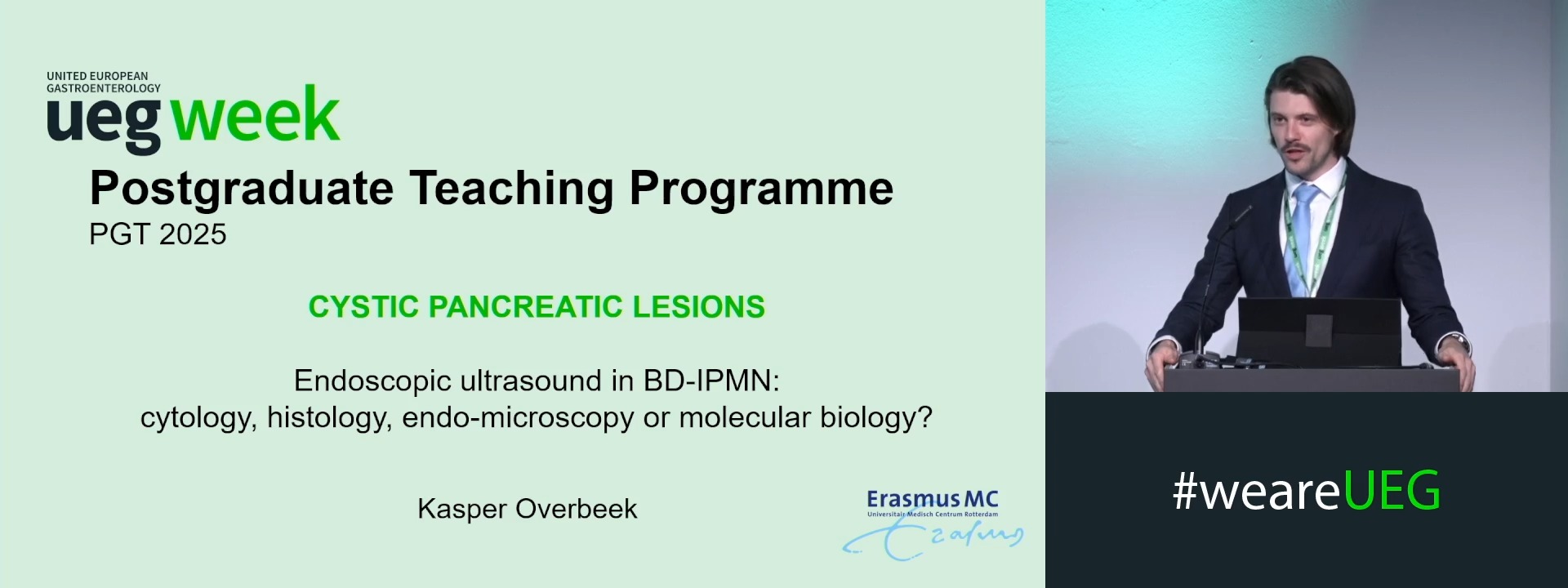
Endoscopic ultrasound in BD-IPMN: Cytology, histology, endo-microscopy or molecular biology?
Affiliations
1 Erasmus MC Cancer Institute, University Medical Center, Rotterdam, Netherlands
Log in to continue.
This content is part of Gutflix. Log in with your myUEG account, or create one free, to watch it.
Not sure what you can access? Learn more about account types.
Panel discussion: The rocky road - Treatment standards for biliary stones
Log in to continue.
This content is part of Gutflix. Log in with your myUEG account, or create one free, to watch it.
Not sure what you can access? Learn more about account types.
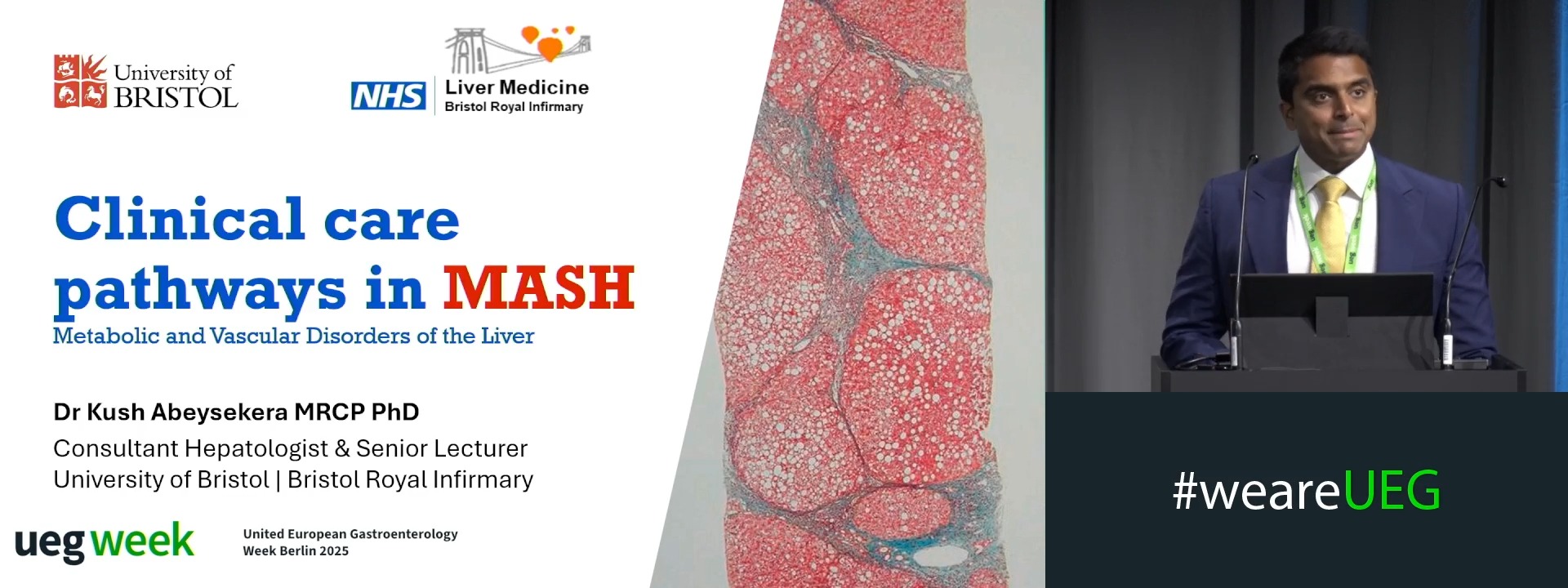
Clinical care pathways in MASH
Affiliations
1 Bristol Medical School, University of Bristol, London, United Kingdom
Log in to continue.
This content is part of Gutflix. Log in with your myUEG account, or create one free, to watch it.
Not sure what you can access? Learn more about account types.
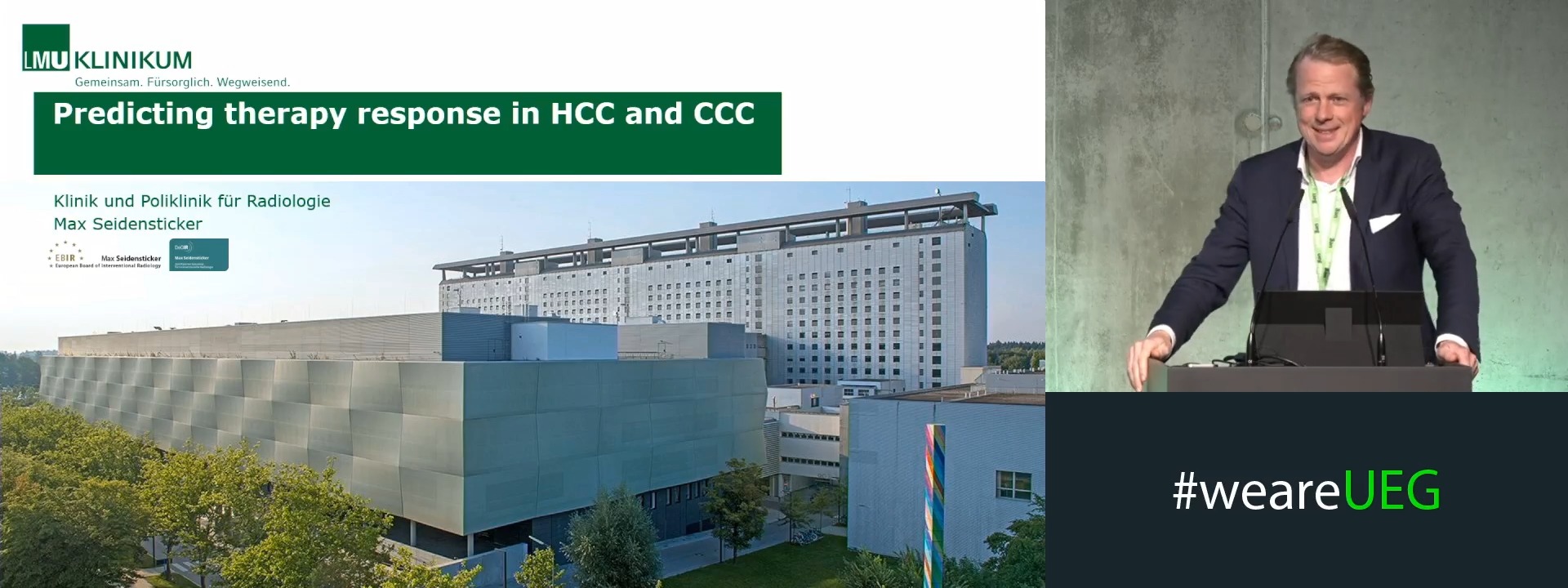
Predicting therapy response in HCC and CCC
Affiliations
1 LMU München, Munich, Germany
Log in to continue.
This content is part of Gutflix. Log in with your myUEG account, or create one free, to watch it.
Not sure what you can access? Learn more about account types.
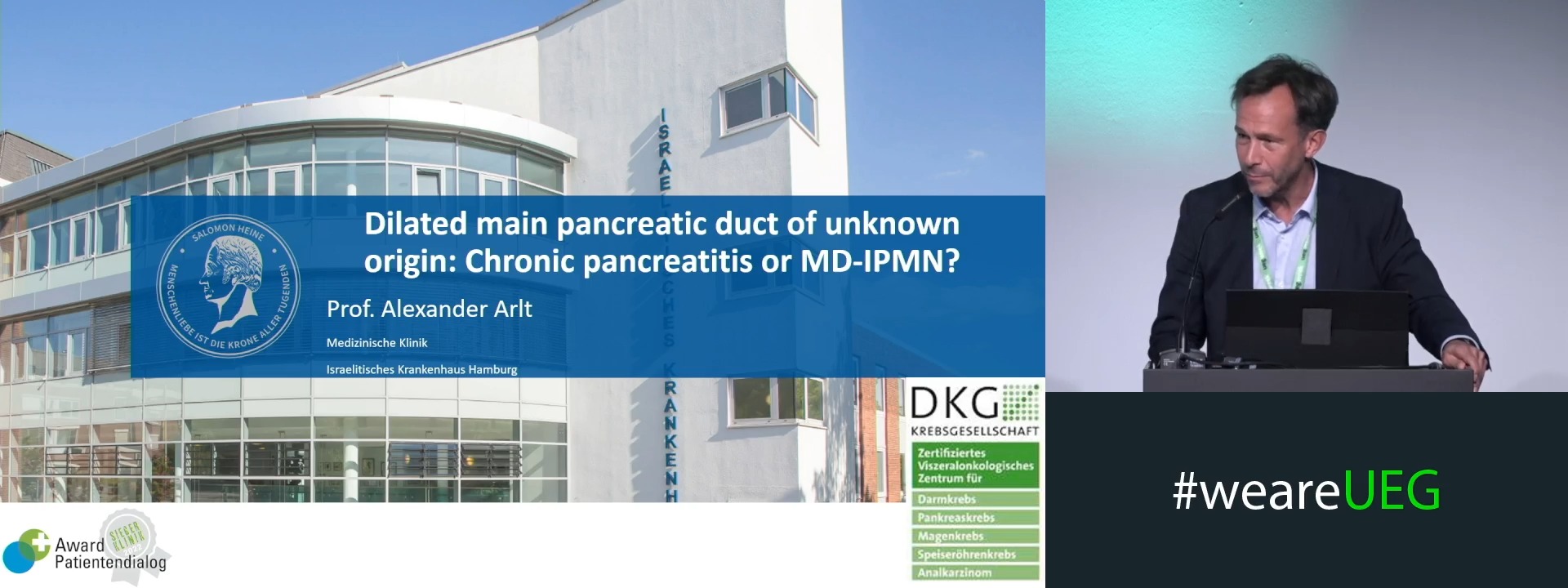
Dilated main pancreatic duct of unknown origin: Chronic pancreatitis or MD-IPMN?
Affiliations
1 Klinikum Oldenburg, Oldenburg, Germany
Log in to continue.
This content is part of Gutflix. Log in with your myUEG account, or create one free, to watch it.
Not sure what you can access? Learn more about account types.
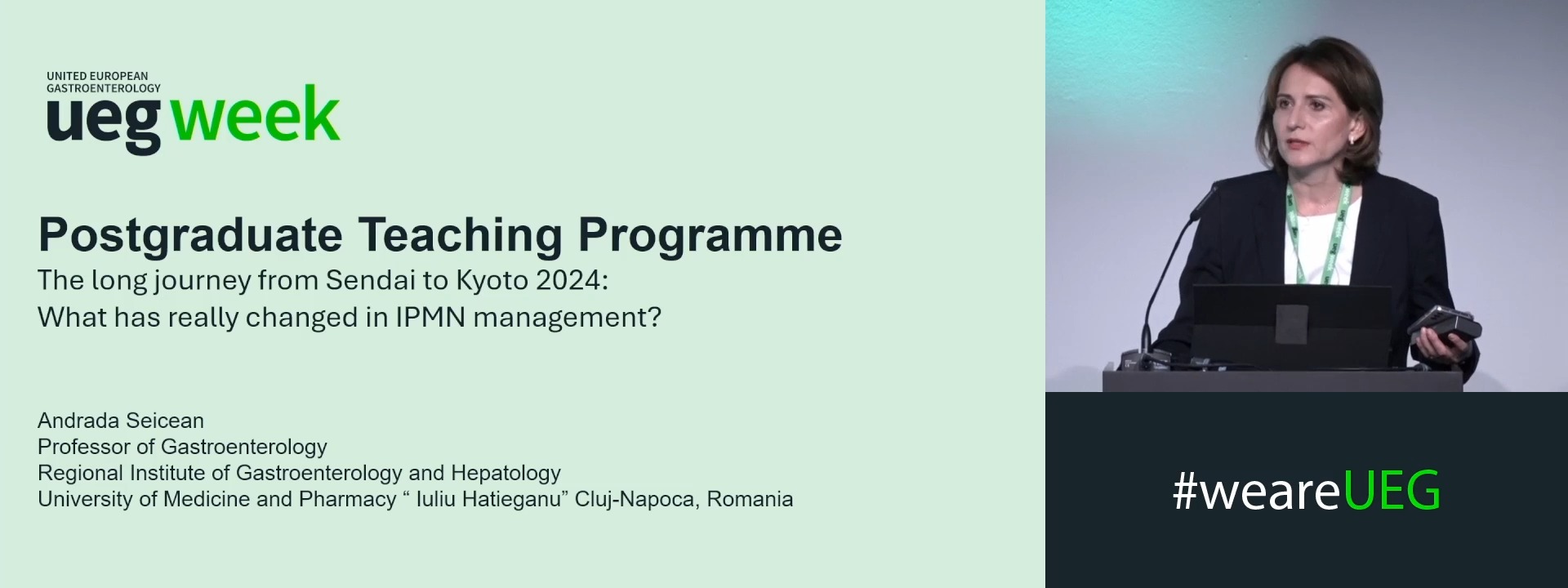
The long journey from Sendai to Kyoto 2024: What has really changed in IPMN management?
Affiliations
1 University of Medicine and Pharmacy Iuliu Hatieganu Cluj-Napoca, Romania, Cluj Napoca, Romania