UEG's content platform for gastroenterology education bringing recordings, courses, guidelines, and more together in one place.
Trending on Gutflix
Rate for better recommendations!
Your feedback helps us show you more of what you like and less of what you dislike!
Log in to continue.
This content is part of Gutflix. Log in with your myUEG account, or create one free, to watch it.
Not sure what you can access? Learn more about account types.
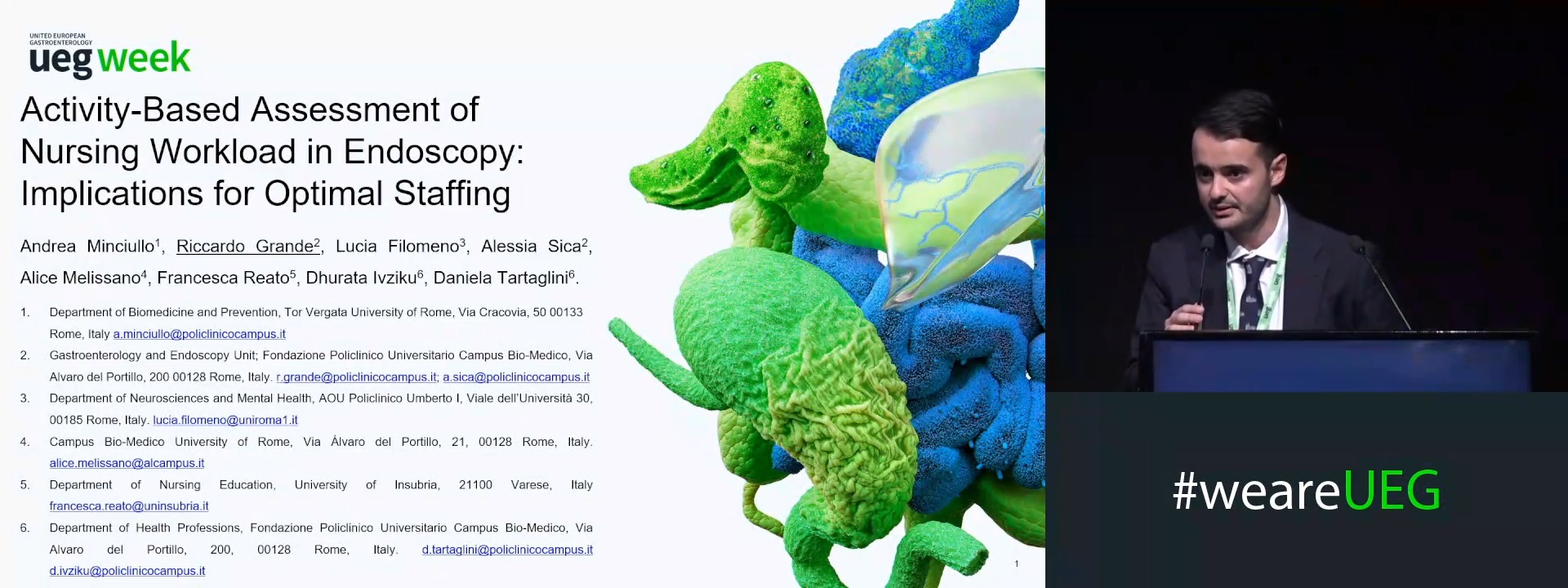
ACTIVITY-BASED ASSESSMENT OF NURSING WORKLOAD IN ENDOSCOPY: IMPLICATIONS FOR OPTIMAL STAFFING
Andrea Minciullo 1, Riccardo Grande 2, Lucia Filomeno 3, Alessia Sica 2, Alice Melissano 4, Francesca Reato 5, Dhurata Ivziku 2, Daniela Tartaglini 2
Affiliations
1 Tor Vergata University, Roma, Italy
2 Fondazione Policlinico Universitario Campus Bio-Medico, Roma, Italy
3 AOU Policlinico Umberto I, Roma, Italy
4 Campus Bio-Medico, Roma, Italy
5 University of Insubria, Varese, Italy
Log in to continue.
This content is part of Gutflix. Log in with your myUEG account, or create one free, to watch it.
Not sure what you can access? Learn more about account types.
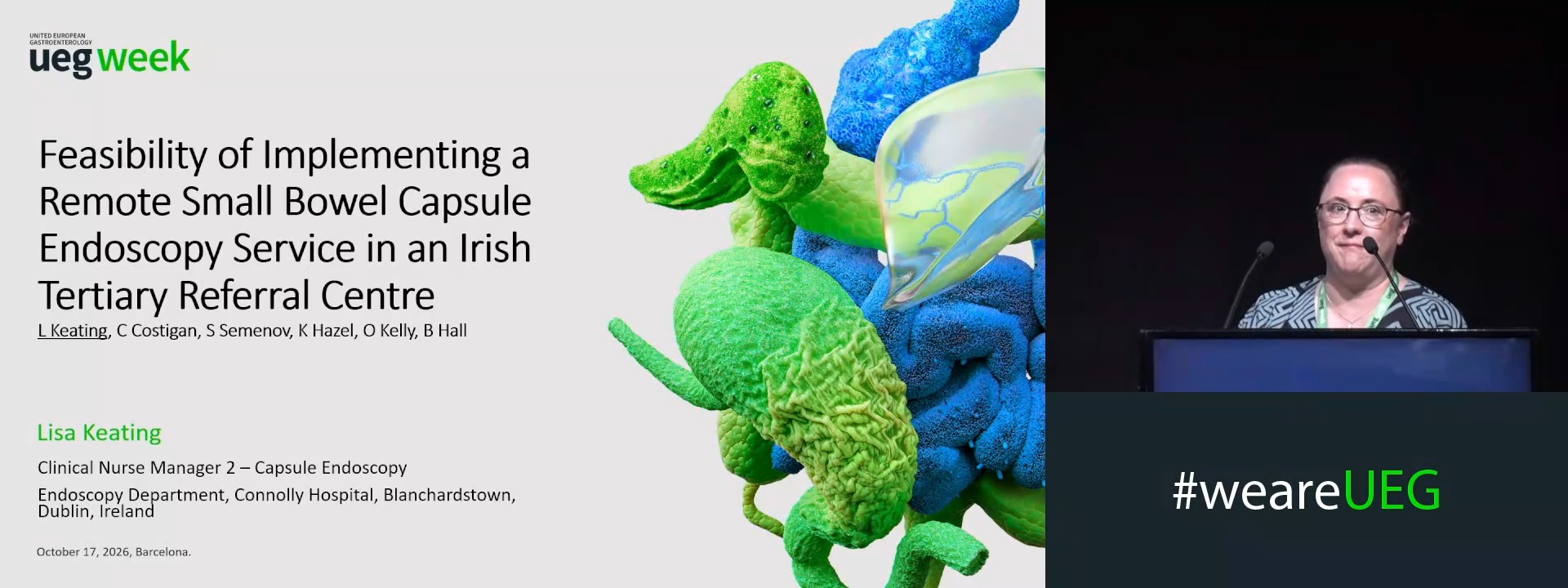
FEASIBILITY OF IMPLEMENTING A REMOTE SMALL BOWEL CAPSULE ENDOSCOPY SERVICE IN AN IRISH TERTIARY REFERRAL CENTRE
Affiliations
1 Connolly Hospital, Dublin, Ireland
Log in to continue.
This content is part of Gutflix. Log in with your myUEG account, or create one free, to watch it.
Not sure what you can access? Learn more about account types.
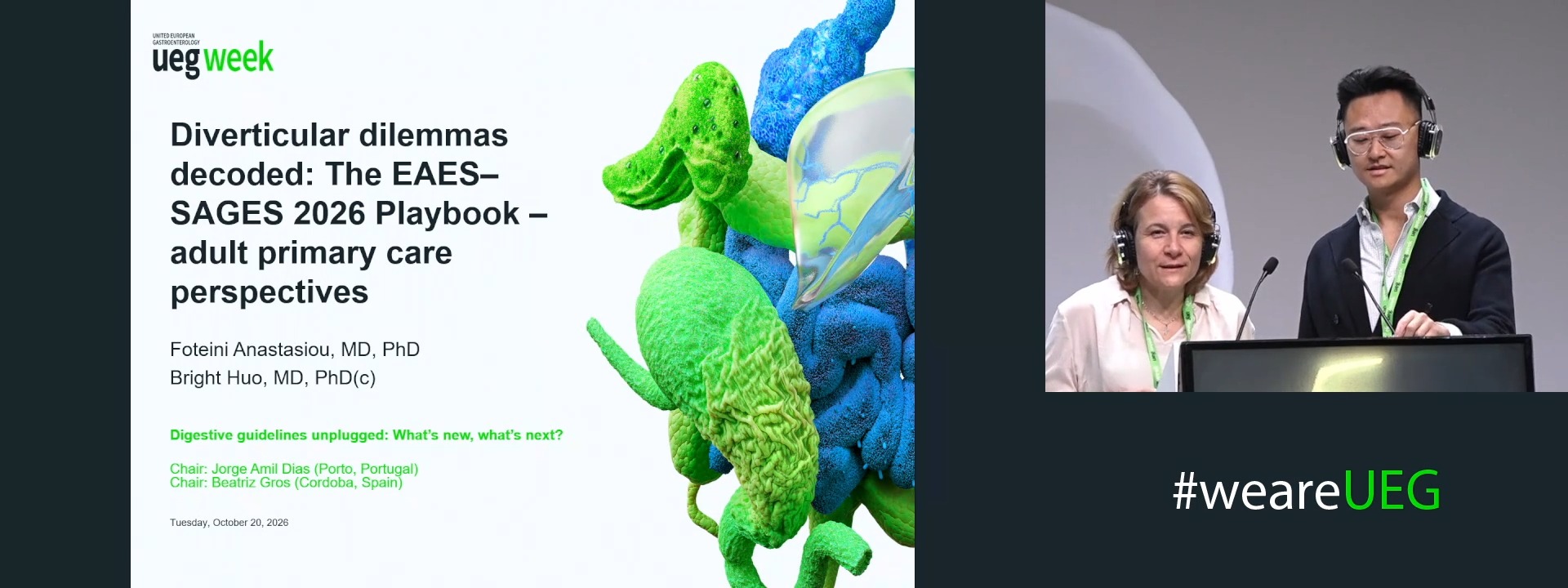
Diverticular dilemmas decoded: The EAES–SAGES 2026 Playbook – adult and primary care perspectives
Affiliations
1 4rth Local Primary Health Care Team (TOMY) - Municipality Practice-Academic Practice of Heraklion, Crete, Heraklion, Crete, Greece
2 McMaster University, Hamilton, Canada
Log in to continue.
This content is part of Gutflix. Log in with your myUEG account, or create one free, to watch it.
Not sure what you can access? Learn more about account types.
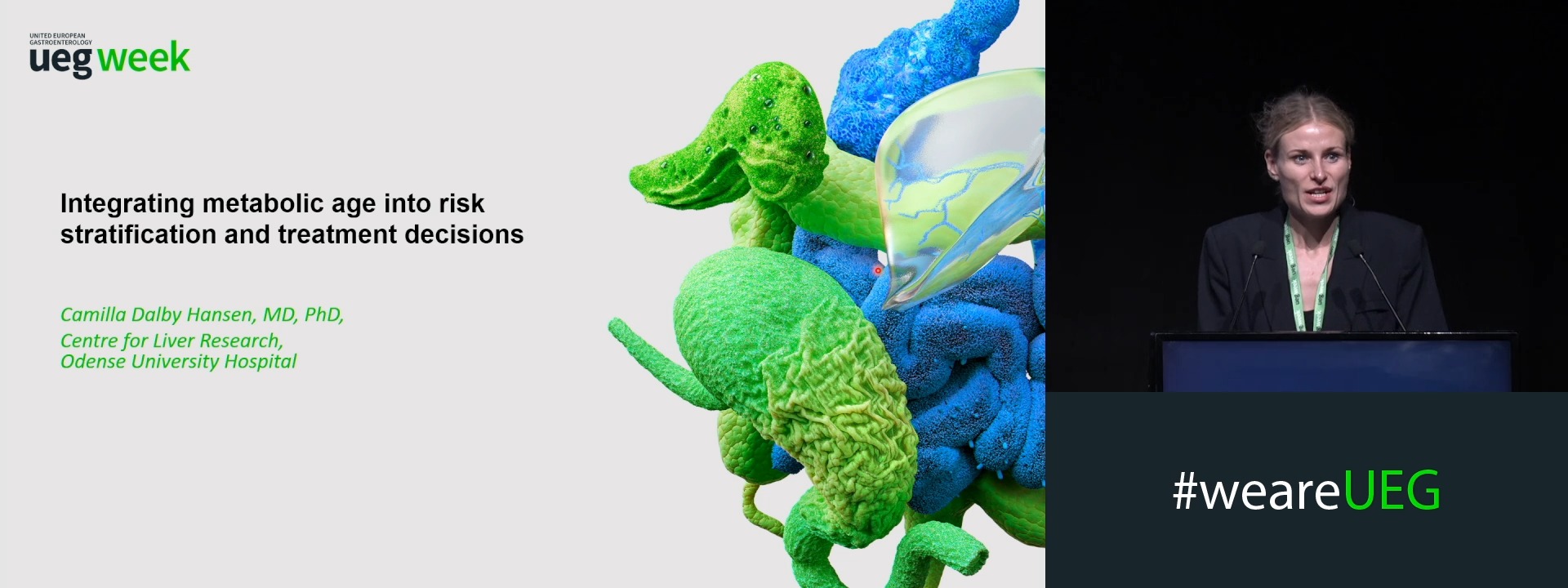
Integrating metabolic age into risk stratification and treatment decisions
Affiliations
1 Odense University Hospital, Odense, Denmark
Log in to continue.
This content is part of Gutflix. Log in with your myUEG account, or create one free, to watch it.
Not sure what you can access? Learn more about account types.
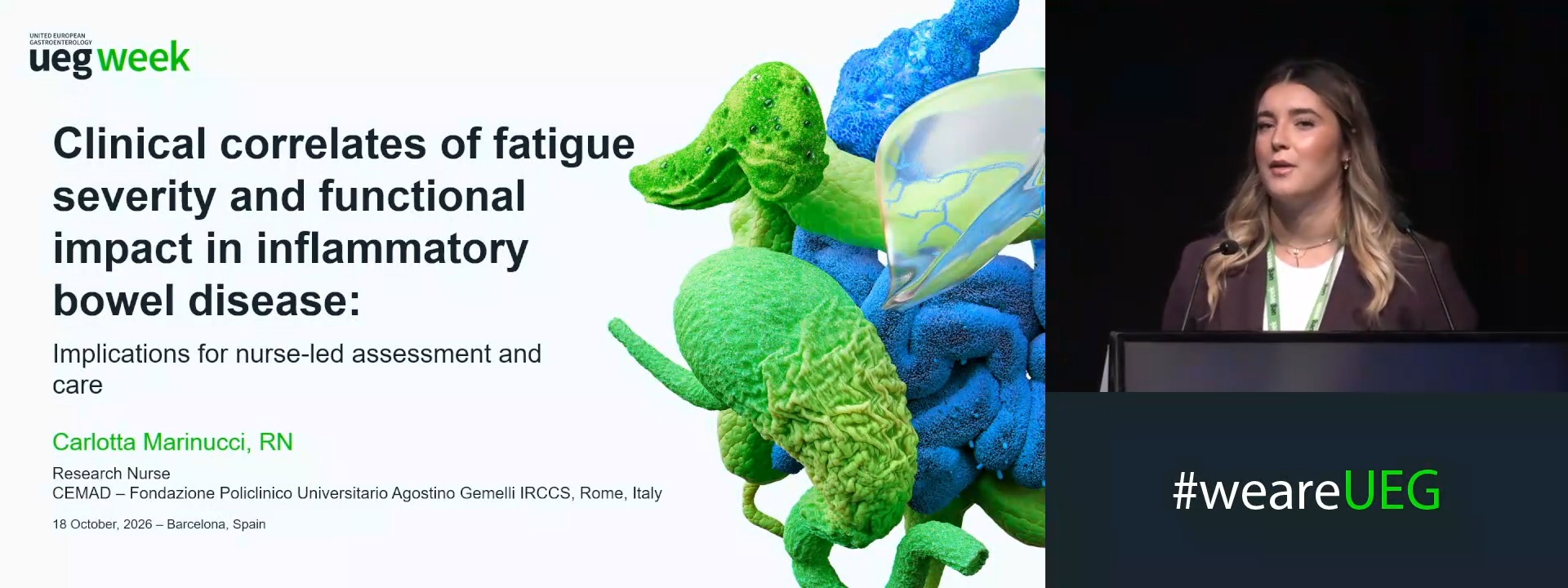
CLINICAL CORRELATES OF FATIGUE SEVERITY AND FUNCTIONAL IMPACT IN INFLAMMATORY BOWEL DISEASE: IMPLICATIONS FOR NURSE-LED ASSESSMENT AND CARE
Daniele Napolitano 1, Maria Vittoria De Girolamo 1, Carlotta Marinucci 2, Nicoletta Orgiana 2, Piergiorgio Martella 2, Alessio Lo Cascio 3, Mattia Bozzetti 4, Franco Scaldaferri 5
Affiliations
1 Fondazione Policlinico Gemelli IRCCS, Rome, Italy
2 Fondazione Policlinico Gemelli, Rome, Italy
3 La Maddalena Cancer Center, Palermo, Italy
4 ASST Cremona, Cremona, Italy
5 Catholic University of Rome Dept. of Internal Medicine Dept. of Gastroenterology, Roma, Italy
Log in to continue.
This content is part of Gutflix. Log in with your myUEG account, or create one free, to watch it.
Not sure what you can access? Learn more about account types.
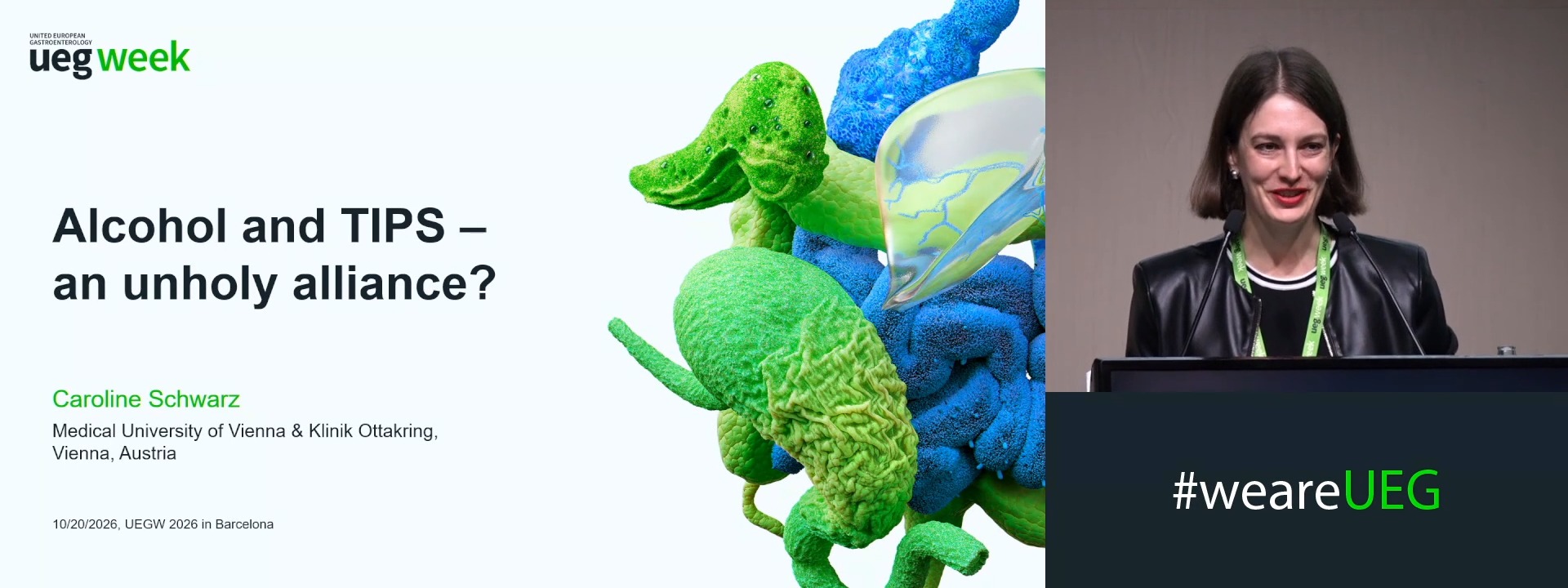
Alcohol and TIPS - an unholy alliance?
Affiliations
1 Klinik Ottakring, Vienna, Austria
Log in to continue.
This content is part of Gutflix. Log in with your myUEG account, or create one free, to watch it.
Not sure what you can access? Learn more about account types.
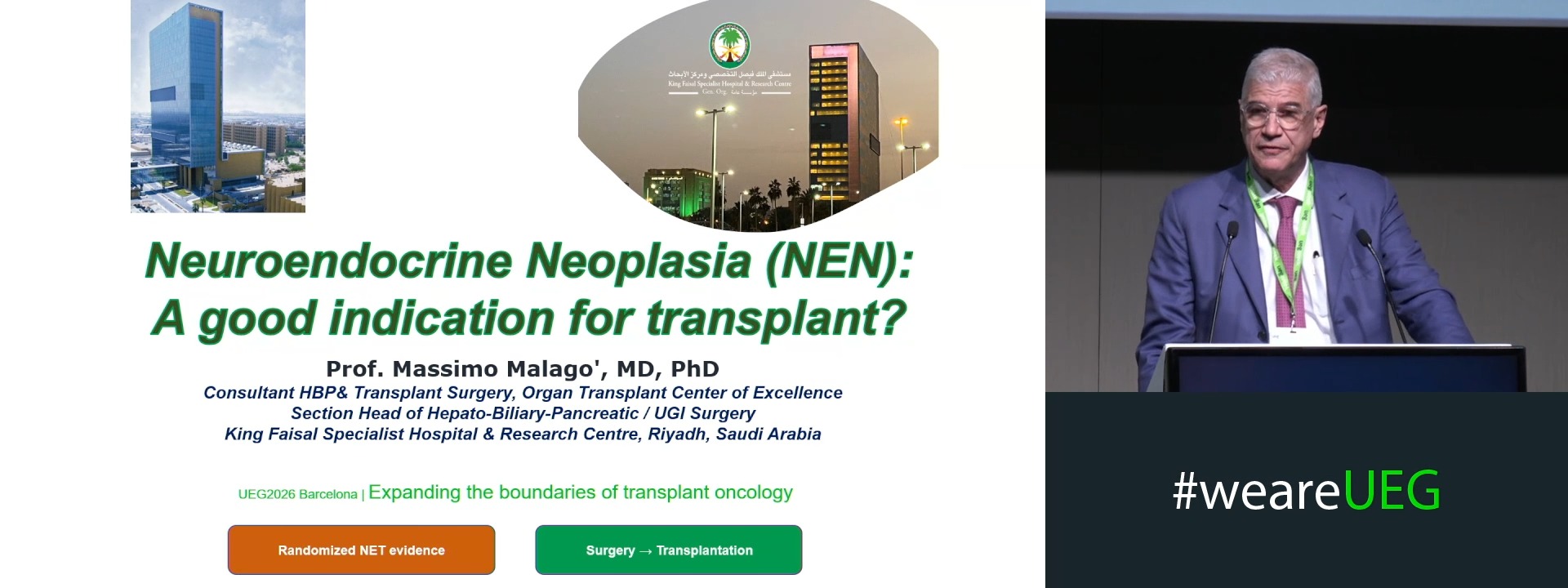
Neuroendocrine cancer: A good indication for transplant?
Affiliations
1 King Faisal Specialist Hospital and Research Center, Riyadh, Saudi Arabia