UEG's content platform for gastroenterology education bringing recordings, courses, guidelines, and more together in one place.
Trending on Gutflix
Rate for better recommendations!
Your feedback helps us show you more of what you like and less of what you dislike!
Log in to continue.
This content is part of Gutflix. Log in with your myUEG account, or create one free, to watch it.
Not sure what you can access? Learn more about account types.
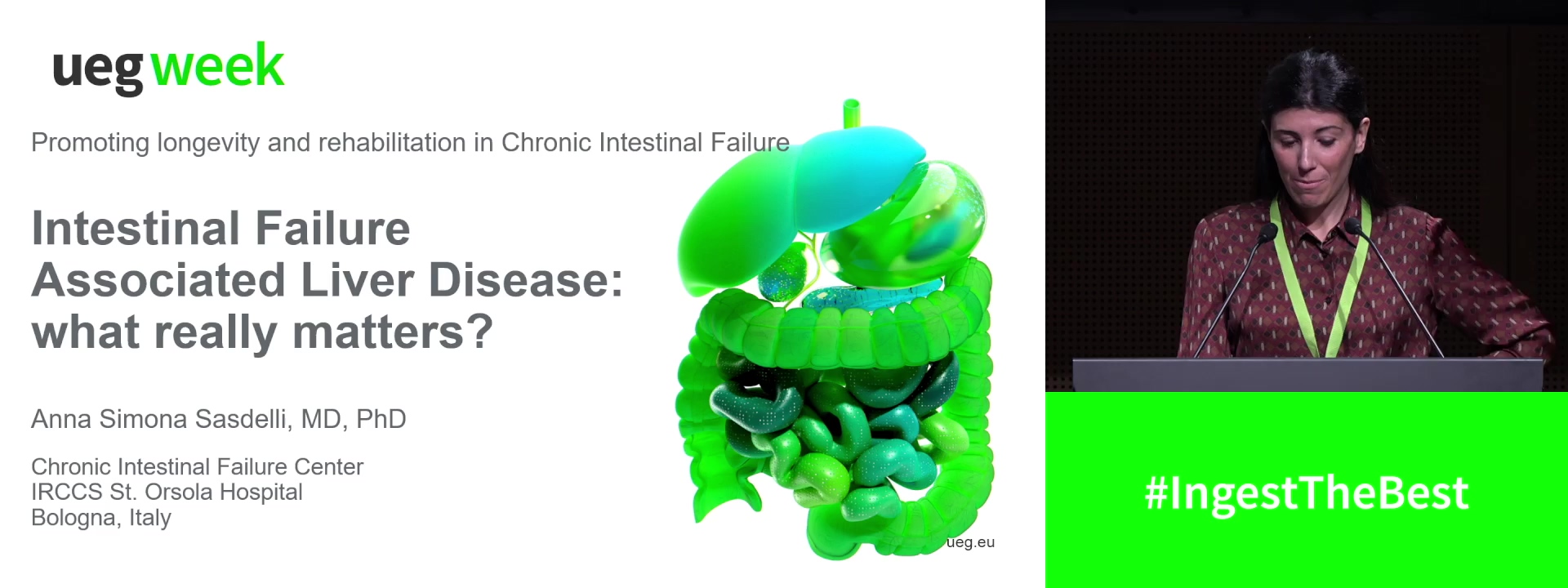
Intestinal-failure-associated liver disease: What really matters?
Affiliations
1 University of Bologna S. Orsola-Malpighi Hospital, Bologna, Italy
Log in to continue.
This content is part of Gutflix. Log in with your myUEG account, or create one free, to watch it.
Not sure what you can access? Learn more about account types.
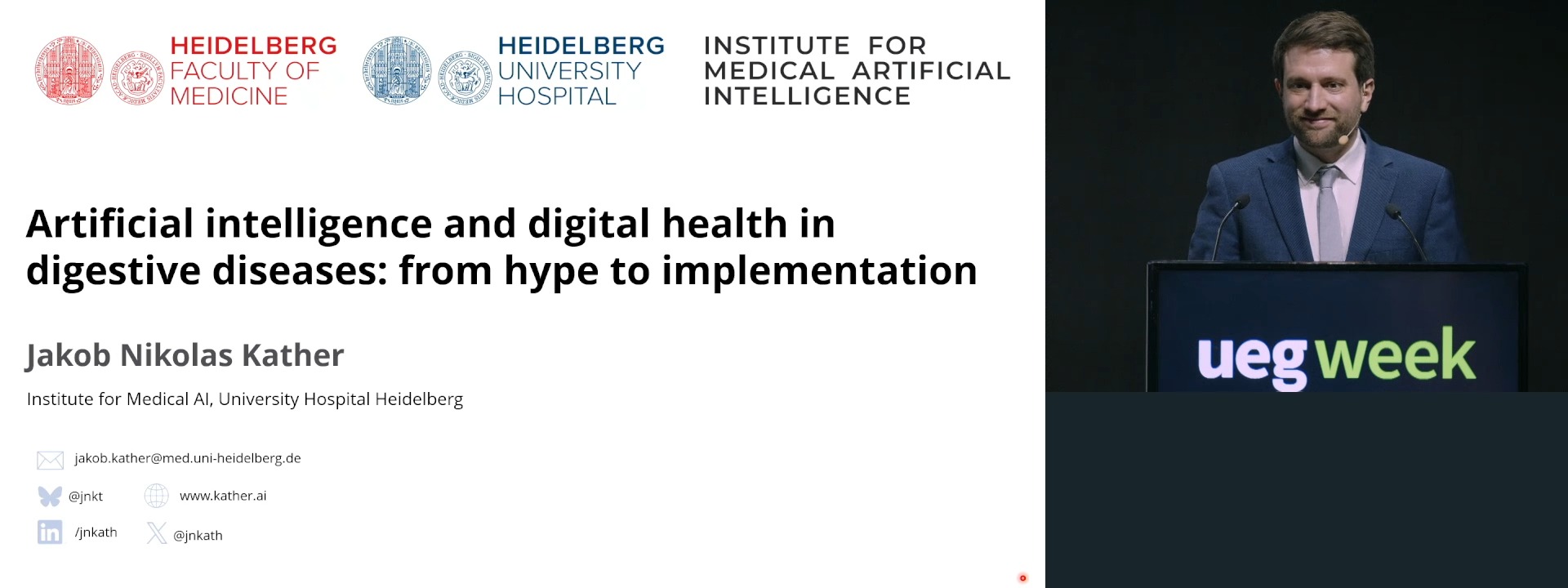
Artificial intelligence and digital health in digestive diseases: From hype to implementation
Affiliations
1 Dresden University of Technology, Dresden, Germany

Log in to continue.
This content is part of Gutflix. Log in with your myUEG account, or create one free, to watch it.
Not sure what you can access? Learn more about account types.
Colorectal cancer: A single cell atlas
Affiliations
1 Università Cattolica del Sacro Cuore, Rome, Italy

Log in to continue.
This content is part of Gutflix. Log in with your myUEG account, or create one free, to watch it.
Not sure what you can access? Learn more about account types.
Creeping fat as source of fibrosis
Affiliations
1 Cleveland Clinic Foundation, Cleveland, United States of America