UEG's educational platform for gastroenterology education bringing recordings, courses, guidelines, and more together in one place.
Most popular content
Rate for better recommendations!
Your feedback helps us show you more of what you like and less of what you dislike!
Log in to access this content.
Free for all myUEG account holders. Your access level is set automatically based on your occupation. Medical professionals get full access to all content. If you are a non-medical user, you can only access UEG Week content from congresses you attended.
Not sure what you can access? Learn more about account types.

ENDOSCOPIC SPHINCTEROTOMY FOR RECURRENT BILIARY PANCREATITIS IN PATIENTS UNFIT FOR SURGERY
Sara Ramos Lopes 1, Madalena Teixeira 1, David Ferro Tomás 1, António Bastos 1, João Mangualde 1, Ricardo Freire 1, Elia Gamito 1, Ana Luísa Alves 1
1 Unidade Local de Saúde da Arrábida, Setúbal, Portugal
Conference
Topics
Submission format
Citation
Published
Log in to access this content.
Free for all myUEG account holders. Your access level is set automatically based on your occupation. Medical professionals get full access to all content. If you are a non-medical user, you can only access UEG Week content from congresses you attended.
Not sure what you can access? Learn more about account types.
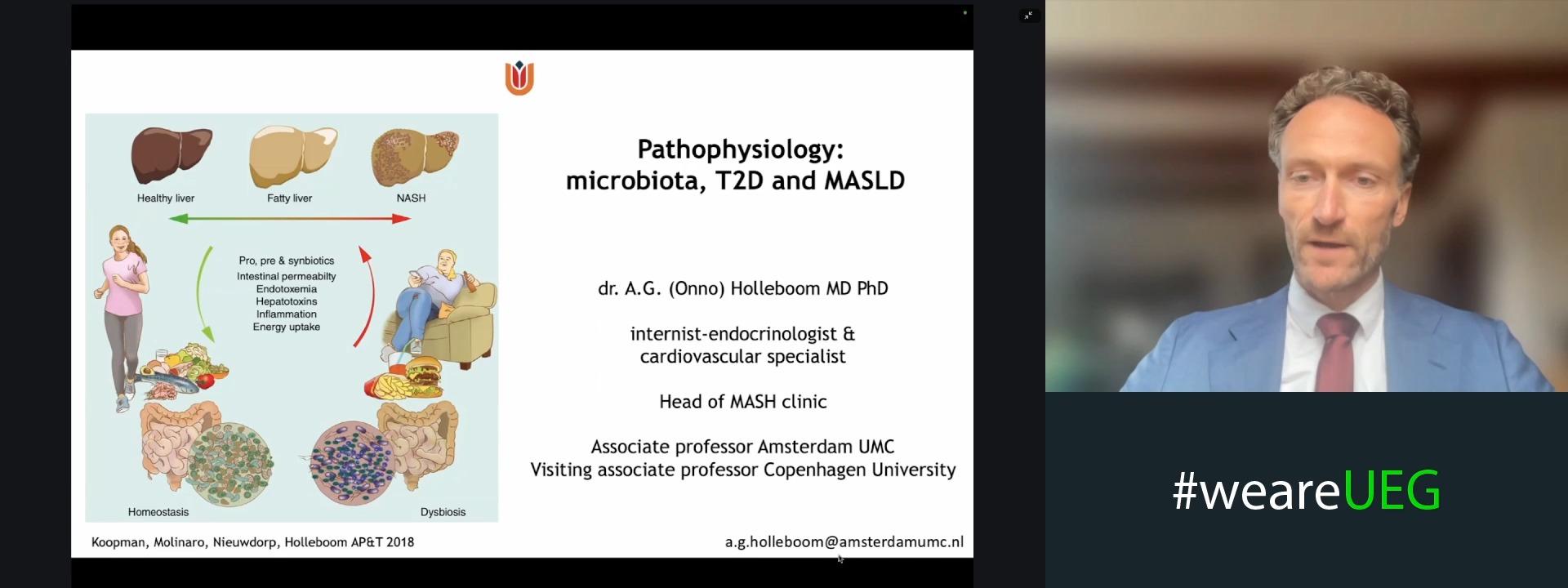
Pathophysiology: Microbiota T-2D and MASLD
1 Amsterdam UMC, Amsterdam, Netherlands
Event
Session
Citation
Published
Log in to access this content.
Free for all myUEG account holders. Your access level is set automatically based on your occupation. Medical professionals get full access to all content. If you are a non-medical user, you can only access UEG Week content from congresses you attended.
Not sure what you can access? Learn more about account types.
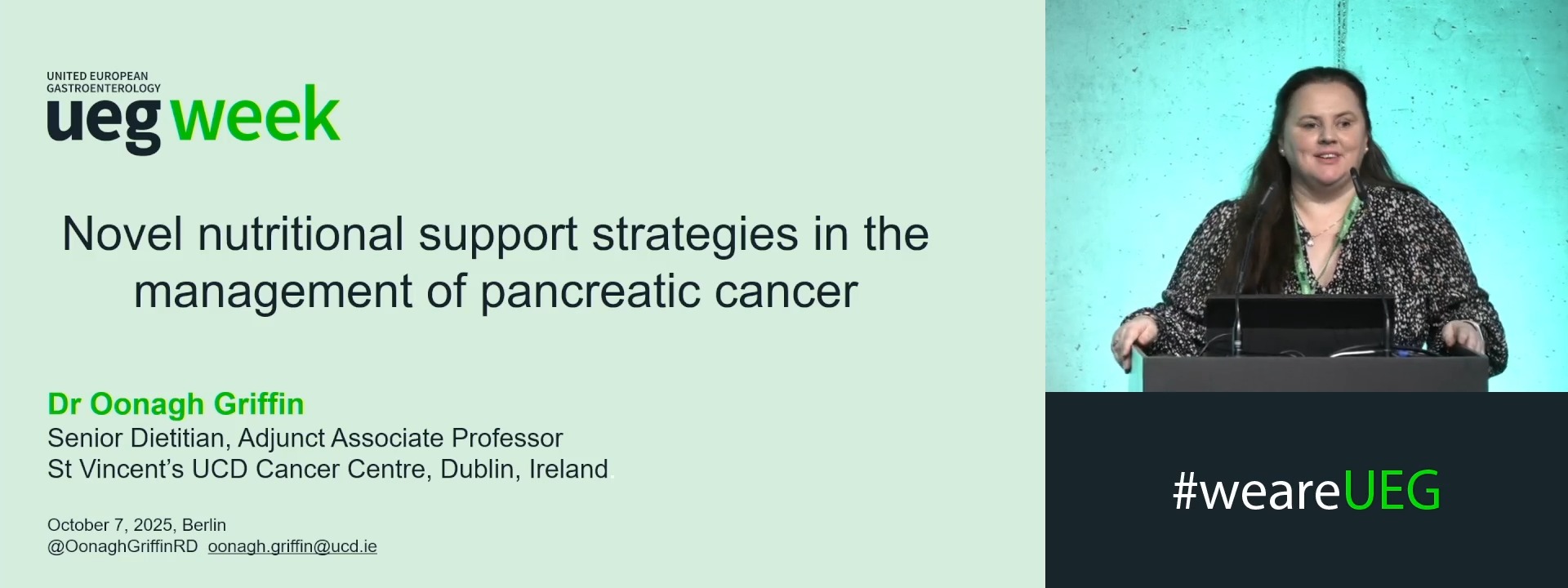
Novel nutritional support in management of PC
1 St Vincent’s University Hospital Dublin, Dublin, Ireland
Event
Topics
Session
Citation
Published
Log in to access this content.
Free for all myUEG account holders. Your access level is set automatically based on your occupation. Medical professionals get full access to all content. If you are a non-medical user, you can only access UEG Week content from congresses you attended.
Not sure what you can access? Learn more about account types.
Advances in PBC Management: A Simple Approach (Gilead) (Complete Session)
1 Gastroenterology and Hepatology Center Kiel and Kiel Liver Study Center, Kiel, Germany
2 Hospital Clínic de Barcelona, Barcelona, Spain
Publisher
Event
Citation
Published
Log in to access this content.
Free for all myUEG account holders. Your access level is set automatically based on your occupation. Medical professionals get full access to all content. If you are a non-medical user, you can only access UEG Week content from congresses you attended.
Not sure what you can access? Learn more about account types.
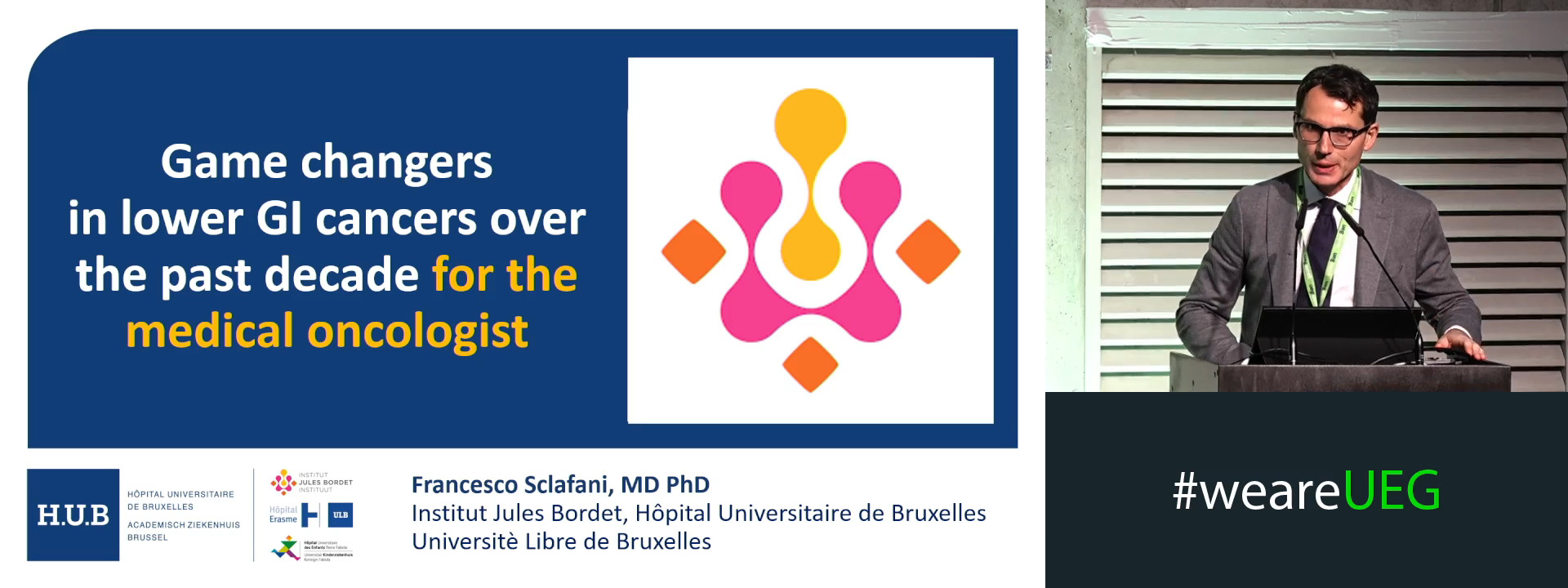
For the medical oncologist
1 Université libre de Bruxelles, Bruxelles, Belgium
Event
Topics
Citation
Published
Log in to access this content.
Free for all myUEG account holders. Your access level is set automatically based on your occupation. Medical professionals get full access to all content. If you are a non-medical user, you can only access UEG Week content from congresses you attended.
Not sure what you can access? Learn more about account types.
Panel Discussion: Diabetes in GI disorders
Event
Session
Citation
Published
Log in to access this content.
Free for all myUEG account holders. Your access level is set automatically based on your occupation. Medical professionals get full access to all content. If you are a non-medical user, you can only access UEG Week content from congresses you attended.
Not sure what you can access? Learn more about account types.
Novel treatment options in PBC
1 Humanitas University, Milan, Italy
Event
Topics