UEG's content platform for gastroenterology education bringing recordings, courses, guidelines, and more together in one place.
Trending on Gutflix
Rate for better recommendations!
Your feedback helps us show you more of what you like and less of what you dislike!
Log in to continue.
This content is part of Gutflix. Log in with your myUEG account, or create one free, to watch it.
Not sure what you can access? Learn more about account types.
Introduction: Are you stuck in the biliary cannulation nightmare: Wake up, here comes the sun
Affiliations
1 San Matteo Hospital, Pavia, Italy
Log in to continue.
This content is part of Gutflix. Log in with your myUEG account, or create one free, to watch it.
Not sure what you can access? Learn more about account types.
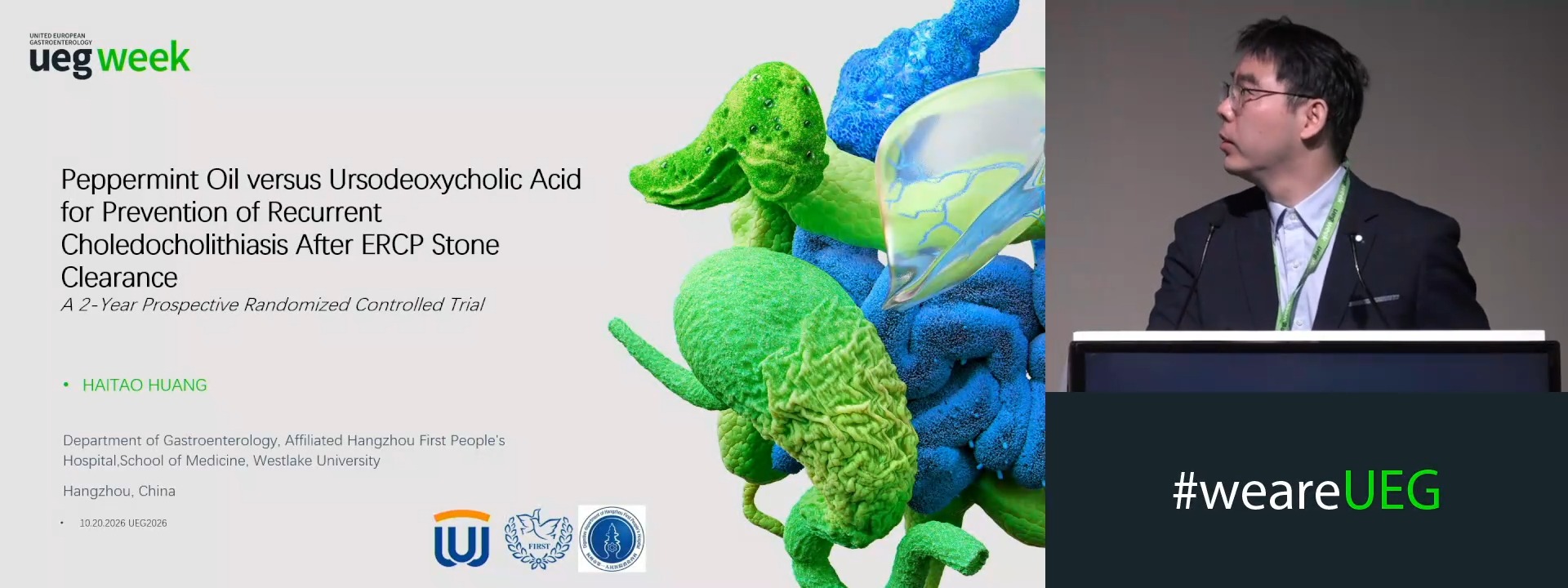
PEPPERMINT OIL VERSUS URSODEOXYCHOLIC ACID FOR PREVENTING RECURRENT CHOLEDOCHOLITHIASIS AFTER ERCP STONE CLEARANCE: A 2-YEAR PROSPECTIVE RANDOMIZED CONTROLLED TRIAL
Haitao Huang 1,2, Yiwen Feng 3, Huanlu Xu 3, Jianlong Chen 3, Liyun Zheng 1, Dongchao Xu 1, Xiaofeng Zhang 1,2, Hangbin Jin 1,2, jing Yang 1,2, Hongzhang Shen 1,2
Affiliations
1 Hangzhou First People's Hospital, Hangzhou, China
2 School of Medicine, Westlake University, Hangzhou, China
3 The Fourth Clinical Medical College, Zhejiang Chinese Medical University, Hangzhou, China
Log in to continue.
This content is part of Gutflix. Log in with your myUEG account, or create one free, to watch it.
Not sure what you can access? Learn more about account types.
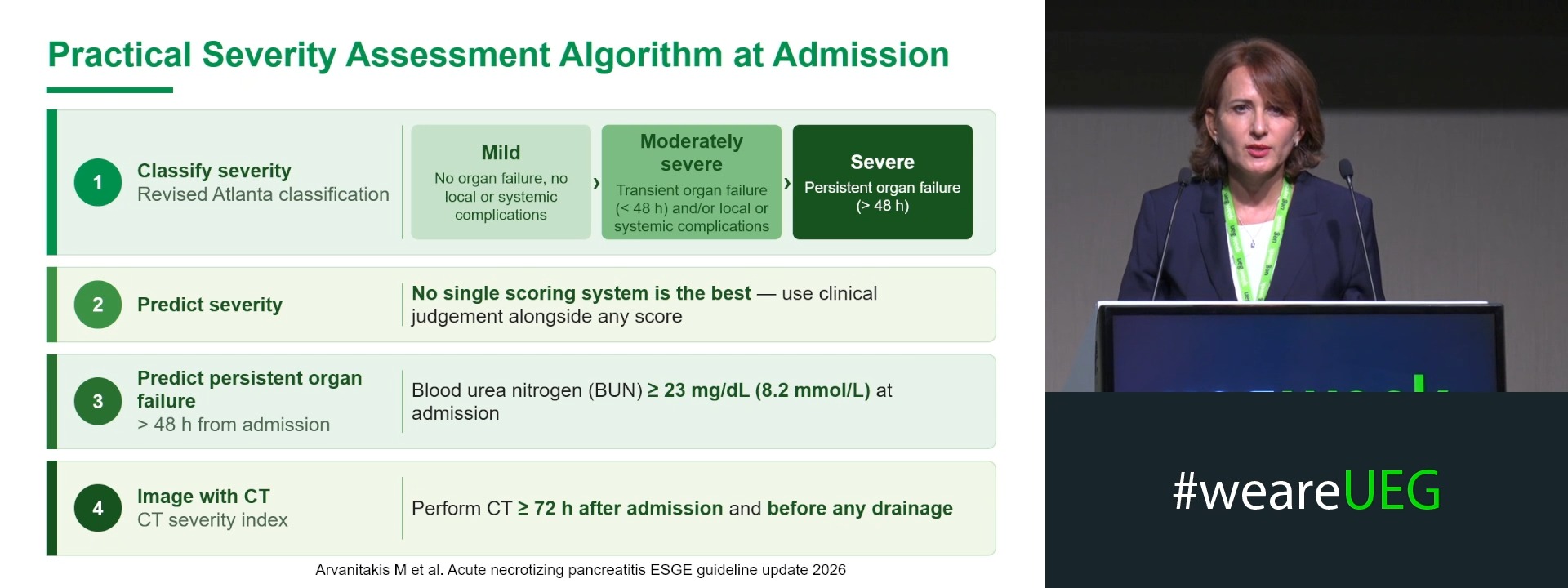
Summary: Acute pancreatitis: Are we still innocent bystanders?
Affiliations
1 University of Medicine and Pharmacy Iuliu Hatieganu Cluj-Napoca, Romania, Cluj Napoca, Romania
Log in to continue.
This content is part of Gutflix. Log in with your myUEG account, or create one free, to watch it.
Not sure what you can access? Learn more about account types.
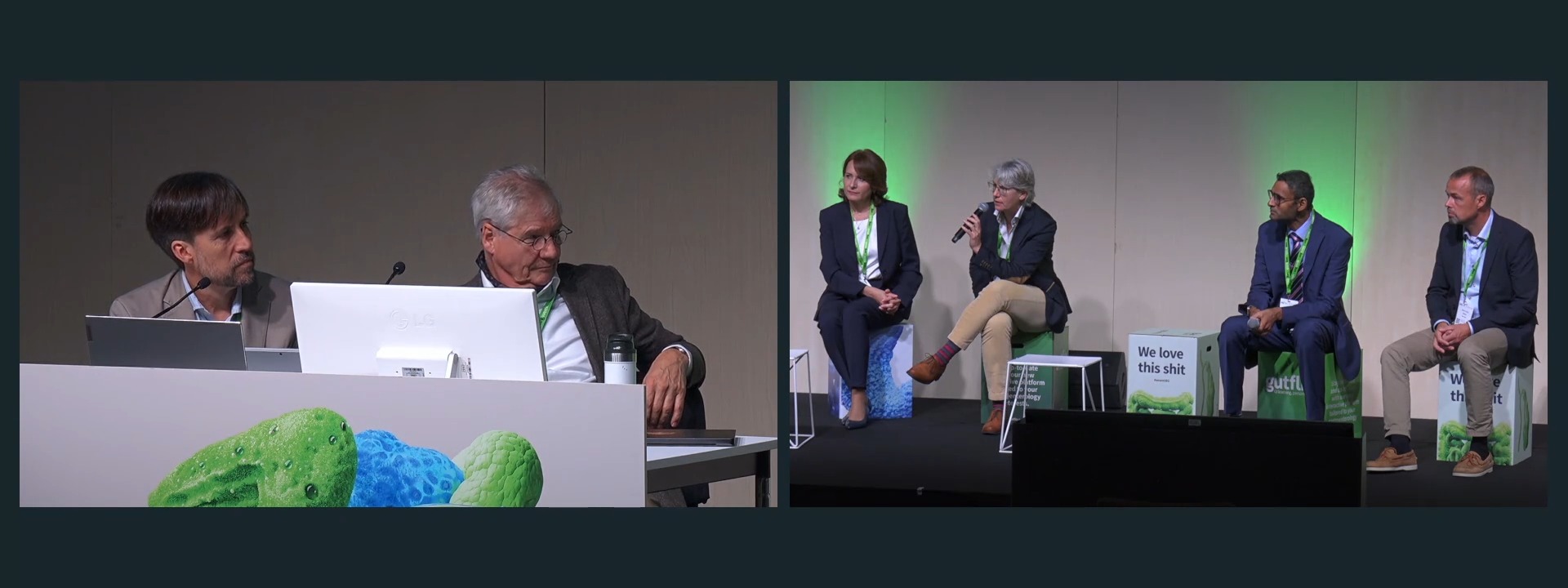
Panel discussion: Acute pancreatitis: Are we still innocent bystanders?
Log in to continue.
This content is part of Gutflix. Log in with your myUEG account, or create one free, to watch it.
Not sure what you can access? Learn more about account types.
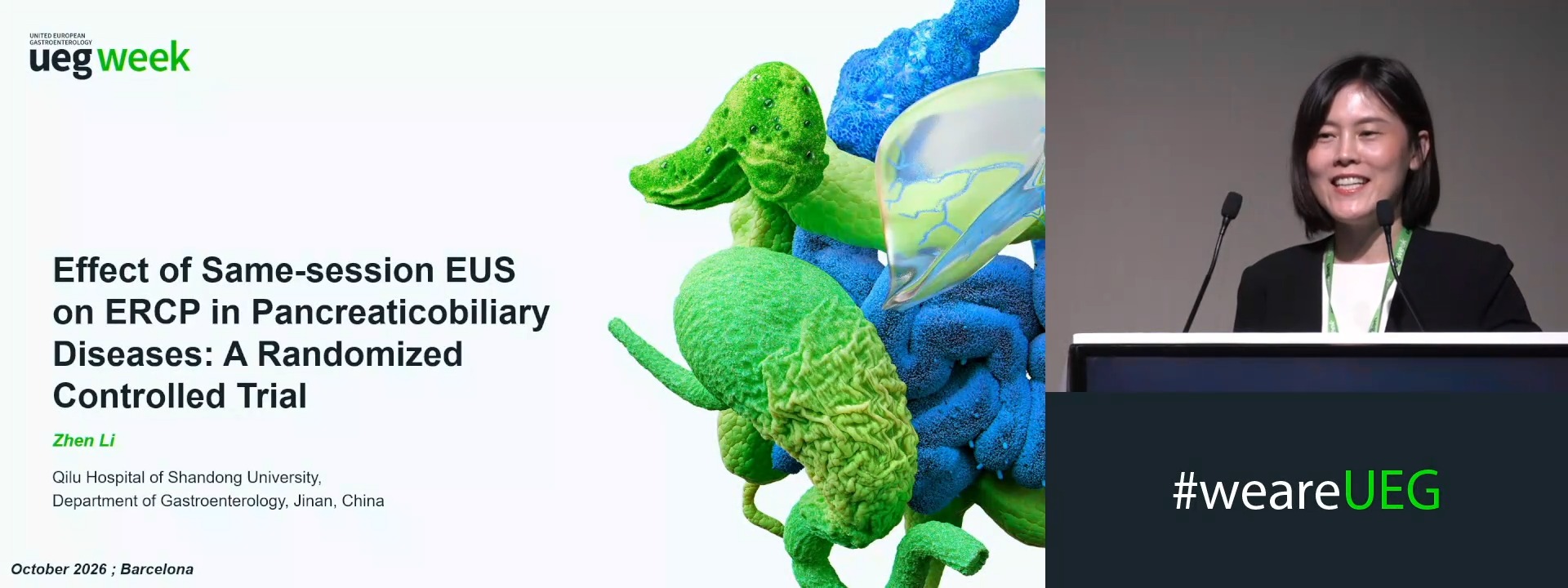
EFFECT OF SAME-SESSION ENDOSCOPIC ULTRASONOGRAPHY ON ENDOSCOPIC RETROGRADE CHOLANGIOPANCREATOGRAPHY IN PANCREATICOBILIARY DISEASES: A RANDOMIZED CONTROLLED TRIAL
Affiliations
1 Qilu Hospital of Shandong University, Jinan, China
Log in to continue.
This content is part of Gutflix. Log in with your myUEG account, or create one free, to watch it.
Not sure what you can access? Learn more about account types.
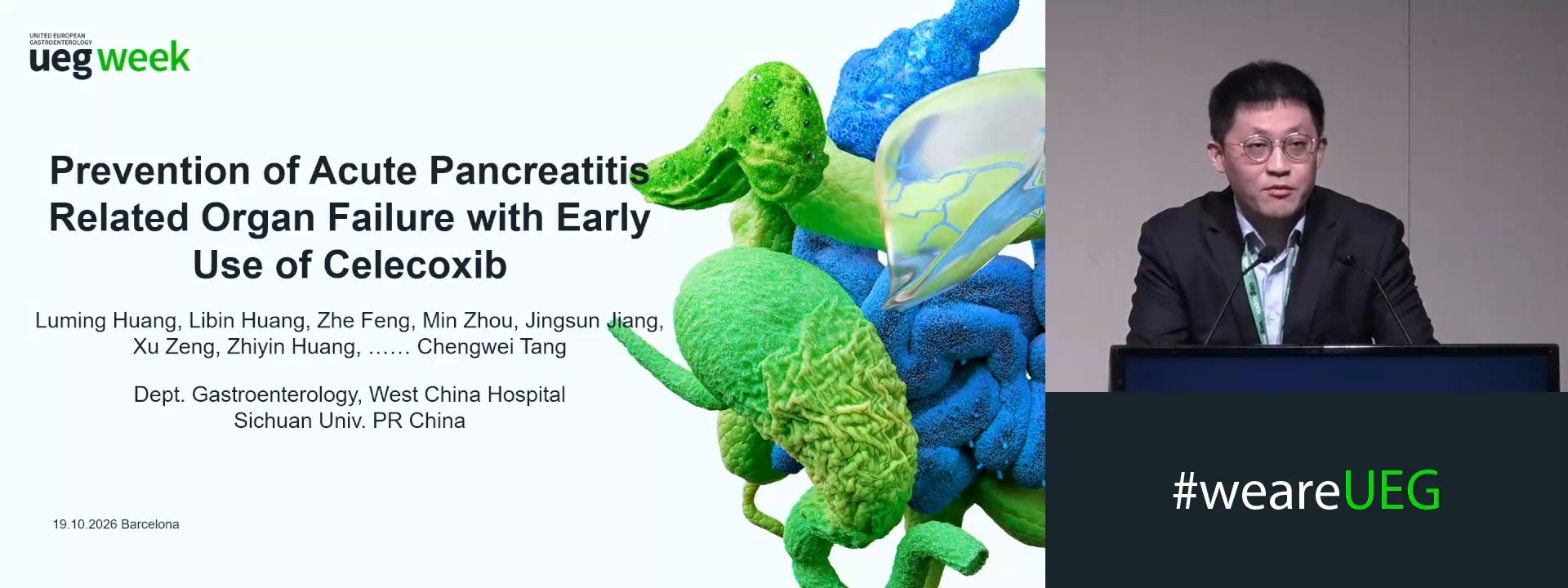
PREVENTION OF ACUTE PANCREATITIS RELATED ORGAN FAILURE WITH EARLY USE OF CELECOXIB -- AN INVESTIGATOR-INITIATED, PROSPECTIVE, MULTI-CENTER, DOUBLE-BLIND, RANDOMIZED, PLACEBO-CONTROLLED CLINICAL TRIAL
Luming Huang 1, Libin Huang 1, Zhe Feng 1, Min Zhou 1, jingsun jiang 1, Xu Zeng 1, Zhiyin Huang 1, Chengwei Tang 1
Affiliations
1 West China Hospital, Sichuan University, Chengdu, China