UEG's content platform for gastroenterology education bringing recordings, courses, guidelines, and more together in one place.
Trending on Gutflix
Rate for better recommendations!
Your feedback helps us show you more of what you like and less of what you dislike!
Log in to continue.
This content is part of Gutflix. Log in with your myUEG account, or create one free, to watch it.
Not sure what you can access? Learn more about account types.
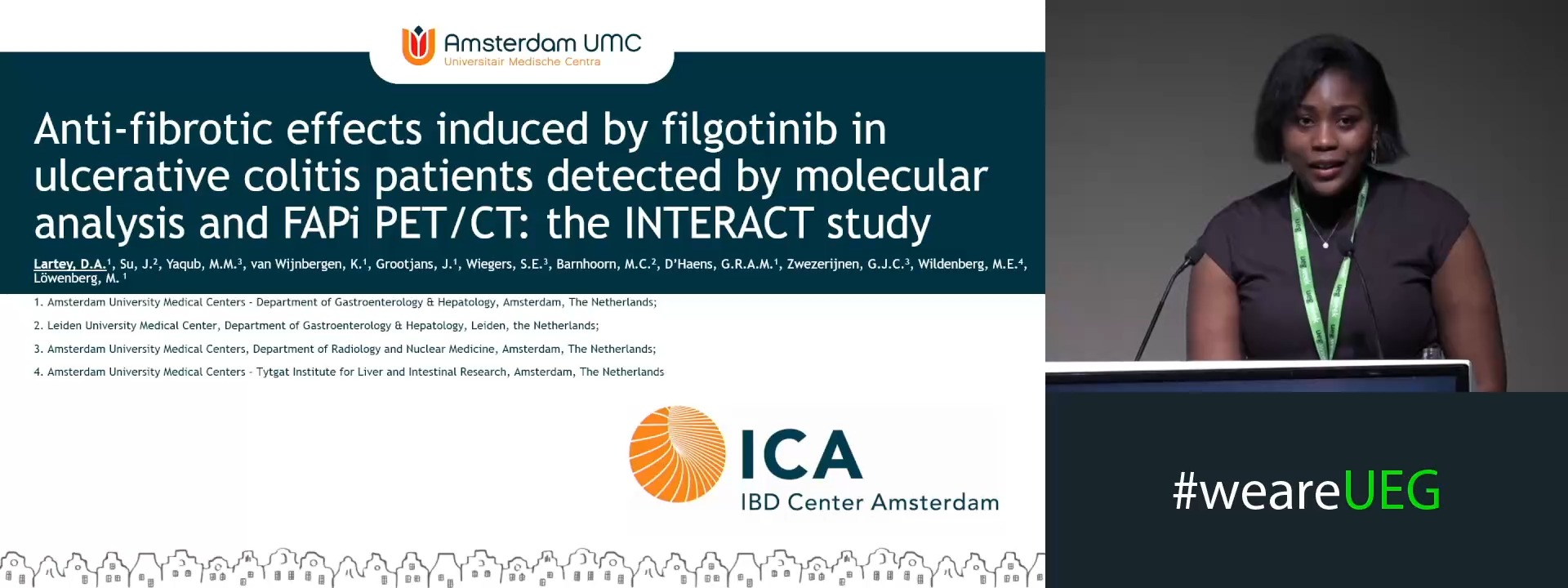
ANTI-FIBROTIC EFFECTS INDUCED BY FILGOTINIB IN ULCERATIVE COLITIS PATIENTS DETECTED BY MOLECULAR ANALYSIS AND FAPI PET/CT: THE INTERACT TRIAL
Dalia Alexia Lartey 1, Jie Su 2, Maqsood M. Yaqub 1, Kelly van Wijnbergen 1, Joep Grootjans 1, Sanne E. Wiegers 1, Marieke Barnhoorn 2, Geert R. D'Haens 1, Gerben J. C. Zwezerijnen 1, Manon E. Wildenberg 1, Mark Löwenberg 1
Affiliations
1 Amsterdam UMC, Amsterdam, Netherlands
2 Leiden University Medical Center, Leiden, Netherlands
Log in to continue.
This content is part of Gutflix. Log in with your myUEG account, or create one free, to watch it.
Not sure what you can access? Learn more about account types.
Liver biopsy or not
Affiliations
1 UCL Institute of Liver and Digestive Health, London, United Kingdom
Log in to continue.
This content is part of Gutflix. Log in with your myUEG account, or create one free, to watch it.
Not sure what you can access? Learn more about account types.
Teamwork at the tip: Nursing excellence in endoscopic resection (OLYMPUS EUROPA SE & CO. KG )
Log in to continue.
This content is part of Gutflix. Log in with your myUEG account, or create one free, to watch it.
Not sure what you can access? Learn more about account types.
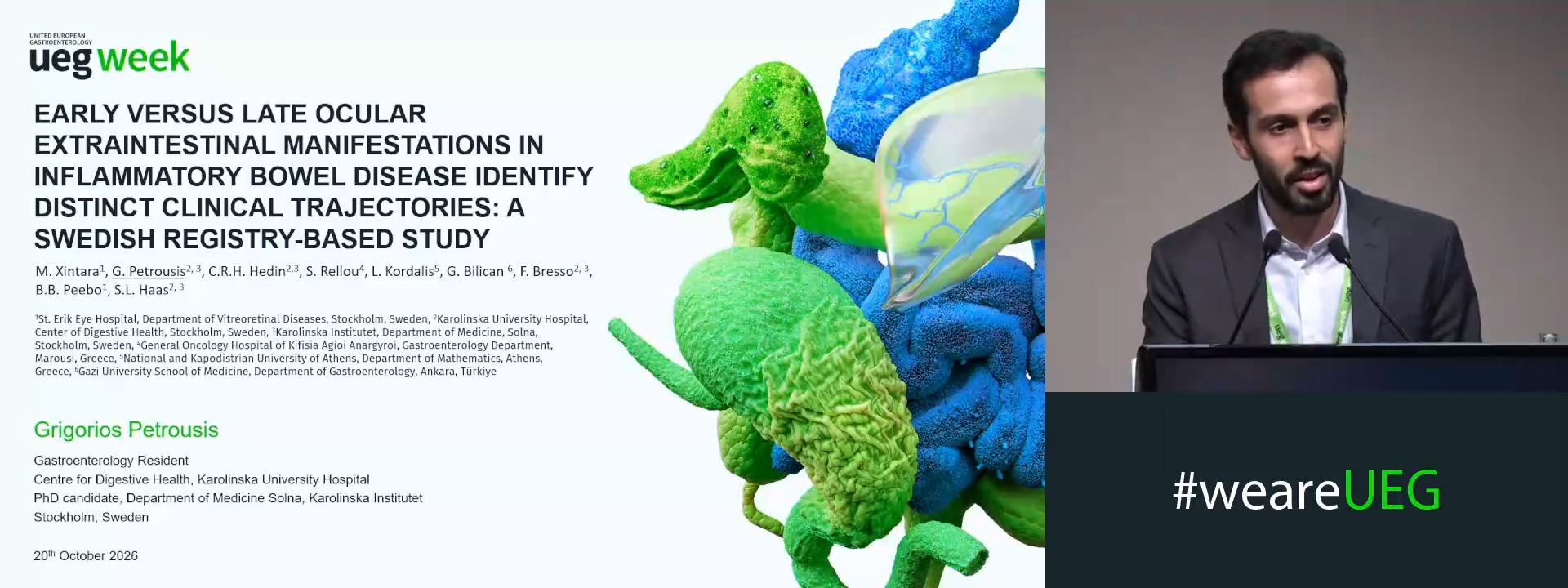
EARLY VERSUS LATE OCULAR EXTRAINTESTINAL MANIFESTATIONS IN INFLAMMATORY BOWEL DISEASE IDENTIFY DISTINCT CLINICAL TRAJECTORIES: A SWEDISH REGISTRY-BASED STUDY
Maria Xintara 1, Grigorios Petrousis 2,3, Charlotte R H Hedin 3,2, Sofia Rellou 4, Leonidas Kordalis 5, Gülden Bilican 6, Francesca Bresso 2,3, Beatrice B Peebo 1, Stephan L. Haas 2,3
Affiliations
1 St. Erik Eye Hospital, Stockholm, Sweden
2 Karolinska University Hospital, Stockholm, Sweden
3 Karolinska Institutet, Stockholm, Sweden
4 General Oncology Hospital of Kifisia Agioi Anargyroi, Marousi, Greece
5 National and Kapodistrian University of Athens, Athens, Greece
6 Gazi University School of Medicine, Ankara, Türkiye
Log in to continue.
This content is part of Gutflix. Log in with your myUEG account, or create one free, to watch it.
Not sure what you can access? Learn more about account types.
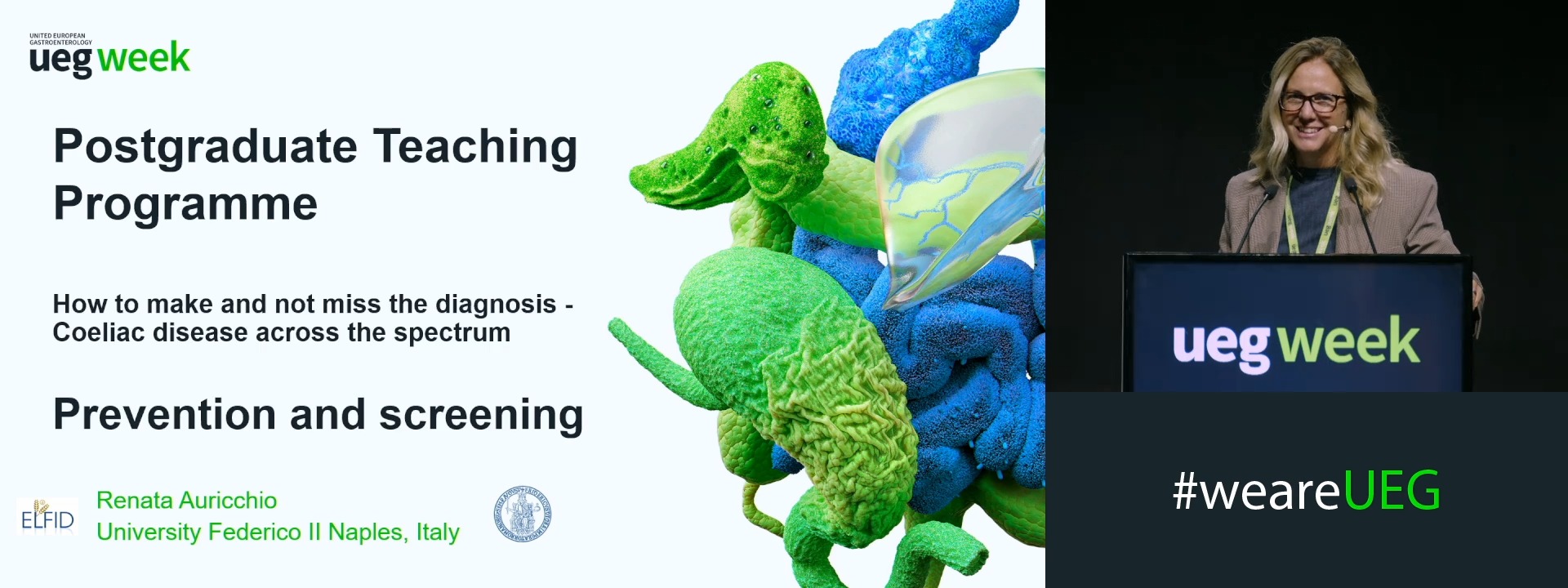
How to identify coeliac disease early: Prevention and screening vs case finding
Affiliations
1 UNIVERSITY FEDERICO II, NAPLES, Naples, Italy
2 Royal Hallamshire Hospital - NHS Trust, Royal Hallamshire Hospital; Sheffield/GB, Sheffield, United Kingdom
Log in to continue.
This content is part of Gutflix. Log in with your myUEG account, or create one free, to watch it.
Not sure what you can access? Learn more about account types.
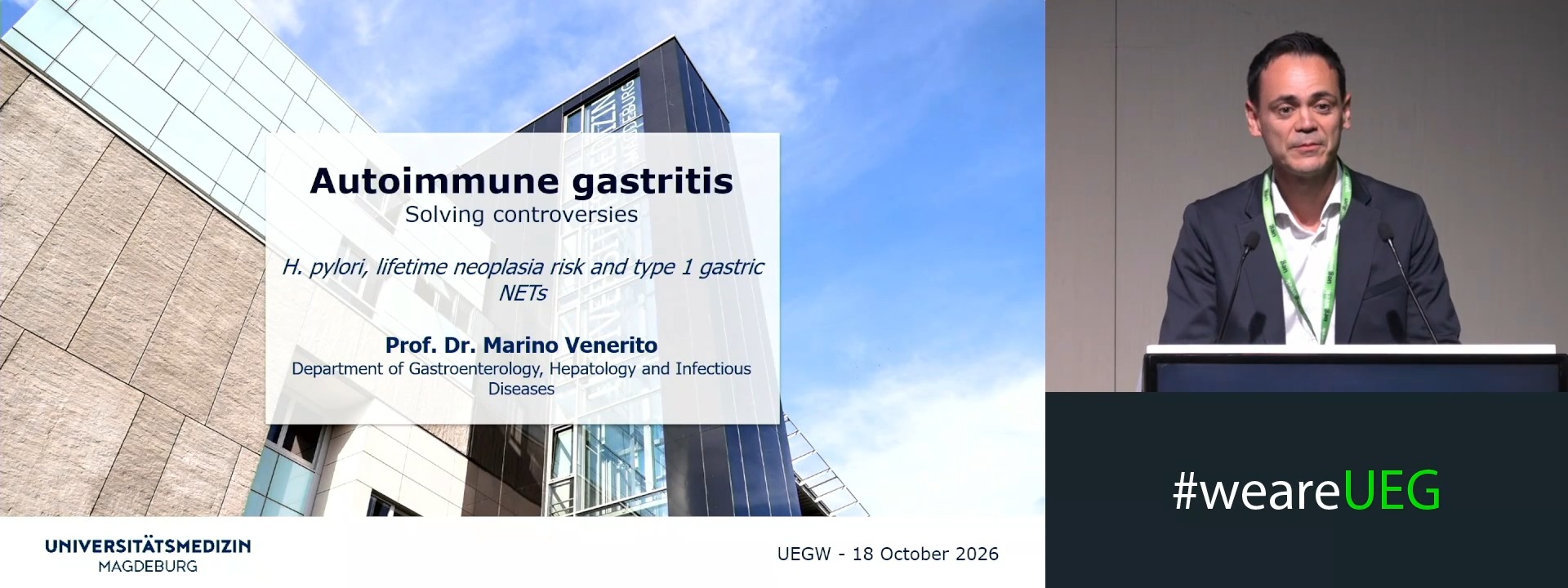
Autoimmune gastritis: Solving controversies
Affiliations
1 Otto-von-Guericke University, Magdeburg, Germany
Log in to continue.
This content is part of Gutflix. Log in with your myUEG account, or create one free, to watch it.
Not sure what you can access? Learn more about account types.
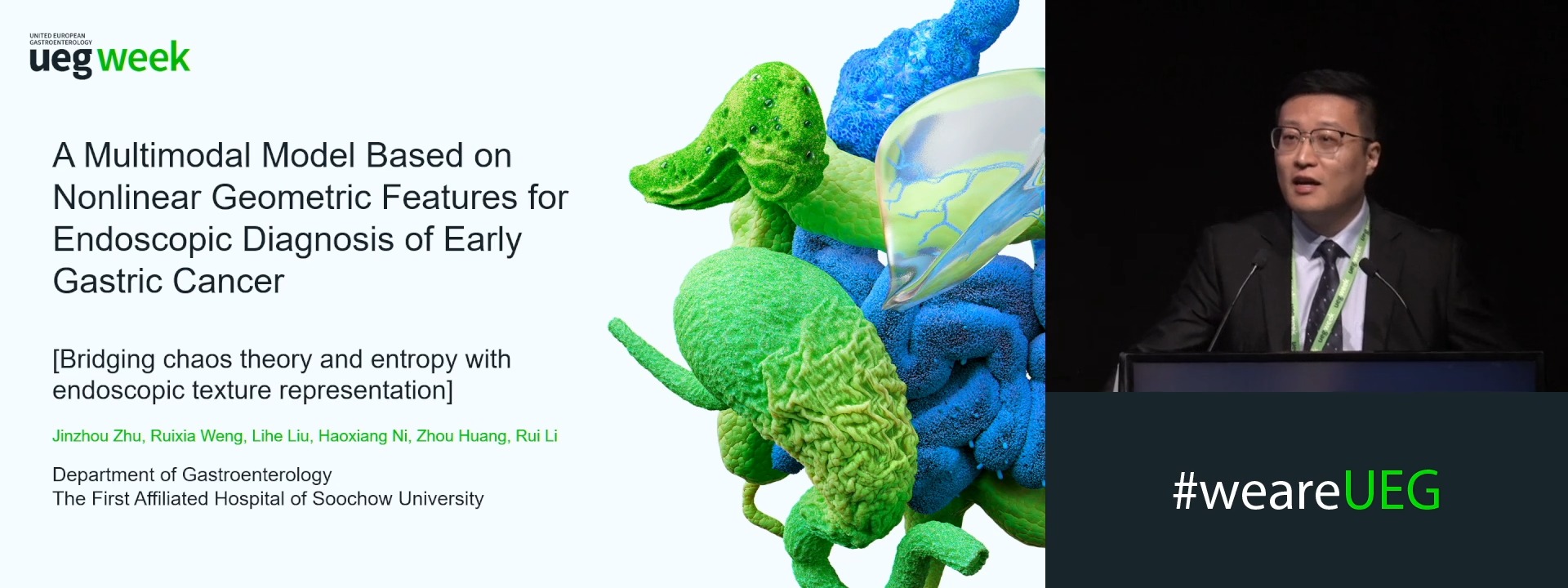
CHAOS THEORY AND MULTISCALE ENTROPY FOR GASTRIC CANCER DIAGNOSIS IN ENDOSCOPIC IMAGES
Affiliations
1 The First Affiliated Hospital of Soochow University, Suzhou, China