UEG's educational platform for gastroenterology education bringing recordings, courses, guidelines, and more together in one place.
Most popular content
Rate for better recommendations!
Your feedback helps us show you more of what you like and less of what you dislike!
Log in to access this content.
Free for all myUEG account holders. Your access level is set automatically based on your occupation. Medical professionals get full access to all content. If you are a non-medical user, you can only access UEG Week content from congresses you attended.
Not sure what you can access? Learn more about account types.
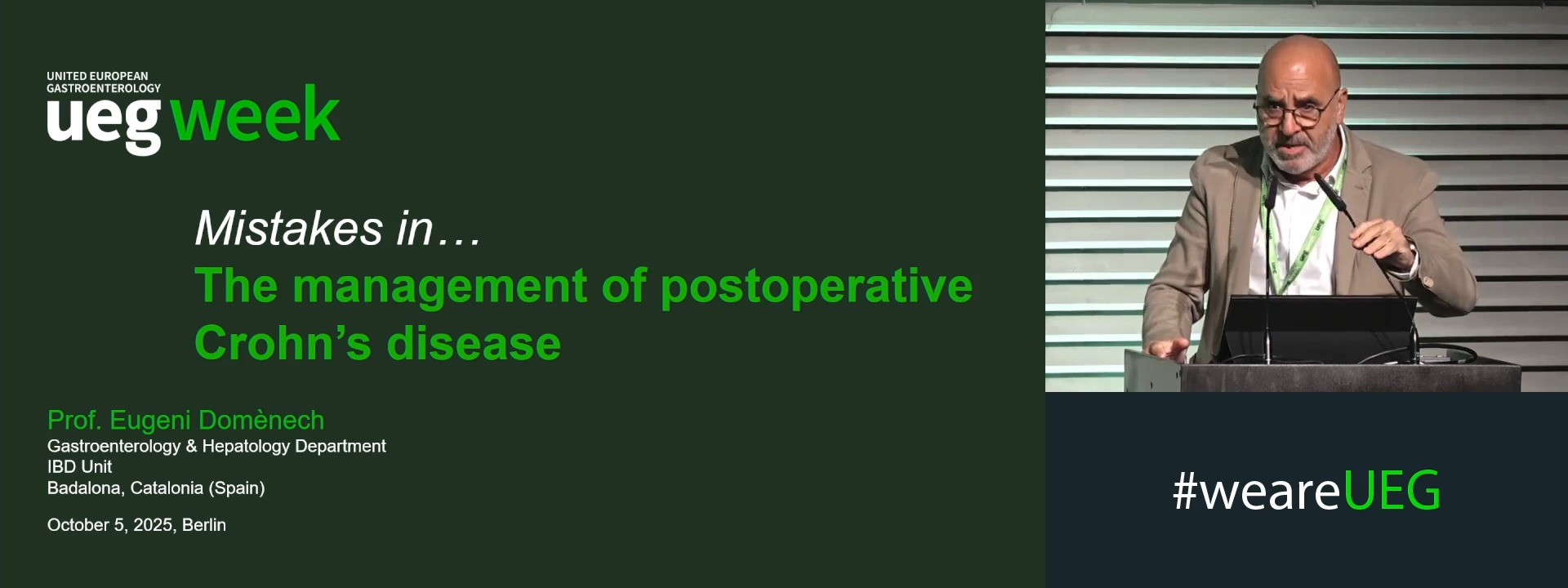
The management of postoperative Crohn’s disease
1 Hospital Germans Trias i pujol, Badalona, Barcelona, Spain
Event
Topics
Session
Citation
Published
Log in to access this content.
Free for all myUEG account holders. Your access level is set automatically based on your occupation. Medical professionals get full access to all content. If you are a non-medical user, you can only access UEG Week content from congresses you attended.
Not sure what you can access? Learn more about account types.
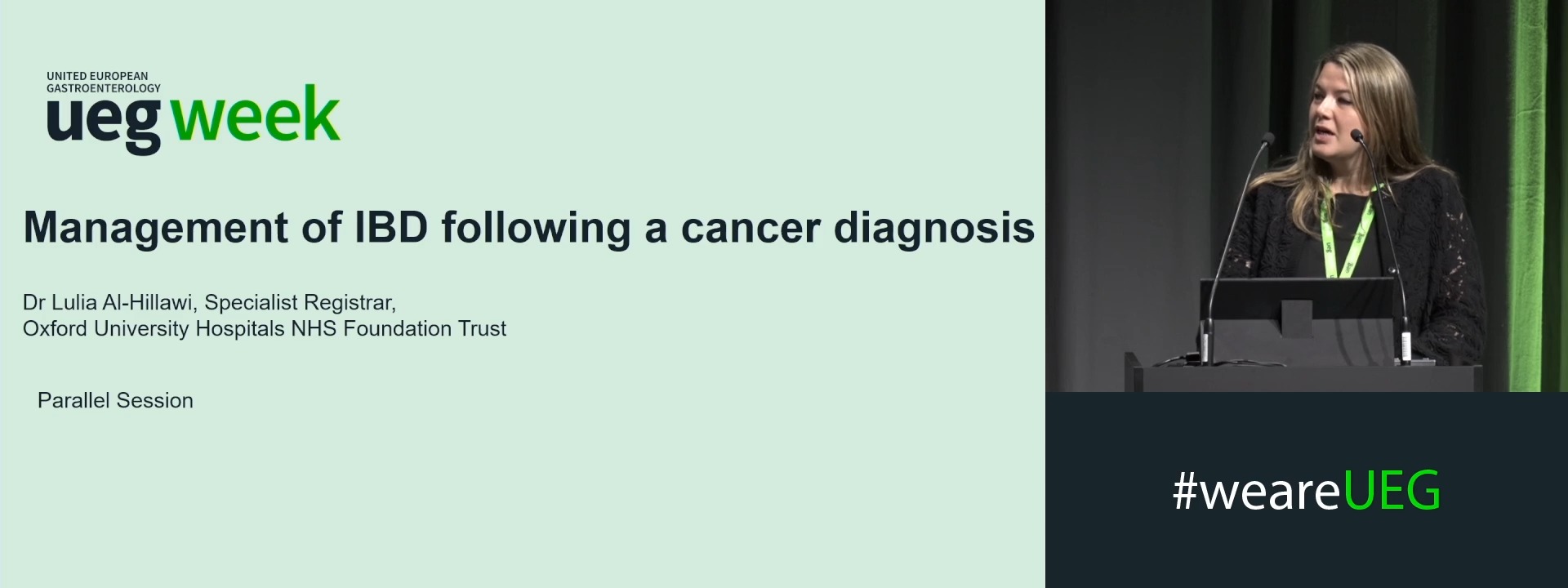
Management of IBD following a cancer diagnosis
1 John Radcliffe Hospital, Oxford, United Kingdom
Event
Topics
Citation
Published
Log in to access this content.
Free for all myUEG account holders. Your access level is set automatically based on your occupation. Medical professionals get full access to all content. If you are a non-medical user, you can only access UEG Week content from congresses you attended.
Not sure what you can access? Learn more about account types.
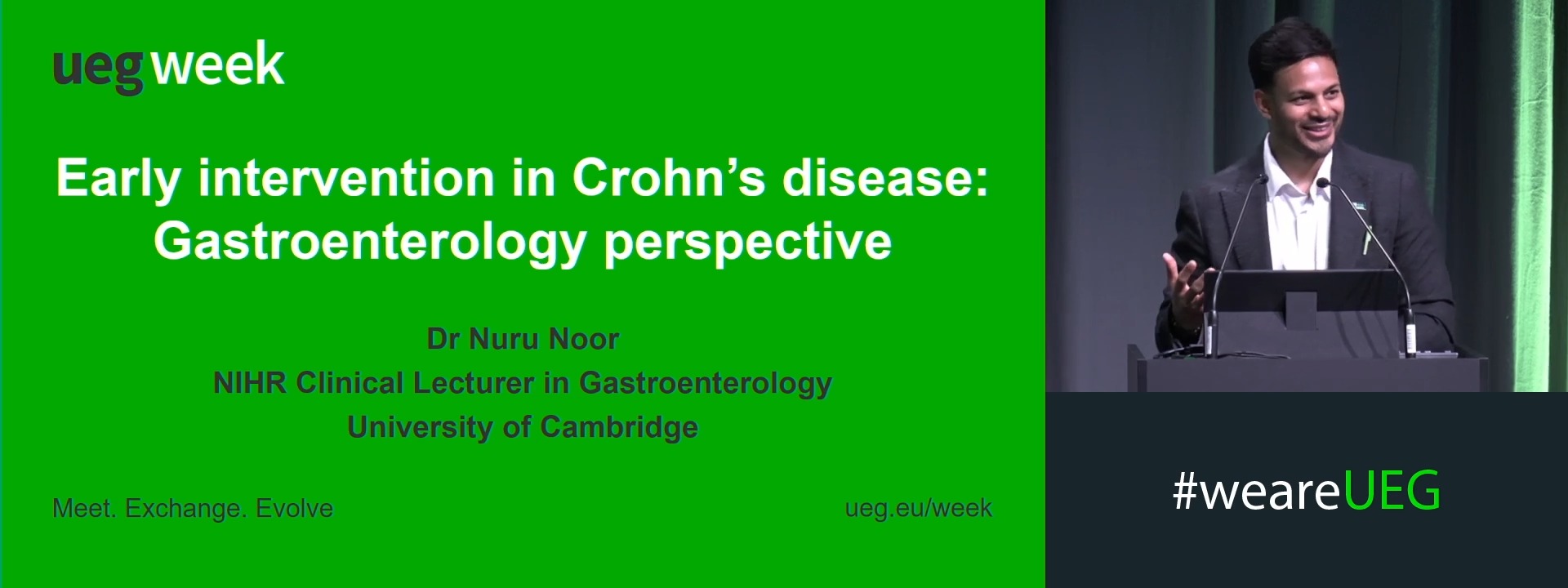
Getting out of the block early in Crohn´s disease: Gastroenterologist vs surgeon perspective
1 Haaglanden Medical Center, The Hague, Netherlands
2 Cambridge University Hospitals NHS Foundation Trust, Cambridge, United Kingdom
Event
Session
Citation
Published
Log in to access this content.
Free for all myUEG account holders. Your access level is set automatically based on your occupation. Medical professionals get full access to all content. If you are a non-medical user, you can only access UEG Week content from congresses you attended.
Not sure what you can access? Learn more about account types.
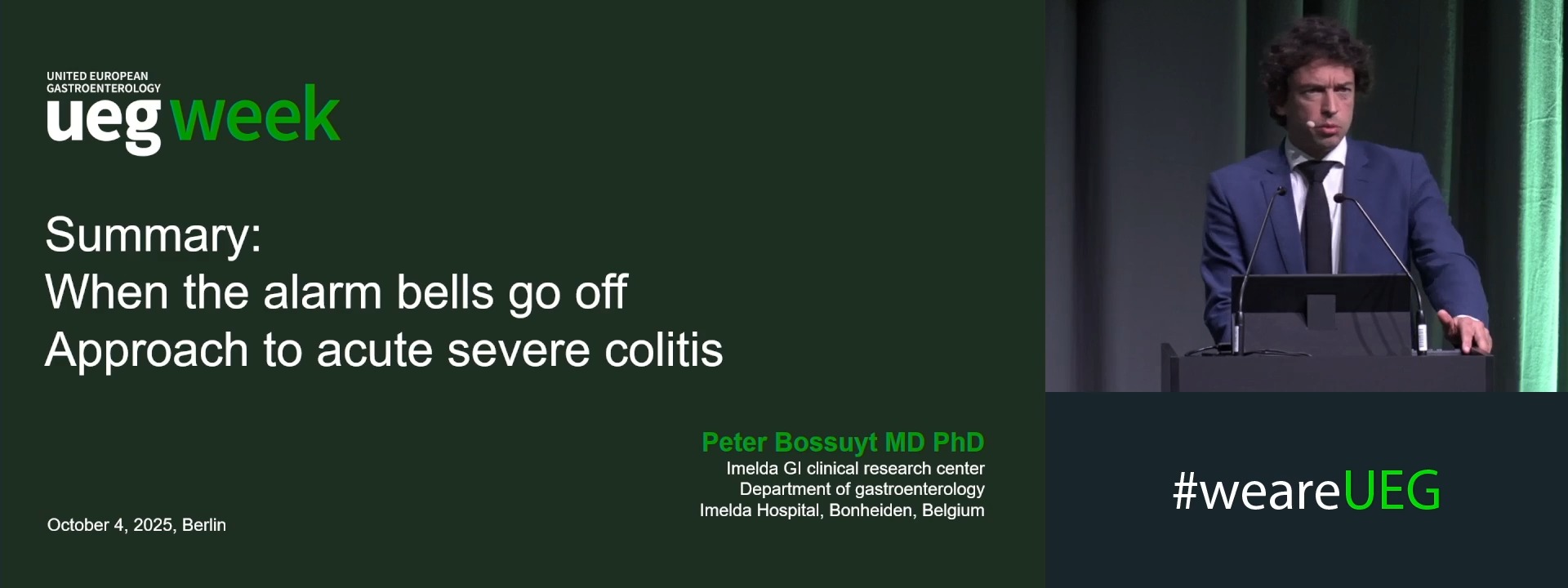
Summary: When the alarm bells go off - Approach to acute severe colitis
1 Imelda General Hospital, Bonheiden, Belgium
Event
Citation
Published
Log in to access this content.
Free for all myUEG account holders. Your access level is set automatically based on your occupation. Medical professionals get full access to all content. If you are a non-medical user, you can only access UEG Week content from congresses you attended.
Not sure what you can access? Learn more about account types.
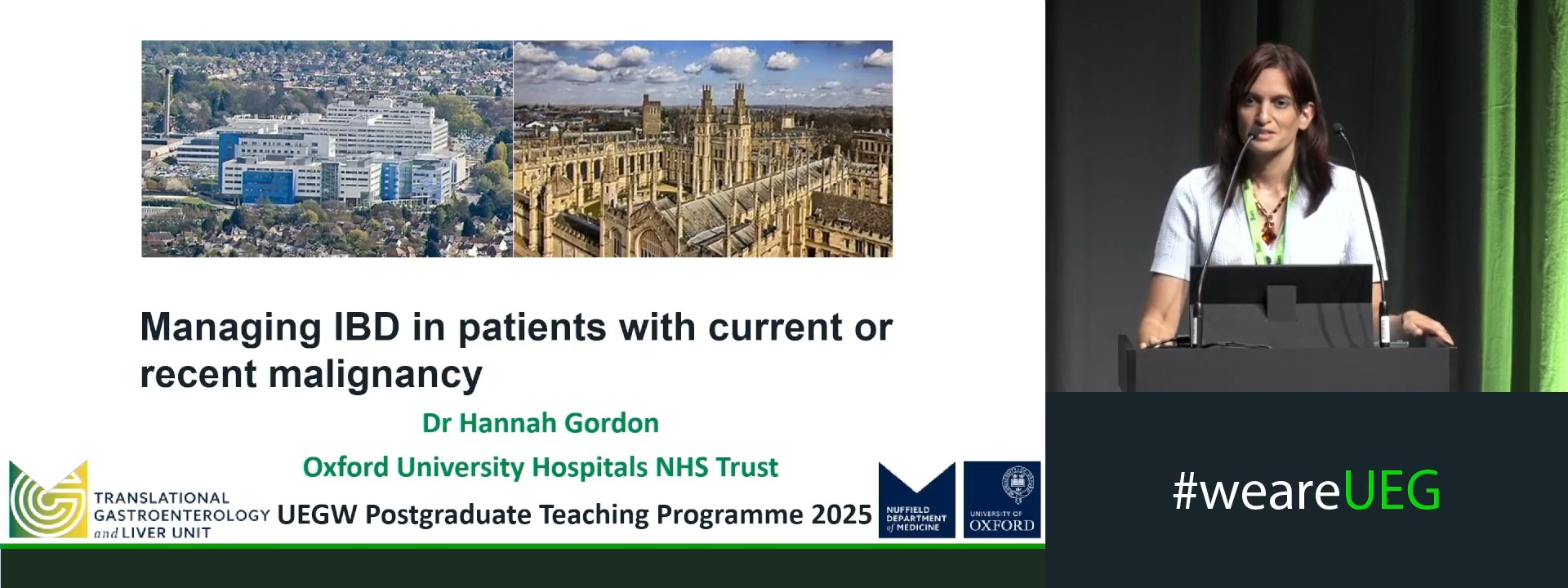
Managing IBD in a patient with new or recent cancer
1 Royal London Hospital, London, United Kingdom
Event
Topics
Citation
Published
Log in to access this content.
Free for all myUEG account holders. Your access level is set automatically based on your occupation. Medical professionals get full access to all content. If you are a non-medical user, you can only access UEG Week content from congresses you attended.
Not sure what you can access? Learn more about account types.
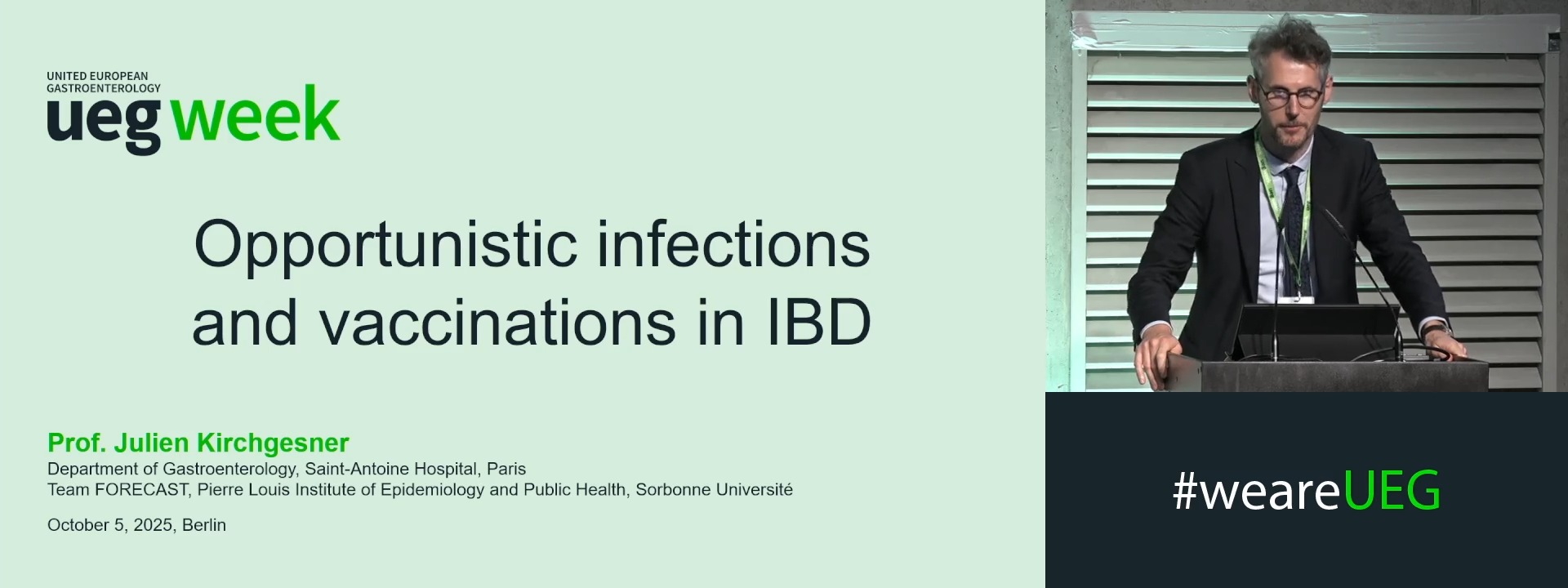
Opportunistic infections and vaccinations in IBD
1 Hopital Saint-Antoine - APHP, Paris, France
Event
Topics
Session
Citation
Published
Log in to access this content.
Free for all myUEG account holders. Your access level is set automatically based on your occupation. Medical professionals get full access to all content. If you are a non-medical user, you can only access UEG Week content from congresses you attended.
Not sure what you can access? Learn more about account types.
THE GLP-2 ANALOG APRAGLUTIDE IMPROVES COLONIC BARRIER FUNCTION IN PATIENTS WITH SHORT BOWEL SYNDROME AND CHRONIC INTESTINAL FAILURE
Astrid Verbiest 1, Joran Toth 2, Pauline Huyghe 2, Lise De Meyere 1, Lucas Wauters 1, Palle Bekker Jeppesen 3, Ricard Farré 2, Francisca Joly 4, Tim Vanuytsel 1
1 University of Leuven, Leuven, Belgium|||University Hospitals Leuven, Leuven, Belgium
2 University of Leuven, Leuven, Belgium
3 Rigshospitalet, Copenhagen University Hospital, Copenhagen, Denmark
4 Hôpital Beaujon, University of Paris, Clichy, France
Conference
Topics