UEG's content platform for gastroenterology education bringing recordings, courses, guidelines, and more together in one place.
Trending on Gutflix
Rate for better recommendations!
Your feedback helps us show you more of what you like and less of what you dislike!
Log in to continue.
This content is part of Gutflix. Log in with your myUEG account, or create one free, to watch it.
Not sure what you can access? Learn more about account types.
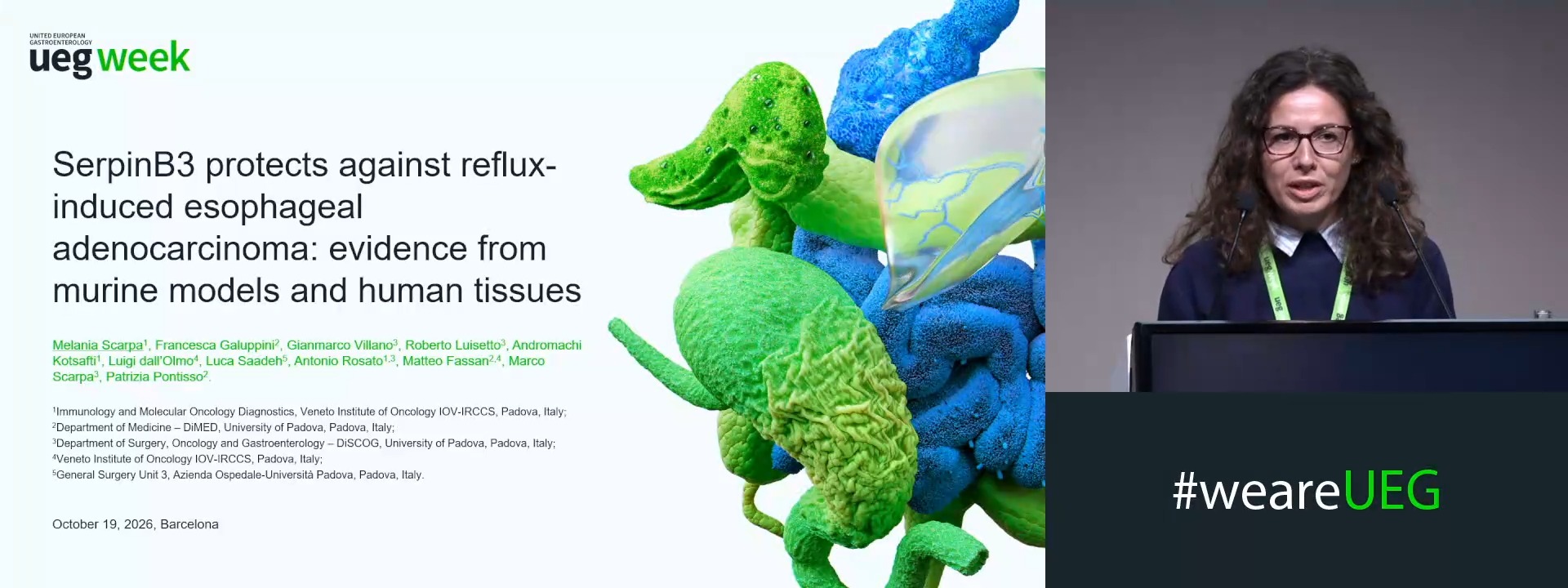
SERPINB3 PROTECTS AGAINST REFLUX-INDUCED ESOPHAGEAL ADENOCARCINOMA: EVIDENCE FROM MURINE MODELS AND HUMAN TISSUES
Melania Scarpa 1, Francesca Galuppini 2, Gianmarco Villano 3, Andromachi Kotsafti 1, Luigi Dall'Olmo 1, Luca Maria Saadeh 4, Santina Quarta 2, Mariagrazia Ruvoletto 2, Alessandra Biasiolo 2, Antonio Rosato 1, Matteo Fassan 5, Roberto Luisetto 3, Marco Scarpa 3, Patrizia Pontisso 2
Affiliations
1 Veneto Institute of Oncology IOV-IRCCS, Padova, Italy
2 University of Padova, Padova, Italy
3 DISCOG, University of Padova, Padova, Italy
4 Azienda Ospedale Università di Padova, Padova, Italy
5 University of Padova, Treviso, Italy
Log in to continue.
This content is part of Gutflix. Log in with your myUEG account, or create one free, to watch it.
Not sure what you can access? Learn more about account types.
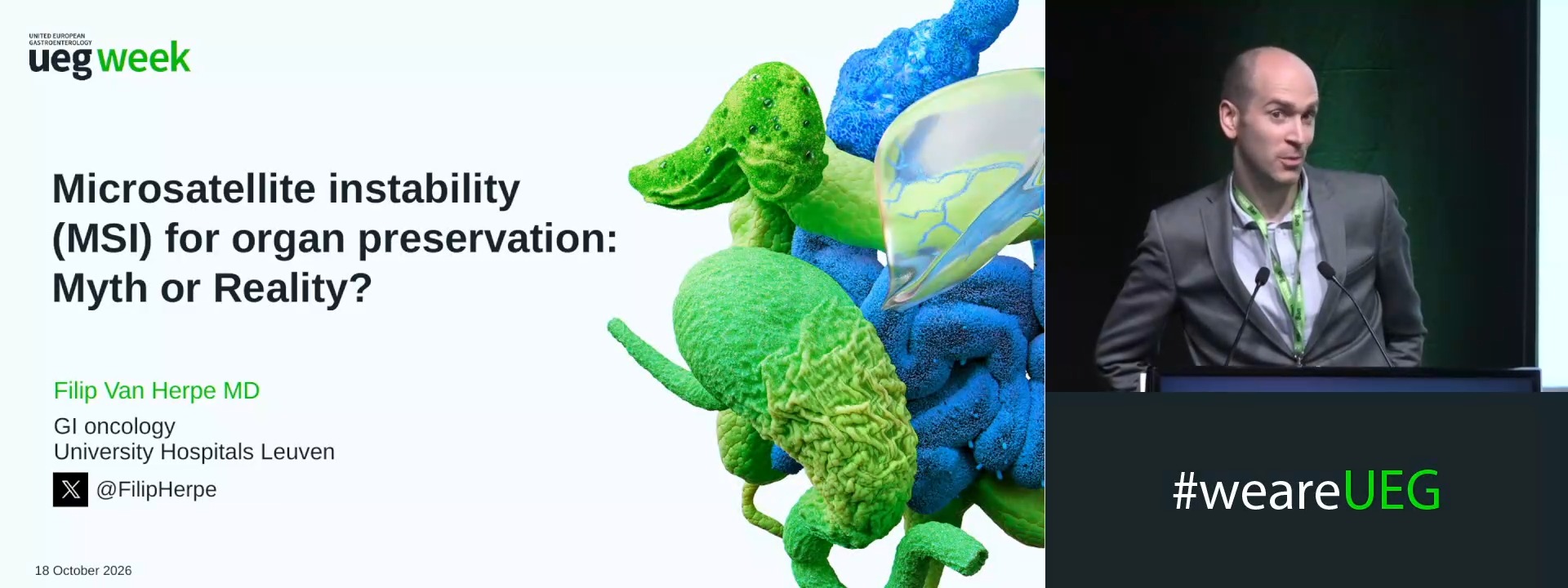
Microsatellite instability (MSI) for organ preservation: Myth or reality?
Affiliations
1 UZ Leuven, Leuven, Belgium
Log in to continue.
This content is part of Gutflix. Log in with your myUEG account, or create one free, to watch it.
Not sure what you can access? Learn more about account types.
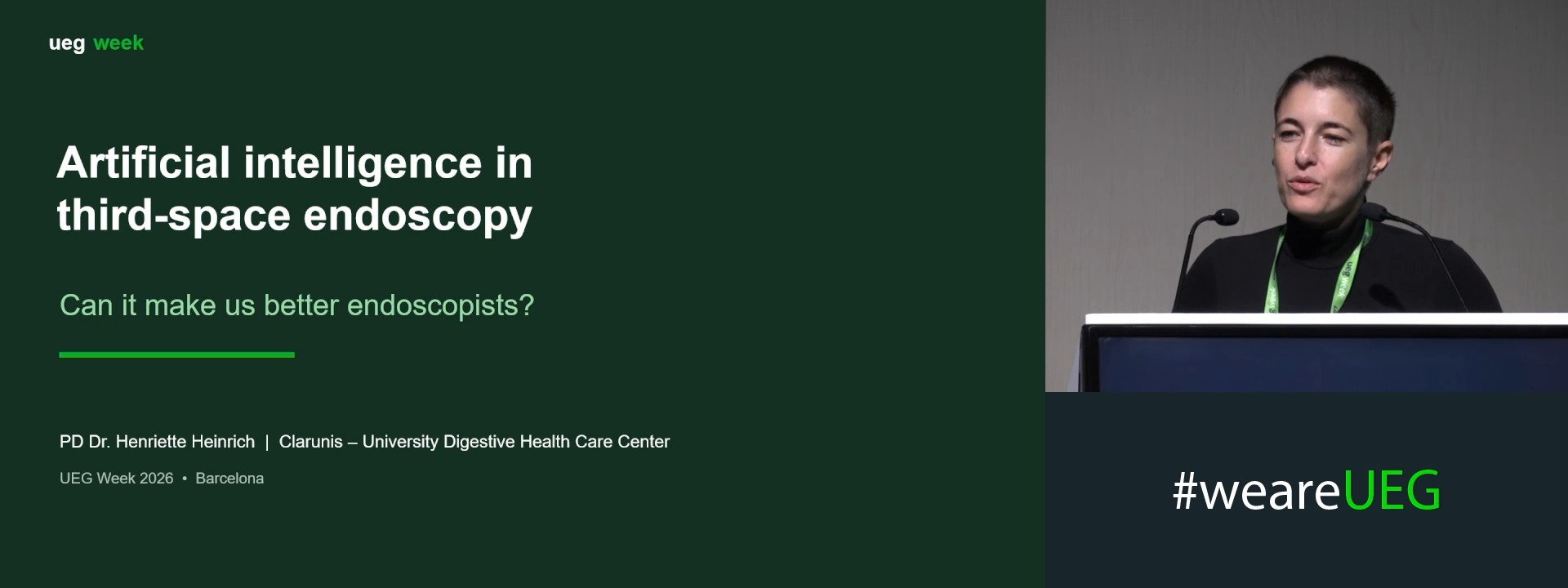
Can AI provide help in third-space endoscopy?
Affiliations
1 Stadtspital Triemli, Zürich, Switzerland
Log in to continue.
This content is part of Gutflix. Log in with your myUEG account, or create one free, to watch it.
Not sure what you can access? Learn more about account types.
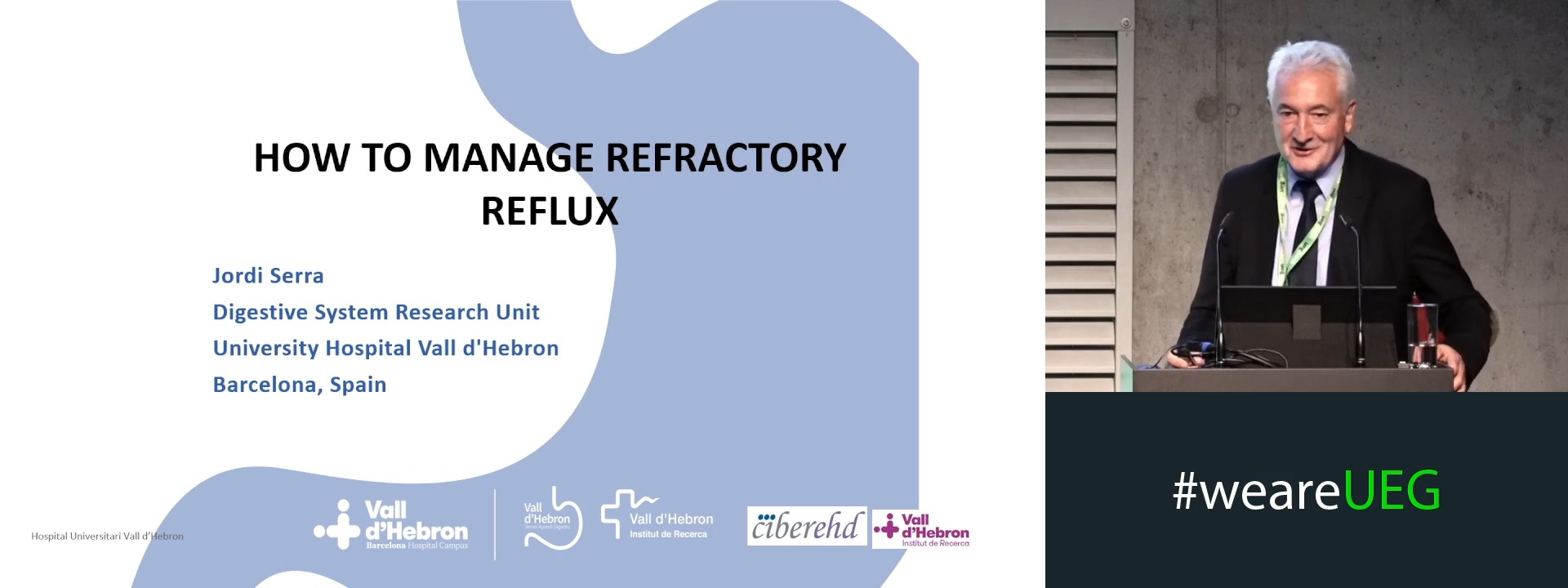
How to manage refractory reflux
Affiliations
1 University Hospital Vall d'Hebron, Barcelona, Spain

Log in to continue.
This content is part of Gutflix. Log in with your myUEG account, or create one free, to watch it.
Not sure what you can access? Learn more about account types.
GORD and potassium competitive acid blockers
Affiliations
1 University of Kansas School of Medicine Dept. of Gastroenterology, Leawood, United States of America