UEG's content platform for gastroenterology education bringing recordings, courses, guidelines, and more together in one place.
Trending on Gutflix
Rate for better recommendations!
Your feedback helps us show you more of what you like and less of what you dislike!
Log in to continue.
This content is part of Gutflix. Log in with your myUEG account, or create one free, to watch it.
Not sure what you can access? Learn more about account types.
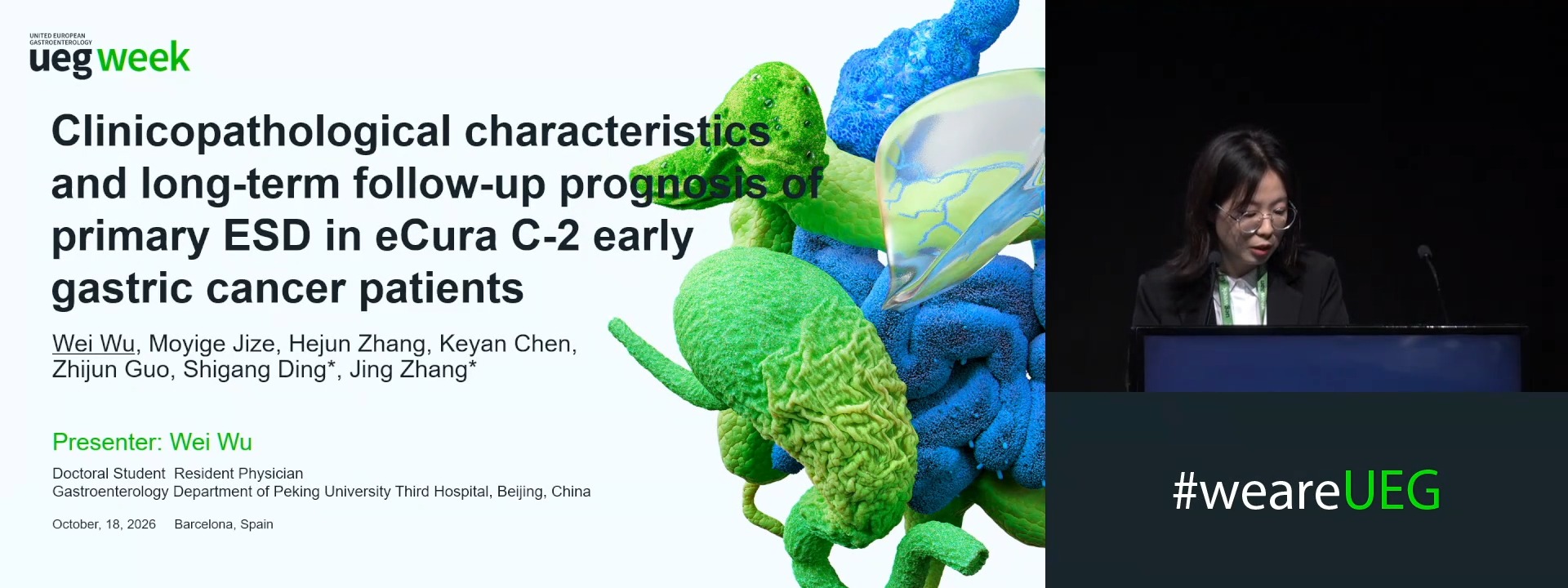
CLINICOPATHOLOGICAL CHARACTERISTICS AND LONG-TERM FOLLOW-UP PROGNOSIS OF PRIMARY ESD IN ECURA C-2 EARLY GASTRIC CANCER PATIENTS
Affiliations
1 Peking University Third Hospital, Beijing, China
Log in to continue.
This content is part of Gutflix. Log in with your myUEG account, or create one free, to watch it.
Not sure what you can access? Learn more about account types.
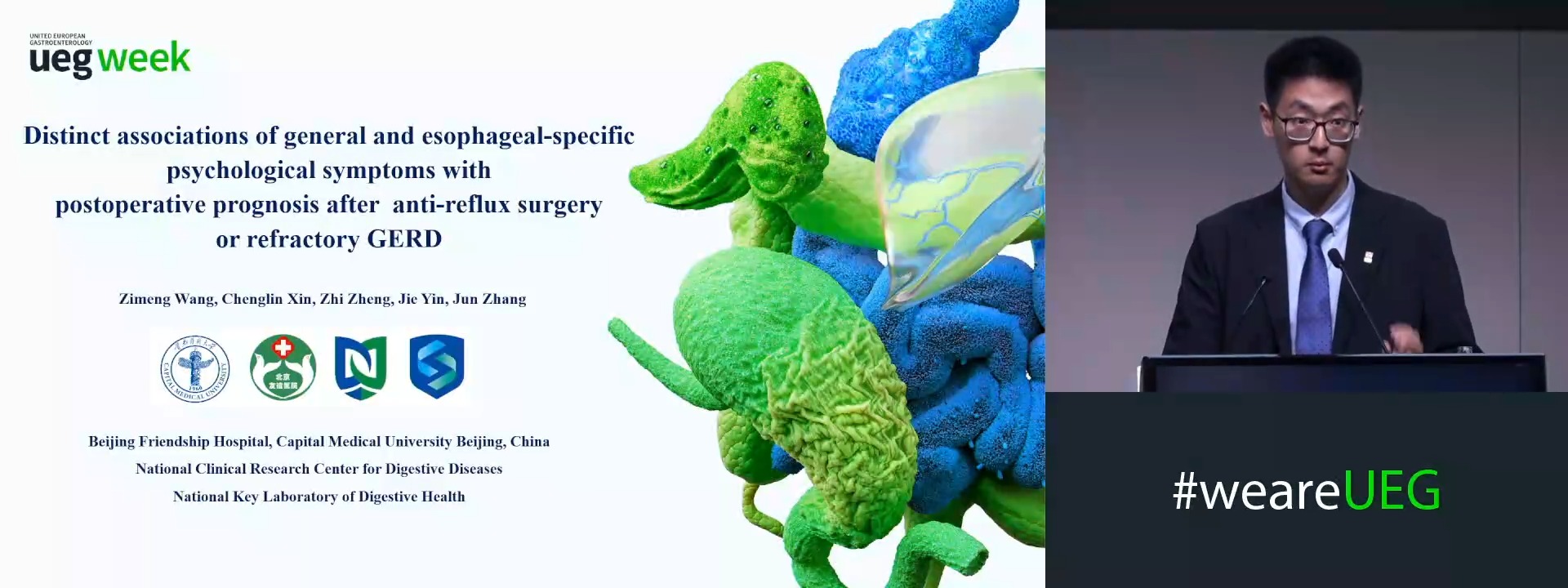
DISTINCT ASSOCIATIONS OF GENERAL AND ESOPHAGEAL-SPECIFIC PSYCHOLOGICAL SYMPTOMS WITH POSTOPERATIVE PROGNOSIS AFTER ANTI-REFLUX SURGERY FOR REFRACTORY GERD
Zimeng Wang 1, Chenglin Xin 1, Zhi Zheng 1, Wei Wang 2, Xueqi Li 1, yixiao sun 1, Haiqiao Zhang 1, Qian Zhang 3, Xiaoye Liu 1, Wenyan Li 3, Fandong Meng 3, Yu Fu 4, Jie Yin 1, Jun Zhang 1, Yingchi Yang 1, Zhongtao Zhang 1
Affiliations
1 Beijing Friendship Hospital, Capital Medical University, Beijing, China
2 Beijing Anding Hospital, Capital Medical University, Beijing, China
3 State Key Lab of Digestive Health, Beijing, China
4 China General Microbiological Culture Collection Center, Institute of Microbiology, Chinese Academy of Sciences, Beijing, China
Log in to continue.
This content is part of Gutflix. Log in with your myUEG account, or create one free, to watch it.
Not sure what you can access? Learn more about account types.
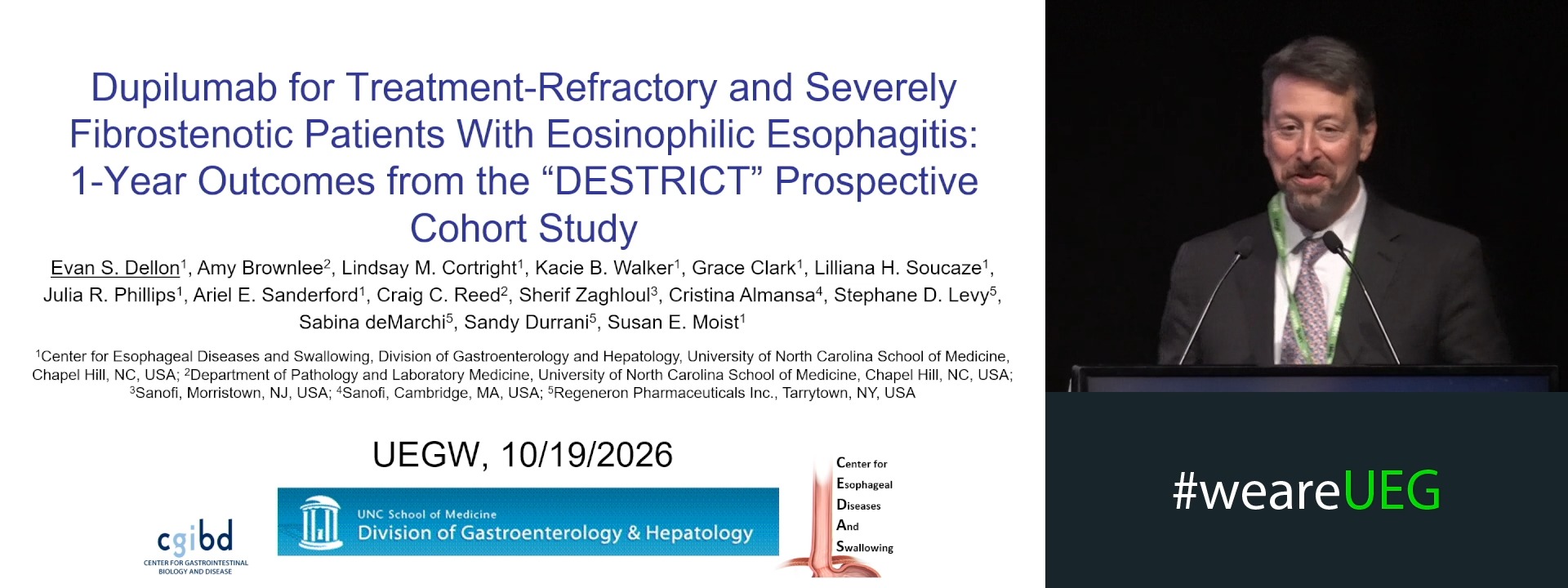
DUPILUMAB FOR TREATMENT-REFRACTORY AND SEVERELY FIBROSTENOTIC PATIENTS WITH EOSINOPHILIC ESOPHAGITIS: 1-YEAR OUTCOMES FROM THE “DESTRICT” PROSPECTIVE COHORT STUDY
Evan S. Dellon 1, Amy Brownlee 1, Lindsay M. Cortright 1, Kacie B. Walker 1, Grace Clark 1, Lilliana H. Soucaze 1, Julia R. Phillips 1, Ariel E. Sanderford 1, Craig C. Reed 1, Sherif Zaghloul 2, Cristina Almansa 3, Amr Radwan 4, Sabina deMarchi 4, Sheharyar Durrani 4, Susan E. Moist 1
Affiliations
1 University of North Carolina School of Medicine, Chapel Hill, NC, United States
2 Sanofi, Morristown, NJ, United States
3 Sanofi, Cambridge, MA, United States
4 Regeneron Pharmaceuticals Inc., Tarrytown, NY, United States
Log in to continue.
This content is part of Gutflix. Log in with your myUEG account, or create one free, to watch it.
Not sure what you can access? Learn more about account types.
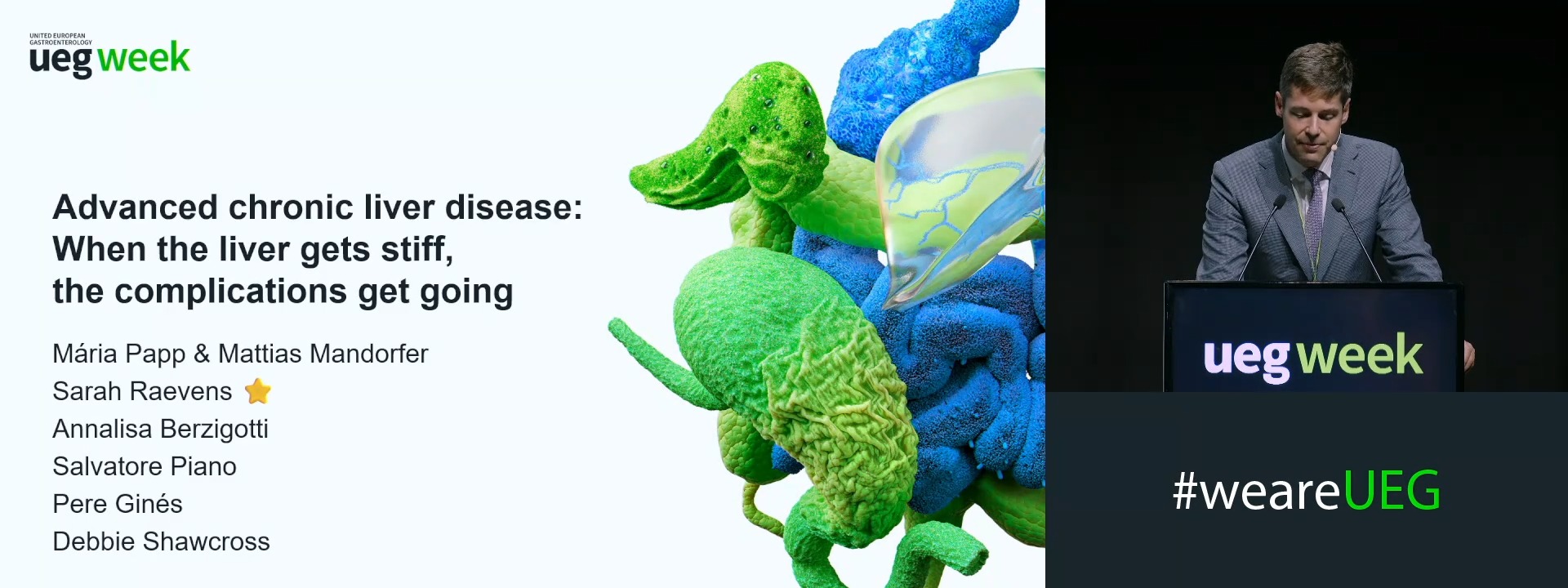
Introduction: Advanced chronic liver disease: When the liver gets stiff, the complications get going
Affiliations
1 Medical University of Vienna, Vienna, Austria

Log in to continue.
This content is part of Gutflix. Log in with your myUEG account, or create one free, to watch it.
Not sure what you can access? Learn more about account types.
The role of behavioural treatments
Affiliations
1 University Of Sydney, Sydney, Australia

Log in to continue.
This content is part of Gutflix. Log in with your myUEG account, or create one free, to watch it.
Not sure what you can access? Learn more about account types.
Q&A: Comparative discussion: Choosing the right tool for the right patient