UEG's educational platform for gastroenterology education bringing recordings, courses, guidelines, and more together in one place.
Most popular content
Rate for better recommendations!
Your feedback helps us show you more of what you like and less of what you dislike!
Log in to access this content.
Free for all myUEG account holders. Your access level is set automatically based on your occupation. Medical professionals get full access to all content. If you are a non-medical user, you can only access UEG Week content from congresses you attended.
Not sure what you can access? Learn more about account types.
Log in to access this content.
Free for all myUEG account holders. Your access level is set automatically based on your occupation. Medical professionals get full access to all content. If you are a non-medical user, you can only access UEG Week content from congresses you attended.
Not sure what you can access? Learn more about account types.
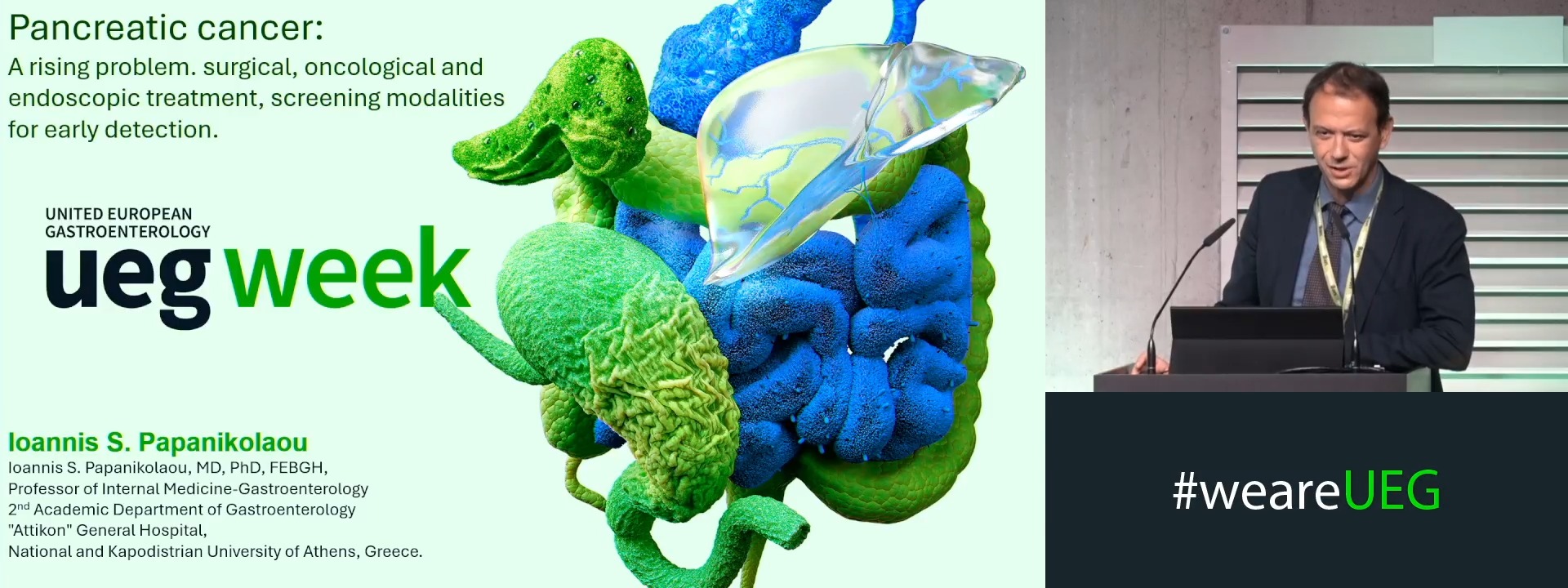
Pancreatic cancer - a rising problem. Surgical, oncological and endoscopic treatment, screening modalities for early detection
1 Attikon University Hospital, National and Kapodistrian University of Athens, Medical School., Athens, Greece
Event
Topics
Session
Citation
Published
Log in to access this content.
Free for all myUEG account holders. Your access level is set automatically based on your occupation. Medical professionals get full access to all content. If you are a non-medical user, you can only access UEG Week content from congresses you attended.
Not sure what you can access? Learn more about account types.

INCIDENCE, RISK FACTORS, AND OUTCOMES OF ACUTE BILIRUBIN ELEVATION FOLLOWING TRANSJUGULAR INTRAHEPATIC PORTOSYSTEMIC SHUNT CREATION
1 Westchina Hospital, Chengdu, China
Conference
Topics
Submission format
Citation
Published
Log in to access this content.
Free for all myUEG account holders. Your access level is set automatically based on your occupation. Medical professionals get full access to all content. If you are a non-medical user, you can only access UEG Week content from congresses you attended.
Not sure what you can access? Learn more about account types.
HIGH CUMULATIVE HELICOBACTER PYLORI ERADICATION THERAPY IN OBESE PATIENTS UNDERGOING GASTRIC BY-PASS SURGERY
Rute Cerqueira 1, Manuel Correia 1, Mafalda Sousa 1, Ines Pita 1, Iolanda Ribeiro 1, Samuel Costa 1, Mconceiçao Manso 2
1 ULS Entre Douro e Vouga, Porto, Portugal
2 RISE-Health, Faculty of Health Sciences, Fernando Pessoa University, Porto, Portugal
Conference
Topics
Submission format
Session
Citation
Published
Log in to access this content.
Free for all myUEG account holders. Your access level is set automatically based on your occupation. Medical professionals get full access to all content. If you are a non-medical user, you can only access UEG Week content from congresses you attended.
Not sure what you can access? Learn more about account types.
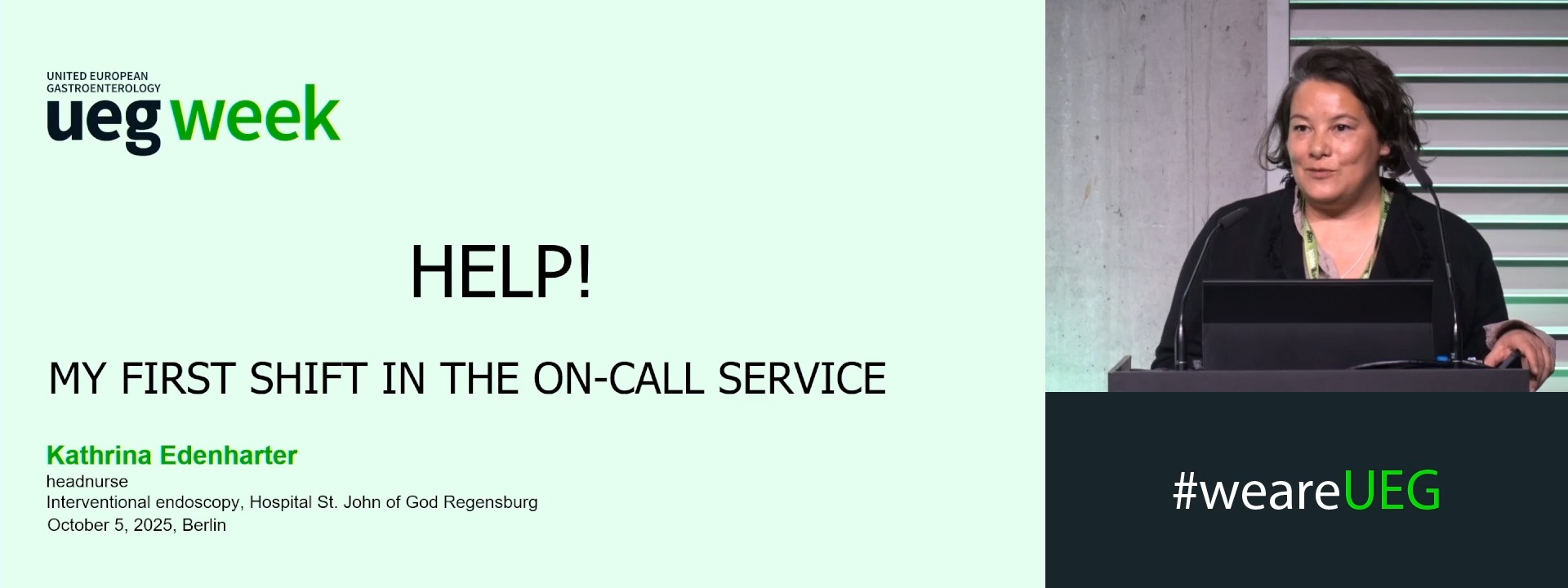
Help! My first shift in the on-call service
1 Krankenhaus Barmherzige Brüder, Regenbsburg, Germany
Event
Topics
Citation
Published
Log in to access this content.
Free for all myUEG account holders. Your access level is set automatically based on your occupation. Medical professionals get full access to all content. If you are a non-medical user, you can only access UEG Week content from congresses you attended.
Not sure what you can access? Learn more about account types.
PANCREATIC STEATOSIS AND EXOCRINE PANCREATIC INSUFFICIENCY: A SYSTEMATIC REVIEW AND META-ANALYSIS
1 Pró-Cardíaco Hospital, 22030040, Brazil
2 Federal University of Campina Grande, Cajazeiras, Brazil
Conference
Topics
Submission format
Session
Citation
Published
Log in to access this content.
Free for all myUEG account holders. Your access level is set automatically based on your occupation. Medical professionals get full access to all content. If you are a non-medical user, you can only access UEG Week content from congresses you attended.
Not sure what you can access? Learn more about account types.
ONE YEAR LATER - FOLLOW-UP AFTER COMBINED ENDOSCOPIC BYPASS AND BILIARY STENTING FOR A LOCALLY ADVANCED PANCREATIC TUMOR
Cosmin-Viorel Bogu 1, Giuseppe Vanella 2, Alexander Arlt 3, Madalina Ilie 4, VASILE SANDRU 1, Pavel Christopher 4, Oana-Mihaela Plotogea 4, Raluca-Ioana Dascalu 1, Afrodita Panaitescu-Damian 4, CONSTANTINESCU GABRIEL 4
1 Carol Davila University of Medicine and Pharmacy, Bucharest, Romania|||Bucharest Emergency Clinical Hospital, Bucharest, Romania
2 IRCCS San Raffaele Institute, Milan, Italy
3 Klinikum Oldenburg, Oldenburg, Germany
4 Bucharest Emergency Clinical Hospital, Bucharest, Romania|||Carol Davila University of Medicine and Pharmacy, Bucharest, Romania
Conference
Topics
Submission format
Session