UEG's educational platform for gastroenterology education bringing recordings, courses, guidelines, and more together in one place.
Most popular content
Rate for better recommendations!
Your feedback helps us show you more of what you like and less of what you dislike!

Log in to access this content.
Free for all myUEG account holders. Your access level is set automatically based on your occupation. Medical professionals get full access to all content. If you are a non-medical user, you can only access UEG Week content from congresses you attended.
Not sure what you can access? Learn more about account types.
PPIs under the microscope: The must-know European guidelines!
1 Vilnius university Santaros Klinikos, Vilnius, Lithuania
Event
Citation
Published

Log in to access this content.
Free for all myUEG account holders. Your access level is set automatically based on your occupation. Medical professionals get full access to all content. If you are a non-medical user, you can only access UEG Week content from congresses you attended.
Not sure what you can access? Learn more about account types.
Chronic constipation (Complete Session)
Event
Topics
Session
Citation
Published
Log in to access this content.
Free for all myUEG account holders. Your access level is set automatically based on your occupation. Medical professionals get full access to all content. If you are a non-medical user, you can only access UEG Week content from congresses you attended.
Not sure what you can access? Learn more about account types.
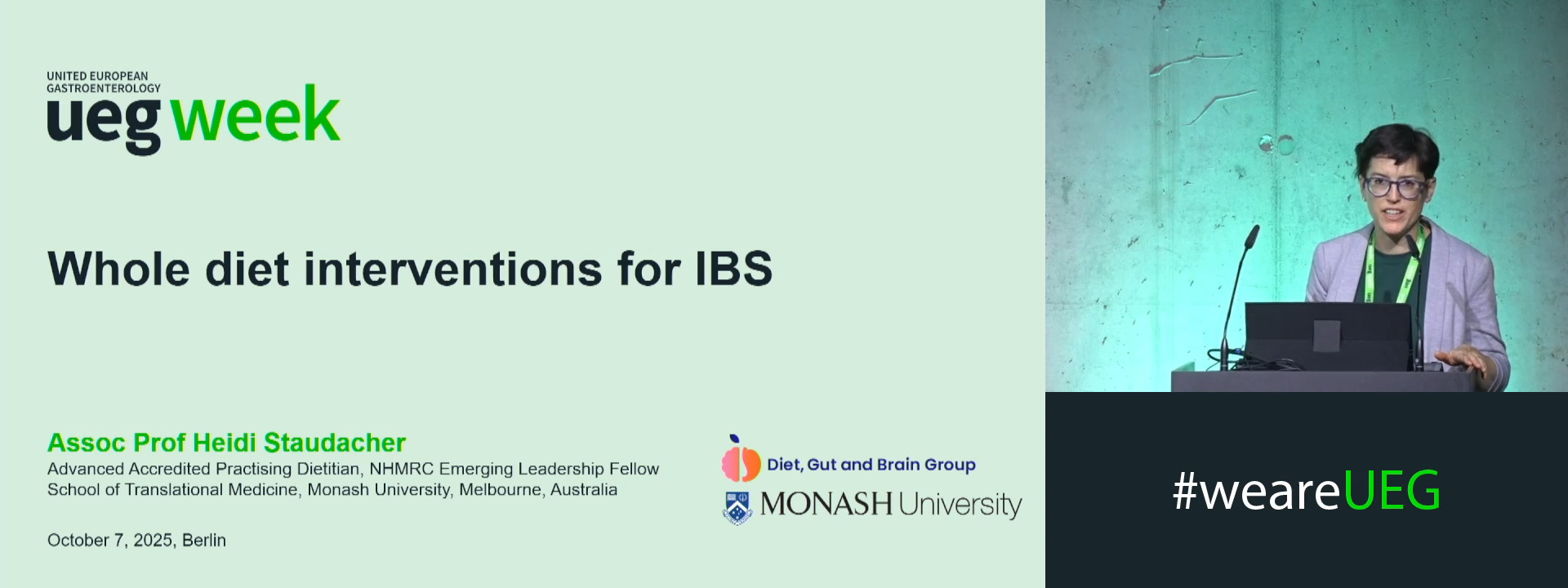
Whole diet interventions for IBS
1 The University of Queensland, Melbourne, Australia
Event
Citation
Published
Log in to access this content.
Free for all myUEG account holders. Your access level is set automatically based on your occupation. Medical professionals get full access to all content. If you are a non-medical user, you can only access UEG Week content from congresses you attended.
Not sure what you can access? Learn more about account types.
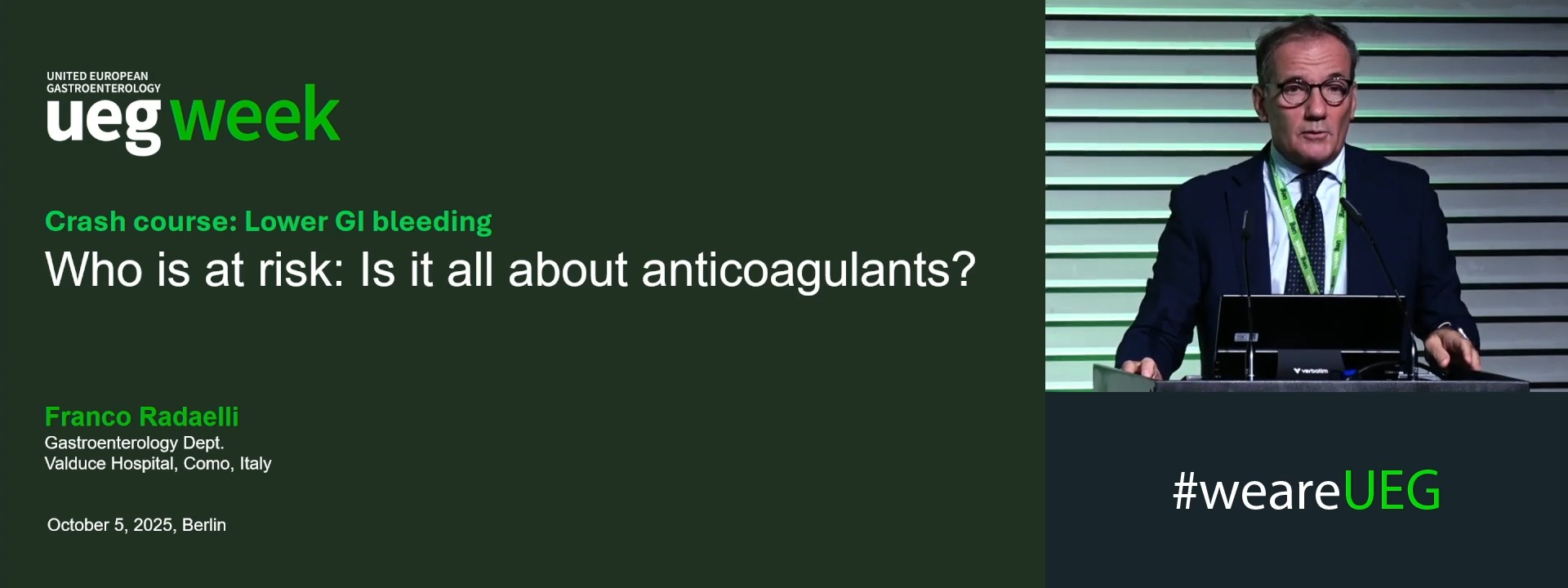
Who is at risk: Is it all about anticoagulants?
1 Valduce Hospital, Como, Italy
Event
Topics
Session
Citation
Published
Log in to access this content.
Free for all myUEG account holders. Your access level is set automatically based on your occupation. Medical professionals get full access to all content. If you are a non-medical user, you can only access UEG Week content from congresses you attended.
Not sure what you can access? Learn more about account types.
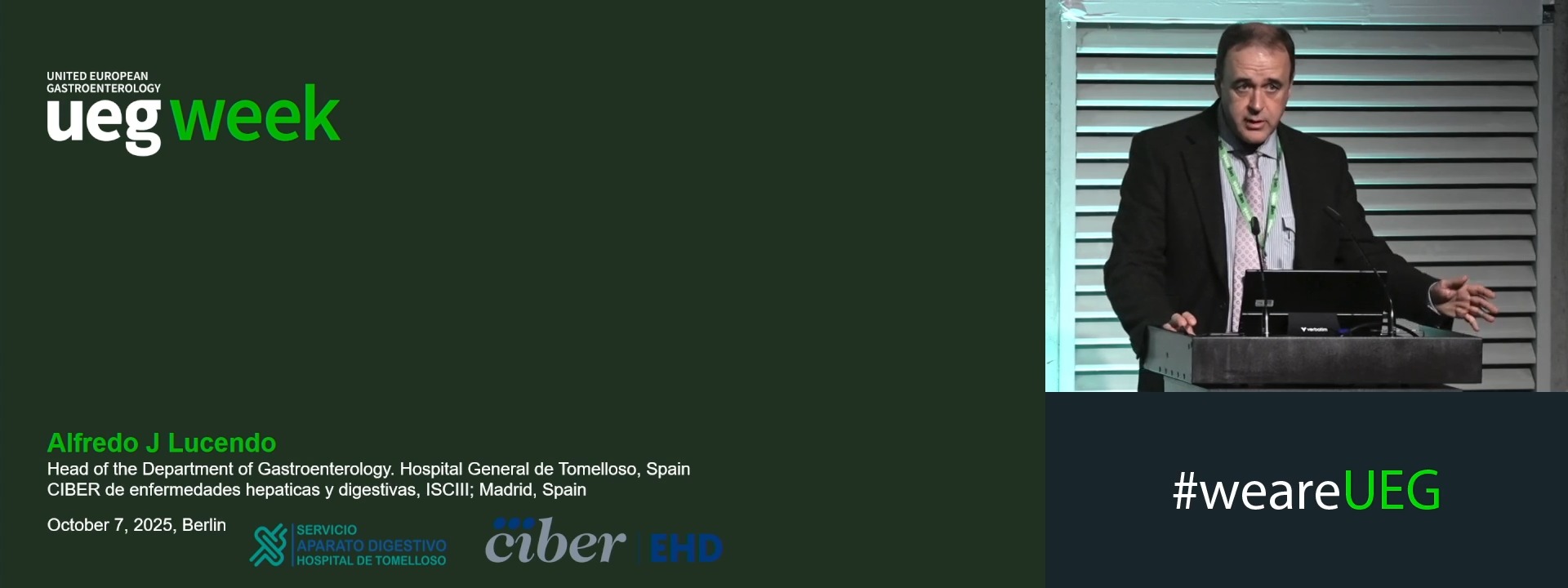
Diet: 1,6, or more?
1 Hospital General de Tomelloso, Instituto de Investigación Sanitaria de Castilla-La Mancha (IDISCAM), Tomelloso, Spain
Event
Session
Citation
Published
Log in to access this content.
Free for all myUEG account holders. Your access level is set automatically based on your occupation. Medical professionals get full access to all content. If you are a non-medical user, you can only access UEG Week content from congresses you attended.
Not sure what you can access? Learn more about account types.
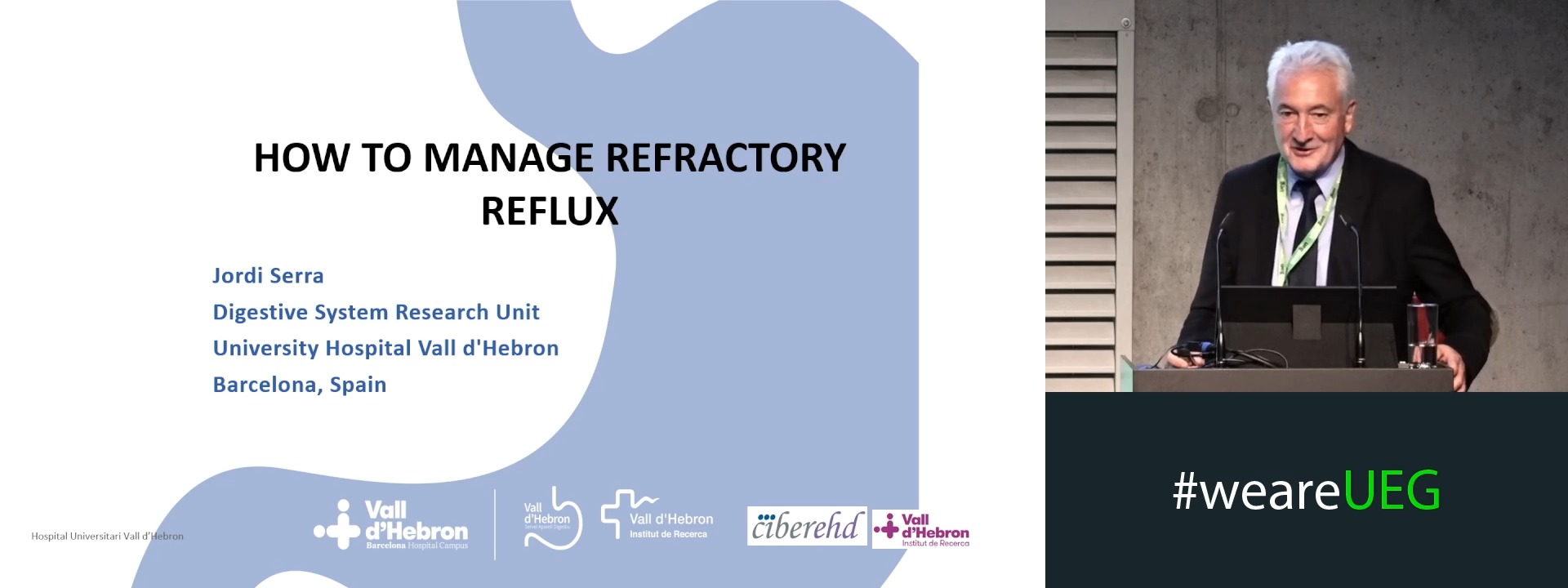
How to manage refractory reflux
1 University Hospital Vall d'Hebron, Barcelona, Spain
Event
Topics
Citation
Published
Log in to access this content.
Free for all myUEG account holders. Your access level is set automatically based on your occupation. Medical professionals get full access to all content. If you are a non-medical user, you can only access UEG Week content from congresses you attended.
Not sure what you can access? Learn more about account types.

ITOPRIDE’S ROLE IN FUNCTIONAL DYSPEPSIA: A META-ANALYSIS OF PLACEBO-CONTROLLED AND PROKINETIC-CONTROLLED TRIALS
Janne Scheepers 1, Heithem Soliman 1, Florencia Carbone 2, Tim Vanuytsel 2, Michael P. Jones 3, Jan Tack 2
1 KU Leuven, Leuven, Belgium
2 University of Leuven, University Hospital Gasthuisberg, Leuven, Belgium
3 Macquarie University, North Ryde, Australia
Conference
Topics
Submission format
Session