UEG's content platform for gastroenterology education bringing recordings, courses, guidelines, and more together in one place.
Trending on Gutflix
Rate for better recommendations!
Your feedback helps us show you more of what you like and less of what you dislike!
Log in to continue.
This content is part of Gutflix. Log in with your myUEG account, or create one free, to watch it.
Not sure what you can access? Learn more about account types.
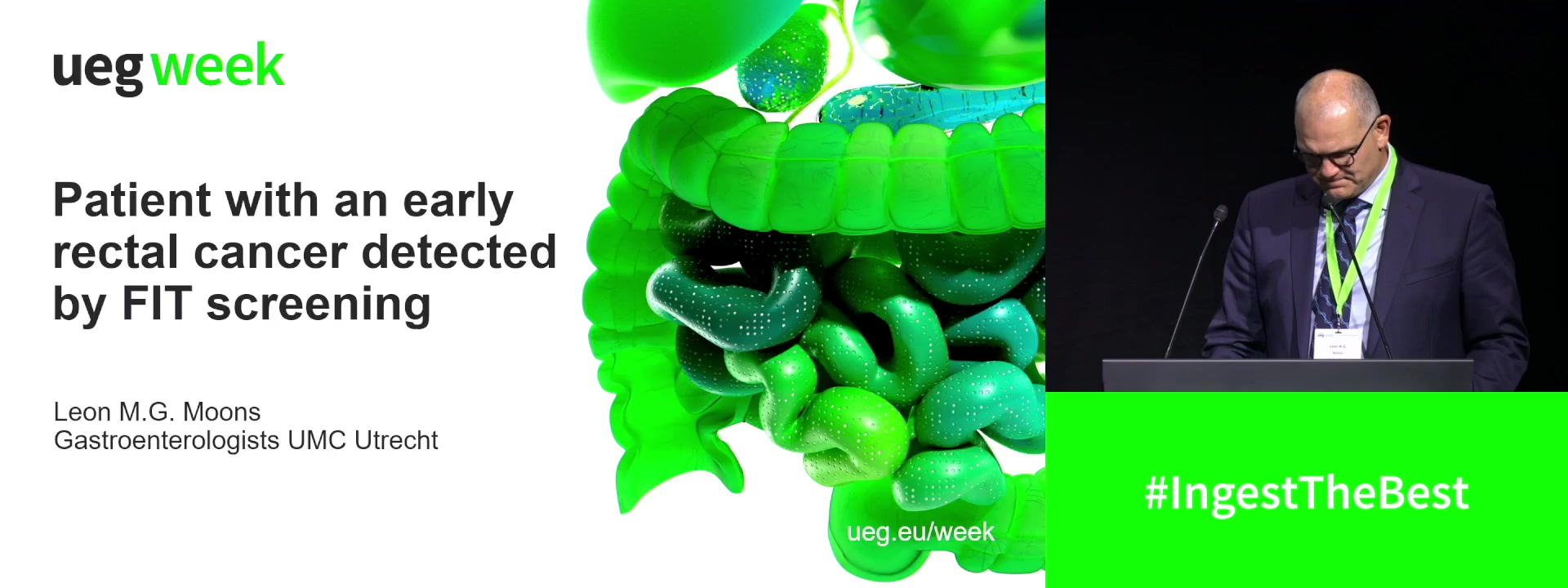
Patient with an early rectal cancer detected by FIT-screening
Affiliations
1 University Medical Center Utrecht, Utrecht, Netherlands
Log in to continue.
This content is part of Gutflix. Log in with your myUEG account, or create one free, to watch it.
Not sure what you can access? Learn more about account types.
Summary: Cancer and IBD - Mitigating risk among uncertainty
Affiliations
1 Charité Berlin, Berlin, Germany
Log in to continue.
This content is part of Gutflix. Log in with your myUEG account, or create one free, to watch it.
Not sure what you can access? Learn more about account types.
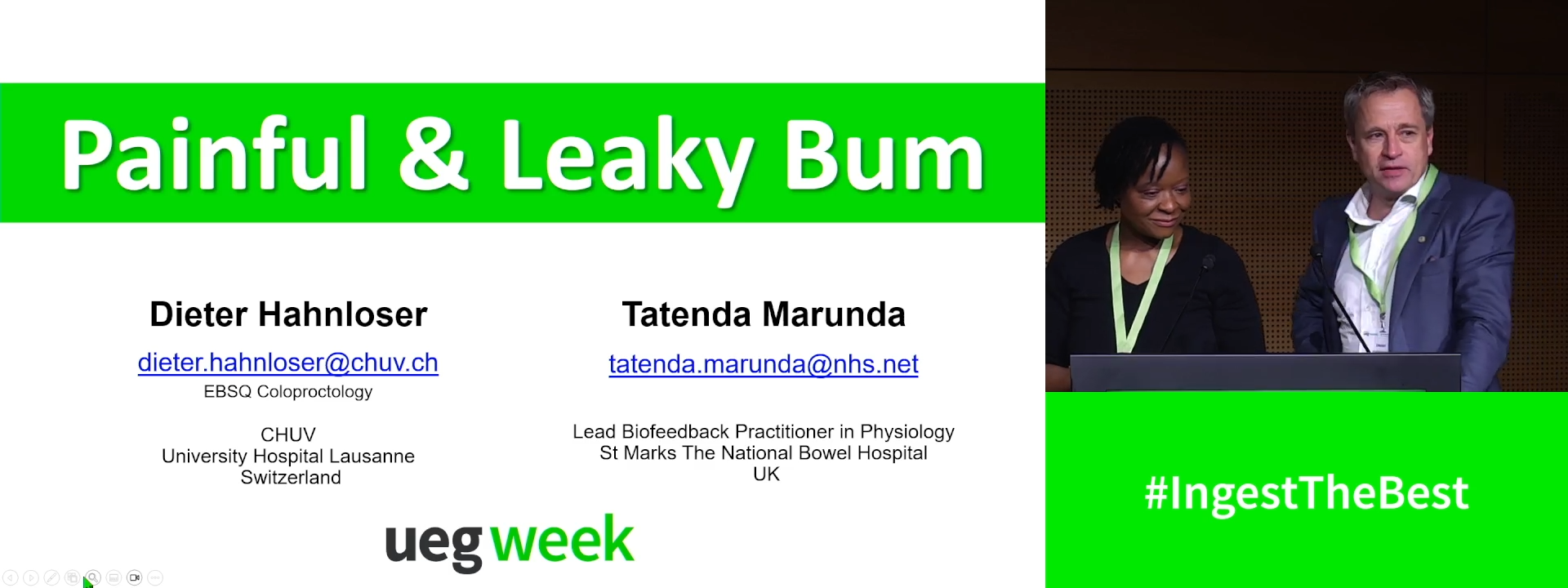
The bum: Haemorrhoids, fissure disease, urgency and incontinence
Affiliations
1 CHUV, Lausanne, Switzerland
2 None, None, United Kingdom
Log in to continue.
This content is part of Gutflix. Log in with your myUEG account, or create one free, to watch it.
Not sure what you can access? Learn more about account types.
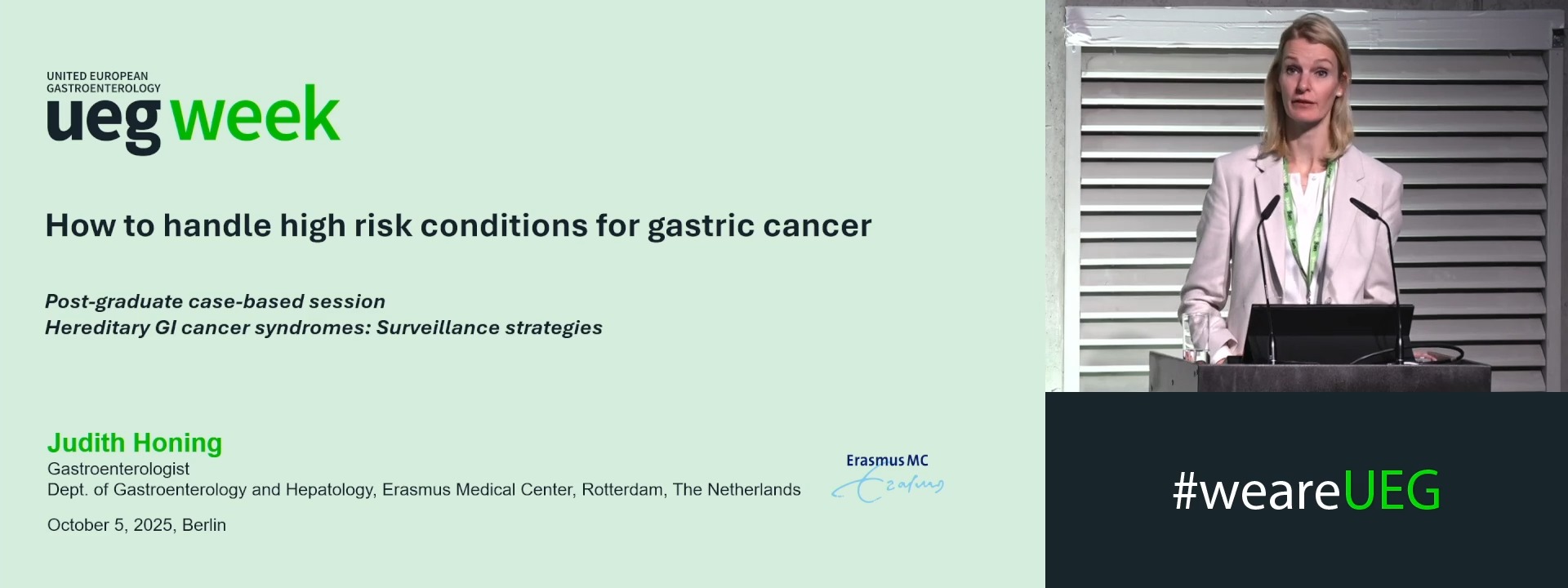
How to handle high risk conditions for gastric cancer
Affiliations
1 Erasmus Mc, Rotterdam, Netherlands
Log in to continue.
This content is part of Gutflix. Log in with your myUEG account, or create one free, to watch it.
Not sure what you can access? Learn more about account types.
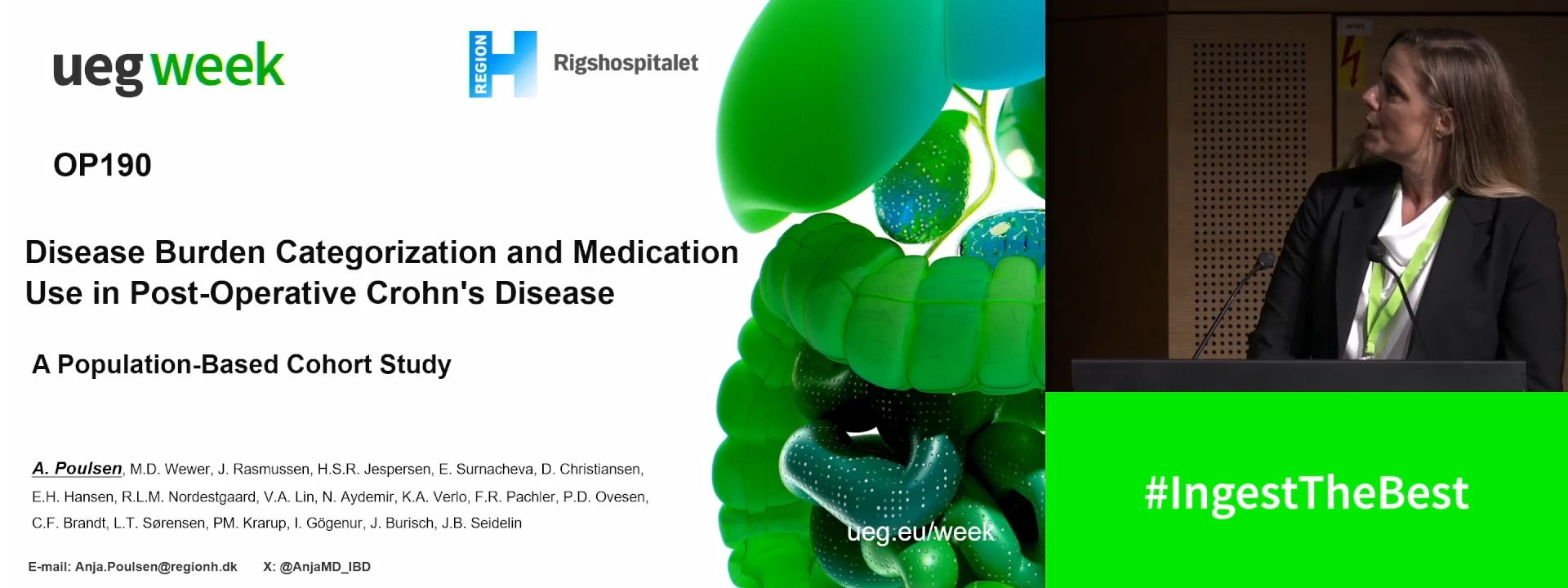
DISEASE BURDEN CATEGORIZATION AND MEDICATION USE IN POST-OPERATIVE CROHN'S DISEASE: A POPULATION-BASED COHORT STUDY
Anja Poulsen 1,2, Mads Damsgaard Wewer 3, Julie Rasmussen 4, Hans Søe Jespersen 1, Elena Surnacheva 1, Dagmar Christiansen 4, Esben Holm Hansen 5, Rie Nordestgaard 3, Viviane Annabelle Lin 4, Kari Verlo 3, Nurcan Aydemir 4, Frederik Pachler 2, Pernille Dige Ovesen 2, Kristian Fuglsang 6, Christopher Filtenborg Brandt 6, Lars Tue Sørensen 1, Peter-Martin Krarup 1, Ismail Gögenur 4, Johan Burisch 3, Jakob Benedict Seidelin 2
Affiliations
1 Copenhagen University Hospital, Bispebjerg, København N, Denmark
2 Copenhagen University Hospital, Herlev and Gentofte, Herlev, Denmark
3 Copenhagen University Hospital - Amager and Hvidovre, Hvidovre, Denmark
4 Zealand University Hospital, Koege, Denmark
5 North Zealand University Hospital, Hilleroed, Denmark
6 University Hospital of Copenhagen, Rigshospitalet, Copenhagen, Denmark