UEG Week Recordings UEG Week Posters Online courses Guidelines Mistakes in... Podcasts Webinars
new
Gut Guide online
Visit ueg.eu Create myUEG account Log In

Filters:

UEG Presentation
Share via Email Share on Facebook Share on X Share on LinkedIn Share on Bluesky
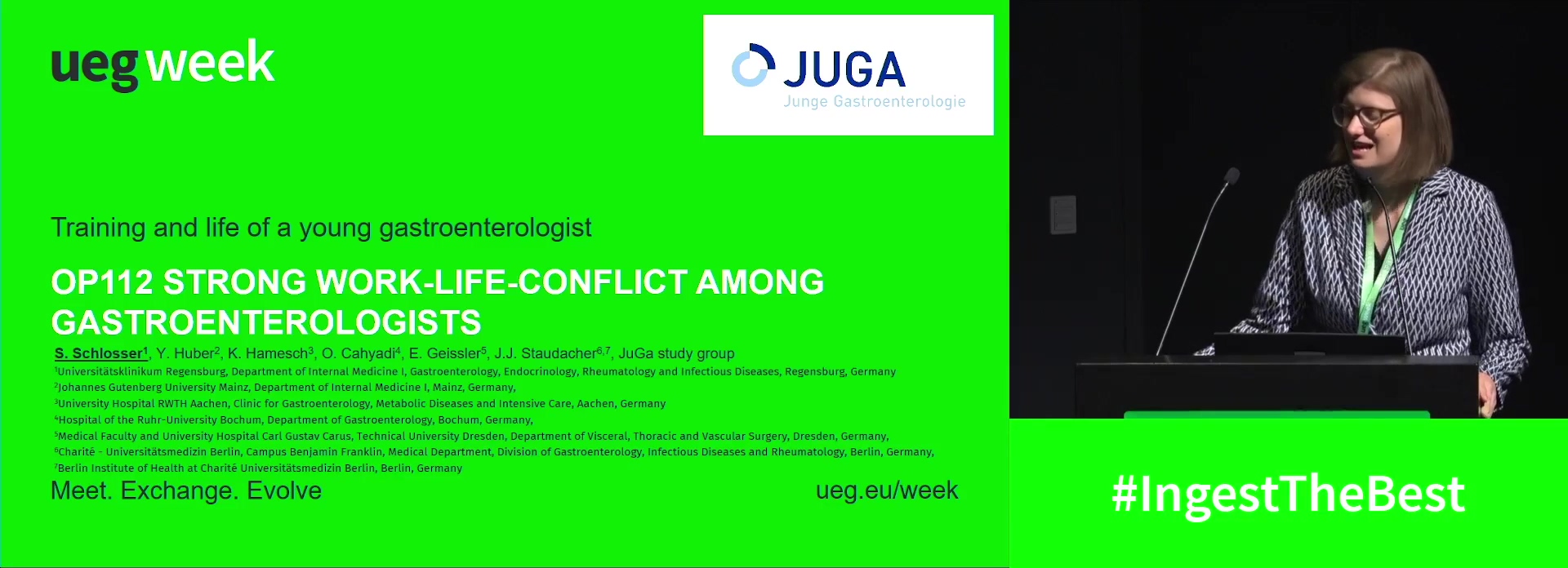
STRONG WORK-LIFE-CONFLICT AMONG GASTROENTEROLOGISTS

Log in to access this content.

Free for all myUEG account holders. Your access level is set automatically based on your occupation. Medical professionals get full access to all content. If you are a non-medical user, you can only access UEG Week content from congresses you attended.

Log In Create a free account

Not sure what you can access? Learn more about account types.

Introduction

Work-life integration is a critical issue many individuals face in the workforce, particularly in professions with high demands, such as healthcare. Physicians, in particular, experience significant challenges in managing their professional and personal lives due to long work hours, unpredictable schedules, and the emotional toll of caring for patients. The resulting work-life conflicts can negatively impact their well-being, job satisfaction, and patient care. Despite recognizing this issue, there is still a lack of research on the extent of work-life conflicts and their effects on physicians.

Aims & Methods

We distributed a voluntary and anonymous survey via e-mail to all members of the German Society for Digestive and Metabolic Diseases (DGVS - Deutsche Gesellschaft für Gastroenterologie, Verdauungs- und Stoffwechselerkrankungen). Sociodemographics and data on parental status, number of children, and used support structures were gathered. The Work-Family Conflict Scale (ISSP) was used to measure the compatibility of family and job. Query logic branched depending on responses, and single and multiple-choice questions were used, as well as Likert scales.

Results

At the point of this interim analysis, 586 respondents finished the survey and were included for statistical analysis. Of the respondents, 45% were women, 71% were parents, and 60.3% had children living in the household. The mean age was 47 years (SD 11,0). In most cases, respondents lived with a working partner (93%), with male respondents more likely to have a stay-at-home partner (8,9% versus 2,9%). A corresponding trend was observed in partners working part-time (Overall: 41.5%. Partners of male physicians 58,9%, partners of female physicians 17,2%). In the ISSP, there were high levels of work-life conflict (scale 1-4, average work/life 3,06 life/work 1,79). Female respondents reported statistically significantly higher work/life, but only numerically higher life/work conflicts than male respondents. (work/life 3,18 versus 2,94, p ˂ 0.001; life/work 1,88 versus 1,77 p = 0.080; two tailed Chi Square). Parents were affected significantly more often by work-life and life-work conflicts.

Conclusion

This study provides valuable insights into the challenges faced by physicians in balancing their professional and personal lives. Finding ways to manage work-life conflicts and maintain a healthy balance is critical for the well-being and longevity of physicians, as well as the quality of care they provide to their patients. Healthcare employers should support their employees in achieving a satisfactory work-life balance.

STRONG WORK-LIFE-CONFLICT AMONG GASTROENTEROLOGISTS

Sophie Schlosser-Hupf 1, Yvonne Huber 2, Karim Hamesch 3, Oscar Cahyadi 4, Enrik Geissler 5, Jonas J. Staudacher 6

1 Universitätsklinikum Regensburg, Egglfing (Köfering), Germany

2 Johannes Gutenberg University Mainz, Mainz, Germany

3 University Hospital RWTH Aachen, Aachen, Germany

4 Hospital of the Ruhr-University Bochum, Bochum, Germany

5 Medical Faculty and University Hospital Carl Gustav Carus, Technical University Dresden, Dresden, Germany

6 Charité - Universitätsmedizin Berlin, Campus Benjamin Franklin, Berlin, Germany|||Berlin Institute of Health at Charité Universitätsmedizin Berlin, Berlin, Germany

Event

UEG Week Copenhagen 2023

Topics

Education & Training Endoscopy

Submission format

Abstract

Session

Training and life of a young gastroenterologist

Citation

United European Gastroenterology Journal 2023; 11 (Supplement 8)

Published

2023
UEG Presentation
Share via Email Share on Facebook Share on X Share on LinkedIn Share on Bluesky
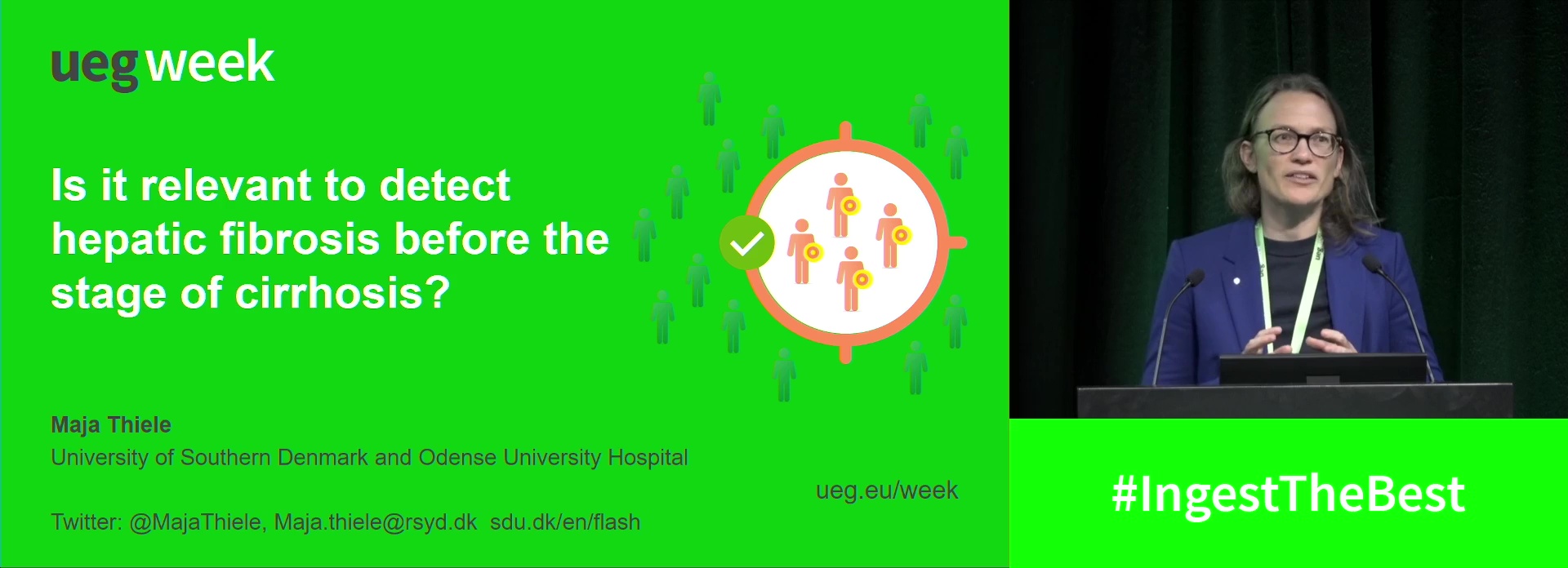
Is it relevant to detect hepatic fibrosis before the stage of cirrhosis?

Log in to access this content.

Free for all myUEG account holders. Your access level is set automatically based on your occupation. Medical professionals get full access to all content. If you are a non-medical user, you can only access UEG Week content from congresses you attended.

Log In Create a free account

Not sure what you can access? Learn more about account types.

Is it relevant to detect hepatic fibrosis before the stage of cirrhosis?

Maja Thiele 1

1 Odense University Hospital - Department of Gastroenterology and Hepatology, Odense University Hospit, Odense, Denmark

Event

UEG Week Copenhagen 2023

Topics

Hepatobiliary Mechanisms & Personalised Medicine

Session

Mechanisms of fibrogenesis: A unifying theme in HPB?

Published

2023
UEG Presentation
Share via Email Share on Facebook Share on X Share on LinkedIn Share on Bluesky
Autoimmunity in the liver

Log in to access this content.

Free for all myUEG account holders. Your access level is set automatically based on your occupation. Medical professionals get full access to all content. If you are a non-medical user, you can only access UEG Week content from congresses you attended.

Log In Create a free account

Not sure what you can access? Learn more about account types.

Autoimmunity in the liver

Bogdan Dumitru Procopet 1

1 University of Medicine and Pharmacy "Iuliu Hatieganu", Cluj-Napoca, Romania

Event

UEG Week Copenhagen 2023

Topics

Hepatobiliary Immunology Pancreas

Session

Autoimmunity in HPB

Published

2023
UEG Presentation
Share via Email Share on Facebook Share on X Share on LinkedIn Share on Bluesky
Molecular classification of GI cancers

Log in to access this content.

Free for all myUEG account holders. Your access level is set automatically based on your occupation. Medical professionals get full access to all content. If you are a non-medical user, you can only access UEG Week content from congresses you attended.

Log In Create a free account

Not sure what you can access? Learn more about account types.

Molecular classification of GI cancers

Juozas Kupcinskas 1

1 Lithuanian University of Health Sciences, Kaunas, Lithuania

Event

UEG Week Copenhagen 2023

Topics

Colorectal Digestive Oncology Hepatobiliary Mechanisms & Personalised Medicine

Session

Precision molecular medicine in GI cancers

Published

2023
UEG Presentation
Share via Email Share on Facebook Share on X Share on LinkedIn Share on Bluesky
How I treat MSI colon and early rectal cancer

Log in to access this content.

Free for all myUEG account holders. Your access level is set automatically based on your occupation. Medical professionals get full access to all content. If you are a non-medical user, you can only access UEG Week content from congresses you attended.

Log In Create a free account

Not sure what you can access? Learn more about account types.

How I treat MSI colon and early rectal cancer

Wilhelmus A. Bemelman 1, Eric Van Cutsem 2

1 Academisch Medisch centrum Dept. of Surgery - Department of Surgery, Academisch Medisch centrum Dept, Amsterdam, Netherlands

2 University Hosp. Gasthuisberg/Leuven, Leuven, Belgium

Event

UEG Week Vienna 2024

Topics

Colorectal Digestive Oncology Endoscopy Histopathology

Session

Controversies in the management of colorectal neoplasia

Citation

United European Gastroenterology Journal 2024; 12 (Supplement 8)

Published

2024
UEG Presentation
Share via Email Share on Facebook Share on X Share on LinkedIn Share on Bluesky
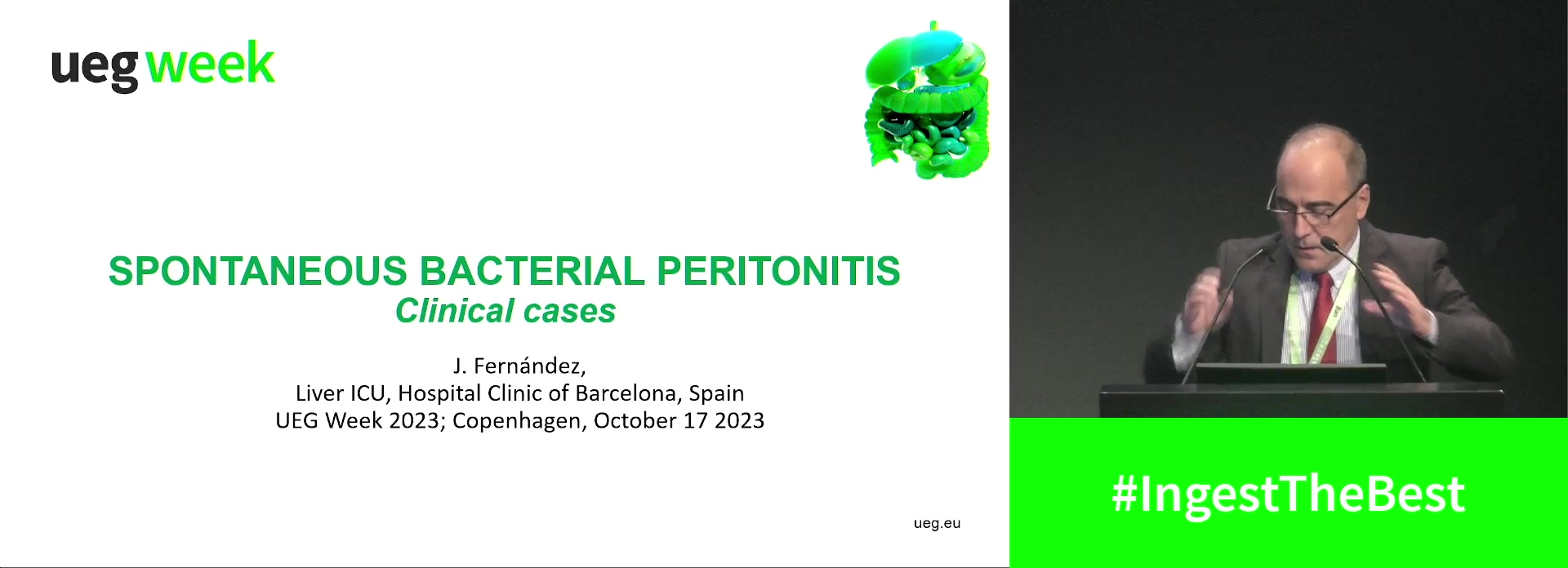
Spontaneous bacterial peritonitis (Complete Session)

Log in to access this content.

Free for all myUEG account holders. Your access level is set automatically based on your occupation. Medical professionals get full access to all content. If you are a non-medical user, you can only access UEG Week content from congresses you attended.

Log In Create a free account

Not sure what you can access? Learn more about account types.

Spontaneous bacterial peritonitis (Complete Session)

Angelo Armandi 1, Marina Berenguer 2, Javier Fernandez Gomez 3

1 University of Turin, None, Italy

2 La Fe University Hospital, Valencia, Spain

3 Hospital Clinic - Liver Unit, Hospital Clinic; Barcelona/ES, Barcelona, Spain

Event

UEG Week Copenhagen 2023

Topics

Hepatobiliary Mechanisms & Personalised Medicine

Session

Spontaneous bacterial peritonitis

Published

2023
UEG Presentation
Share via Email Share on Facebook Share on X Share on LinkedIn Share on Bluesky
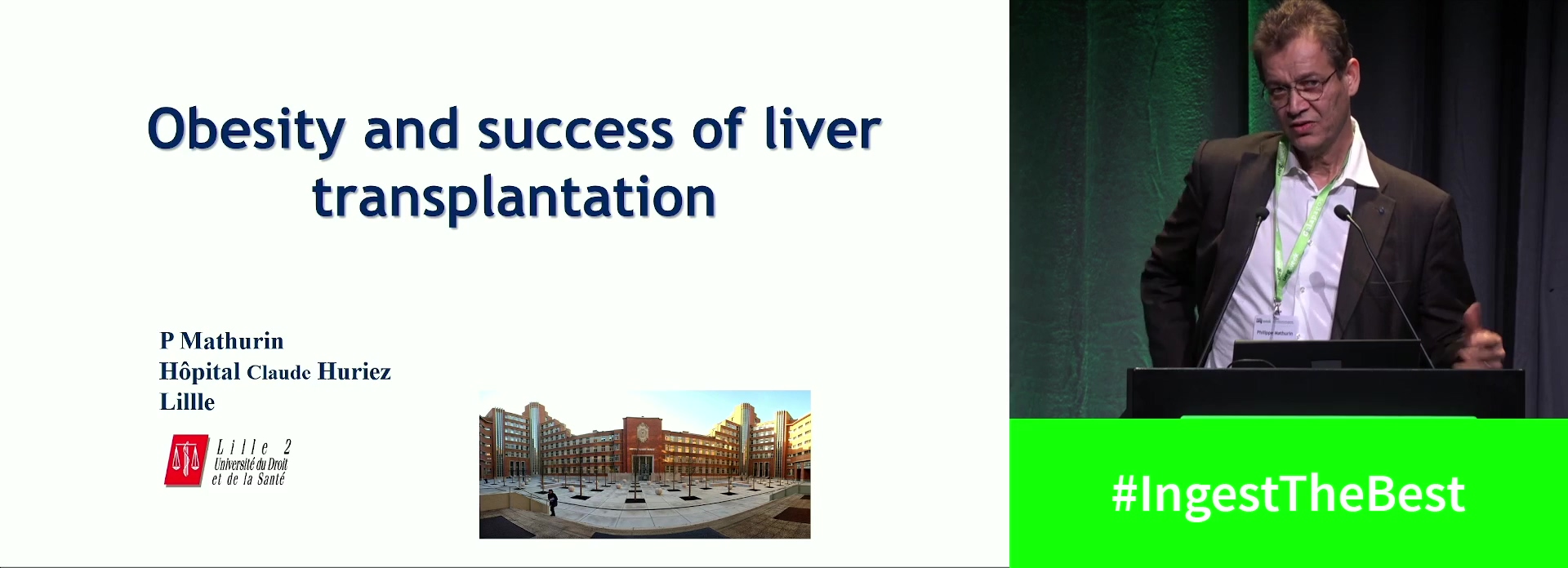
Obesity and success of liver transplantation

Log in to access this content.

Free for all myUEG account holders. Your access level is set automatically based on your occupation. Medical professionals get full access to all content. If you are a non-medical user, you can only access UEG Week content from congresses you attended.

Log In Create a free account

Not sure what you can access? Learn more about account types.

Obesity and success of liver transplantation

Philippe Mathurin 1

1 CHRU Lille Service MADN Hopital Huriez, Lille, France

Event

UEG Week Copenhagen 2023

Topics

Hepatobiliary

Session

Best of hepatology in UEG Journal

Published

2023

The global reference point for the digestive health community

Platform Publisher

United European Gastroenterology

Wickenburggasse 1 1080 Vienna, Austria

Contact us

support@ueg.eu

ueg.eu

T: +43 1 997 1639

Legal

Terms & Conditions

Imprint

Privacy Policy

Explore

My Bookmarks

My recommendations

My fields of interest

© 2026 United European Gastroenterology

Change fields of interest

These fields are selected based on the interests in your myUEG profile.
Click the item to unselect it. You can select multiple items.