UEG's educational platform for gastroenterology education bringing recordings, courses, guidelines, and more together in one place.
Most popular content
Rate for better recommendations!
Your feedback helps us show you more of what you like and less of what you dislike!
Log in to access this content.
Free for all myUEG account holders. Your access level is set automatically based on your occupation. Medical professionals get full access to all content. If you are a non-medical user, you can only access UEG Week content from congresses you attended.
Not sure what you can access? Learn more about account types.
ENDOSCOPIC VACUUM THERAPY IN POSTOPERATIVE UPPER GI LEAKS: CLINICAL INSIGHTS AND OUTCOMES FROM A TERTIARY REFERRAL CENTER
André Trigo 1, Filipa Vidal Lima 1, Hugo Ribeiro 1, Diogo Feijó 1, Mara Costa 1, Andrea Emília Pereira Silva 1, Mariana Marques da Silva Sant'Anna 1, Marta Gravito-Soares 2, Elisa Gravito-Soares 3, Cláudia Agostinho 1, Mariana Ruão 2, Pedro Narra Figueiredo 3
1 Unidade Local de Saúde de Coimbra, Coimbra, Portugal
2 Unidade Local de Saúde de Coimbra, Coimbra, Portugal|||Faculdade de Medicina da Universidade de Coimbra, Coimbra, Portugal
3 Faculdade de Medicina da Universidade de Coimbra, Coimbra, Portugal|||Unidade Local de Saúde de Coimbra, Coimbra, Portugal
Conference
Topics
Submission format
Citation
Published
Log in to access this content.
Free for all myUEG account holders. Your access level is set automatically based on your occupation. Medical professionals get full access to all content. If you are a non-medical user, you can only access UEG Week content from congresses you attended.
Not sure what you can access? Learn more about account types.
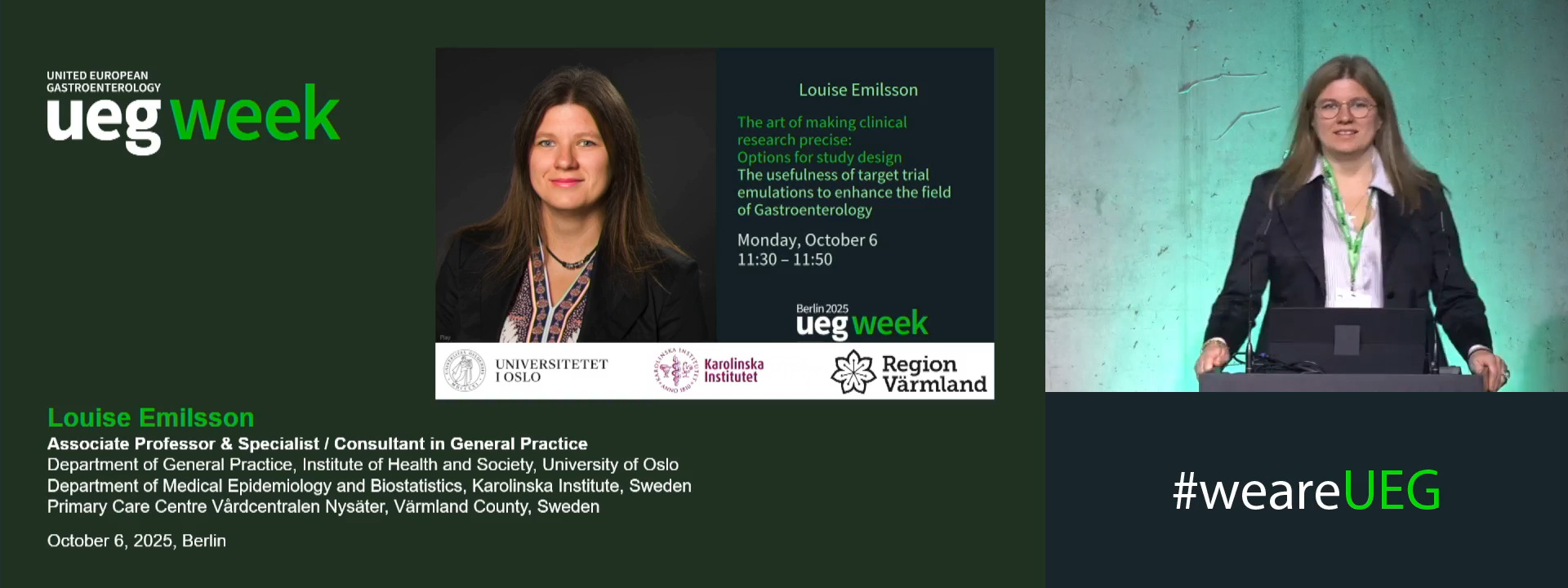
The usefulness of target trial emulations to enhance the field of Gastroenterology
1 County Council of Värmland, Värmlands, Sweden
Event
Citation
Published
Log in to access this content.
Free for all myUEG account holders. Your access level is set automatically based on your occupation. Medical professionals get full access to all content. If you are a non-medical user, you can only access UEG Week content from congresses you attended.
Not sure what you can access? Learn more about account types.
The endoscopy nurse's guide to the GI galaxy
1 University General Hospital Attikon, Athens, Greece
Event
Topics
Session
Citation
Published
Log in to access this content.
Free for all myUEG account holders. Your access level is set automatically based on your occupation. Medical professionals get full access to all content. If you are a non-medical user, you can only access UEG Week content from congresses you attended.
Not sure what you can access? Learn more about account types.
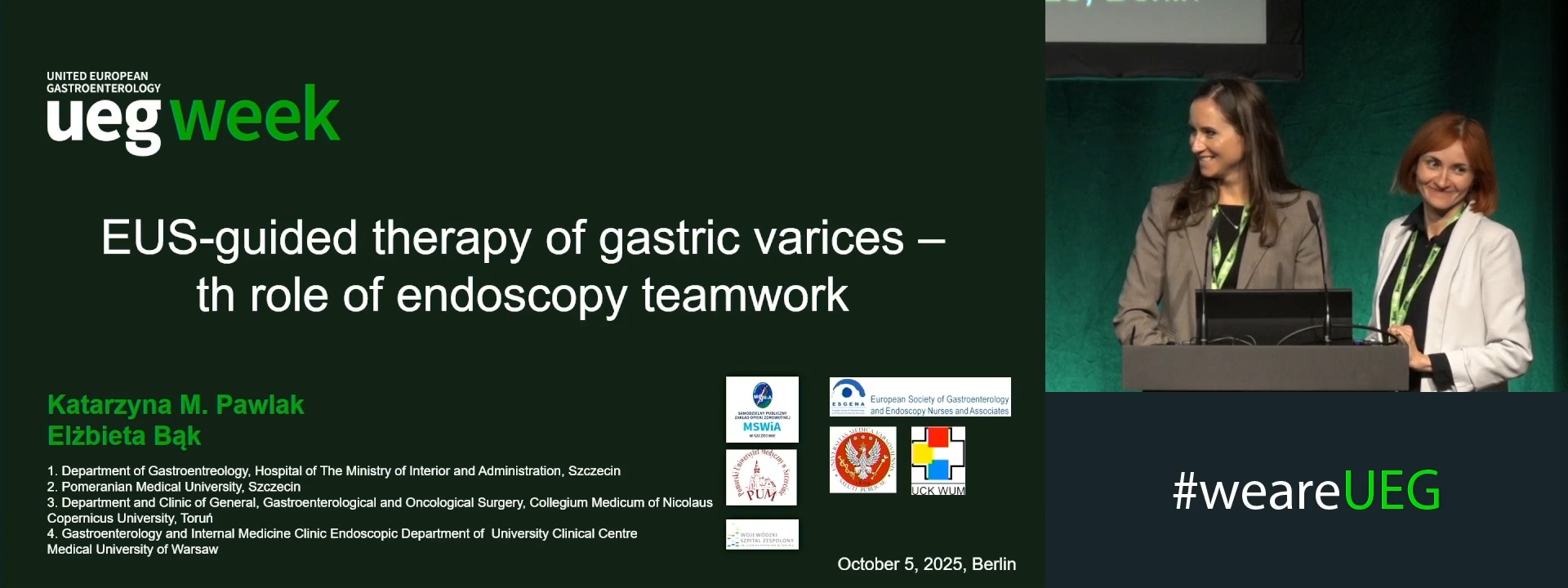
EUS-guided therapy of gastric varices: The role of endoscopic nurse-team work
1 Wojskowy Instytut Medyczny, Warsaw, Poland
2 Hospital of the Ministry of Interior and Administration, Szczecin, Poland
Event
Topics
Citation
Published
Log in to access this content.
Free for all myUEG account holders. Your access level is set automatically based on your occupation. Medical professionals get full access to all content. If you are a non-medical user, you can only access UEG Week content from congresses you attended.
Not sure what you can access? Learn more about account types.
RANDOMIZED COMPARISON OF DAILY VERSUS ALTERNATE DAY ORAL IRON THERAPY IN PATIENTS WITH ULCERATIVE COLITIS WITH IRON DEFICIENCY ANEMIA
Uday Kiran Mangipudi 1, Prateek Bhatia 2, Harshal Mandavdhare 2, VANEET JEARTH 2, Aravind Sekar 2, Amol Patil 2, Usha Dutta 2, Vishal Sharma 2
1 Postgraduate Institute of Medical Education And Research, Chandigarh, India
2 Postgraduate Institute of Medical Education and Research, Chandigarh, India
Conference
Topics
Submission format
Session
Citation
Published
Log in to access this content.
Free for all myUEG account holders. Your access level is set automatically based on your occupation. Medical professionals get full access to all content. If you are a non-medical user, you can only access UEG Week content from congresses you attended.
Not sure what you can access? Learn more about account types.
RANDOMIZED CONTROLLED TRIAL ON THE USE OF NASOGASTRIC AND NASOJEJUNAL TUBES(NG AND NJ TUBES) AFTER GASTRECTOMY FOR CANCER
1 Tuen Mun Hospital, Hong Kong, Hong Kong
Conference
Topics
Submission format
Citation
Published
Log in to access this content.
Free for all myUEG account holders. Your access level is set automatically based on your occupation. Medical professionals get full access to all content. If you are a non-medical user, you can only access UEG Week content from congresses you attended.
Not sure what you can access? Learn more about account types.
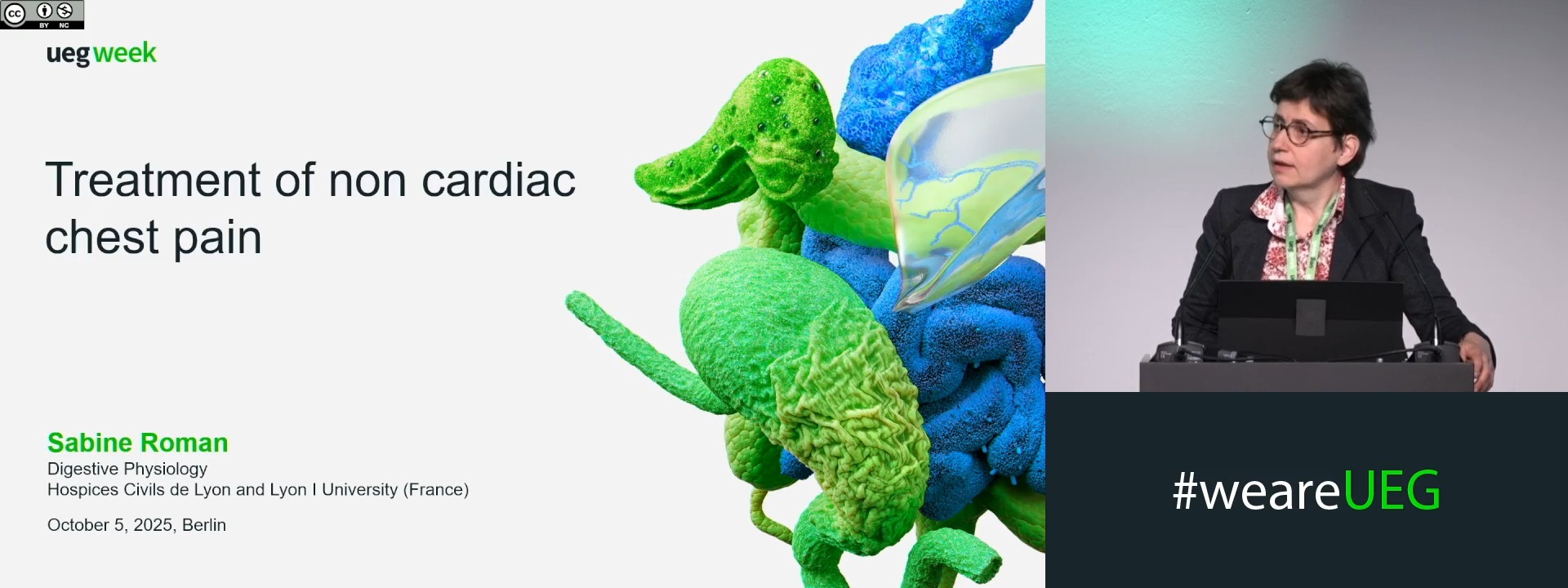
Treatment of non-cardiac chest pain
1 Hôpital Edouard Herriot, Lyon, France
Event
Topics