UEG's content platform for gastroenterology education bringing recordings, courses, guidelines, and more together in one place.
Trending on Gutflix
Rate for better recommendations!
Your feedback helps us show you more of what you like and less of what you dislike!
Log in to continue.
This content is part of Gutflix. Log in with your myUEG account, or create one free, to watch it.
Not sure what you can access? Learn more about account types.
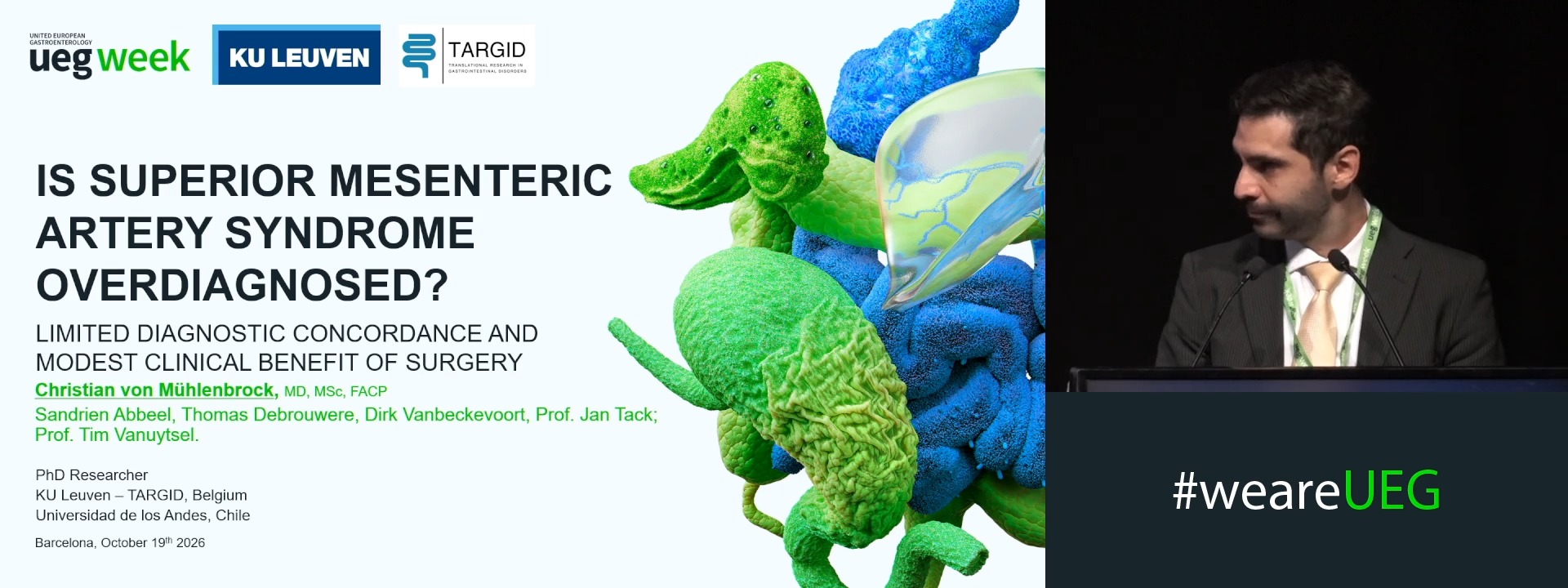
OVERDIAGNOSIS OF SUPERIOR MESENTERIC ARTERY SYNDROME: LIMITED DIAGNOSTIC CONCORDANCE BETWEEN IMAGING MODALITIES AND LIMITED BENEFIT OF SURGERY
Christian von Muhlenbrock 1,2,3, Sandrien Abbeel 4, Thomas Debrouwere 1, Dirk Vanbeckevoort 1, Jan Tack 1, Tim Vanuytsel 1
Affiliations
1 KU Leuven, Leuven, Belgium
2 Universidad de Chile, Santiago, Chile
3 Universidad de los Andes, Santiago, Chile
4 KU Leuven, Eppegem, Belgium
Log in to continue.
This content is part of Gutflix. Log in with your myUEG account, or create one free, to watch it.
Not sure what you can access? Learn more about account types.
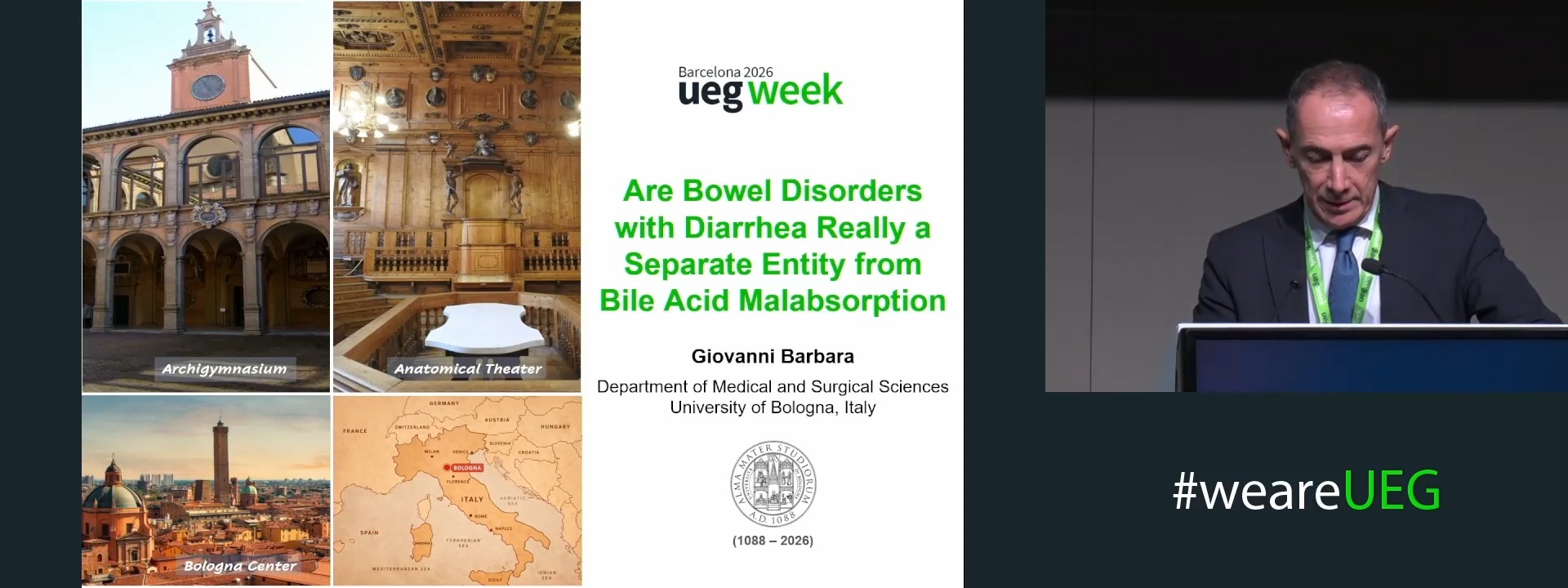
Are bowel disorders with diarrhoea really a separate entity from bile acid malabsorption?
Affiliations
1 University of Bologna, Bologna, Italy
Log in to continue.
This content is part of Gutflix. Log in with your myUEG account, or create one free, to watch it.
Not sure what you can access? Learn more about account types.
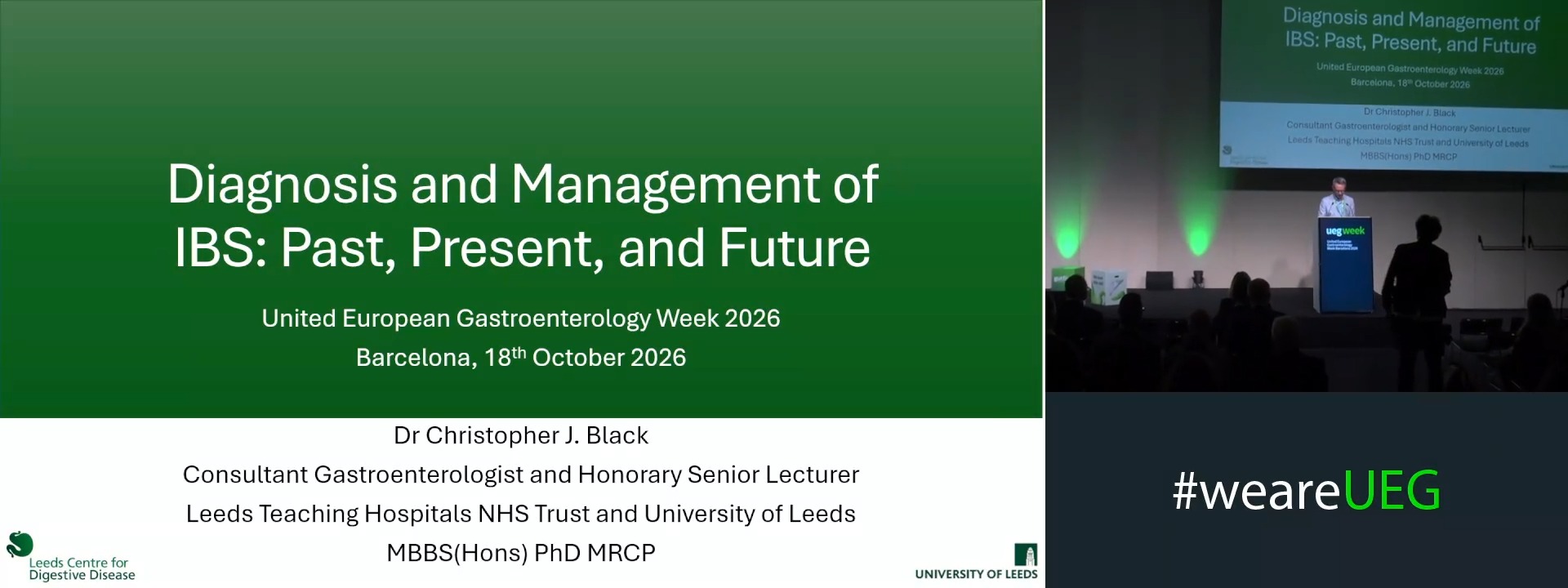
Diagnosis and management of IBS: Past, present and future
Affiliations
1 Leeds Teaching Hospitals NHS Trust, Leeds, United Kingdom
Log in to continue.
This content is part of Gutflix. Log in with your myUEG account, or create one free, to watch it.
Not sure what you can access? Learn more about account types.
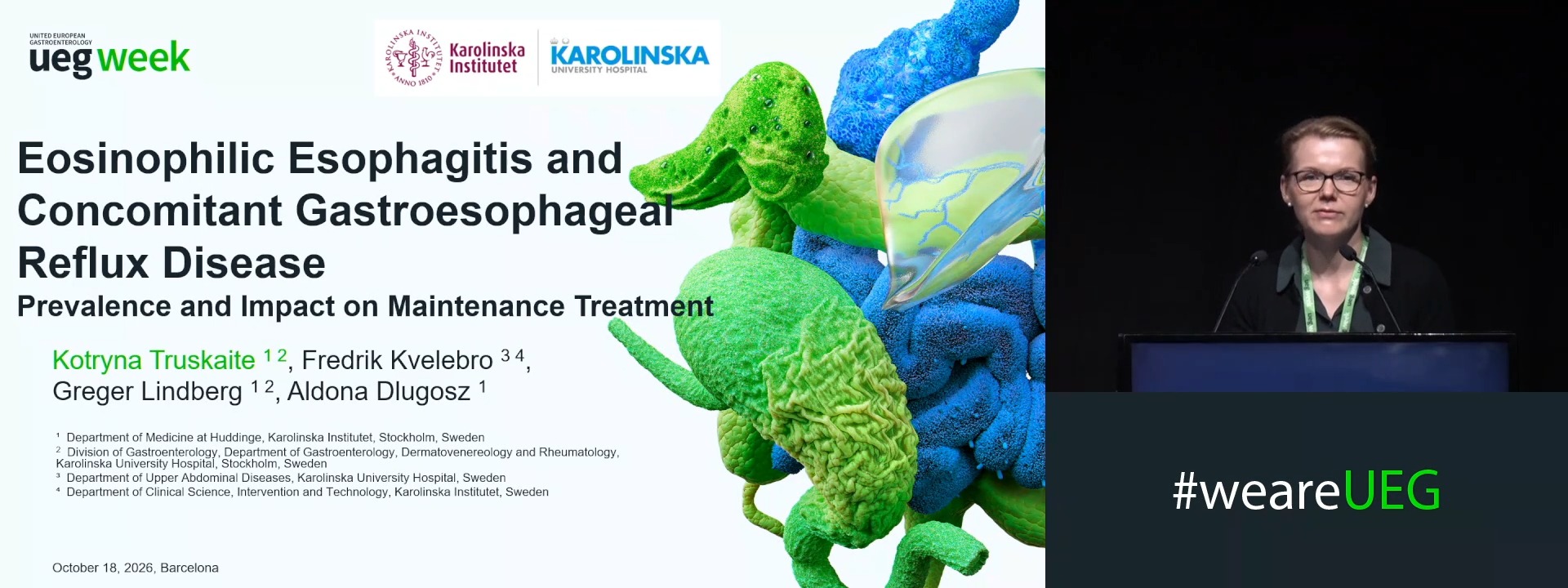
PREVALENCE OF GERD IN PATIENTS WITH EOSINOPHILIC ESOPHAGITIS AND ITS IMPACT ON TREATMENT OUTCOMES: INSIGHTS FROM A SWEDISH TERTIARY CENTRE COHORT
Affiliations
1 Karolinska Institutet, Stockholm, Sweden
2 Karolinska University Hospital, Stockholm, Sweden
Log in to continue.
This content is part of Gutflix. Log in with your myUEG account, or create one free, to watch it.
Not sure what you can access? Learn more about account types.
TSPAN8 FACILITATES CANCER-ASSOCIATED FIBROBLAST-INDUCED GASTRIC CANCER PROGRESSION VIA WNT SIGNALING
Affiliations
1 Wuxi People's Hospital Affiliated to Nanjing Medical University, Wuxi, China
Log in to continue.
This content is part of Gutflix. Log in with your myUEG account, or create one free, to watch it.
Not sure what you can access? Learn more about account types.
Cracking the code of EoE: Fresh rules for a puzzling disease – adult GI and transition of care perspectives
Affiliations
1 Hospital General de Tomelloso, Madrid, Spain
2 University Childrens Hospital Cologne, Cologne, Germany
Log in to continue.
This content is part of Gutflix. Log in with your myUEG account, or create one free, to watch it.
Not sure what you can access? Learn more about account types.
Drug approval for paediatric IBD and EoE – time to revolutionise: Transitioning from paediatrics to adult care
Affiliations
1 Shaare Zedek Medical Center, Jerusalem, Israel
2 Hospital General de Tomelloso, Gastroenterology Research Unit / Instituto de Investigación Sanitaria de Castilla La Mancha (IDISCAM), Tomelloso, Spain