UEG's educational platform for gastroenterology education bringing recordings, courses, guidelines, and more together in one place.
Most popular content
Rate for better recommendations!
Your feedback helps us show you more of what you like and less of what you dislike!
Log in to access this content.
Free for all myUEG account holders. Your access level is set automatically based on your occupation. Medical professionals get full access to all content. If you are a non-medical user, you can only access UEG Week content from congresses you attended.
Not sure what you can access? Learn more about account types.
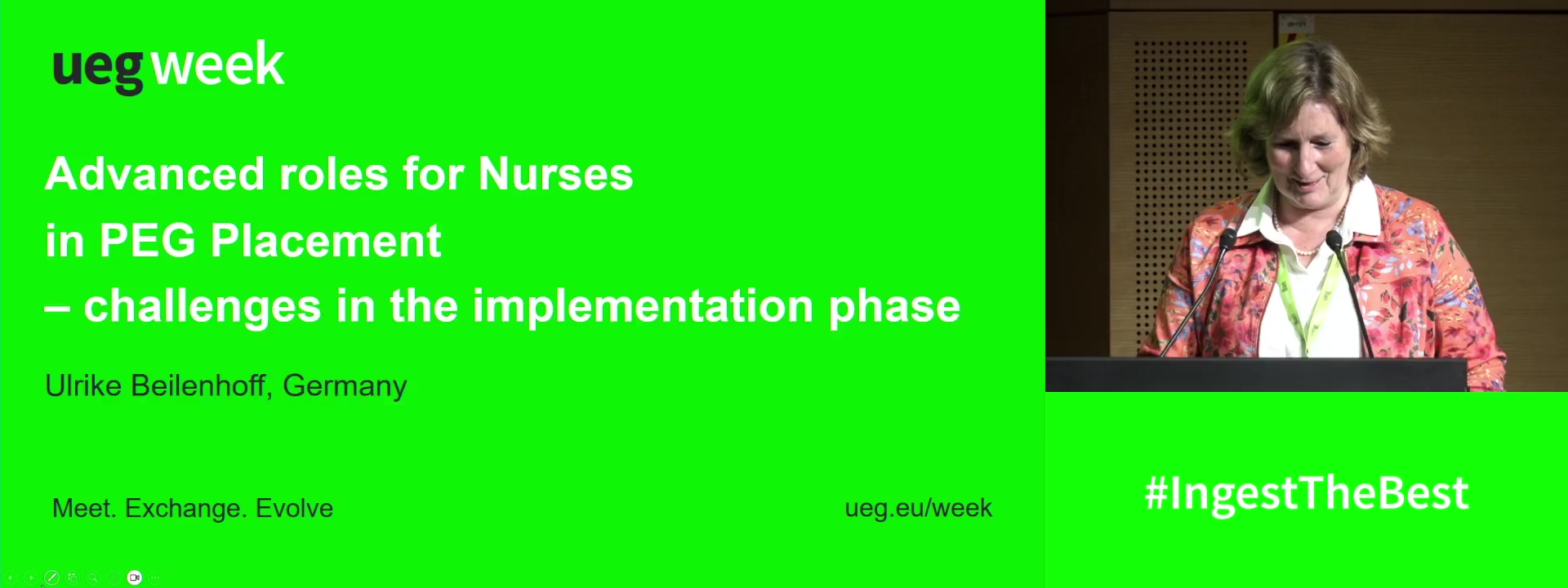
Advanced roles for nurses in PEG placement: Challenges in the implementation phase
1 ESGENA Scientific Secretary, Ulm, Germany
Event
Topics
Citation
Published
Log in to access this content.
Free for all myUEG account holders. Your access level is set automatically based on your occupation. Medical professionals get full access to all content. If you are a non-medical user, you can only access UEG Week content from congresses you attended.
Not sure what you can access? Learn more about account types.
Best of UEG Week 2024 Roberta Maselli on "Endoscopy"
Topics
Published
Log in to access this content.
Free for all myUEG account holders. Your access level is set automatically based on your occupation. Medical professionals get full access to all content. If you are a non-medical user, you can only access UEG Week content from congresses you attended.
Not sure what you can access? Learn more about account types.
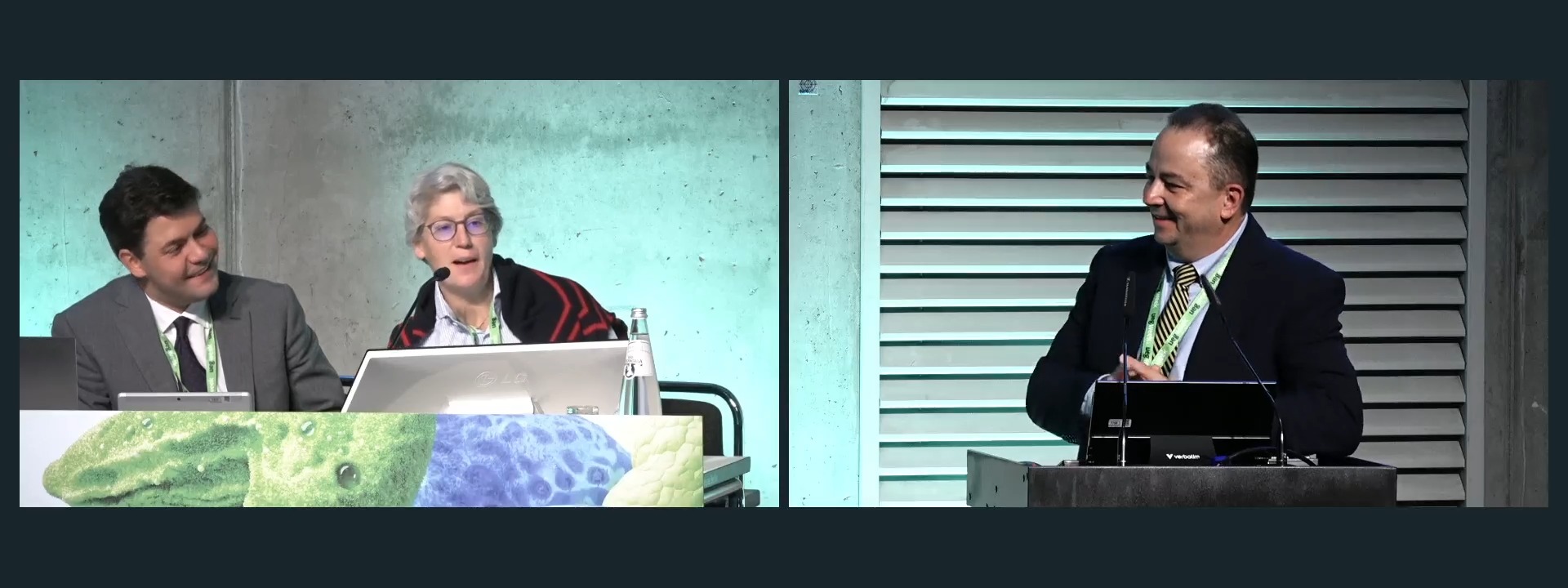
Panel discussion: Obesity in Pan America
Event
Session
Citation
Published
Log in to access this content.
Free for all myUEG account holders. Your access level is set automatically based on your occupation. Medical professionals get full access to all content. If you are a non-medical user, you can only access UEG Week content from congresses you attended.
Not sure what you can access? Learn more about account types.
The future of immunotherapy → are surgeons obsolete soon? with Jeroen Dekervel
Topics
Published
Log in to access this content.
Free for all myUEG account holders. Your access level is set automatically based on your occupation. Medical professionals get full access to all content. If you are a non-medical user, you can only access UEG Week content from congresses you attended.
Not sure what you can access? Learn more about account types.
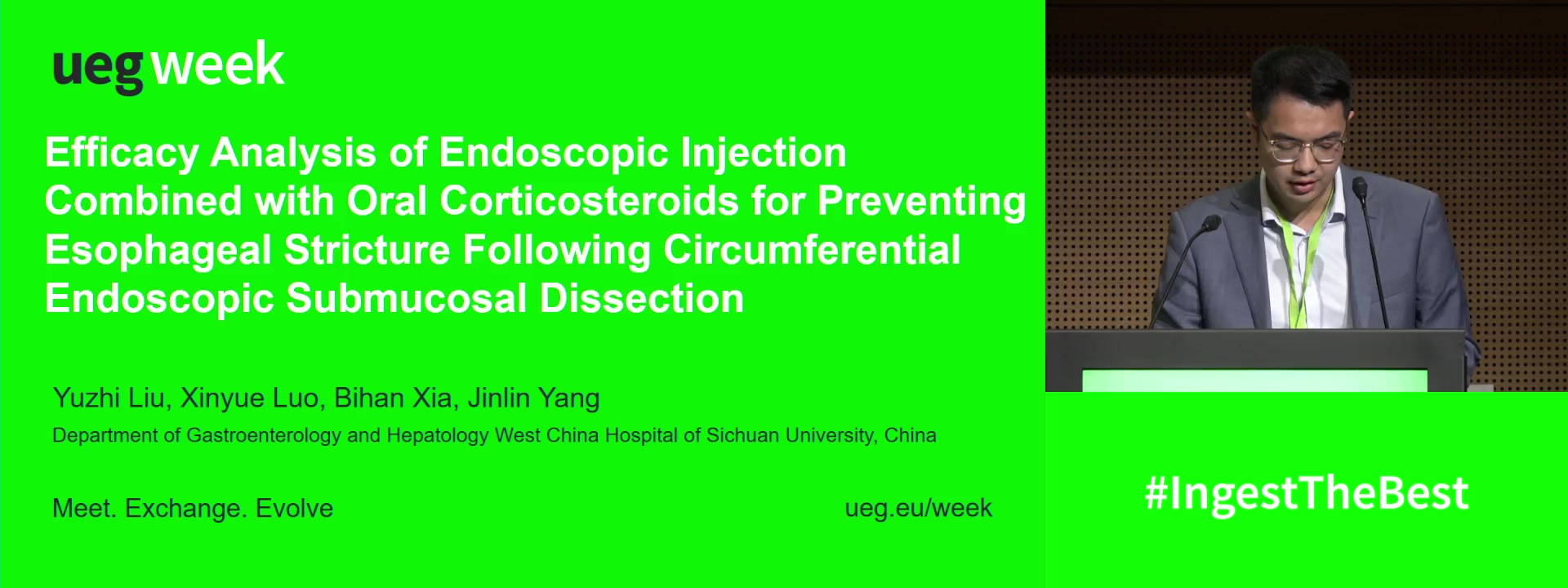
EFFICACY ANALYSIS OF ENDOSCOPIC INJECTION COMBINED WITH ORAL CORTICOSTEROIDS FOR PREVENTING ESOPHAGEAL STRICTURE FOLLOWING CIRCUMFERENTIAL ENDOSCOPIC SUBMUCOSAL DISSECTION
1 West China Hospital of Sichuan University, Chengdu, China
Event
Submission format
Citation
Published
Log in to access this content.
Free for all myUEG account holders. Your access level is set automatically based on your occupation. Medical professionals get full access to all content. If you are a non-medical user, you can only access UEG Week content from congresses you attended.
Not sure what you can access? Learn more about account types.

EMERGENCE OF SEVERE ACUTE HEPATITIS A IN ADULTS: AN 11-YEAR COHORT FROM A TERTIARY CARE CENTER
Reem Mansour 1, Rami Tabbikha 1, Fayrouz Hachicho 1, Ali ElHadi Zreik 1, Batoul Abdallah 1, George F. Araj 1, Kassem Barada 1
1 American University of Beirut Medical Center, Beirut, Lebanon
Conference
Topics
Submission format
Citation
Published
Log in to access this content.
Free for all myUEG account holders. Your access level is set automatically based on your occupation. Medical professionals get full access to all content. If you are a non-medical user, you can only access UEG Week content from congresses you attended.
Not sure what you can access? Learn more about account types.
DOES CONTRAST-ENHANCED ENDOSCOPIC ULTRASOUND GUIDED TISSUE ACQUISITION IMPROVE THE DIAGNOSTIC RATE OF PANCREATIC CANCER COMPARED TO ENDOSCOPIC ULTRASOUND GUIDED TISSUE ACQUISITION IN PATIENTS WITH FEATURES OF CHRONIC PANCREATITIS?
Raluca Jeler 1, Edina Cristina Seulean 1, Rares-Ilie Orzan 2, Voicu Rednic 1, Cristina Pojoga 3, Claudia Hagiu 2, Ioana Rusu 2, Geza Molnar 1, Nadim Al Hajjar 2, Andrada Seicean 2
1 Regional Institute of Gastroenterology and Hepatology “Prof. Dr. Octavian Fodor”, Cluj-Napoca, Romania
2 Regional Institute of Gastroenterology and Hepatology “Prof. Dr. Octavian Fodor”, Cluj-Napoca, Romania|||”Iuliu Hatieganu” University of Medicine and Pharmacy, Cluj-Napoca, Romania
3 Regional Institute of Gastroenterology and Hepatology “Prof. Dr. Octavian Fodor”, Cluj-Napoca, Romania|||Babes-Bolyai University, Cluj-Napoca, Romania
Conference
Topics