UEG's content platform for gastroenterology education bringing recordings, courses, guidelines, and more together in one place.
Trending on Gutflix
Rate for better recommendations!
Your feedback helps us show you more of what you like and less of what you dislike!
Log in to continue.
This content is part of Gutflix. Log in with your myUEG account, or create one free, to watch it.
Not sure what you can access? Learn more about account types.
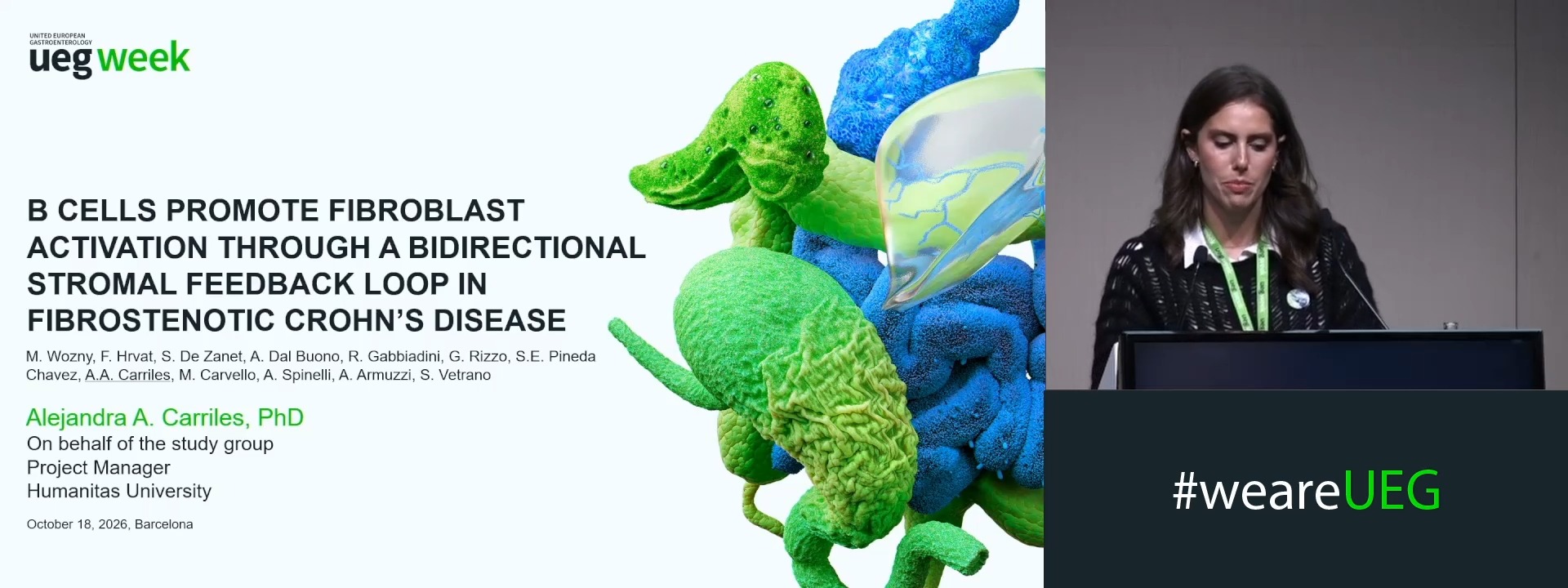
B CELLS PROMOTE FIBROBLAST ACTIVATION THROUGH A BIDIRECTIONAL STROMAL FEEDBACK LOOP IN FIBROSTENOTIC CROHN’S DISEASE
Marek Wozny 1, Faris Hrvat 1, Stefano De Zanet 2, Arianna Dal Buono 3, Roberto Gabbiadini 3, Giulia Rizzo 4, Samuel Elias Pineda Chavez 5, Alejandra Angela Carriles Linares 1, Michele Carvello 2, Antonino Spinelli 6, Alessandro Armuzzi 7, Stefania Vetrano 8
Affiliations
1 Humanitas University, Pieve Emanuele, Italy
2 IRCCS Humanitas Research Hospital, Rozzano, Italy
3 Humanitas University, Milan, Italy
4 Humanitas Research Hospital, Rozzano, Italy
5 Humanitas University, Rozzano, Italy
6 Humanitas University, Rozzano Milano, Italy
7 IBD Center, IRCCS Humanitas Research Hospital, Rozzano, Milan, Italy
8 Istituto Clinico Humanitas Dept. of Gastroenterology, Rozzano, Italy
Log in to continue.
This content is part of Gutflix. Log in with your myUEG account, or create one free, to watch it.
Not sure what you can access? Learn more about account types.
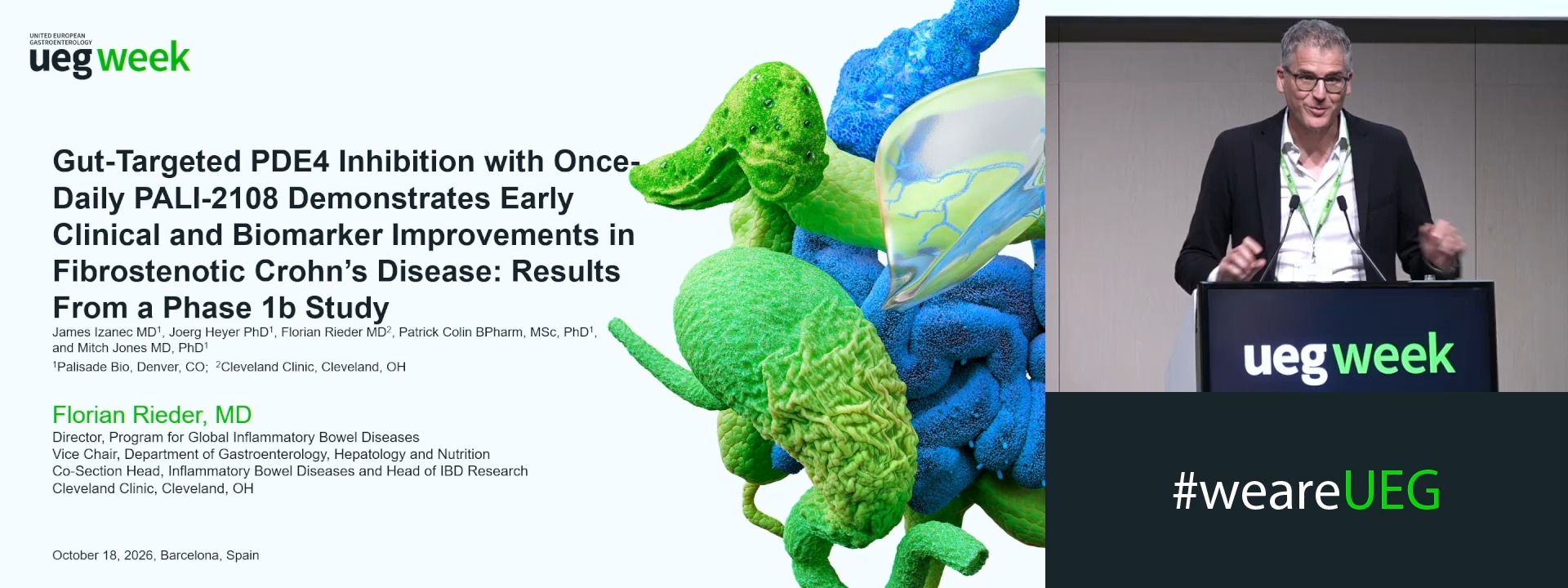
GUT-TARGETED PDE4 INHIBITION WITH ONCE-DAILY PALI-2108 DEMONSTRATES EARLY CLINICAL AND BIOMARKER IMPROVEMENTS IN FIBROSTENOTIC CROHN’S DISEASE: RESULTS FROM A PHASE 1B STUDY
Affiliations
1 Palisade Bio, Denver, United States
2 Cleveland Clinic Foundation, Cleveland, United States
Log in to continue.
This content is part of Gutflix. Log in with your myUEG account, or create one free, to watch it.
Not sure what you can access? Learn more about account types.
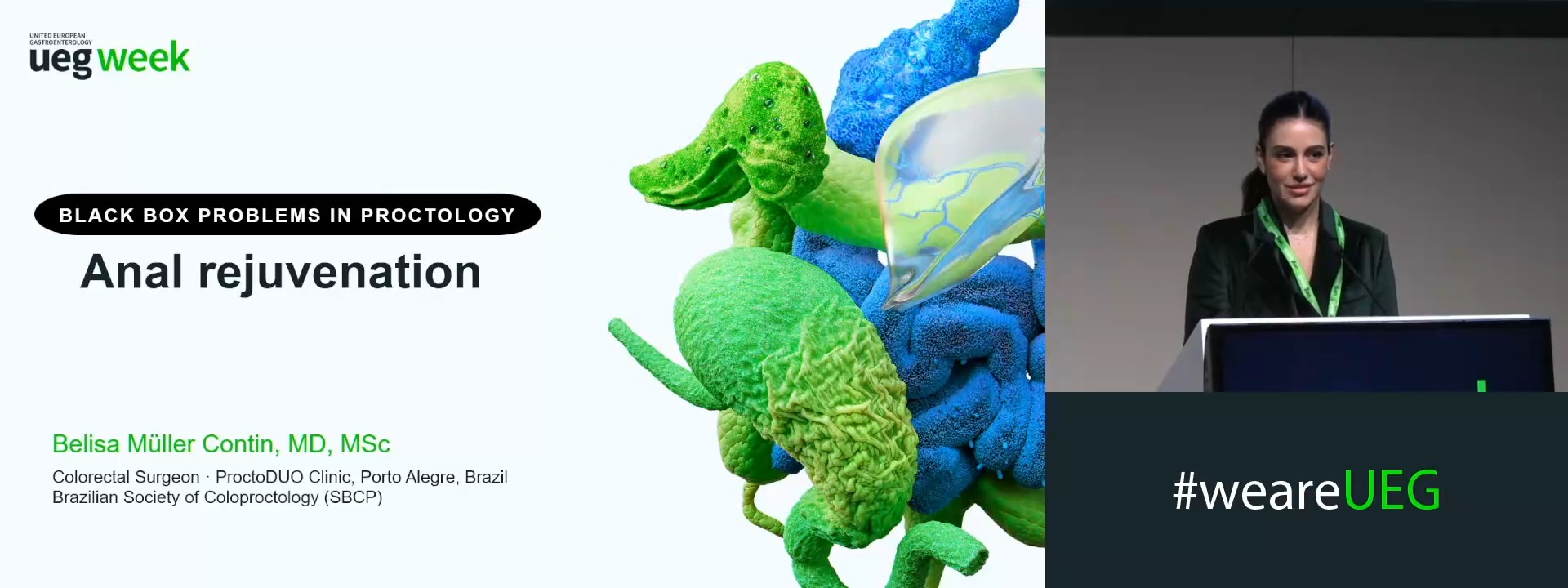
Anal rejuvenation
Affiliations
1 ProctoDUO Clinic, Porto Alegre, Brazil
Log in to continue.
This content is part of Gutflix. Log in with your myUEG account, or create one free, to watch it.
Not sure what you can access? Learn more about account types.
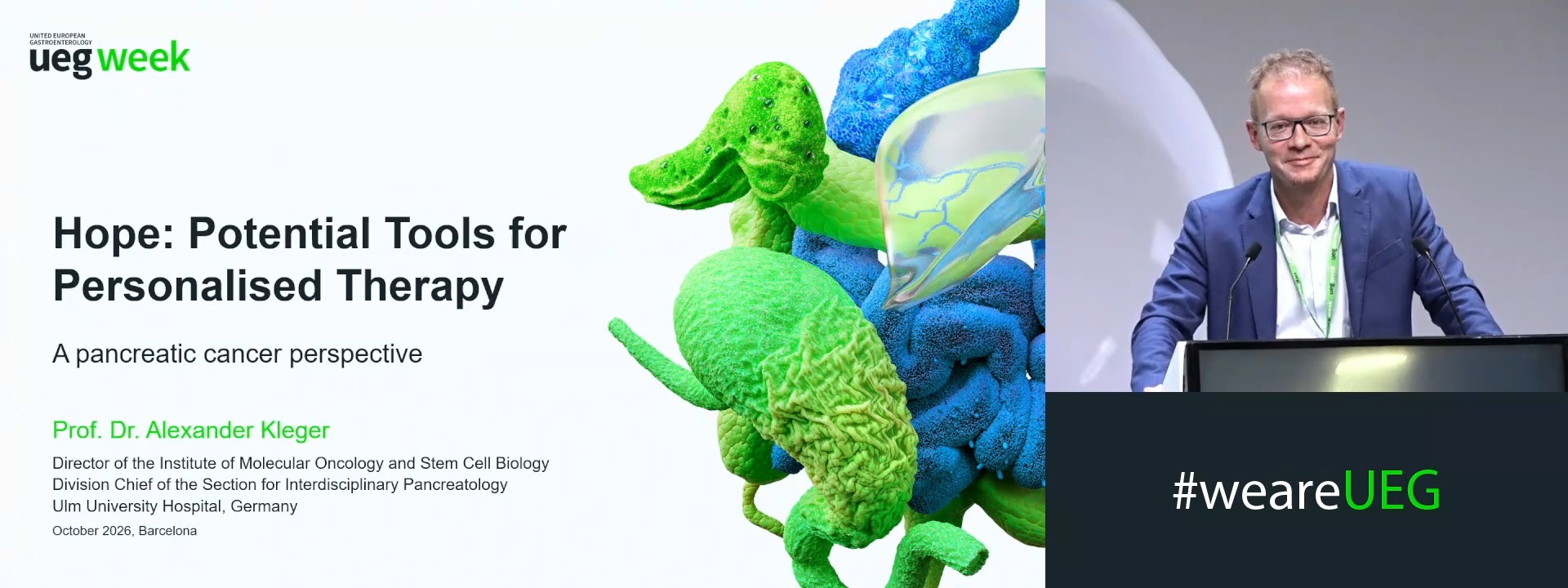
Hope: Potential tools for personalised therapy
Log in to continue.
This content is part of Gutflix. Log in with your myUEG account, or create one free, to watch it.
Not sure what you can access? Learn more about account types.
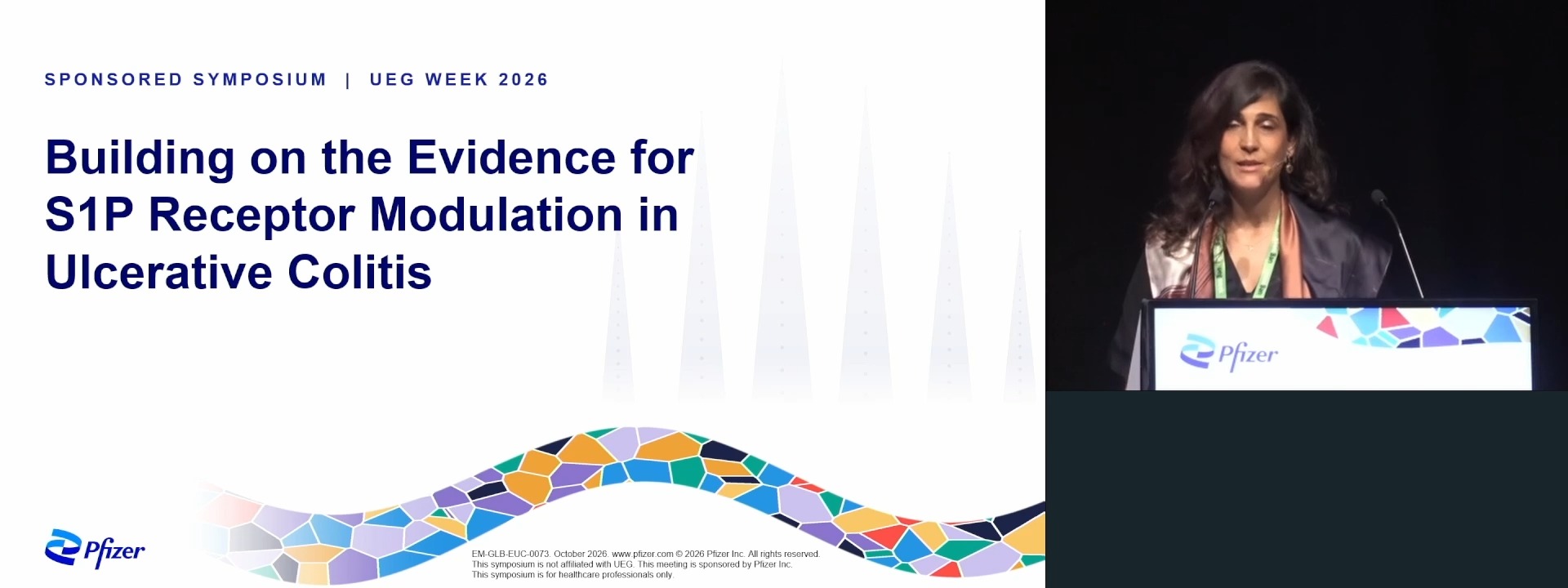
Building on the Evidence for S1P Receptor Modulation in Ulcerative Colitis (Pfizer) (Complete Session)
Affiliations
1 University of Chicago Medicine, Chicago, United States of America
2 IBD Center, IRCCS Humanitas Research Hospital, Rozzano, Milan, Italy
3 Hospital Beatriz Ângelo & Hospital da Luz, Lisbon, Portugal
Log in to continue.
This content is part of Gutflix. Log in with your myUEG account, or create one free, to watch it.
Not sure what you can access? Learn more about account types.
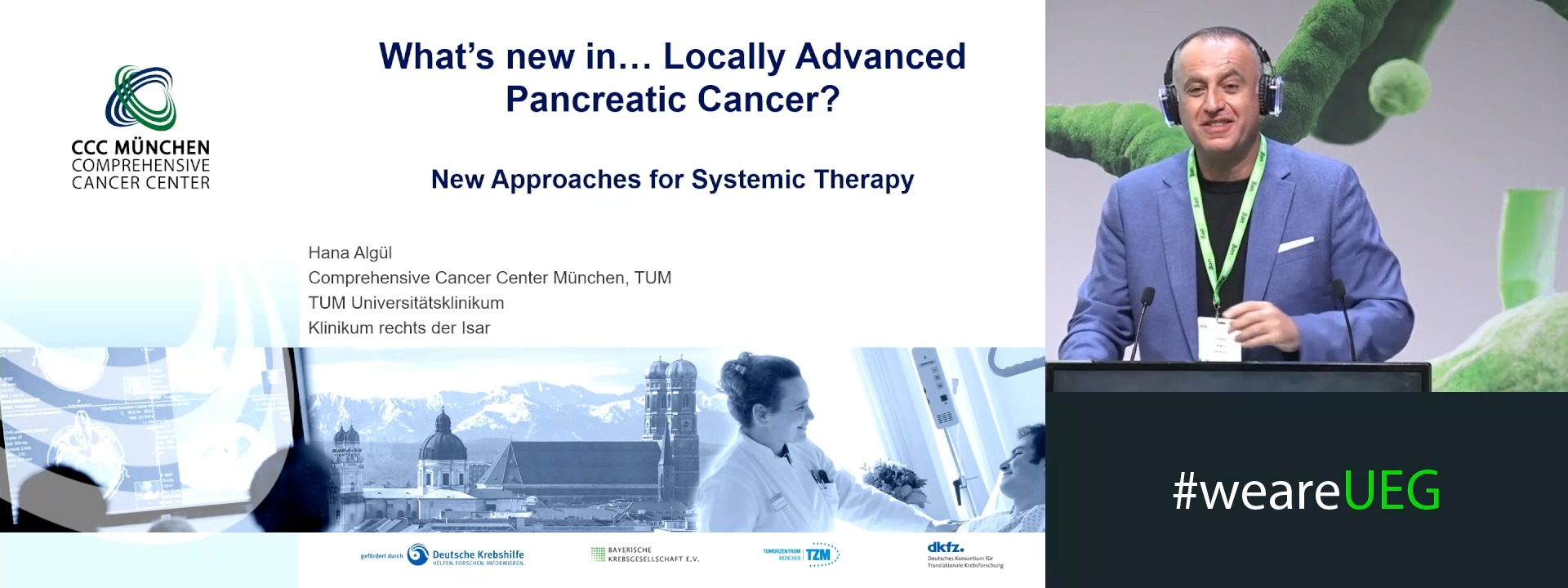
New approaches for systemic therapy
Affiliations
1 Technical University of Munich, Munich, Germany