UEG's content platform for gastroenterology education bringing recordings, courses, guidelines, and more together in one place.
Trending on Gutflix
Rate for better recommendations!
Your feedback helps us show you more of what you like and less of what you dislike!
Log in to continue.
This content is part of Gutflix. Log in with your myUEG account, or create one free, to watch it.
Not sure what you can access? Learn more about account types.
The role of the clinical educator in endoscopy
Affiliations
1 None, None, United Kingdom
Log in to continue.
This content is part of Gutflix. Log in with your myUEG account, or create one free, to watch it.
Not sure what you can access? Learn more about account types.
From bench to bedside: Using multiomics for personalised therapy
Affiliations
1 UZ Leuven, Leuven, Belgium
Log in to continue.
This content is part of Gutflix. Log in with your myUEG account, or create one free, to watch it.
Not sure what you can access? Learn more about account types.
Unsolved problems with imaging in pancreatic cancer
Affiliations
1 Jules Bordet Institut, Université Libre de Bruxelles, Brussels, Italy
Log in to continue.
This content is part of Gutflix. Log in with your myUEG account, or create one free, to watch it.
Not sure what you can access? Learn more about account types.
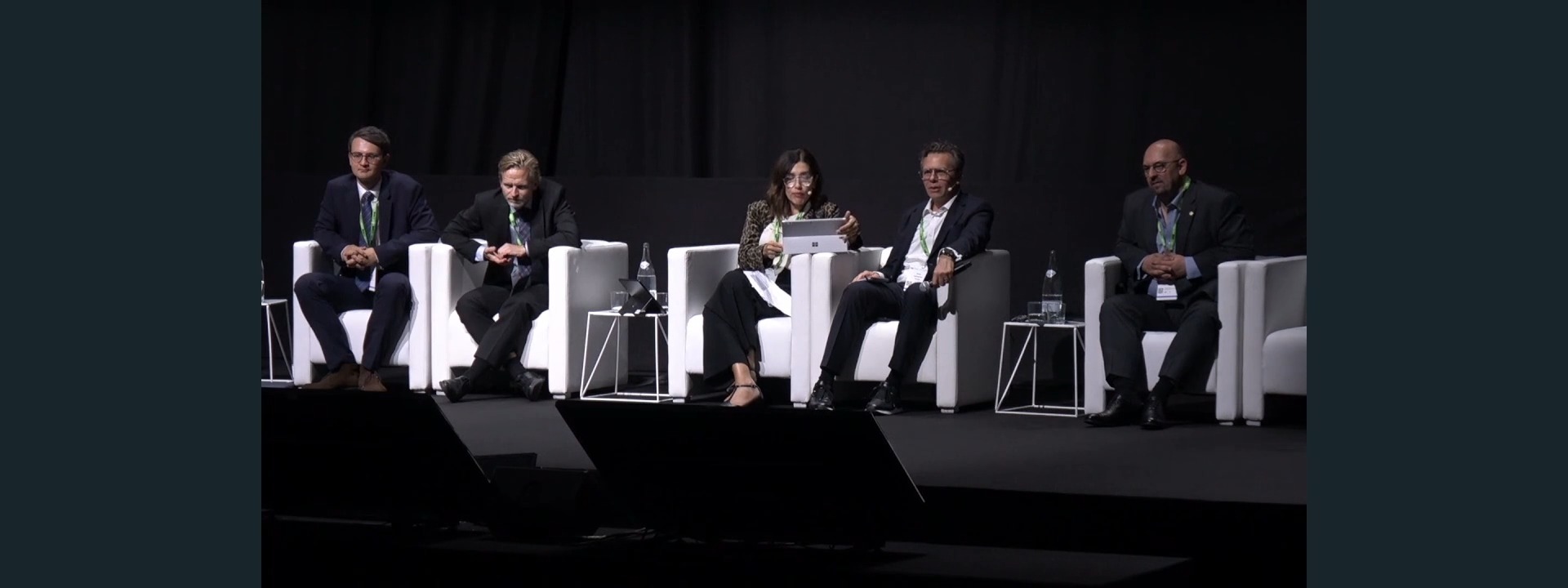
Panel discussion: How to tackle PSC/IBD from a multidisciplinary perspective
Log in to continue.
This content is part of Gutflix. Log in with your myUEG account, or create one free, to watch it.
Not sure what you can access? Learn more about account types.
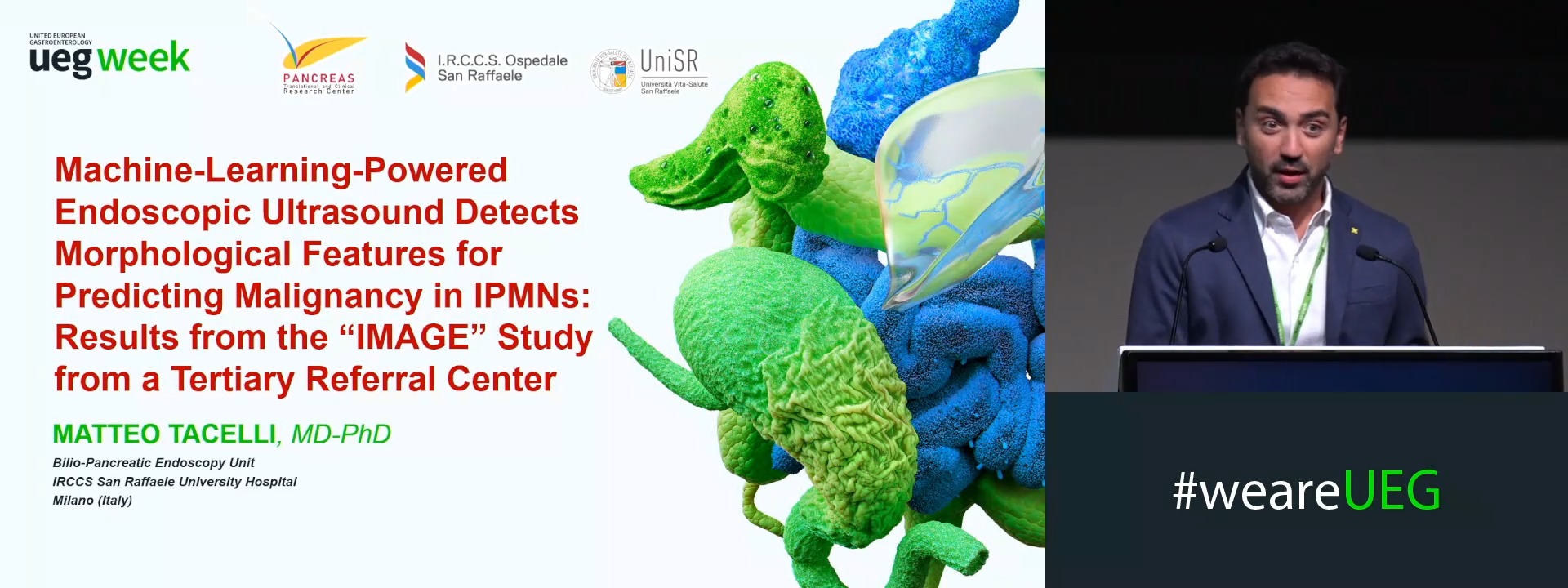
MACHINE-LEARNING-POWERED ENDOSCOPIC ULTRASOUND DETECTS MORPHOLOGICAL FEATURES FOR PREDICTING MALIGNANCY IN IPMNS: RESULTS FROM THE “IMAGE” STUDY FROM A TERTIARY REFERRAL CENTER
Matteo Tacelli 1, Piera Zaccari 1, Alessandro Mannucci 1, Maria Chiara Petrone 1, Giulio Belfiori 1, Gabriele Capurso 1, Massimo Falconi 1, Michele Reni 1, Federica Pedica 1, Stefano Crippa 1, Paolo Giorgio Arcidiacono 1
Affiliations
1 San Raffaele Scientific Institute IRCCS, Milano, Italy
Log in to continue.
This content is part of Gutflix. Log in with your myUEG account, or create one free, to watch it.
Not sure what you can access? Learn more about account types.
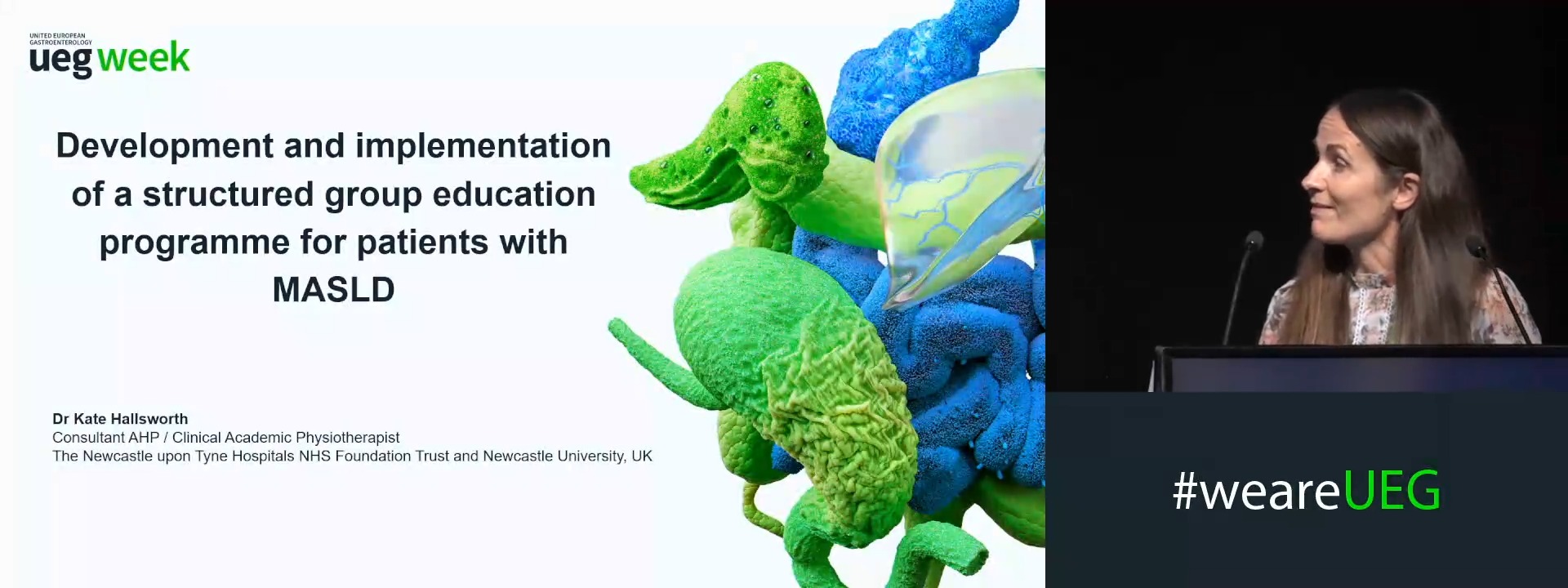
Supporting self-management: Development and implementation of a structured group education programme for patients with MASLD
Affiliations
1 NIHR Newcastle Biomedical Research Centre, Newcastle upon Tyne, United Kingdom