UEG's educational platform for gastroenterology education bringing recordings, courses, guidelines, and more together in one place.
Most popular content
Rate for better recommendations!
Your feedback helps us show you more of what you like and less of what you dislike!
Log in to access this content.
Free for all myUEG account holders. Your access level is set automatically based on your occupation. Medical professionals get full access to all content. If you are a non-medical user, you can only access UEG Week content from congresses you attended.
Not sure what you can access? Learn more about account types.

FROM GUT TO LIVER: MICROBIOTA-BASED INTERVENTIONS FOR NAFLD
1 Danylo Halytsky Lviv National Medical University, Lviv, Ukraine
2 Bukovinian State Medical University, Chernivtsi, Ukraine
3 Shupyk National Healthcare University of Ukraine, Kyiv, Ukraine
4 National Medical Academy of Postgraduate Education by P.Shupyk, Kyiv, Ukraine
Conference
Topics
Submission format
Session
Citation
Published
Log in to access this content.
Free for all myUEG account holders. Your access level is set automatically based on your occupation. Medical professionals get full access to all content. If you are a non-medical user, you can only access UEG Week content from congresses you attended.
Not sure what you can access? Learn more about account types.
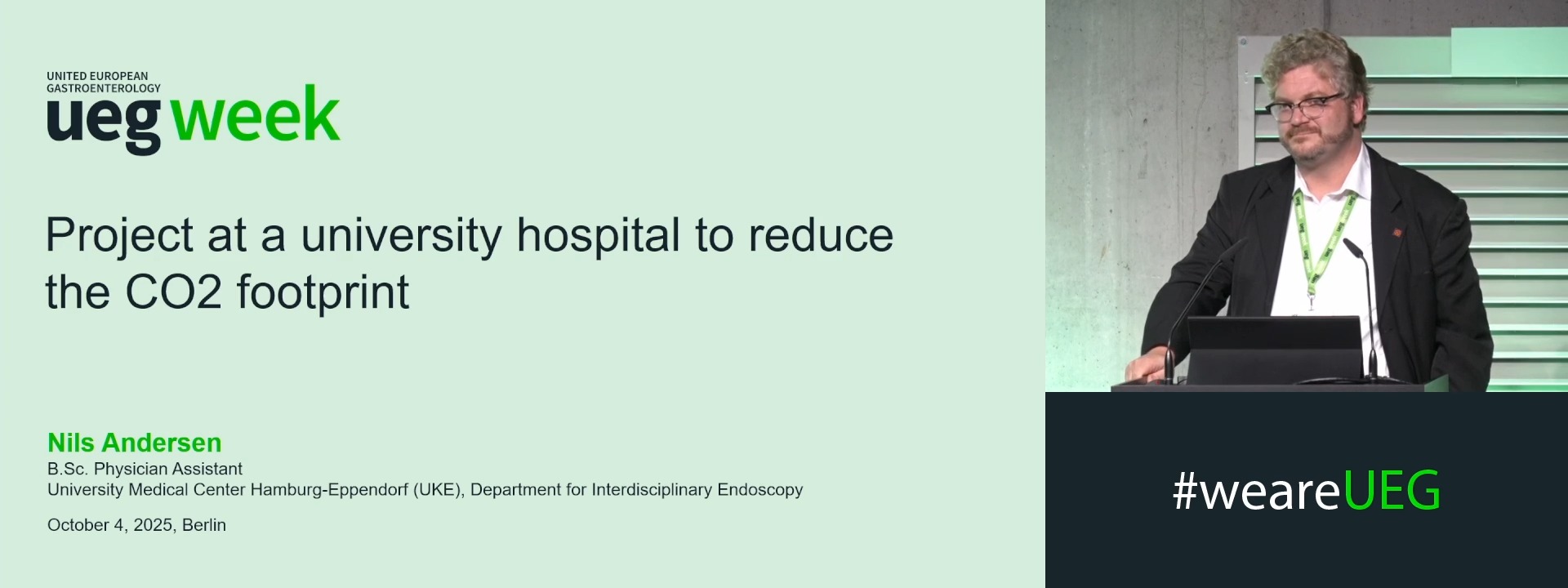
Project at a university hospital to reduce the CO2 footprint
1 UKE Hamburg-Eppendorf Abt. Endoskopie, Hamburg, Germany
Event
Topics
Citation
Published
Log in to access this content.
Free for all myUEG account holders. Your access level is set automatically based on your occupation. Medical professionals get full access to all content. If you are a non-medical user, you can only access UEG Week content from congresses you attended.
Not sure what you can access? Learn more about account types.
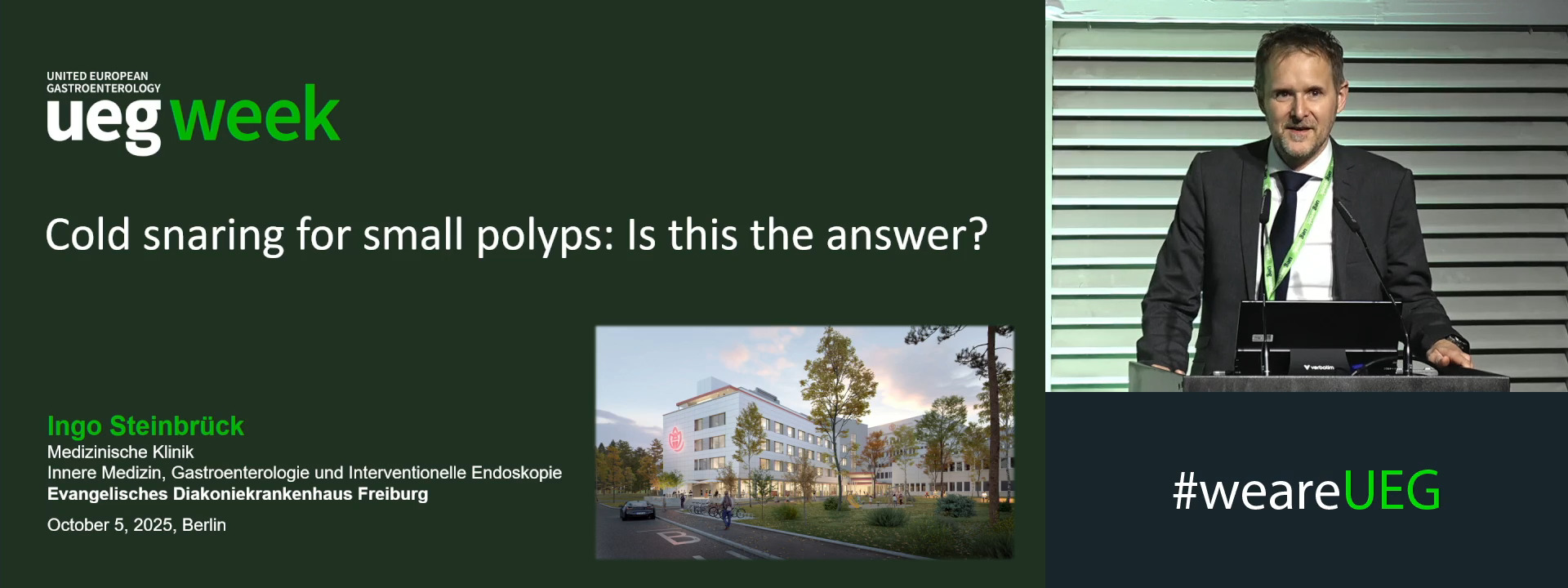
Cold snaring for small polyps or serrated polyps: Is this the answer?
1 AMC, Amsterdam, Netherlands
2 Evangelisches Diakoniekrankenhaus Freiburg, Freiburg, Germany
Event
Session
Citation
Published
Log in to access this content.
Free for all myUEG account holders. Your access level is set automatically based on your occupation. Medical professionals get full access to all content. If you are a non-medical user, you can only access UEG Week content from congresses you attended.
Not sure what you can access? Learn more about account types.
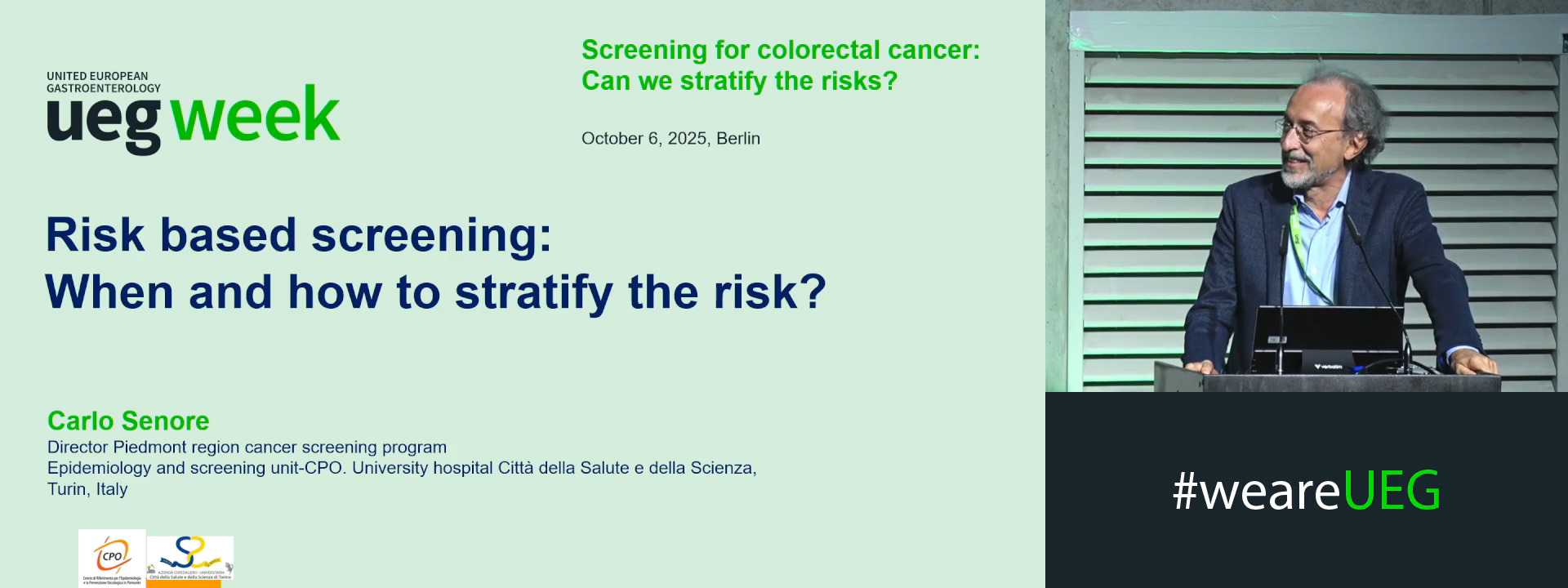
Risk based screening: When and how to stratify the risk?
1 University Hospital Città della Salute e della Scienza, Torino, Italy
Event
Citation
Published
Log in to access this content.
Free for all myUEG account holders. Your access level is set automatically based on your occupation. Medical professionals get full access to all content. If you are a non-medical user, you can only access UEG Week content from congresses you attended.
Not sure what you can access? Learn more about account types.
DIMINISHED GUT MICROBIOME DIVERSITY IN INFLAMMATORY BOWEL DISEASE: INSIGHTS FROM LONG-READ 16S RRNA AMPLICON SEQUENCING
Svetlana Lyamina 1, Iurii Slepov 2, Yulia Akishina 3, Ekaterina Kozhevnikova 2, Sergey Kalish 2, Maria Skalinskaya 3, Petr A. Beliy 2, Igor Bakulin 3, Igor Maev 2
1 Russian University of Medicine, Moscow, Russian Federation|||Russian University of Medicine, Moscow, Russian Federation
2 Russian University of Medicine, Moscow, Russian Federation
3 North-Western State Medical University named after I.I. Mechnikov, Saint Petersburg, Russian Federation
Conference
Topics
Submission format
Session
Citation
Published
Log in to access this content.
Free for all myUEG account holders. Your access level is set automatically based on your occupation. Medical professionals get full access to all content. If you are a non-medical user, you can only access UEG Week content from congresses you attended.
Not sure what you can access? Learn more about account types.
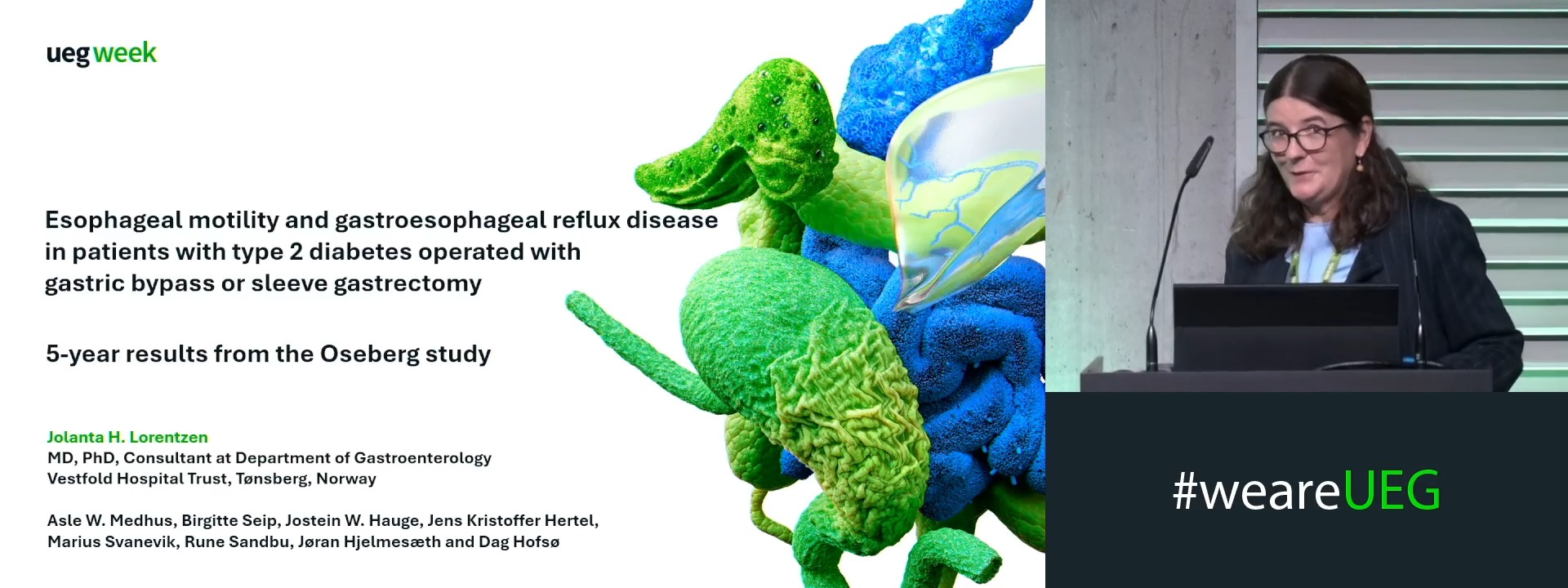
ESOPHAGEAL MOTILITY AND GASTROESOPHAGEAL REFLUX DISEASE IN PATIENTS WITH TYPE 2 DIABETES OPERATED WITH GASTRIC BYPASS OR SLEEVE GASTRECTOMY, 5-YEAR RESULTS FROM THE OSEBERG STUDY
Jolanta Lorentzen 1, Jostein W. Hauge 2, Asle W. Medhus 3, Jens K. Hertel 2, Birgitte Seip 4, Marius Svanevik 2, Rune Sandbu 2, Dag Hofsø 2, Jøran Hjelmesæth 2
1 Vestfold Hospital Trust, Tønsberg, Norway
2 Vestfold Hospital Trust, Tonsberg, Norway
3 Oslo University Hospital, Oslo, Norway
4 Vestfold Hospital, Tønsberg, Norway
Event
Submission format
Session
Citation
Published
Log in to access this content.
Free for all myUEG account holders. Your access level is set automatically based on your occupation. Medical professionals get full access to all content. If you are a non-medical user, you can only access UEG Week content from congresses you attended.
Not sure what you can access? Learn more about account types.
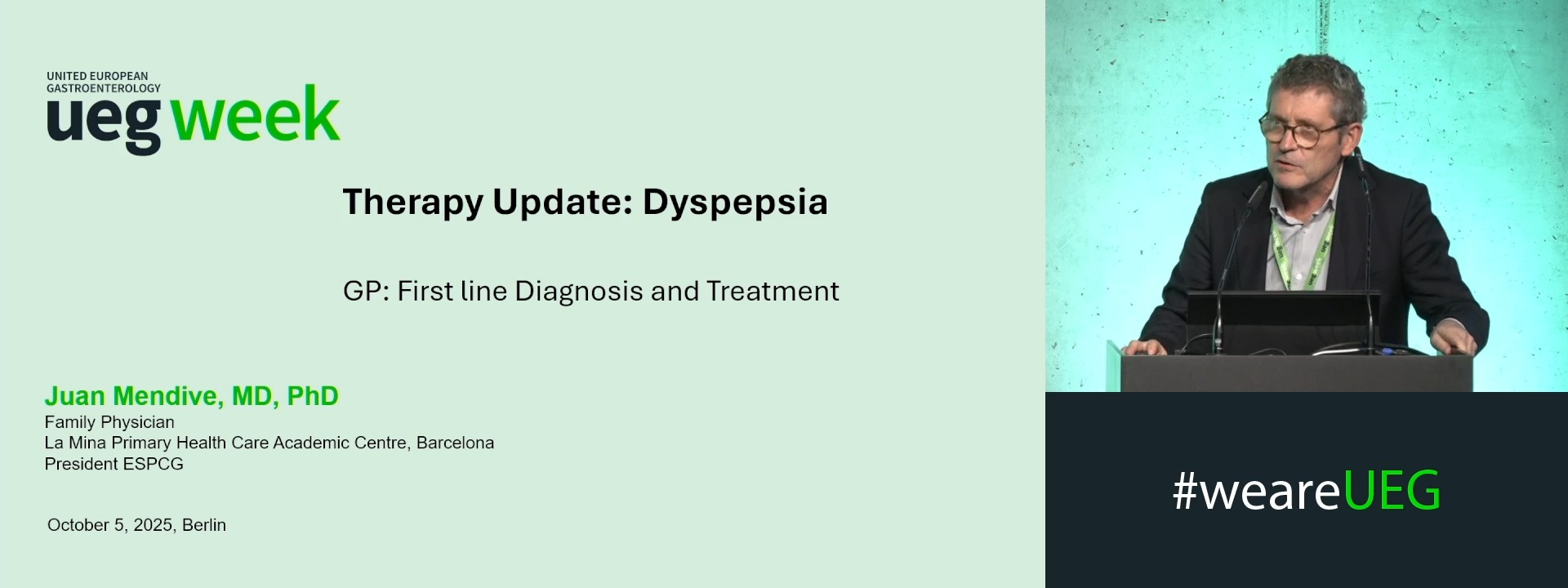
GP: First line diagnosis and treatment
1 European Society for Primary Care Gastroenterology (ESPCG), Sant Adrià de Besòs ( Barcelona), Spain
Event
Session