UEG's educational platform for gastroenterology education bringing recordings, courses, guidelines, and more together in one place.
Most popular content
Rate for better recommendations!
Your feedback helps us show you more of what you like and less of what you dislike!
Log in to access this content.
Free for all myUEG account holders. Your access level is set automatically based on your occupation. Medical professionals get full access to all content. If you are a non-medical user, you can only access UEG Week content from congresses you attended.
Not sure what you can access? Learn more about account types.
THE ROLE OF NURSING INTERVENTIONS FOR ALLERGIC REACTIONS TO INTRAVENOUS IRON
1 University Hospital Centre “Sestre milosrdnice“, Zagreb, Croatia
2 KBC Sestre Milosrdnice, Zagreb, Croatia
Conference
Submission format
Session
Citation
Published
Log in to access this content.
Free for all myUEG account holders. Your access level is set automatically based on your occupation. Medical professionals get full access to all content. If you are a non-medical user, you can only access UEG Week content from congresses you attended.
Not sure what you can access? Learn more about account types.
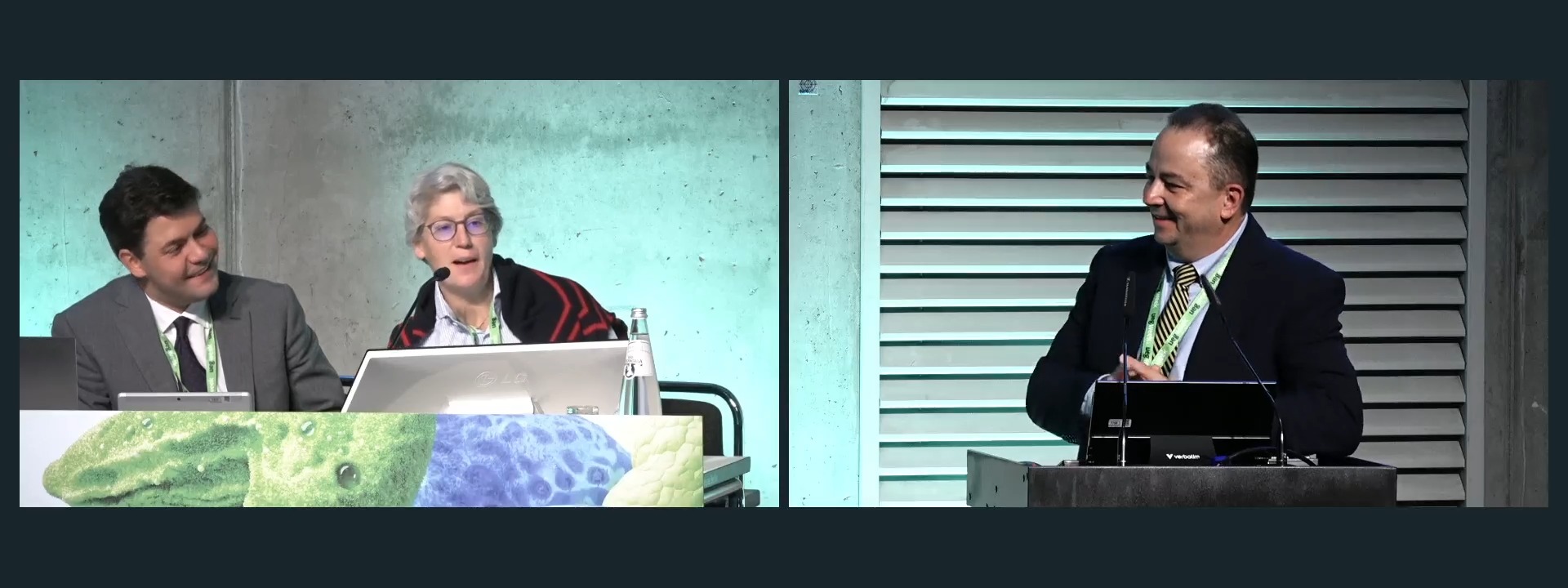
Panel discussion: Obesity in Pan America
Event
Session
Citation
Published
Log in to access this content.
Free for all myUEG account holders. Your access level is set automatically based on your occupation. Medical professionals get full access to all content. If you are a non-medical user, you can only access UEG Week content from congresses you attended.
Not sure what you can access? Learn more about account types.
CASE REPORT OF SINGLE BALOON ENTEROSCOPY EXTRACTION OF VIDEOCAPSULE
1 CHC Rijeka, Rijeka, Croatia
Conference
Submission format
Session
Citation
Published
Log in to access this content.
Free for all myUEG account holders. Your access level is set automatically based on your occupation. Medical professionals get full access to all content. If you are a non-medical user, you can only access UEG Week content from congresses you attended.
Not sure what you can access? Learn more about account types.
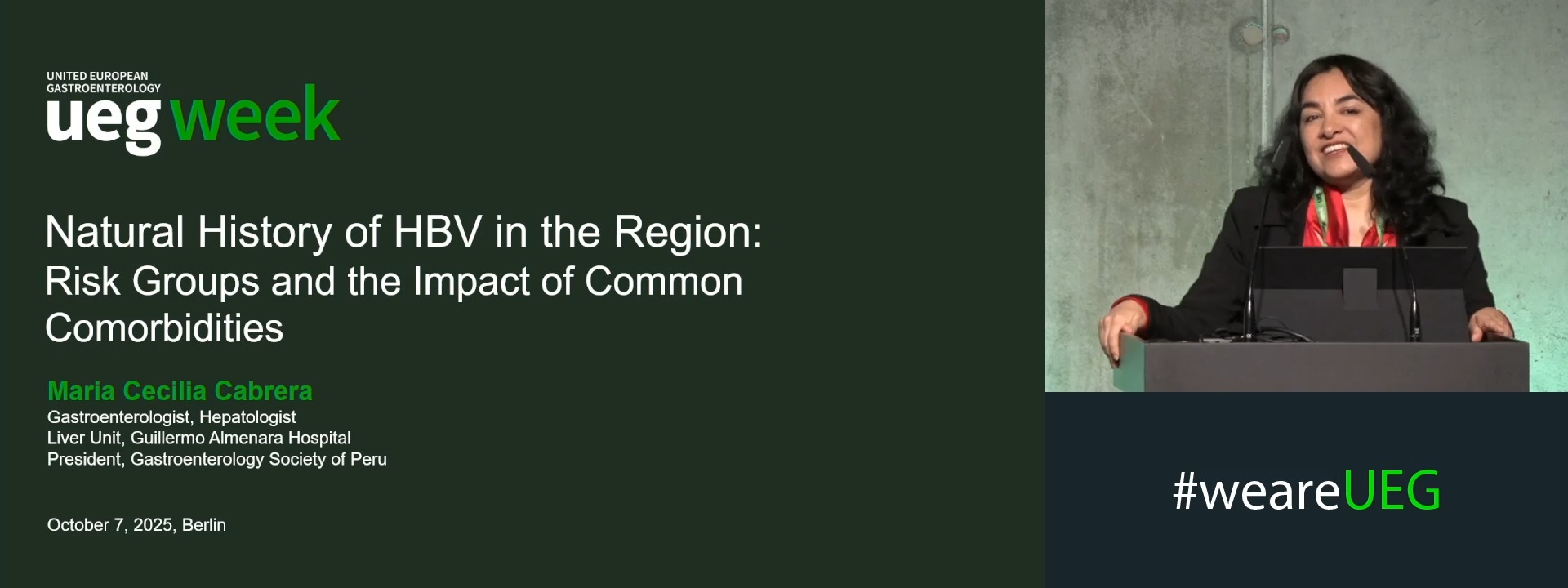
Natural History of HBV in the Region: Risk Groups and the Impact of Common Comorbidities
1 Hospital Beonym, Lima, Peru
Event
Session
Citation
Published
Log in to access this content.
Free for all myUEG account holders. Your access level is set automatically based on your occupation. Medical professionals get full access to all content. If you are a non-medical user, you can only access UEG Week content from congresses you attended.
Not sure what you can access? Learn more about account types.
NURSING SKILLS ENDOSCOPIC VACUUM THERAPY FOR ESOPHAGEAL ANASTOMOTIC LEAKS - DATA FROM A TERTIARY HOSPITAL
1 Instituto Português de Oncologia - Lisboa, Lisboa, Portugal
2 Portuguese Oncology Institute Francisco Gentil, Lisbon, Lisbon, Portugal
Conference
Submission format
Session
Citation
Published
Log in to access this content.
Free for all myUEG account holders. Your access level is set automatically based on your occupation. Medical professionals get full access to all content. If you are a non-medical user, you can only access UEG Week content from congresses you attended.
Not sure what you can access? Learn more about account types.
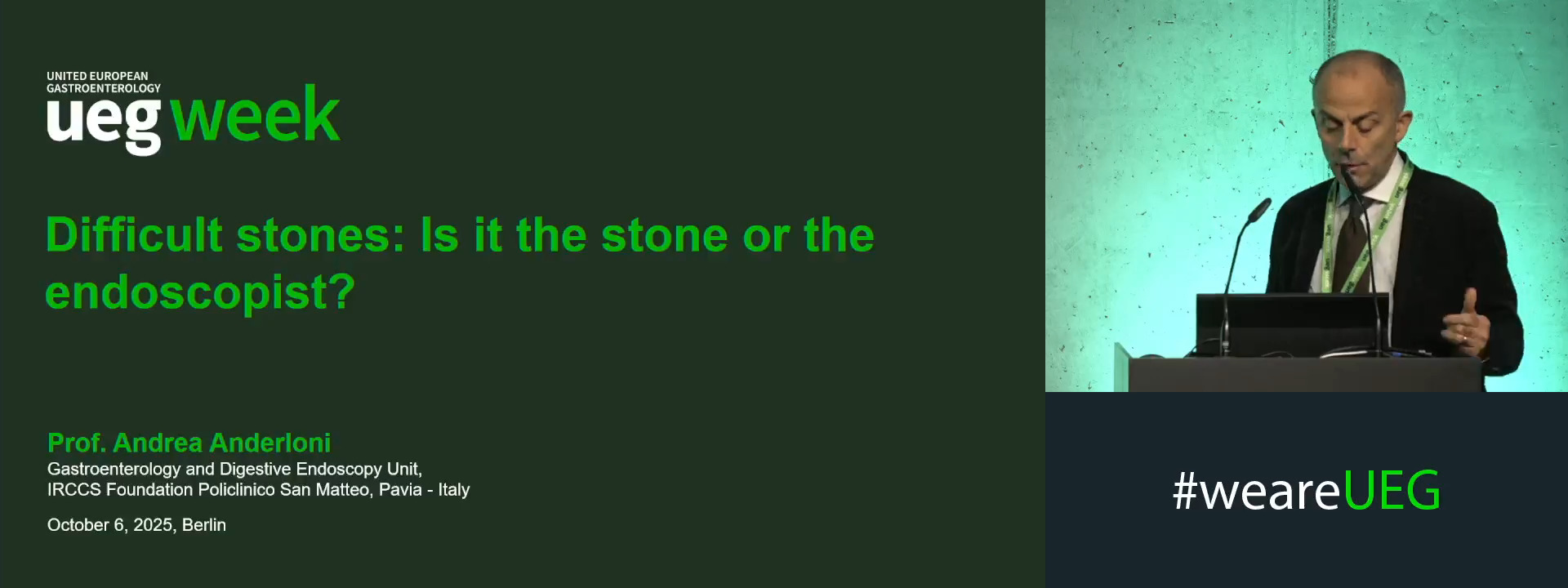
Difficult stones: Is it the stone or the endoscopist?
1 San Matteo Hospital, Pavia, Italy
Event
Topics
Citation
Published
Log in to access this content.
Free for all myUEG account holders. Your access level is set automatically based on your occupation. Medical professionals get full access to all content. If you are a non-medical user, you can only access UEG Week content from congresses you attended.
Not sure what you can access? Learn more about account types.
THE ASSOCIATION BETWEEN RUMINATION AND POSTTRAUMATIC GROWTH IN PATIENTS WITH INFLAMMATORY BOWEL DISEASE: A CROSS-SECTIONAL STUDY
1 Zhejiang Chinese Medical University, Hangzhou, China
Conference
Submission format
Session