UEG's content platform for gastroenterology education bringing recordings, courses, guidelines, and more together in one place.
Trending on Gutflix
Rate for better recommendations!
Your feedback helps us show you more of what you like and less of what you dislike!
Log in to continue.
This content is part of Gutflix. Log in with your myUEG account, or create one free, to watch it.
Not sure what you can access? Learn more about account types.
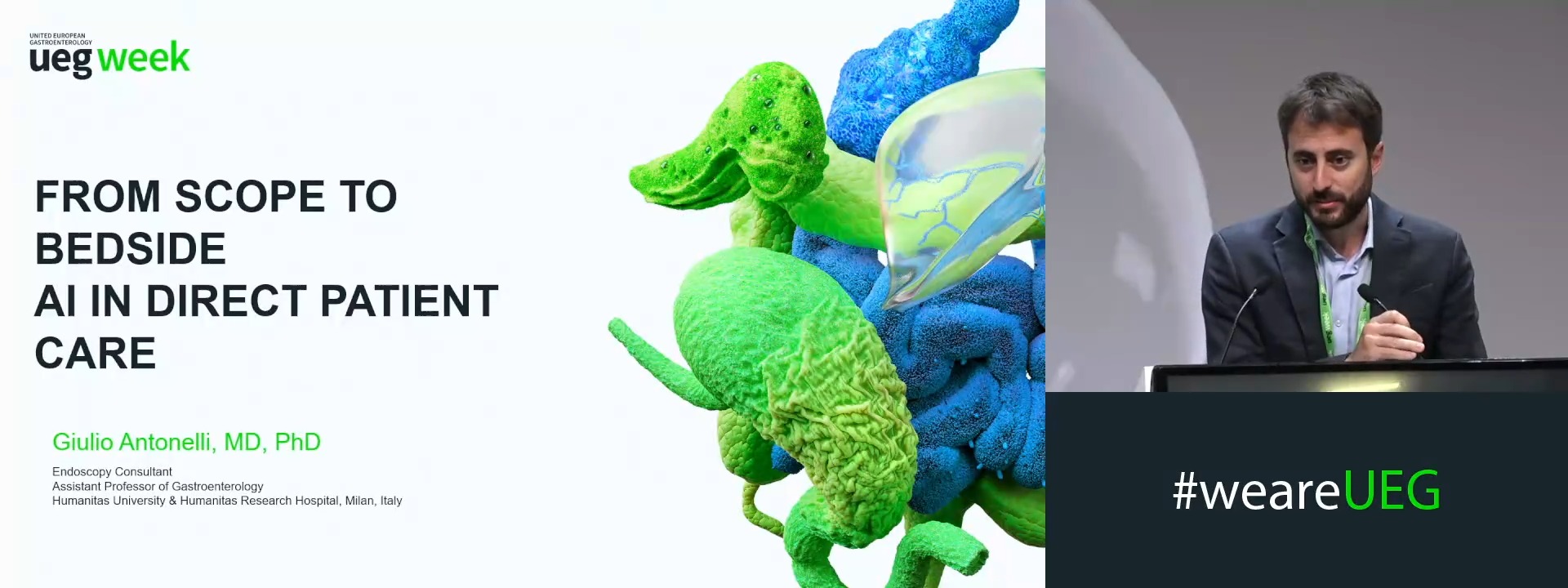
From scope to bedside: AI in direct patient care
Affiliations
1 Ospedale dei Castelli, Rome, Italy
Log in to continue.
This content is part of Gutflix. Log in with your myUEG account, or create one free, to watch it.
Not sure what you can access? Learn more about account types.
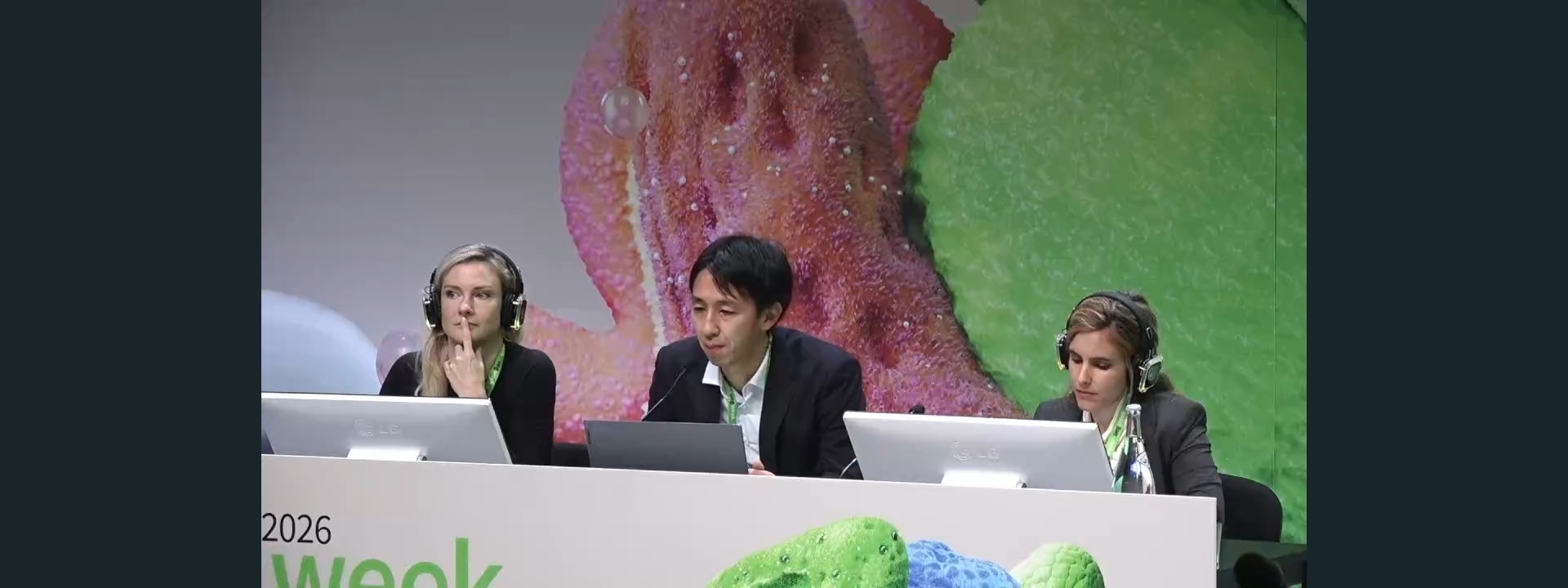
Introduction: AI integration in my clinical practice today
Affiliations
1 University of Oslo / Showa University, Oslo, Norway
Log in to continue.
This content is part of Gutflix. Log in with your myUEG account, or create one free, to watch it.
Not sure what you can access? Learn more about account types.
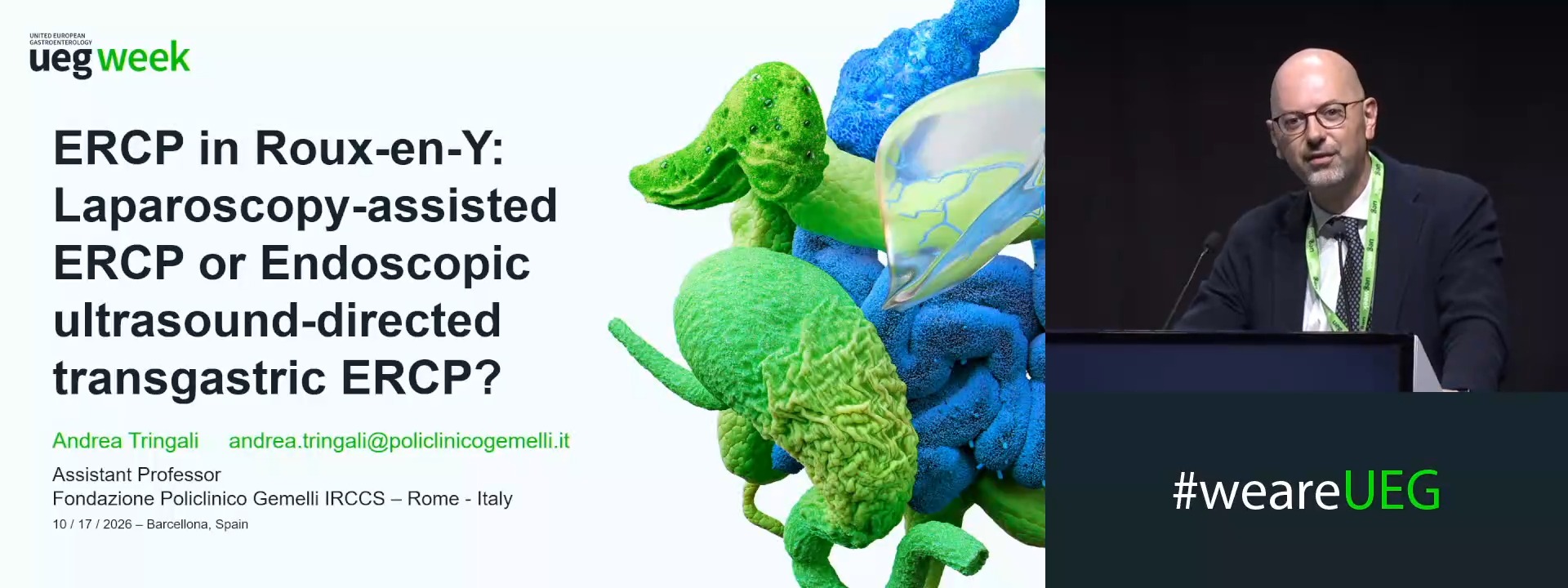
Video case: ERCP in Roux-en-Y: Laparoscopy-assisted ERCP or endoscopic ultrasound-directed transgastric ERCP?
Affiliations
1 Catholic University of the Sacred Heart, Rome, Italy
Log in to continue.
This content is part of Gutflix. Log in with your myUEG account, or create one free, to watch it.
Not sure what you can access? Learn more about account types.
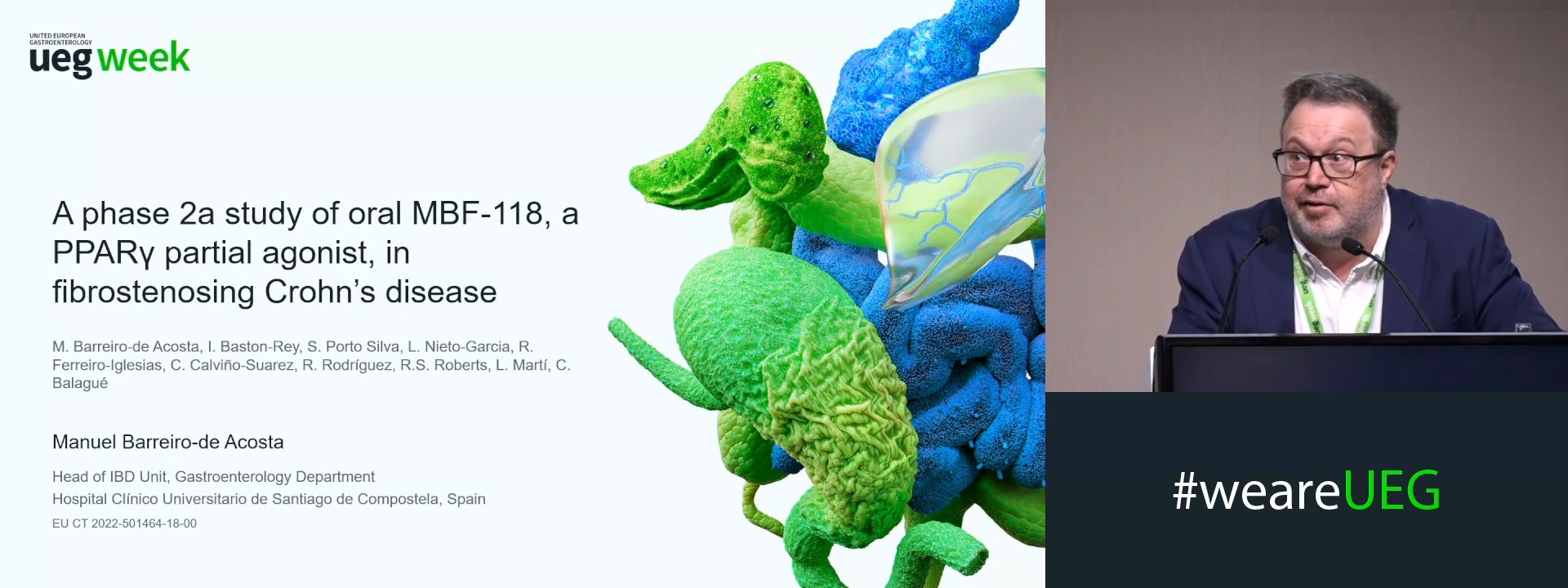
A PHASE 2A STUDY TO EVALUATE SAFETY, PHARMACOKINETICS AND CLINICAL EFFICACY OF ORAL TREATMENT WITH MBF-118 IN PATIENTS WITH FIBROSTENOSING CROHN’S DISEASE
Manuel Barreiro de Acosta 1,2, Iria Bastón-Rey 1,2, María del Sol Porto-Silva 1,2, Laura Nieto-Garcia 1,2, Rocío Ferreiro-Iglesias 1,2, Cristina Calviño Suarez 2,1, Rodolfo Rodríguez 3, Richard Roberts 3, Luc Marti 3, Cristina Balagué 3
Affiliations
1 Health Research Institute of Santiago de Compostela (IDIS), Santiago de Compostela, Spain
2 University Hospital of Santiago de Compostela, Santiago de Compostela, Spain
3 Medibiofarma S.L, Pamplona, Spain
Log in to continue.
This content is part of Gutflix. Log in with your myUEG account, or create one free, to watch it.
Not sure what you can access? Learn more about account types.
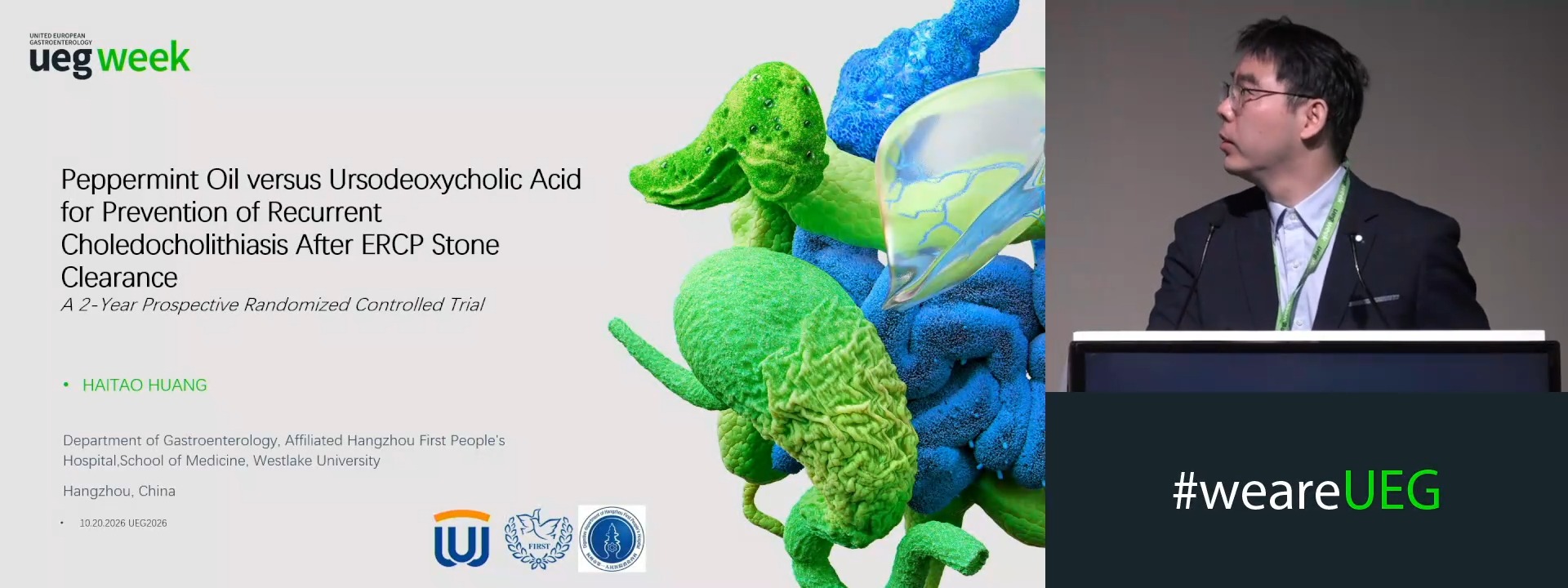
PEPPERMINT OIL VERSUS URSODEOXYCHOLIC ACID FOR PREVENTING RECURRENT CHOLEDOCHOLITHIASIS AFTER ERCP STONE CLEARANCE: A 2-YEAR PROSPECTIVE RANDOMIZED CONTROLLED TRIAL
Haitao Huang 1,2, Yiwen Feng 3, Huanlu Xu 3, Jianlong Chen 3, Liyun Zheng 1, Dongchao Xu 1, Xiaofeng Zhang 1,2, Hangbin Jin 1,2, jing Yang 1,2, Hongzhang Shen 1,2
Affiliations
1 Hangzhou First People's Hospital, Hangzhou, China
2 School of Medicine, Westlake University, Hangzhou, China
3 The Fourth Clinical Medical College, Zhejiang Chinese Medical University, Hangzhou, China