UEG's educational platform for gastroenterology education bringing recordings, courses, guidelines, and more together in one place.
Most popular content
Rate for better recommendations!
Your feedback helps us show you more of what you like and less of what you dislike!
Log in to access this content.
Free for all myUEG account holders. Your access level is set automatically based on your occupation. Medical professionals get full access to all content. If you are a non-medical user, you can only access UEG Week content from congresses you attended.
Not sure what you can access? Learn more about account types.

HYPERBARIC OXYGEN THERAPY IN REFRACTORY ULCERATIVE COLITIS: A PROSPECTIVE PILOT TRIAL
Lieven Mulders 1, Maarten Pruijt 1, Joep van Oostrom 1, Esmerij van der Zanden 2, Andra Neefjes-Borst 1, Pim J Koelink 1, Manon E. Wildenberg 1, Wouter J. de Jonge 1, Milan Ridderikhof 3, Rob van Hulst 3, Geert R. D'Haens 1, Krisztina B. Gecse 1
1 Amsterdam UMC, Amsterdam, Netherlands
2 Amstelland Ziekenhuis, Amstelveen, Netherlands
3 Amsterdam UMC, Amsterdam, Netherlands|||Amsterdam UMC, Amsterdam, Netherlands
Conference
Topics
Submission format
Citation
Published
Log in to access this content.
Free for all myUEG account holders. Your access level is set automatically based on your occupation. Medical professionals get full access to all content. If you are a non-medical user, you can only access UEG Week content from congresses you attended.
Not sure what you can access? Learn more about account types.
Panel discussion: Cancer and IBD - Mitigating risk among uncertainty
Event
Topics
Citation
Published
Log in to access this content.
Free for all myUEG account holders. Your access level is set automatically based on your occupation. Medical professionals get full access to all content. If you are a non-medical user, you can only access UEG Week content from congresses you attended.
Not sure what you can access? Learn more about account types.
Summary: Cancer and IBD - Mitigating risk among uncertainty
1 Charité Berlin, Berlin, Germany
Event
Topics
Citation
Published
Log in to access this content.
Free for all myUEG account holders. Your access level is set automatically based on your occupation. Medical professionals get full access to all content. If you are a non-medical user, you can only access UEG Week content from congresses you attended.
Not sure what you can access? Learn more about account types.
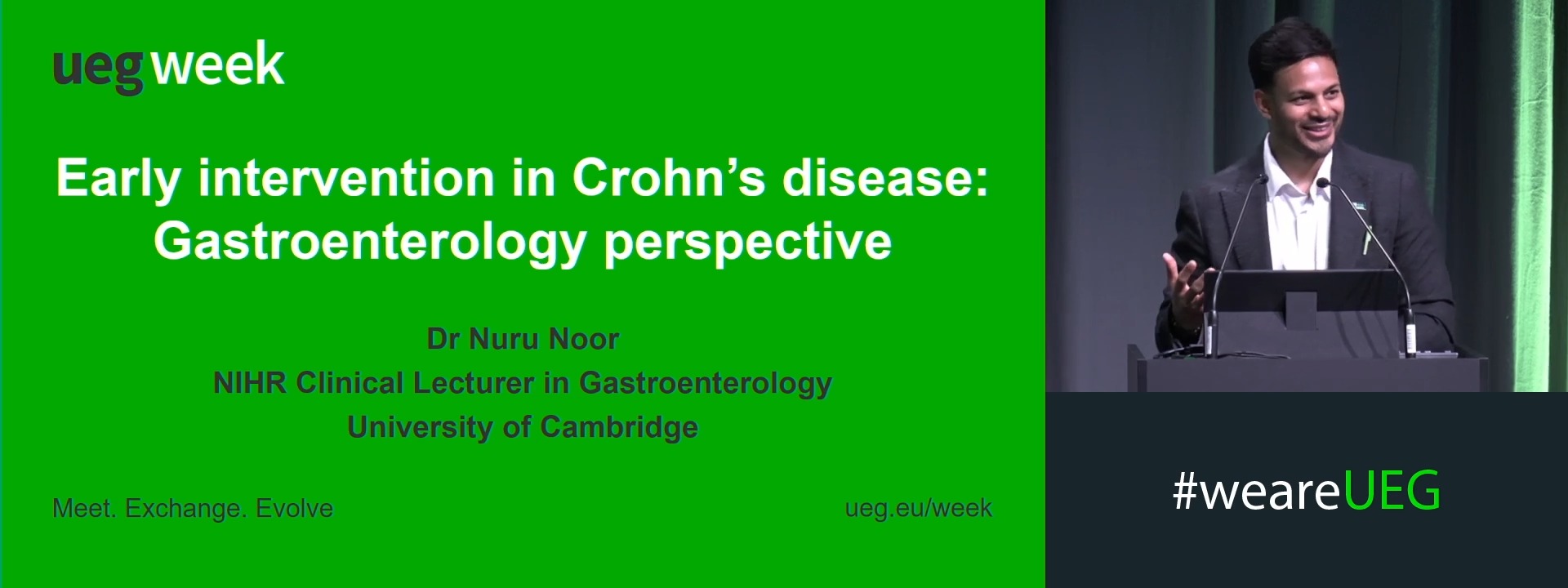
Getting out of the block early in Crohn´s disease: Gastroenterologist vs surgeon perspective
1 Haaglanden Medical Center, The Hague, Netherlands
2 Cambridge University Hospitals NHS Foundation Trust, Cambridge, United Kingdom
Event
Session
Citation
Published
Log in to access this content.
Free for all myUEG account holders. Your access level is set automatically based on your occupation. Medical professionals get full access to all content. If you are a non-medical user, you can only access UEG Week content from congresses you attended.
Not sure what you can access? Learn more about account types.
IS THERE A ROLE FOR SODIUM BUTYRATE IN THE TREATMENT OF PEDIATRIC INFLAMMATORY BOWEL DISEASES?
Oana Belei 1, Laura Olariu 1, Eugen-Adrian Goldis 1, Radu Dragomir 1, Marina Adriana Mercioni 1, Otilia Marginean 1
1 Victor Babes University of Medicine and Pharmacy, Timisoara, Romania
Conference
Topics
Submission format
Citation
Published
Log in to access this content.
Free for all myUEG account holders. Your access level is set automatically based on your occupation. Medical professionals get full access to all content. If you are a non-medical user, you can only access UEG Week content from congresses you attended.
Not sure what you can access? Learn more about account types.
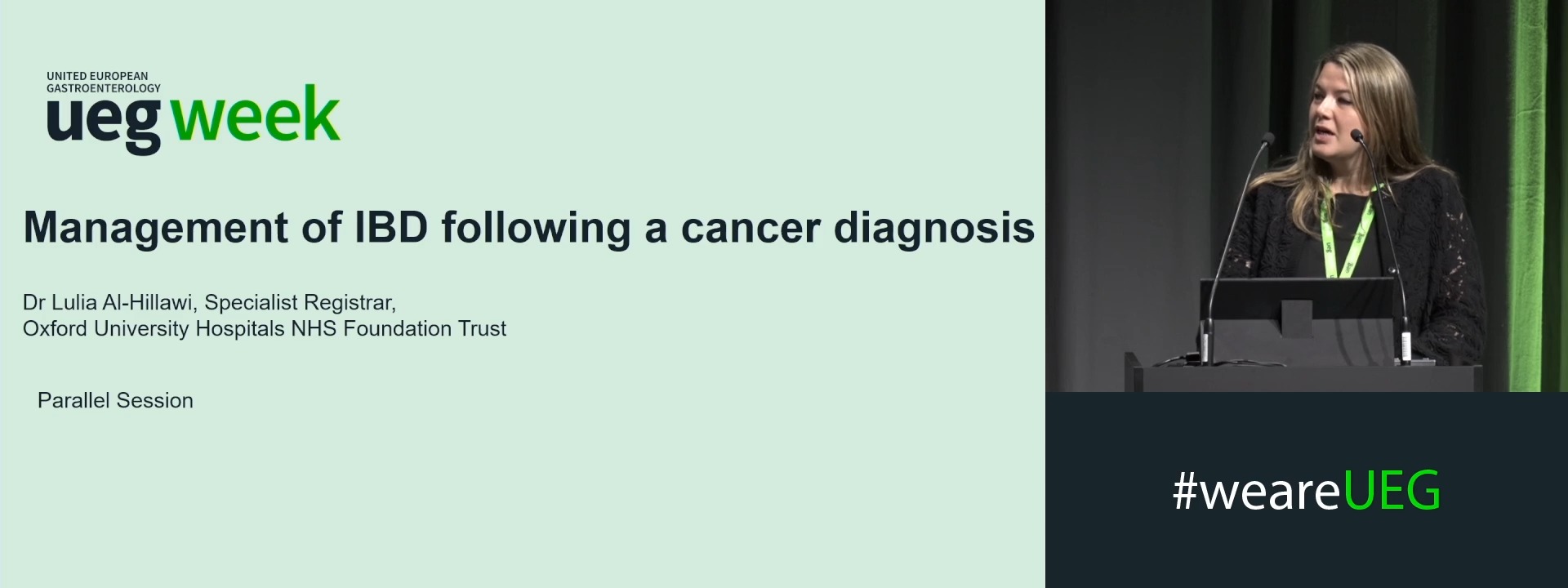
Management of IBD following a cancer diagnosis
1 John Radcliffe Hospital, Oxford, United Kingdom
Event
Topics
Citation
Published
Log in to access this content.
Free for all myUEG account holders. Your access level is set automatically based on your occupation. Medical professionals get full access to all content. If you are a non-medical user, you can only access UEG Week content from congresses you attended.
Not sure what you can access? Learn more about account types.
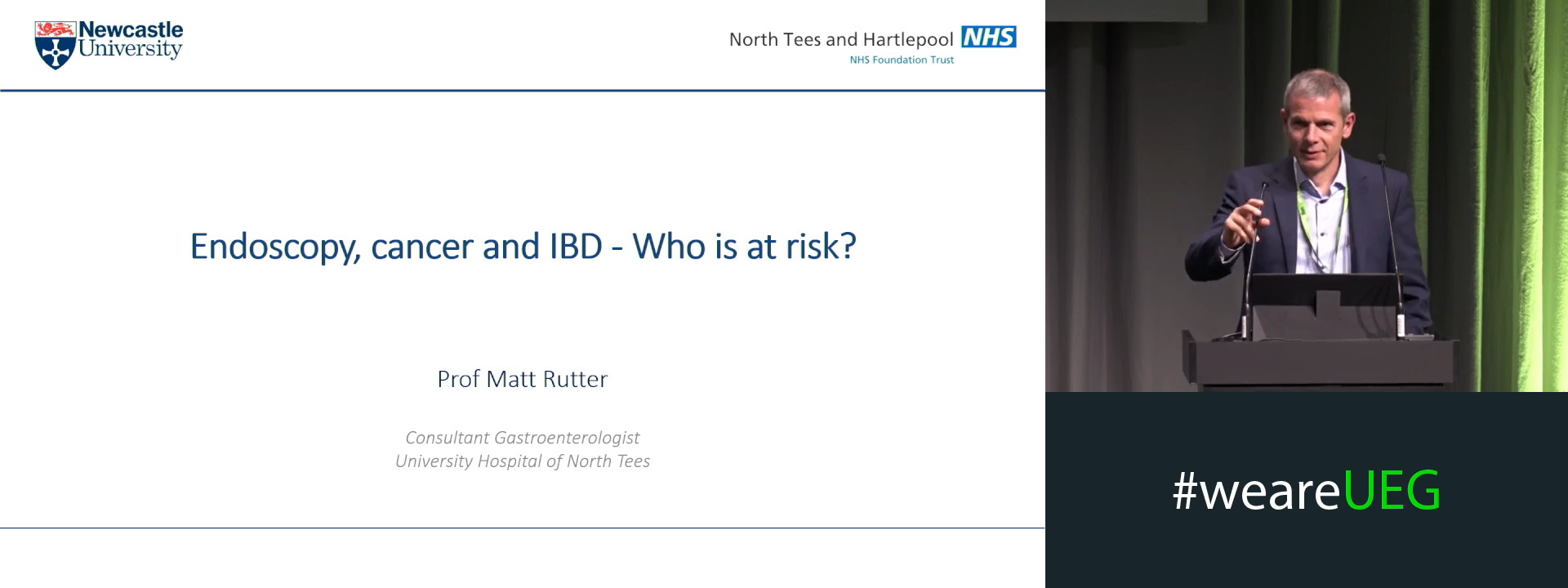
Who is at risk?
1 University Hospital North Tees NHS Dept. of Gastroenterology - Gastroenterology, University Hospital, Stockton-on-Tees, United Kingdom
Event
Topics
Session