UEG's content platform for gastroenterology education bringing recordings, courses, guidelines, and more together in one place.
Trending on Gutflix
Rate for better recommendations!
Your feedback helps us show you more of what you like and less of what you dislike!
Log in to continue.
This content is part of Gutflix. Log in with your myUEG account, or create one free, to watch it.
Not sure what you can access? Learn more about account types.
Current algorithms in systemic management of advanced CRC
Affiliations
1 Medical University of Gdansk, Warsaw, Poland
Log in to continue.
This content is part of Gutflix. Log in with your myUEG account, or create one free, to watch it.
Not sure what you can access? Learn more about account types.
Radiological assessment of response for organ preservation: Can ctDNA help in early stage?
Affiliations
1 Centre Hospitalier Universitaire de Poitiers, Poitiers, France
2 School of Medicine, National & Kapodistrian University of Athens, Athens, Greece
Log in to continue.
This content is part of Gutflix. Log in with your myUEG account, or create one free, to watch it.
Not sure what you can access? Learn more about account types.
Immunodeficiency-associated enteropathy
Affiliations
1 Vrije Universiteit Medical Center, Amsterdam, Netherlands
Log in to continue.
This content is part of Gutflix. Log in with your myUEG account, or create one free, to watch it.
Not sure what you can access? Learn more about account types.
Do we need a complete molecular workup before starting therapy?
Affiliations
1 Universitätsklinikum Ulm - Klinik für Innere Medizin I, Ulm, Germany
Log in to continue.
This content is part of Gutflix. Log in with your myUEG account, or create one free, to watch it.
Not sure what you can access? Learn more about account types.
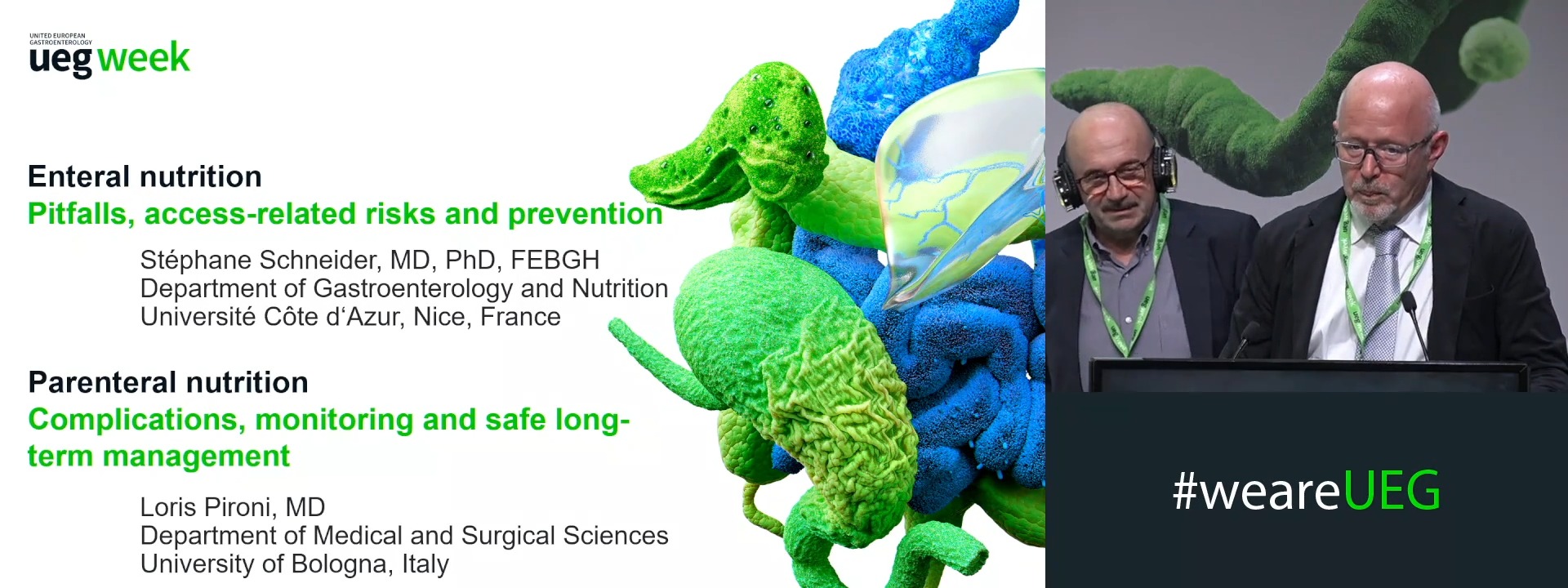
Complications in enteral and parenteral nutrition: Pitfalls, monitoring and safe long-term management
Affiliations
1 University of Bologna S. Orsola-Malpighi Hospital, Bologna, Italy
2 CHU de Nice - Archet, Nice, France
Log in to continue.
This content is part of Gutflix. Log in with your myUEG account, or create one free, to watch it.
Not sure what you can access? Learn more about account types.
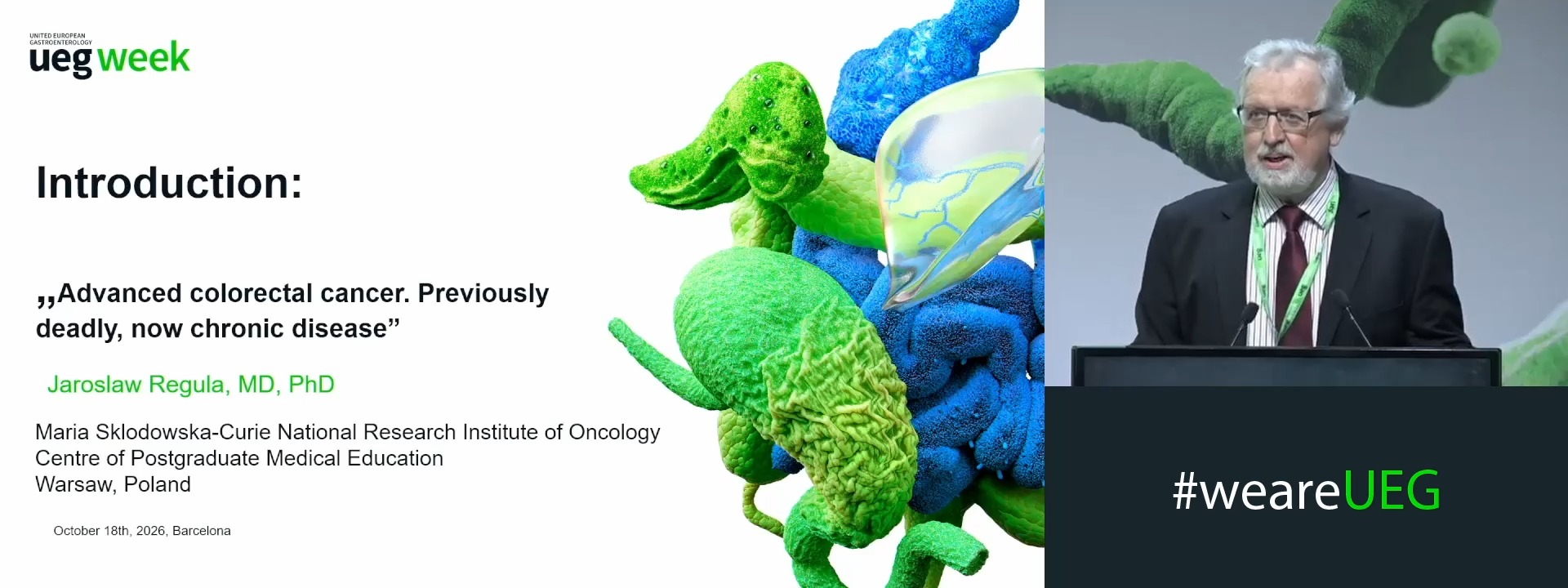
Introduction: Useful definitions and context for gastroenterologists
Affiliations
1 Maria Sklodowska-Curie National Research Institute of Oncology and Centre of Postgraduate Medical Ed, Warsaw, Poland
Log in to continue.
This content is part of Gutflix. Log in with your myUEG account, or create one free, to watch it.
Not sure what you can access? Learn more about account types.
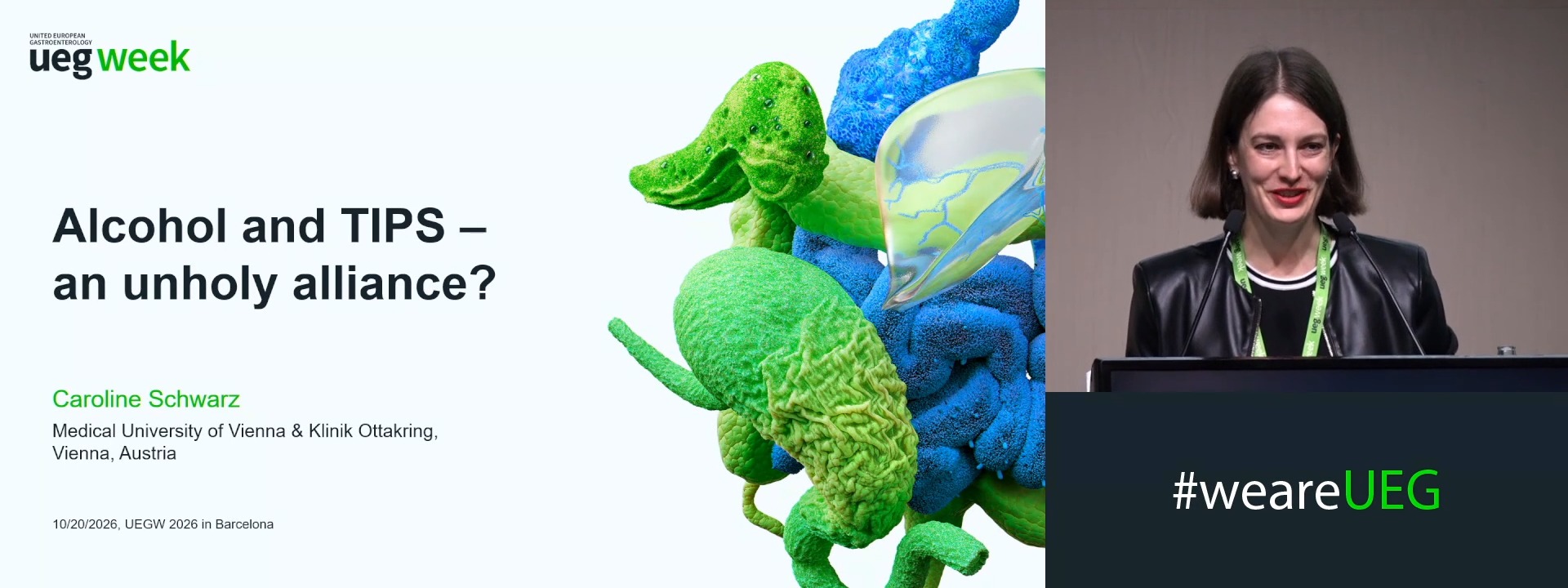
Alcohol and TIPS - an unholy alliance?
Affiliations
1 Klinik Ottakring, Vienna, Austria