UEG's content platform for gastroenterology education bringing recordings, courses, guidelines, and more together in one place.
Trending on Gutflix
Rate for better recommendations!
Your feedback helps us show you more of what you like and less of what you dislike!
Log in to continue.
This content is part of Gutflix. Log in with your myUEG account, or create one free, to watch it.
Not sure what you can access? Learn more about account types.
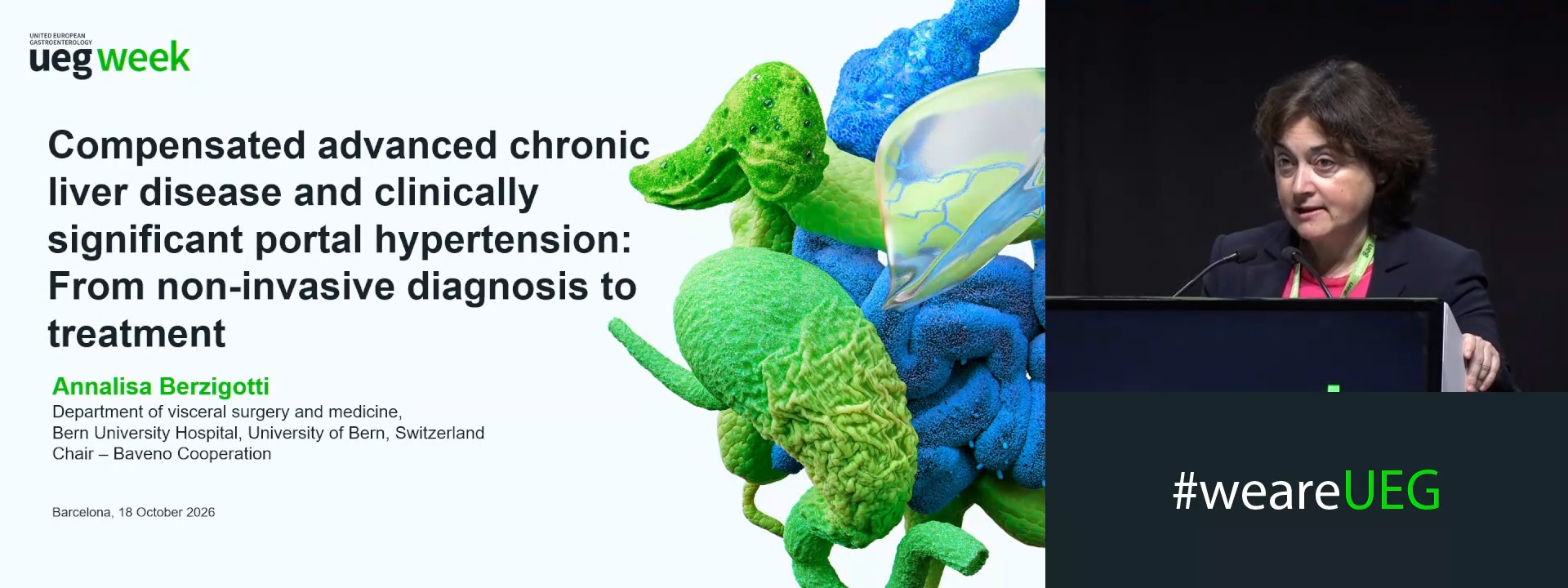
Compensated advanced chronic liver disease and clinically significant portal hypertension: From non-invasive diagnosis to treatment
Affiliations
1 Inselspital, University Hospital of Berne, Berne, Switzerland
Log in to continue.
This content is part of Gutflix. Log in with your myUEG account, or create one free, to watch it.
Not sure what you can access? Learn more about account types.
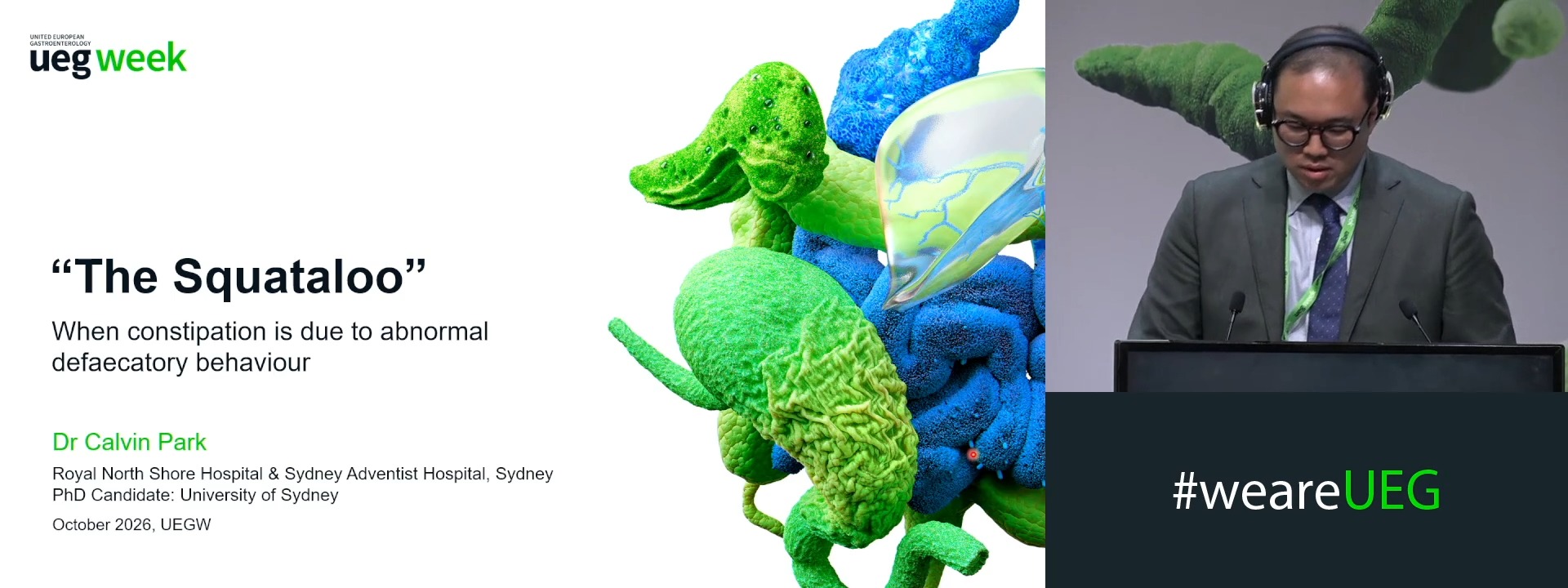
Summary: What happened to the patient?
Affiliations
1 Royal North Shore Hospital, Sydney, Australia
Log in to continue.
This content is part of Gutflix. Log in with your myUEG account, or create one free, to watch it.
Not sure what you can access? Learn more about account types.
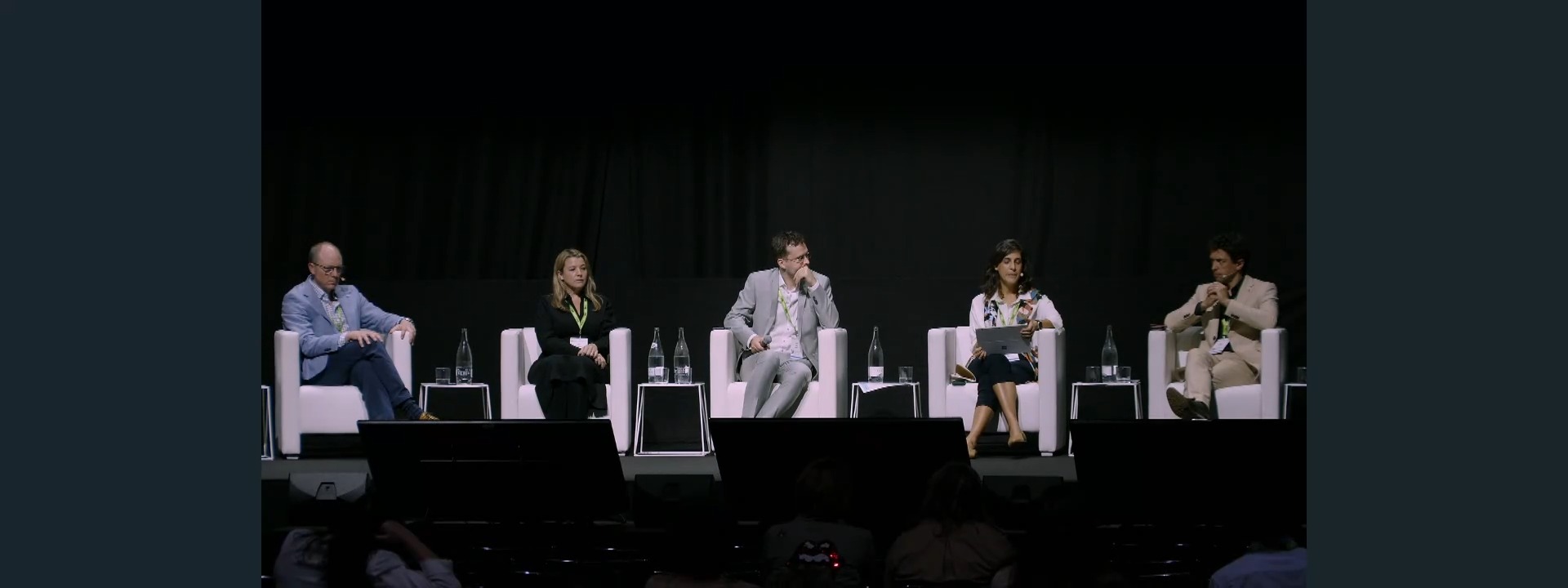
Panel discussion: Dilemmas in ulcerative colitis: Back to the basics or fast forward
Log in to continue.
This content is part of Gutflix. Log in with your myUEG account, or create one free, to watch it.
Not sure what you can access? Learn more about account types.
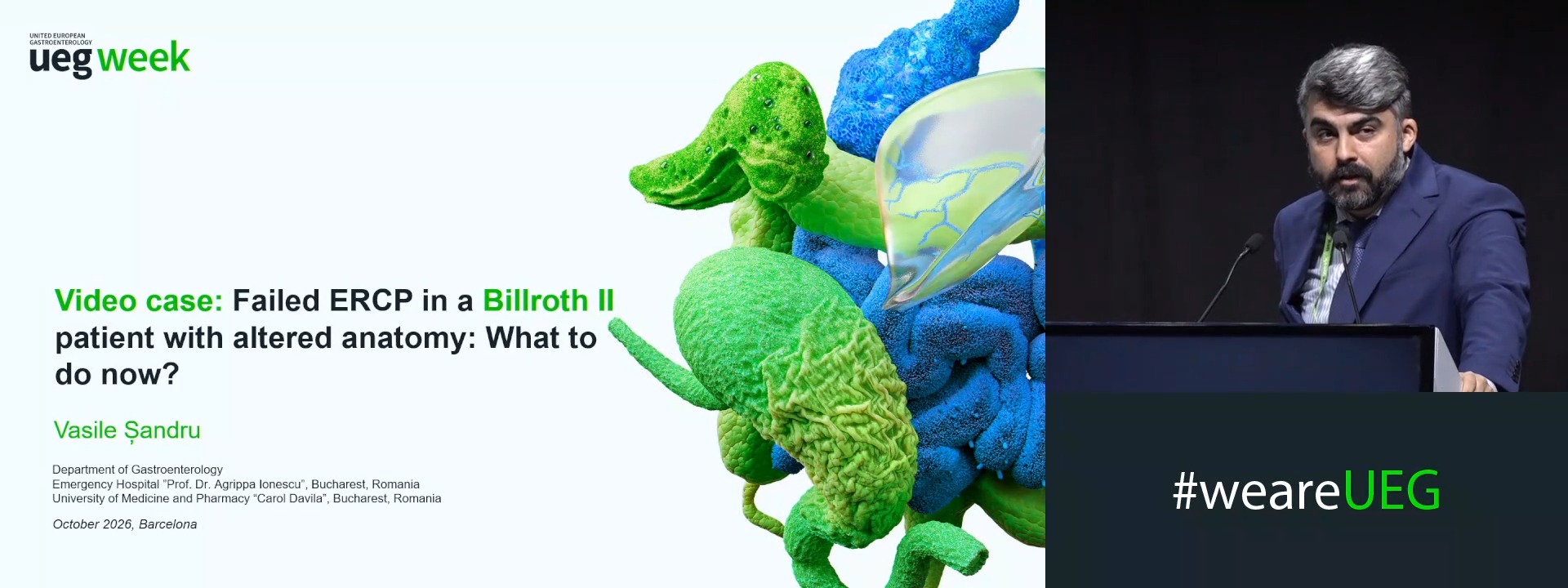
Video case: Failed ERCP in a Billroth II patient with altered anatomy: What to do now?
Affiliations
1 Bucharest Emergency Hospital, Bucharest, Romania
Log in to continue.
This content is part of Gutflix. Log in with your myUEG account, or create one free, to watch it.
Not sure what you can access? Learn more about account types.
Q&A: Chronic constipation: How to diagnose and treat this frequent condition in clinical practice
Log in to continue.
This content is part of Gutflix. Log in with your myUEG account, or create one free, to watch it.
Not sure what you can access? Learn more about account types.
Introduction: Advanced chronic liver disease: When the liver gets stiff, the complications get going
Affiliations
1 Medical University of Vienna, Vienna, Austria
Log in to continue.
This content is part of Gutflix. Log in with your myUEG account, or create one free, to watch it.
Not sure what you can access? Learn more about account types.
Acting upstream in the pathophysiological cascade of ascites and managing recurrent ascites and its consequences: From TAPS to TIPS
Affiliations
1 University of Padova, Padova, Italy
2 CONSORCI INSTITUT D'INVESTIGACIONS BIOMEDIQUES AUGUST PI I SUNYER, Barcelona, Spain