UEG Week Recordings UEG Week Posters Online courses Guidelines Mistakes in... Podcasts Webinars
Visit ueg.eu Create myUEG account Log In

Filters:

UEG Mistakes In Articles
Share via Email Share on Facebook Share on X Share on LinkedIn Share on Bluesky

Log in to access this content.

Free for all myUEG account holders. Your access level is set automatically based on your occupation. Medical professionals get full access to all content. If you are a non-medical user, you can only access UEG Week content from congresses you attended.

Log In Create a free account

Not sure what you can access? Learn more about account types.
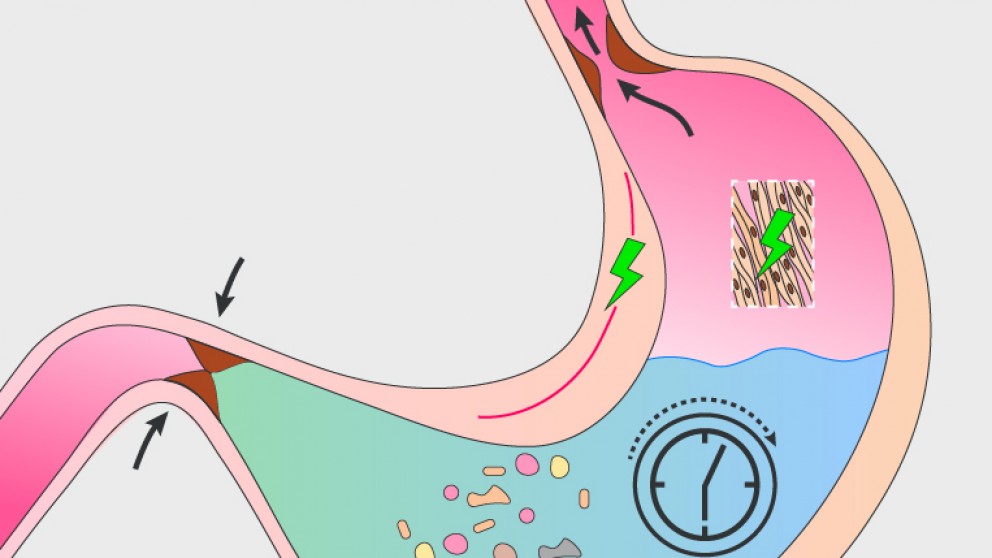
The term ‘gastroparesis’ was first coined by Kassander in 1958 to describe the fact that barium did not leave the stomach of patients with diabetes for over 24 hours — so-called ‘gastroparesis diabeticorum’. Nowadays it refers to a delay in gastric emptying that is associated with symptoms primarily of nausea and vomiting as well as the absence of mechanical obstruction. In 1958, 21 cases were described, but in 2019, 5 million US individuals were diagnosed as having gastroparesis. This rapid increase in prevalence is likely to have occurred because it has become much easier to measure gastric emptying and to attribute symptoms to this without necessarily thinking through differentials. The incidence of hospital admissions for patients labelled as having gastroparesis is rapidly rising, increasing at a much faster rate than admissions for patients with nausea and vomiting, gastro-oesophageal reflux disease, gastritis or gastric ulcers, which are all remaining relatively static. Gastroparesis therefore represents a major healthcare burden. Gastroparesis can be idiopathic or is most frequently caused by diabetes (type 1 more than type 2) or surgical procedures that can disrupt the vagus nerve (e.g. Billroth gastrectomy, oesophagectomy, gastric bypass surgery and fundoplication). In this article, I describe the mistakes most frequently made in patients who have a suspected diagnosis of gastroparesis. I base my discussion on the available evidence as well as clinical experience in the field. 


Mistakes in gastroparesis and how to avoid them

Mistakes in gastroparesis and how to avoid them

Asma Fikree

Topics

Neurogastroenterology & Motility Stomach & H. Pylori

Citation

Fikree A. Mistakes in gastroparesis and how to avoid them. UEG Education 2021; 21: 18–22.

Published

2021
UEG Mistakes In Articles
Share via Email Share on Facebook Share on X Share on LinkedIn Share on Bluesky

Log in to access this content.

Free for all myUEG account holders. Your access level is set automatically based on your occupation. Medical professionals get full access to all content. If you are a non-medical user, you can only access UEG Week content from congresses you attended.

Log In Create a free account

Not sure what you can access? Learn more about account types.
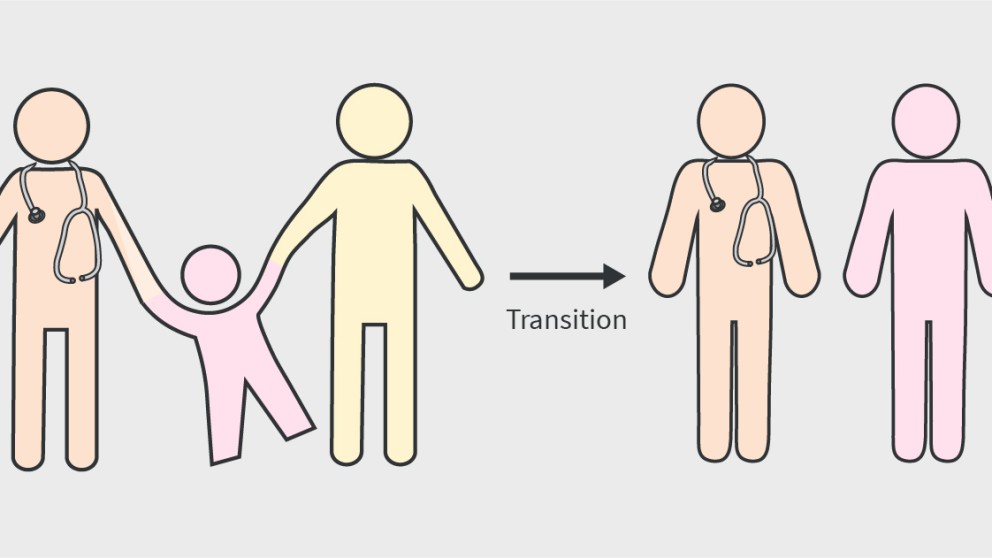
Children and adolescents with chronic diseases requiring lifelong care face unique challenges that affect their daily lives and those of their families. Initially, these patients receive specialized care in pediatric facilities, where parents play a key role in treatment decisions. However, transitioning to adult healthcare facilities is inevitable, and this process, recognized as crucial years ago, involves moving adolescents with chronic conditions from child-centered to adult-oriented care. This transition can be complicated by varying age limits for pediatric care and the scarcity of adult care centers with specific expertise. The transition often requires cooperation between different centers or even countries due to patient mobility. The transition phase is critical, as it can lead to loss of follow-up, treatment suspension, and increased risks of complications or disease relapse. Beyond medical management, various factors influence the long-term prognosis of chronic conditions, making a well-organized transition program essential. While many hospitals have implemented transition models with mixed results in satisfaction, disease control, and follow-up adherence, there are frequent shortcomings in the process. This Mistakes In article will outline eight common mistakes made during the transition from pediatric to adult care, supported by literature and professional experience.

Mistakes in transitional care for children and young adults and how  to avoid them

Mistakes in transitional care for children and young adults and how to avoid them

Patrizia Burra, Hans Törnblom, Jorge Amil Dias, Moriam Mustapha

Topics

Primary Care

Citation

Jorge Amil-Dias, Hans Törnblom, Moriam Mustapha and Patrizia Burra. Mistakes in transitional care for children and young adults and how to avoid them. UEG Education 2023; 23: 22-25.

Published

2023
UEG Podcast Episode
UEG Podcast
Share via Email Share on Facebook Share on X Share on LinkedIn Share on Bluesky

Log in to access this content.

Free for all myUEG account holders. Your access level is set automatically based on your occupation. Medical professionals get full access to all content. If you are a non-medical user, you can only access UEG Week content from congresses you attended.

Log In Create a free account

Not sure what you can access? Learn more about account types.

From Vienna to Berlin: What inspired us last year at UEG Week

Egle Dieninyte - Misiune, Pradeep Mundre

Published

2025
UEG Mistakes In Articles
Share via Email Share on Facebook Share on X Share on LinkedIn Share on Bluesky

Log in to access this content.

Free for all myUEG account holders. Your access level is set automatically based on your occupation. Medical professionals get full access to all content. If you are a non-medical user, you can only access UEG Week content from congresses you attended.

Log In Create a free account

Not sure what you can access? Learn more about account types.

Ostomy management refers to the care and maintenance of an ostomy and involves various aspects to ensure the individual’s health, comfort, and quality of life. This should involve the patient, a close support system (family and/or friends), and a healthcare team, including ostomy nurses and healthcare professionals specialising in ostomy care.

Mistakes in ostomy management and how to avoid them

Mistakes in ostomy management and how to avoid them

Revital Barkan, Ian White, Iris Dotan

Topics

Primary Care

Published

2025
UEG Podcast Episode
UEG Podcast
Share via Email Share on Facebook Share on X Share on LinkedIn Share on Bluesky

Log in to access this content.

Free for all myUEG account holders. Your access level is set automatically based on your occupation. Medical professionals get full access to all content. If you are a non-medical user, you can only access UEG Week content from congresses you attended.

Log In Create a free account

Not sure what you can access? Learn more about account types.

Weight loss "Endoscopy vs. Surgery" with Ivo Boskoski and Ralph Peterli

Ivo Boskoski, Ralph Peterli, Pradeep Mundre

Topics

Endoscopy Surgery

Published

2024
UEG Mistakes In Articles
Share via Email Share on Facebook Share on X Share on LinkedIn Share on Bluesky

Log in to access this content.

Free for all myUEG account holders. Your access level is set automatically based on your occupation. Medical professionals get full access to all content. If you are a non-medical user, you can only access UEG Week content from congresses you attended.

Log In Create a free account

Not sure what you can access? Learn more about account types.

Mistakes in jejunal feeding and how to avoid them

Ashley Bond, Simon Lal

Topics

Small Intestine & Nutrition

Citation

Bond A and Lal S. Mistakes in jejunal feeding and how to avoid them. UEG Education 2020; 20: 17–19. 

Published

2020
UEG Standards and Guidelines
Clinical Practice Guideline
Share via Email Share on Facebook Share on X Share on LinkedIn Share on Bluesky

Log in to access this content.

Free for all myUEG account holders. Your access level is set automatically based on your occupation. Medical professionals get full access to all content. If you are a non-medical user, you can only access UEG Week content from congresses you attended.

Log In Create a free account

Not sure what you can access? Learn more about account types.

Abstract

This Technical and Technology Review from the European Society of Gastrointestinal Endoscopy (ESGE) represents an update of the previous document on the technical aspects of endoscopic ultrasound (EUS)-guided sampling in gastroenterology, including the available types of needle, technical aspects of tissue sampling, new devices, and specimen handling and processing. Among the most important new recommendations are:

ESGE recommends end-cutting fine-needle biopsy (FNB) needles over reverse-bevel FNB or fine-needle aspiration (FNA) needles for tissue sampling of solid pancreatic lesions; FNA may still have a role when rapid on-site evaluation (ROSE) is available.

ESGE recommends EUS-FNB or mucosal incision-assisted biopsy (MIAB) equally for tissue sampling of subepithelial lesions ≥20 mm in size. MIAB could represent the first choice for smaller lesions (<20 mm) if proper expertise is available.

ESGE does not recommend the use of antibiotic prophylaxis before EUS-guided tissue sampling of solid masses and EUS-FNA of pancreatic cystic lesions.

Endoscopic ultrasound-guided tissue sampling: European Society of Gastrointestinal Endoscopy (ESGE) Technical and Technology Review

Endoscopic ultrasound-guided tissue sampling: European Society of Gastrointestinal Endoscopy (ESGE) Technical and Technology Review

Antonio Facciorusso

Publisher

European Society of Gastrointestinal Endoscopy logo
European Society of Gastrointestinal Endoscopy

Guideline

Clinical Practice Guideline

Topics

Endoscopy

Citation

Endoscopy 2025; 57(04): 390-418

Published

2025
Login to access

The global reference point for the digestive health community

Platform Publisher

United European Gastroenterology

Wickenburggasse 1 1080 Vienna, Austria

Contact us

support@ueg.eu

ueg.eu

T: +43 1 997 1639

Legal

Terms & Conditions

Imprint

Privacy Policy

Explore

My Bookmarks

My recommendations

My fields of interest

© 2026 United European Gastroenterology

Change fields of interest

These fields are selected based on the interests in your myUEG profile.
Click the item to unselect it. You can select multiple items.