UEG's content platform for gastroenterology education bringing recordings, courses, guidelines, and more together in one place.
Trending on Gutflix
Rate for better recommendations!
Your feedback helps us show you more of what you like and less of what you dislike!
Log in to continue.
This content is part of Gutflix. Log in with your myUEG account, or create one free, to watch it.
Not sure what you can access? Learn more about account types.
Behavioural assessment and treatment in disordered eating
Affiliations
1 University Of Gothenburg, Gothenburg, Sweden
Log in to continue.
This content is part of Gutflix. Log in with your myUEG account, or create one free, to watch it.
Not sure what you can access? Learn more about account types.
Seeing beyond the human eye: AI in endoscopic detection
Affiliations
1 Amsterdam UMC, Amsterdam, Netherlands
Log in to continue.
This content is part of Gutflix. Log in with your myUEG account, or create one free, to watch it.
Not sure what you can access? Learn more about account types.
Second victim phenomenon – how can we prevent it
Affiliations
1 None, None, Belgium
Log in to continue.
This content is part of Gutflix. Log in with your myUEG account, or create one free, to watch it.
Not sure what you can access? Learn more about account types.
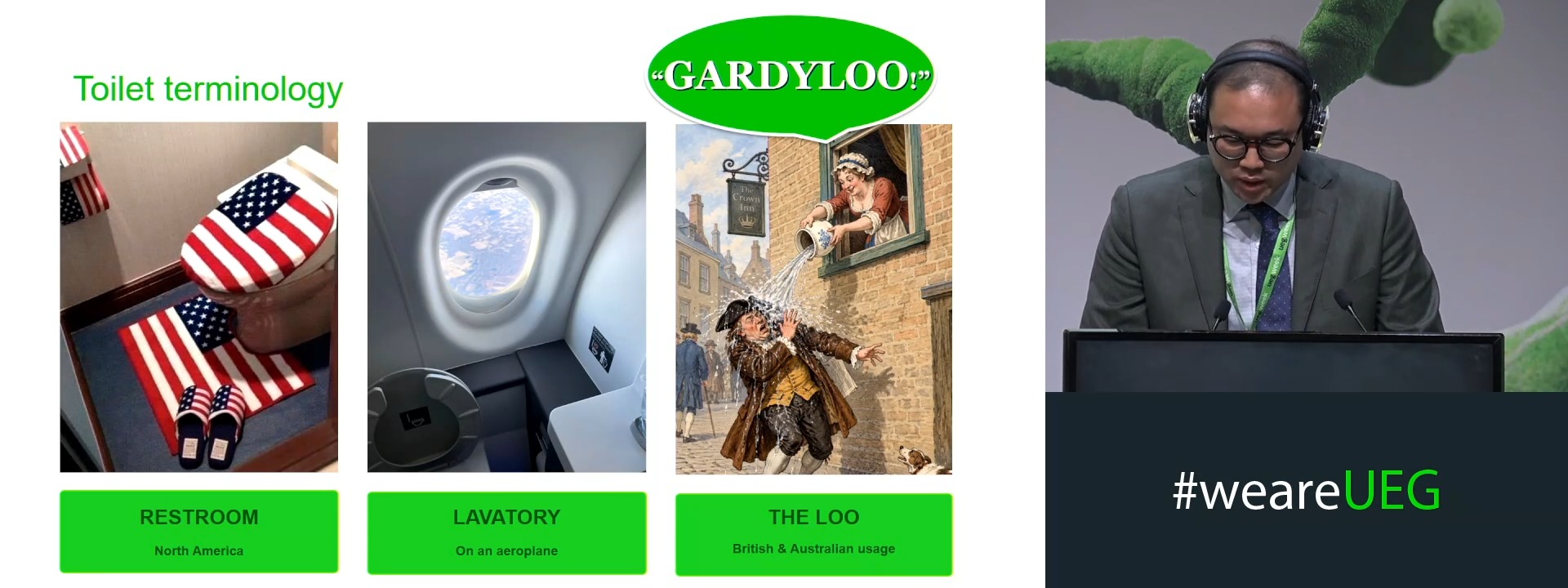
Clinical scenario 2: The squataloo - when constipation is due to abnormal defecatory behaviour
Affiliations
1 Royal North Shore Hospital, Sydney, Australia
Log in to continue.
This content is part of Gutflix. Log in with your myUEG account, or create one free, to watch it.
Not sure what you can access? Learn more about account types.
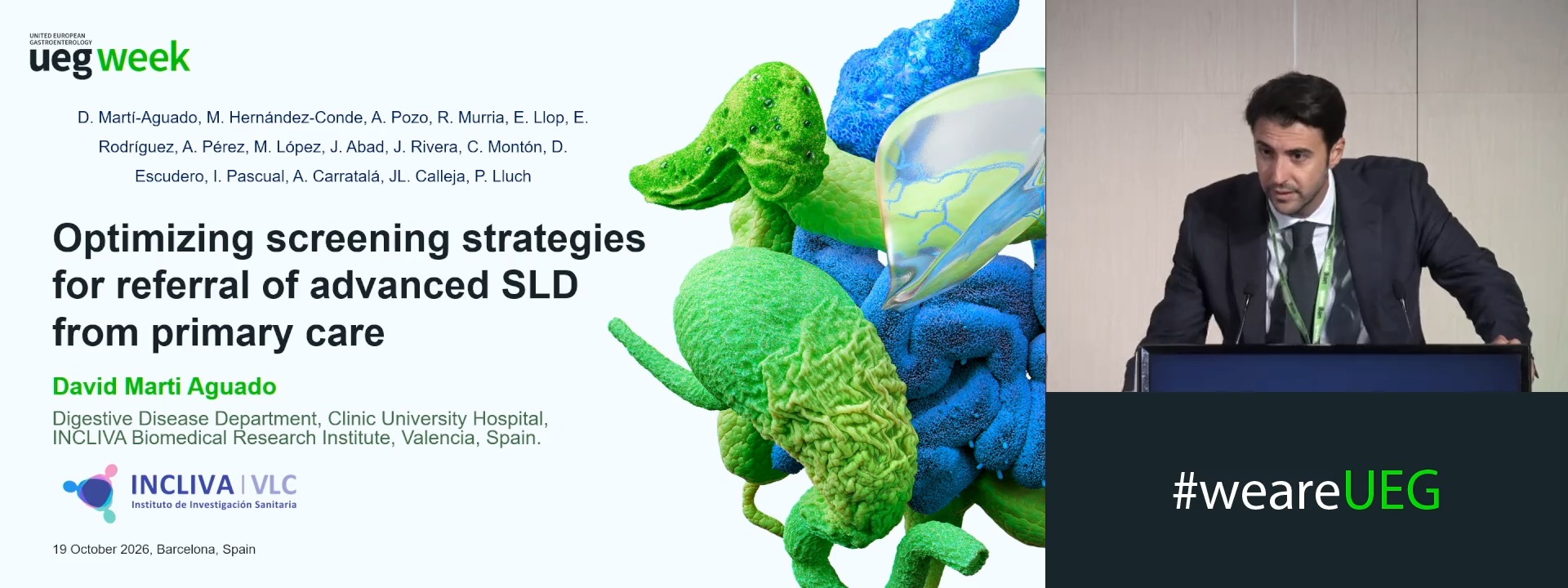
OPTIMIZING SCREENING STRATEGIES FOR REFERRAL OF ADVANCED STEATOTIC LIVER DISEASE FROM PRIMARY CARE
David Marti Aguado 1, Marta Hernandez Conde 2, Adela Pozo Giraldez 1, Rosa Murria 1, Enrique Rodríguez-Borja 1, Ana Perez 2, Elba Llop 3, Marta Lopez Gomez 4, Javier Abad 4, Jesus Manuel Rivera Esteban 2, Cristina Monton 1, Desamparados Escudero-Garcia 5, Isabel Pascual-Moreno 6, Arturo Carratala-Calvo 1, Jose Luis Calleja 4, Paloma Lluch García 1
Affiliations
1 Clinic University Hospital of Valencia, INCLIVA Health Research Institute, Valencia, Spain
2 Puerta de Hierro University Hospital, Madrid, Spain
3 Gastroenterology, Hospital Puerta de Hierro, Madrid, Spain, Madrid, Spain
4 Hospital Universitario Puerta de Hierro, Pozuelo De Alarcon, Spain
5 University of Valencia, Valencia, Spain
6 Hospital Clinico Universitario, Valencia, Spain
Log in to continue.
This content is part of Gutflix. Log in with your myUEG account, or create one free, to watch it.
Not sure what you can access? Learn more about account types.
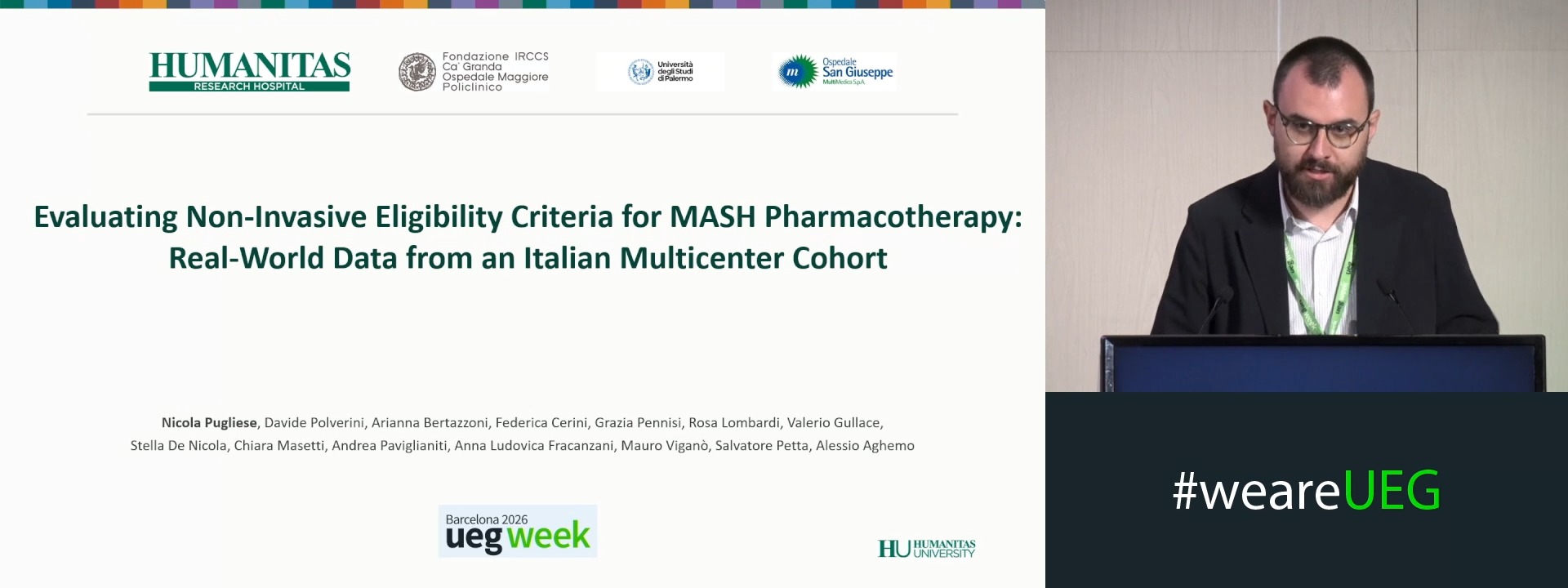
EVALUATING NON-INVASIVE ELIGIBILITY CRITERIA FOR RESMETIROM AND SEMAGLUTIDE IN METABOLIC DYSFUNCTION-ASSOCIATED STEATOTIC LIVER DISEASE: REAL-WORLD DATA FROM AN ITALIAN MULTICENTER COHORT
Nicola Pugliese 1, Davide Polverini 1, Arianna Bertazzoni 1, Federica Cerini 2, Grazie Pennisi 3, Rosa Lombardi 2, Valerio Gullace 1, Stella De Nicola 1, Chiara Masetti 1, Andrea Calogero Paviglianiti 1, Anna Francanzani 2, Mauro Viganò 4, Salvatore Petta 3, Alessio Aghemo 1
Affiliations
1 Humanitas Research Hospital, Rozzano, Italy
2 Università degli Studi di Milano Statale, Milano, Italy
3 Università di Palermo, Palermo, Italy
4 Ospedale Papa Giovanni XXIII, Bergamo, Italy