UEG's educational platform for gastroenterology education bringing recordings, courses, guidelines, and more together in one place.
Most popular content
Rate for better recommendations!
Your feedback helps us show you more of what you like and less of what you dislike!
Log in to access this content.
Free for all myUEG account holders. Your access level is set automatically based on your occupation. Medical professionals get full access to all content. If you are a non-medical user, you can only access UEG Week content from congresses you attended.
Not sure what you can access? Learn more about account types.
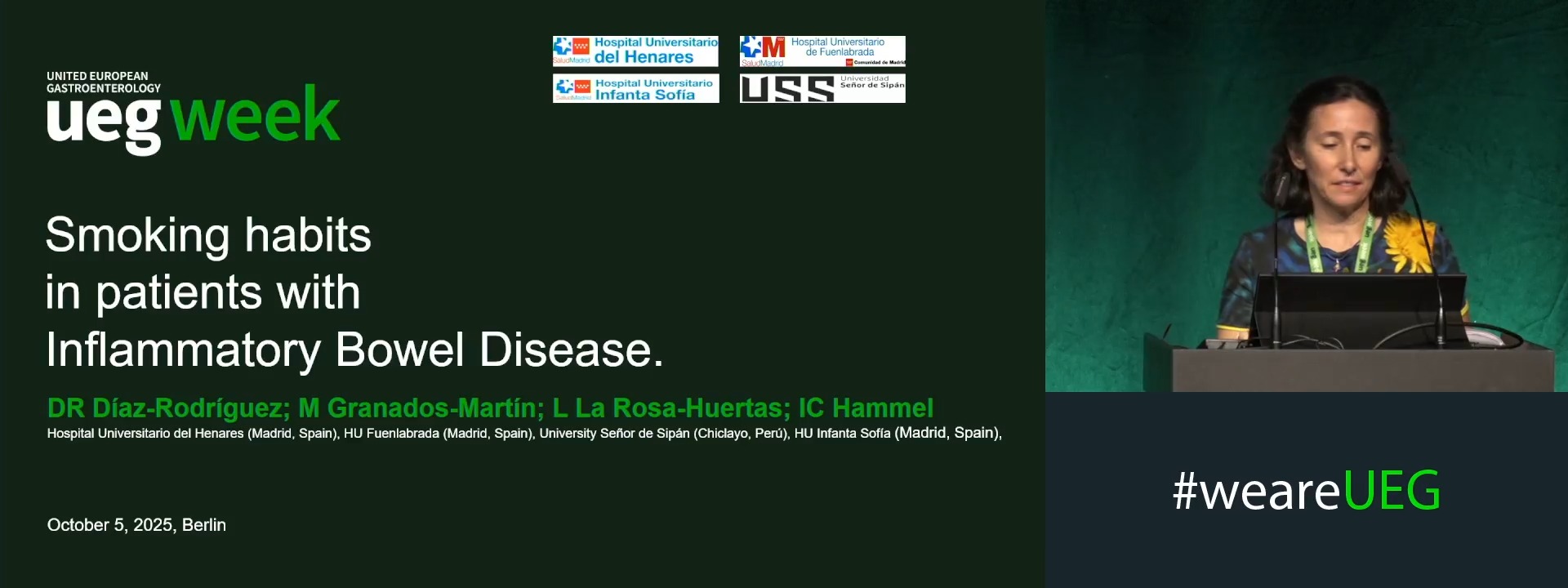
SMOKING HABITS IN PATIENTS WITH INFLAMMATORY BOWEL DISEASE
Dania Rocio Diaz-Rodriguez 1, Monica Granados Martin 2, Liliana La Rosa-Huertas 3, Inés Constanze Hammel 4
1 Hospital Universitario del Henares, Madrid, Spain
2 Hospital de Fuenlabrada, Fuenlabrada, Spain
3 Universidad Señor de Sipán, Lims, Peru
4 Hospital Universitario Infanta Sofía, San Sebastián de los Reyes, Spain
Event
Topics
Submission format
Citation
Published
Log in to access this content.
Free for all myUEG account holders. Your access level is set automatically based on your occupation. Medical professionals get full access to all content. If you are a non-medical user, you can only access UEG Week content from congresses you attended.
Not sure what you can access? Learn more about account types.
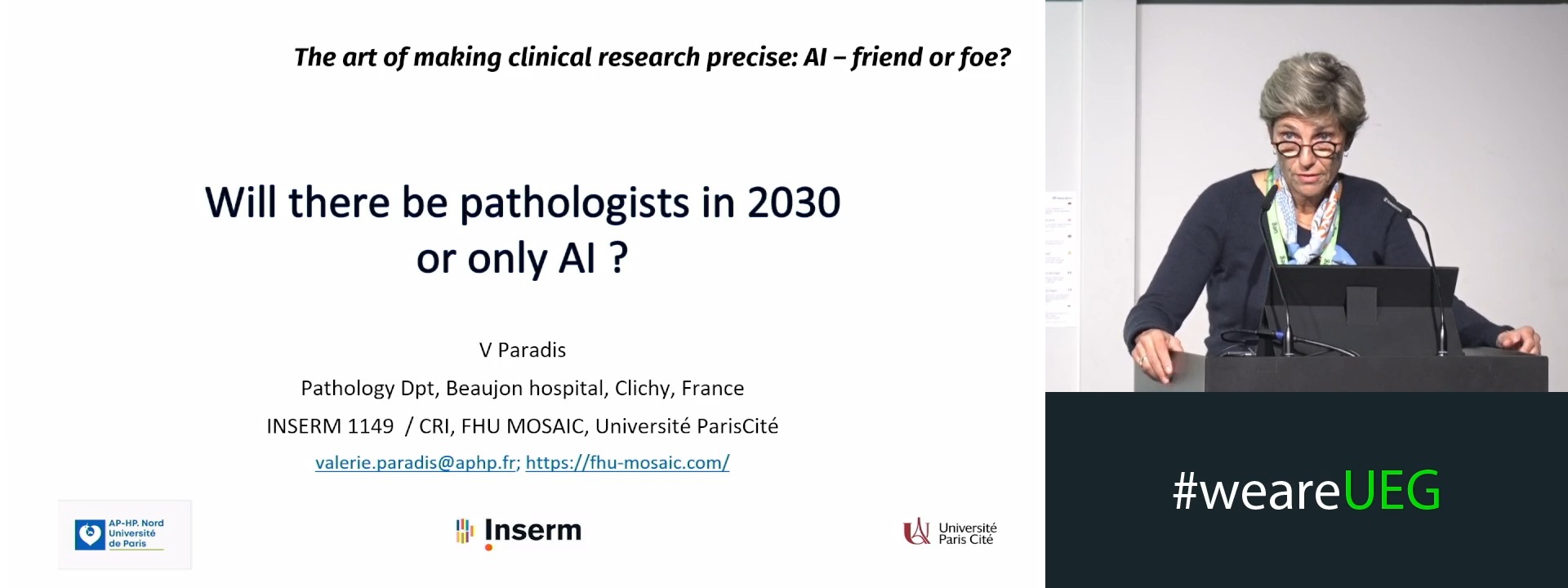
Will there be pathologists in 2030 or only AI?
1 INSERM - Hôpital Beaujon, Clichy, France
Event
Topics
Citation
Published
Log in to access this content.
Free for all myUEG account holders. Your access level is set automatically based on your occupation. Medical professionals get full access to all content. If you are a non-medical user, you can only access UEG Week content from congresses you attended.
Not sure what you can access? Learn more about account types.
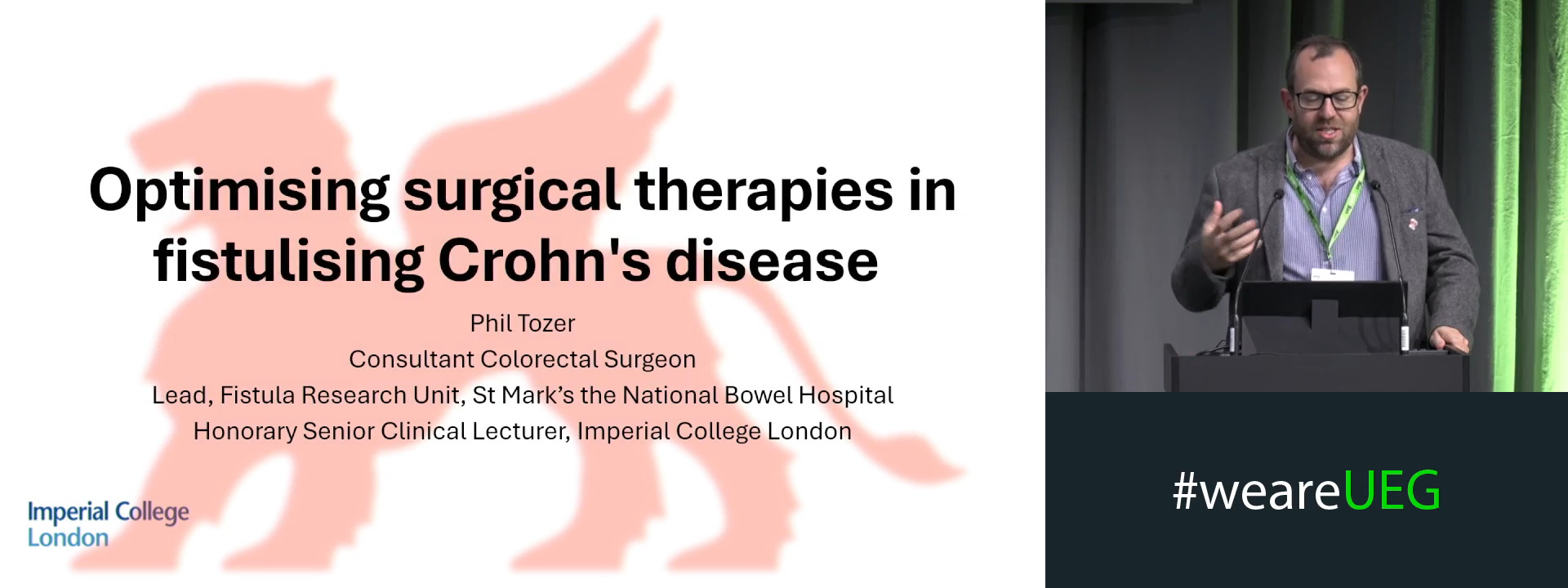
Optimising surgical therapies in fistulising Crohn's disease
1 St Marks Hospital, London, United Kingdom
Event
Citation
Published
Log in to access this content.
Free for all myUEG account holders. Your access level is set automatically based on your occupation. Medical professionals get full access to all content. If you are a non-medical user, you can only access UEG Week content from congresses you attended.
Not sure what you can access? Learn more about account types.
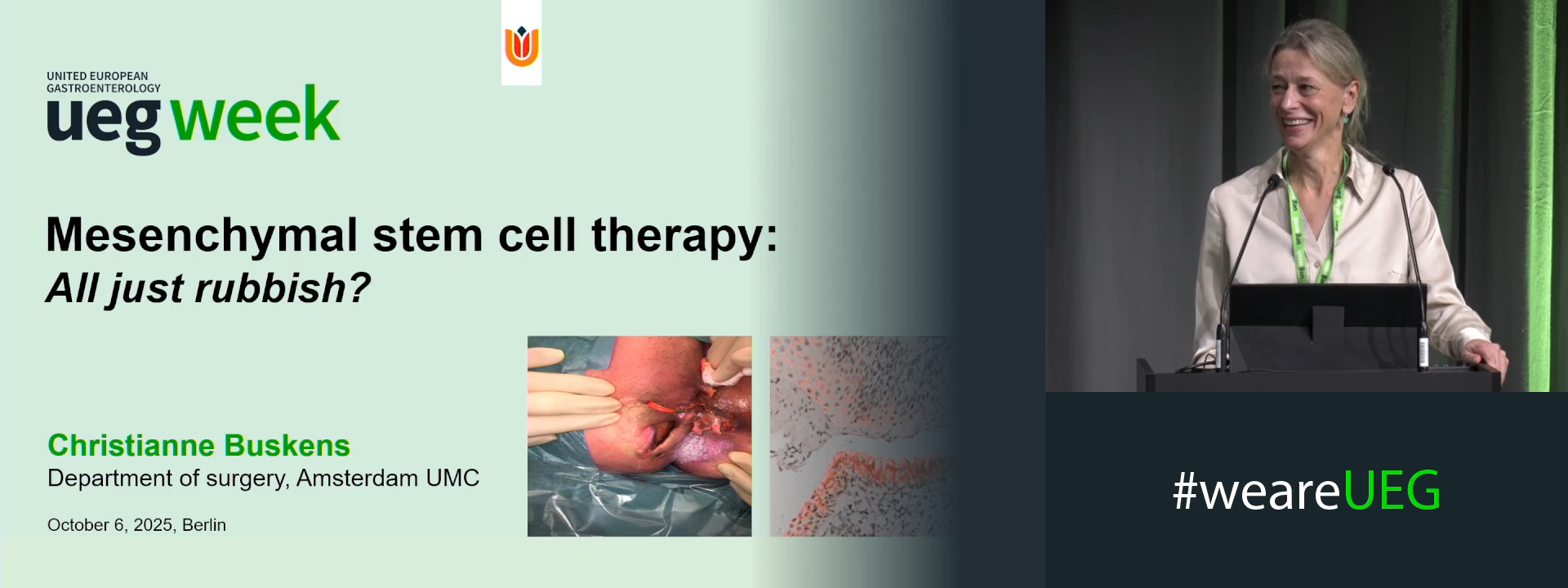
Mesenchymal stem cell therapy: All just rubbish?
1 Academic Medical Center, Amsterdam, Netherlands
Event
Citation
Published
Log in to access this content.
Free for all myUEG account holders. Your access level is set automatically based on your occupation. Medical professionals get full access to all content. If you are a non-medical user, you can only access UEG Week content from congresses you attended.
Not sure what you can access? Learn more about account types.
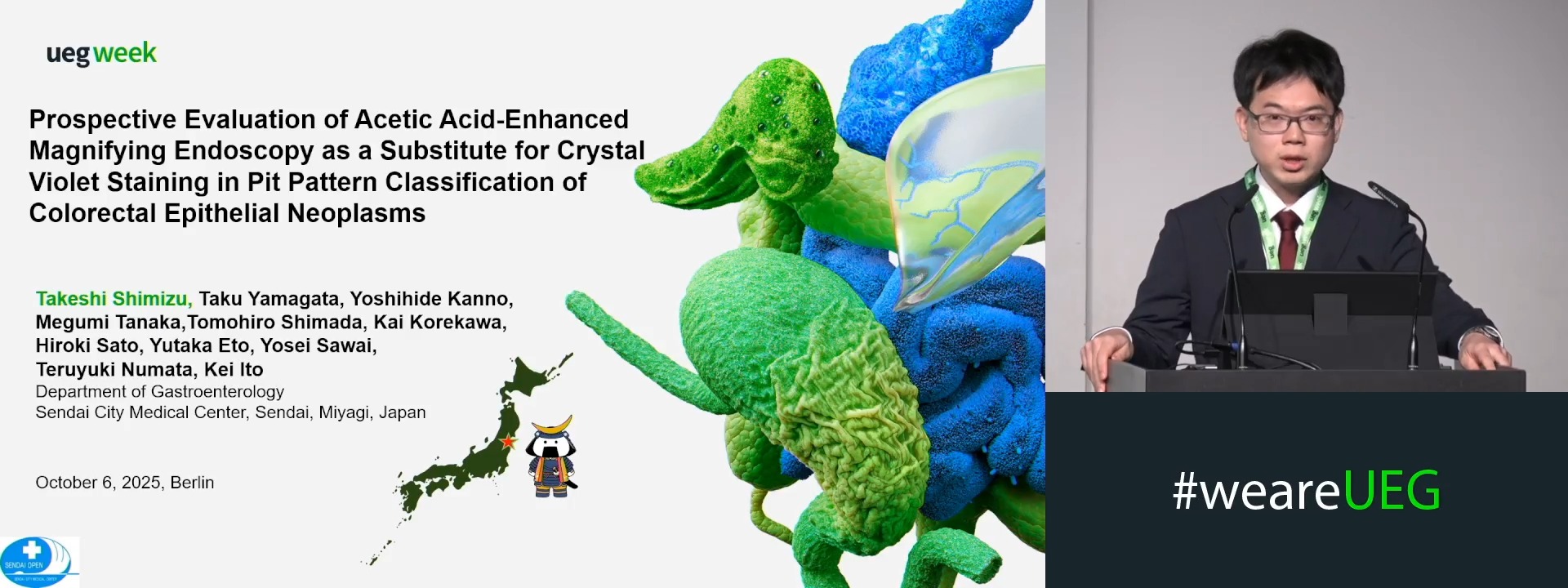
PROSPECTIVE EVALUATION OF ACETIC ACID-ENHANCED MAGNIFYING ENDOSCOPY AS A SUBSTITUTE FOR CRYSTAL VIOLET STAINING IN PIT PATTERN CLASSIFICATION OF COLORECTAL EPITHELIAL NEOPLASMS
Takeshi Shimizu 1, Taku Yamagata 1, Yoshihide Kanno 1, Megumi Tanaka 1, Tomohiro Shimada 1, Kai Korekawa 1, Hiroki Sato 1, Yutaka Eto 1, Yosei Sawai 1, Teruyuki Numata 1, Kei Ito 1
1 Sendai City Medical Center, Sendai, Japan
Event
Submission format
Citation
Published
Log in to access this content.
Free for all myUEG account holders. Your access level is set automatically based on your occupation. Medical professionals get full access to all content. If you are a non-medical user, you can only access UEG Week content from congresses you attended.
Not sure what you can access? Learn more about account types.
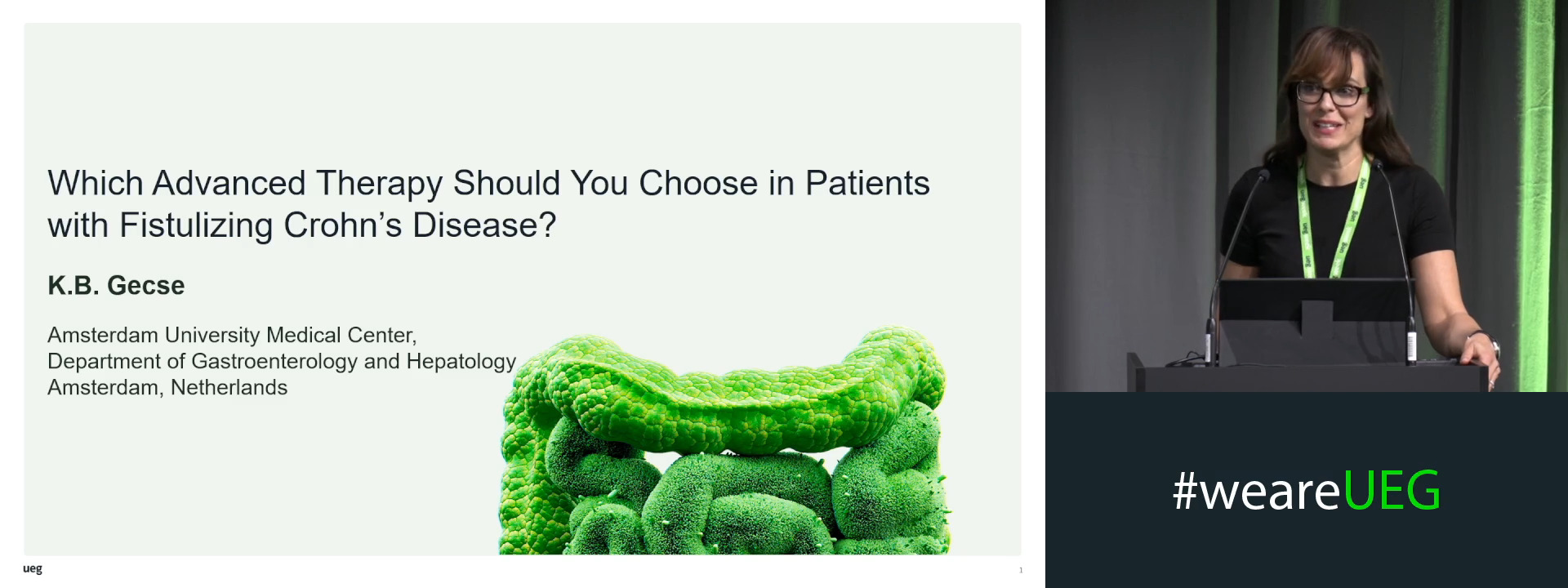
Which advanced therapy should you choose in patients with fistulising Crohn's disease?
1 Amsterdam University Medical Center, Amsterdam, Netherlands
Event
Citation
Published
Log in to access this content.
Free for all myUEG account holders. Your access level is set automatically based on your occupation. Medical professionals get full access to all content. If you are a non-medical user, you can only access UEG Week content from congresses you attended.
Not sure what you can access? Learn more about account types.
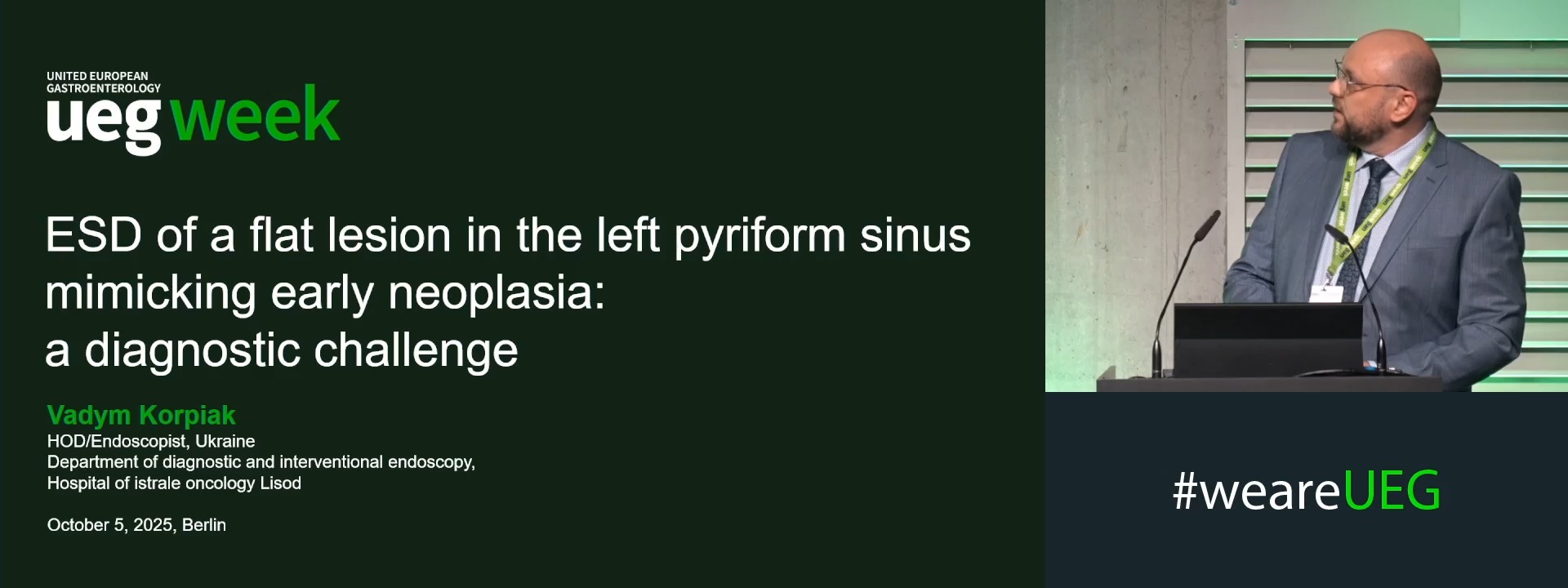
ESD OF A FLAT LESION IN THE LEFT PYRIFORM SINUS MIMICKING EARLY NEOPLASIA: A DIAGNOSTIC CHALLENGE
1 LLC "Gastrocenter", Olymed, Kyiv, Ukraine|||National University of Kyiv Mohyla Academy, Kyiv, Ukraine
2 LLC "Gastrocenter", Olymed, Kyiv, Ukraine
3 CSD Lab Medical Laboratory, Kyiv, Ukraine
4 Lisod Hospital, Kyiv, Ukraine