UEG's content platform for gastroenterology education bringing recordings, courses, guidelines, and more together in one place.
Trending on Gutflix
Rate for better recommendations!
Your feedback helps us show you more of what you like and less of what you dislike!
Log in to continue.
This content is part of Gutflix. Log in with your myUEG account, or create one free, to watch it.
Not sure what you can access? Learn more about account types.
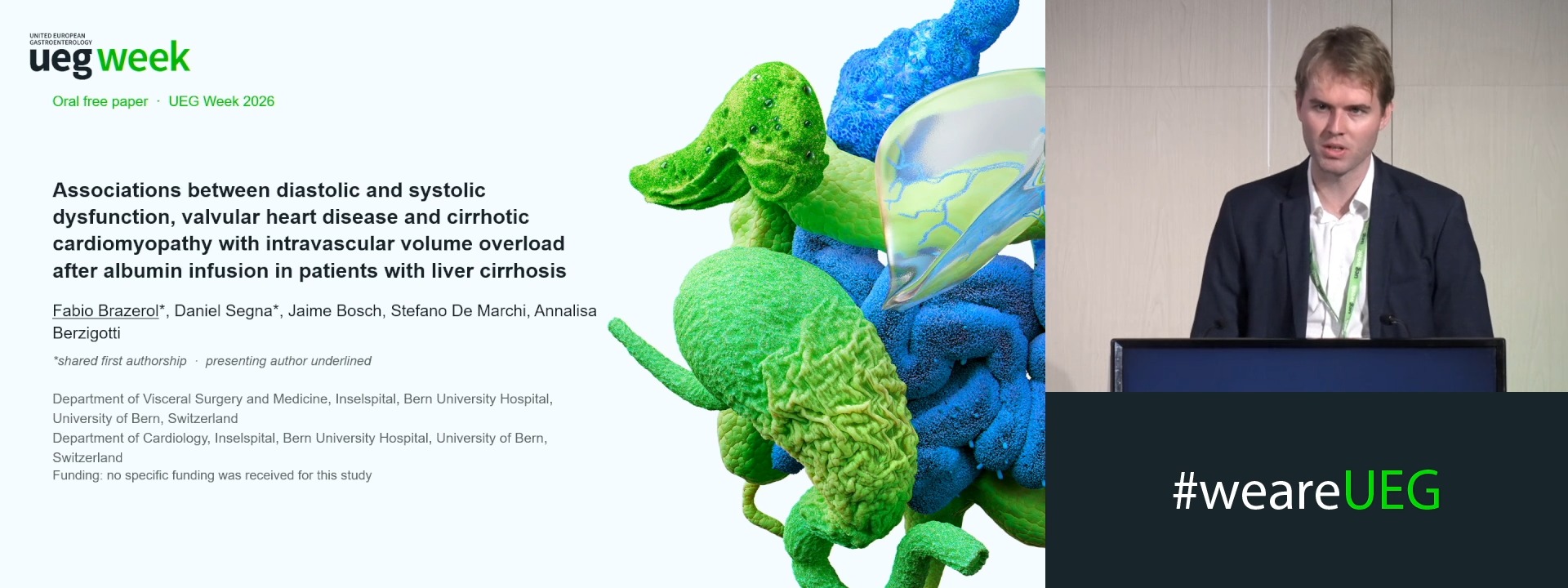
ASSOCIATIONS BETWEEN DIASTOLIC AND SYSTOLIC DYSFUNCTION, VALVULAR HEART DISEASE, AND CIRRHOTIC CARDIOMYOPATHY WITH INTRAVASCULAR VOLUME OVERLOAD AFTER ALBUMIN INFUSION IN PATIENTS WITH LIVER CIRRHOSIS
Affiliations
1 Inselspital Bern and University of Bern, Bern, Switzerland, Bern, Switzerland
2 University of Bern, Bern, Switzerland
Log in to continue.
This content is part of Gutflix. Log in with your myUEG account, or create one free, to watch it.
Not sure what you can access? Learn more about account types.
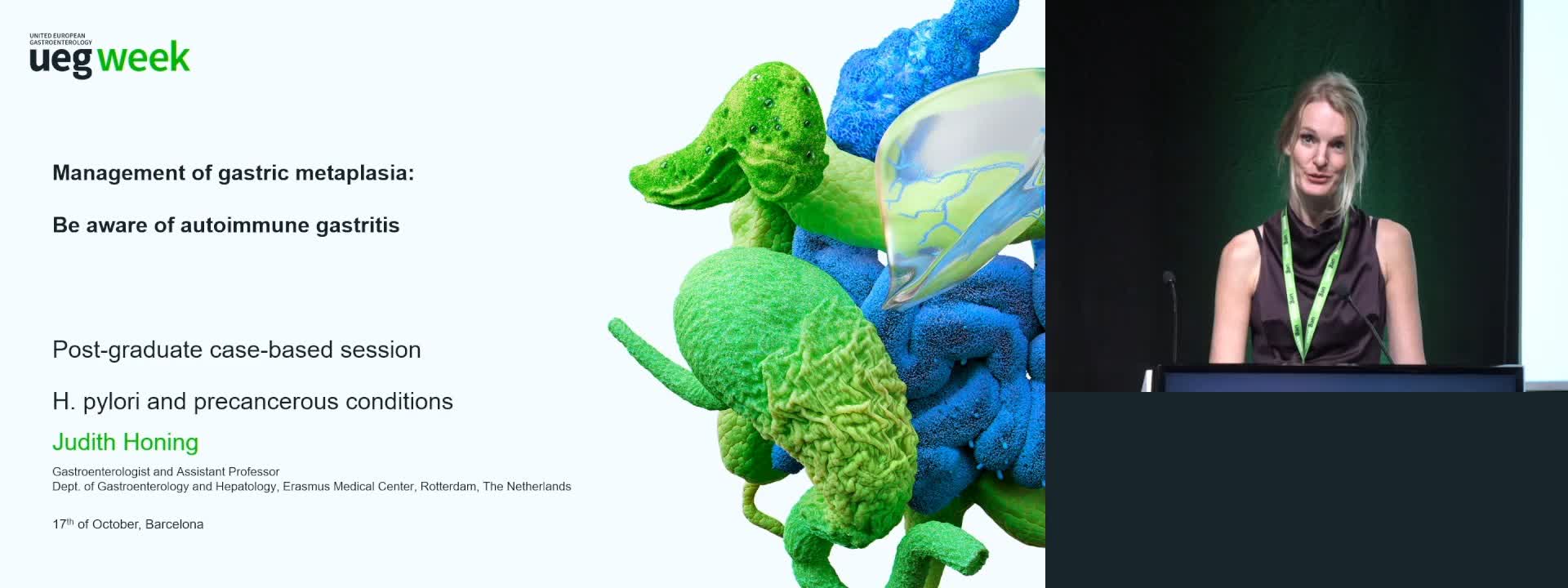
Management of gastric metaplasia: Be aware of autoimmune gastritis
Affiliations
1 Erasmus Medical Center Rotterdam, Rotterdam, Netherlands
Log in to continue.
This content is part of Gutflix. Log in with your myUEG account, or create one free, to watch it.
Not sure what you can access? Learn more about account types.
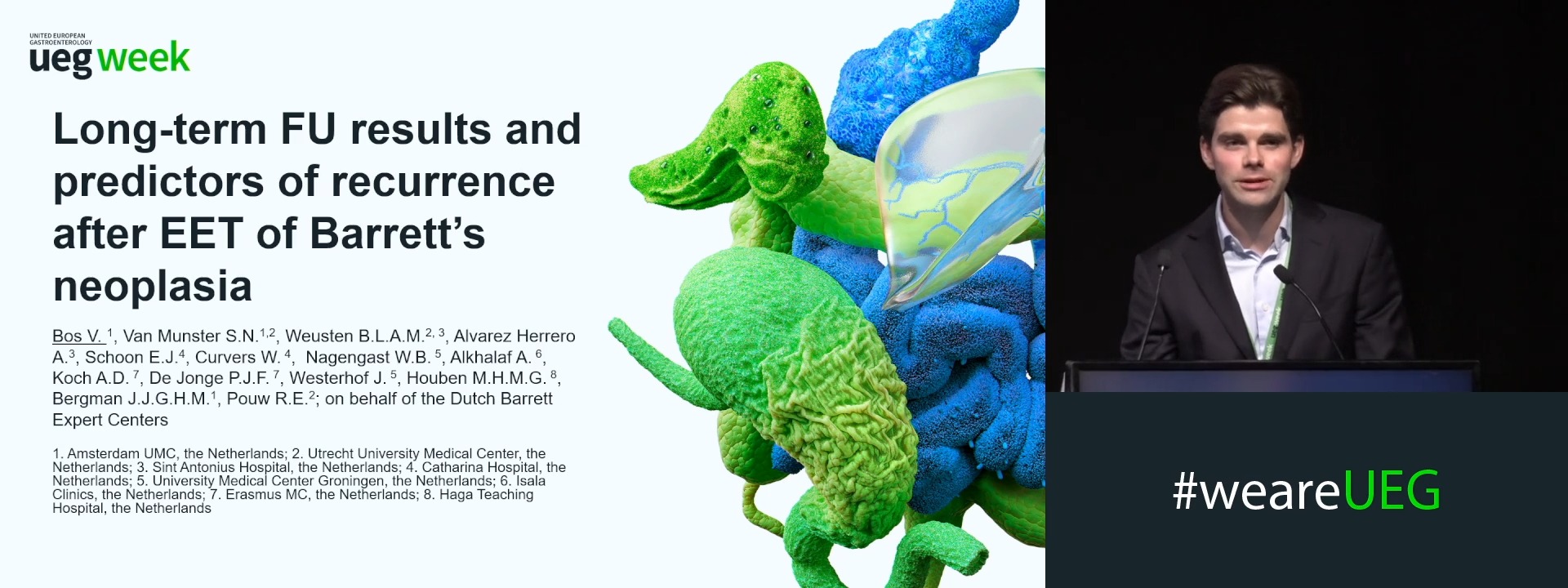
LOW RECURRENCE RATES AFTER ENDOSCOPIC ERADICATION THERAPY OF BARRETT'S NEOPLASIA: LONG-TERM FOLLOW-UP RESULTS FROM THE NATIONWIDE DUTCH BARRETT'S REGISTRY
Vincent Bos 1, Sanne van Munster 1, Bas L.A.M. Weusten 2,3, Lorenza Alvarez Herrero 2, Erik Jan Schoon 4, Wouter L. Curvers 4, Wouter B. Nagengast 5, Alaa Alkhalaf 6, Arjun D. Koch 7, Pieter Jan de Jonge 7, Jessie Westerhof 5, Martin Houben 8, Jacques J. Bergman 1, Roos E. Pouw 3
Affiliations
1 Amsterdam UMC, Amsterdam, Netherlands
2 St Antonius Hospital, Nieuwegein, Netherlands
3 UMC Utrecht, Utrecht, Netherlands
4 Catharina Hospital, Eindhoven, Netherlands
5 University Medical Center Groningen, Groningen, Netherlands
6 Isala, Zwolle, Netherlands
7 Erasmus MC - University Medical center, Rotterdam, Netherlands
8 Haga Teaching Hospital, The Hague, Netherlands
Log in to continue.
This content is part of Gutflix. Log in with your myUEG account, or create one free, to watch it.
Not sure what you can access? Learn more about account types.
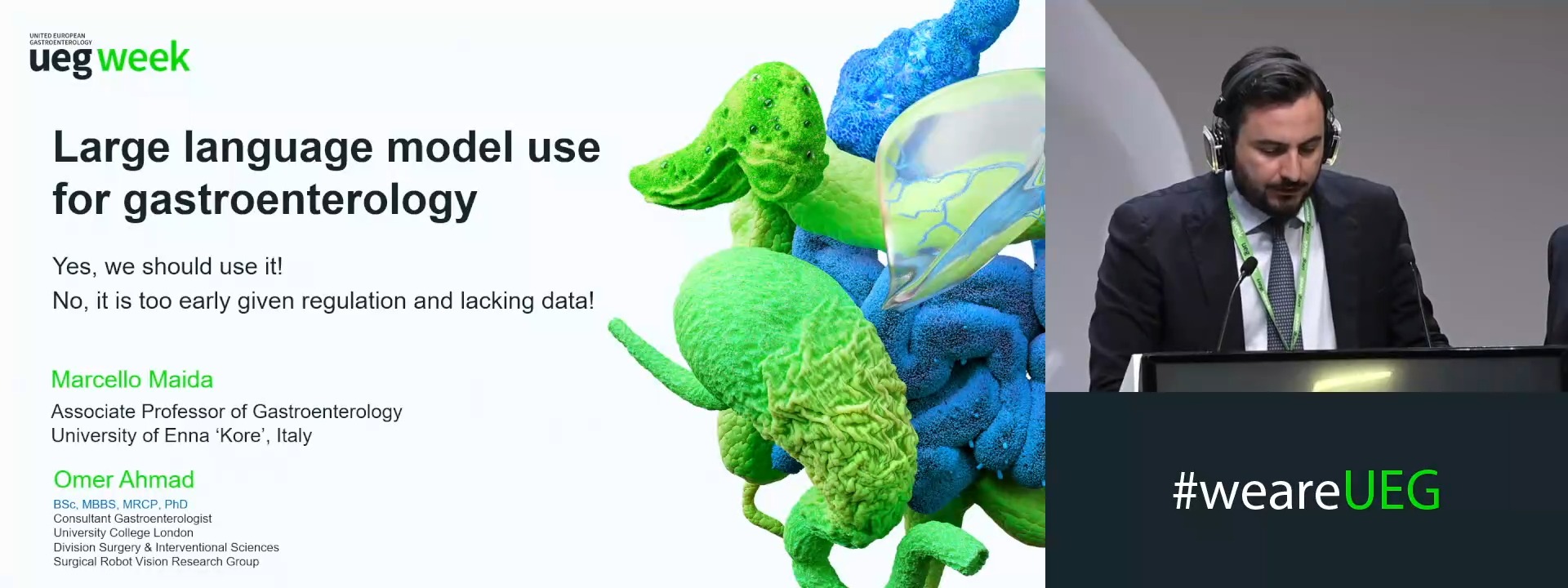
Large language model use for gastroenterology: Should we use it already, or is it too early given regulation and lacking data?
Affiliations
1 Department of Medicine and Surgery, University of Enna ‘Kore’, Enna, Italy
2 University College London, London, United Kingdom
Log in to continue.
This content is part of Gutflix. Log in with your myUEG account, or create one free, to watch it.
Not sure what you can access? Learn more about account types.
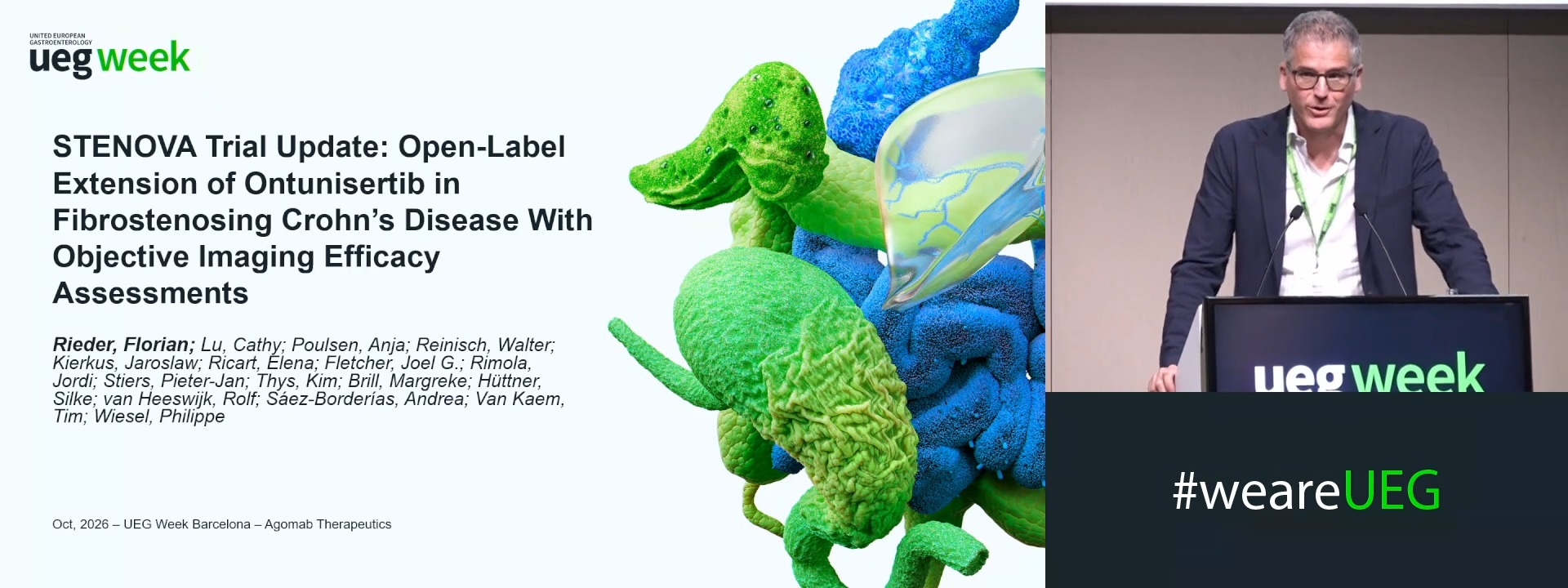
STENOVA TRIAL UPDATE: OPEN-LABEL EXTENSION OF ONTUNISERTIB IN FIBROSTENOSING CROHN’S DISEASE WITH OBJECTIVE IMAGING EFFICACY ASSESSMENTS
Florian Rieder 1, Cathy Lu 2, Anja Poulsen 3, Walter Reinisch 4, Jaroslaw Kierkus 5, Elena Ricart 6, Joel Flechter 7, Jordi Rimola 8, Pieter-Jan Stiers 9, Kim Thys 9, Margreke Brill 9, Silke Hüttner 9, Rolf Van Heeswijk 9, Andrea Saez 10, Tim Van Kaem 9, Philippe Wiesel 11
Affiliations
1 Cleveland Clinic Foundation, Cleveland Heights, United States
2 University Of Calgary, Calgary, Canada
3 Rigshospitalet, Copenhagen Ø, Denmark
4 Medical University of Vienna, Wien, Austria
5 Children’s Memorial Health Institute, Warsaw, Poland
6 Hospital Clinic, Barcelona, Spain
7 Mayo Clinic, Rochester, United States
8 Hospital Clínic Barcelona, Barcelona, Spain
9 Agomab Therapeutics NV, Berchem, Belgium
10 Agomab Spain S.L.U., A Coruña, Spain
11 Agomab US, Cambridge, United States