UEG's educational platform for gastroenterology education bringing recordings, courses, guidelines, and more together in one place.
Most popular content
Rate for better recommendations!
Your feedback helps us show you more of what you like and less of what you dislike!
Log in to continue.
This content is part of Gutflix. Log in with your myUEG account, or create one free, to watch it.
Not sure what you can access? Learn more about account types.
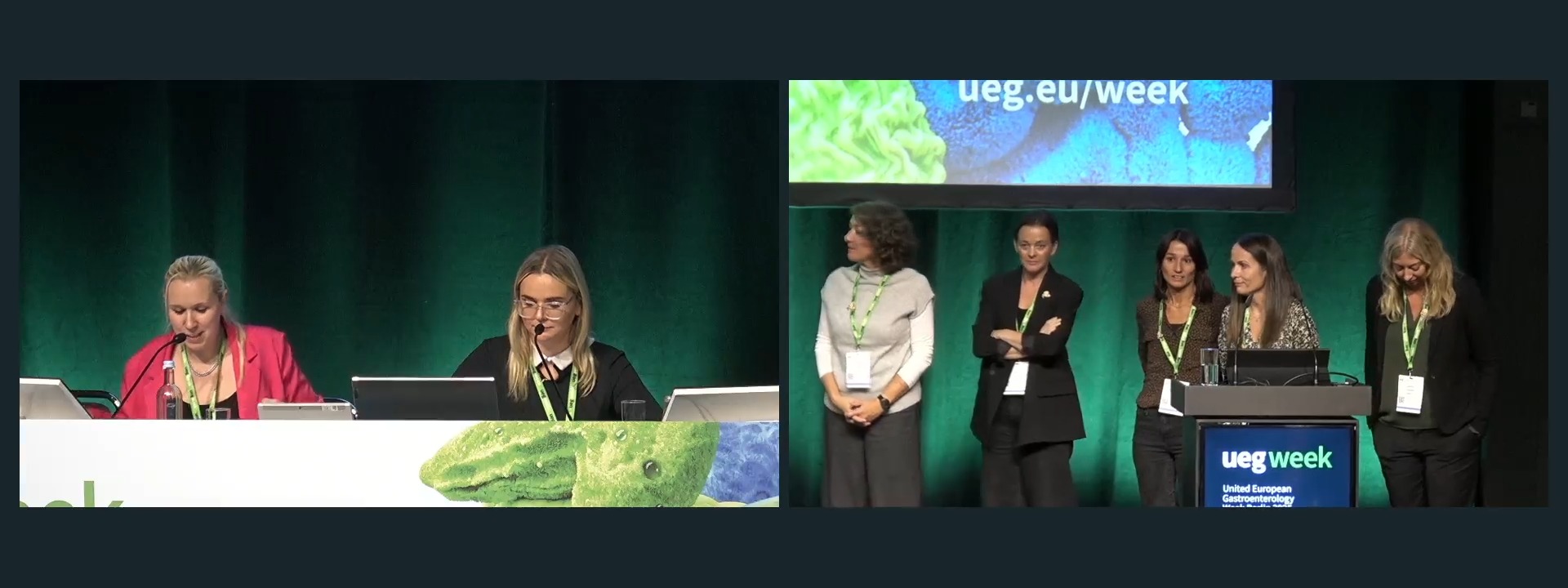
Panel Discussion
Log in to continue.
This content is part of Gutflix. Log in with your myUEG account, or create one free, to watch it.
Not sure what you can access? Learn more about account types.
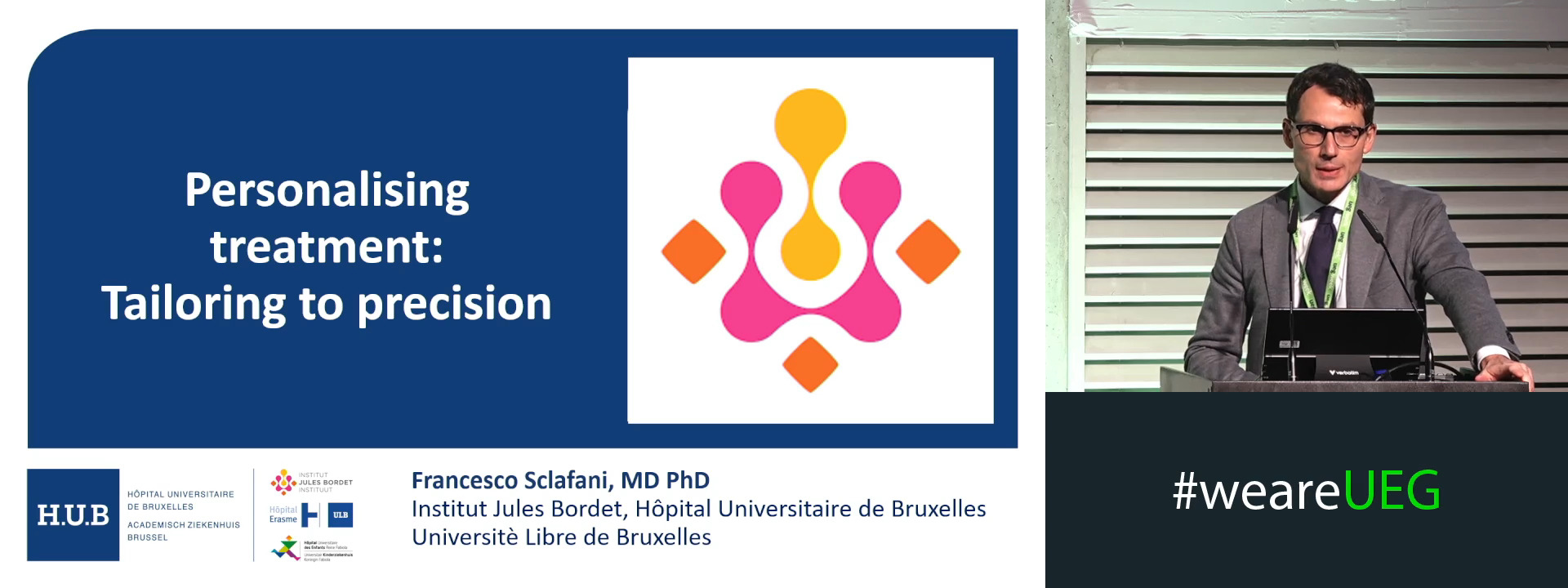
Personalising treatment: Tailoring to precision
Affiliations
1 Université libre de Bruxelles, Bruxelles, Belgium
Log in to continue.
This content is part of Gutflix. Log in with your myUEG account, or create one free, to watch it.
Not sure what you can access? Learn more about account types.
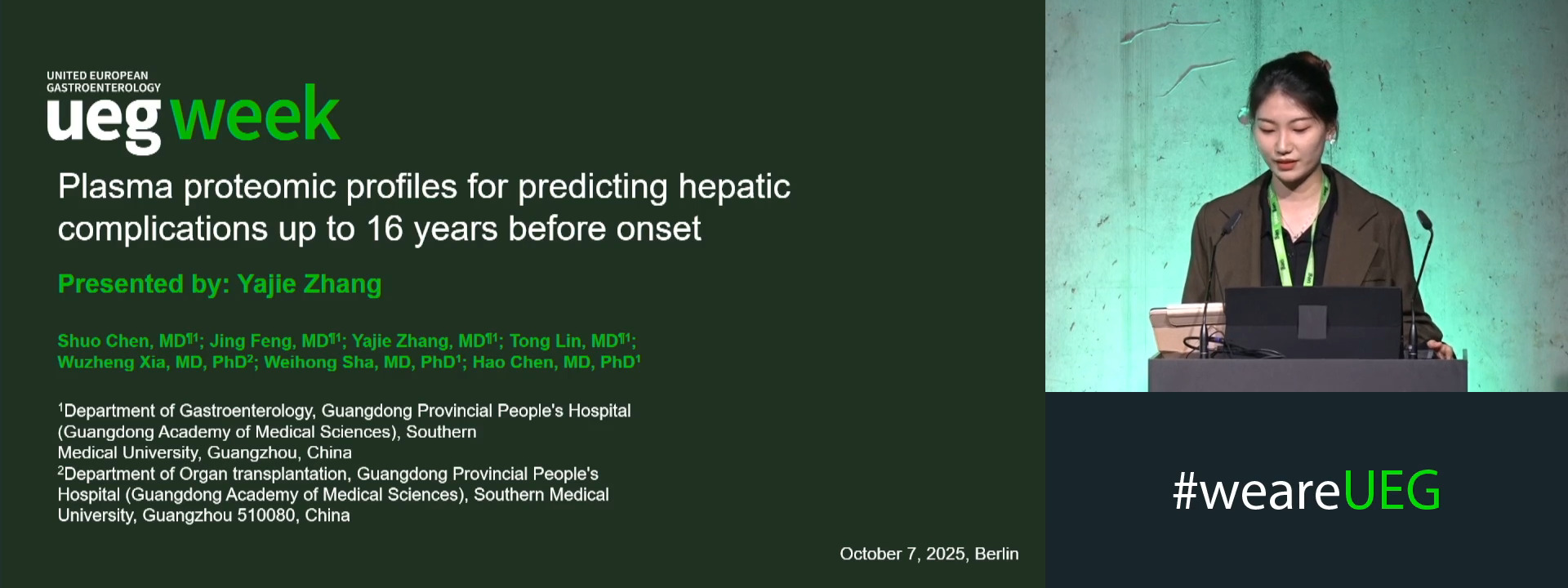
PLASMA PROTEOMIC PROFILES FOR PREDICTING HEPATIC COMPLICATIONS UP TO 16 YEARS BEFORE ONSET
Affiliations
1 Department of Gastroenterology, Guangdong Provincial People's Hospital (Guangdong Academy of Medical Sciences), Southern Medical University, Guangzhou, China
2 Department of Organ transplantation, Guangdong Provincial People's Hospital (Guangdong Academy of Medical Sciences), Southern Medical University, Guangzhou, China
Log in to continue.
This content is part of Gutflix. Log in with your myUEG account, or create one free, to watch it.
Not sure what you can access? Learn more about account types.
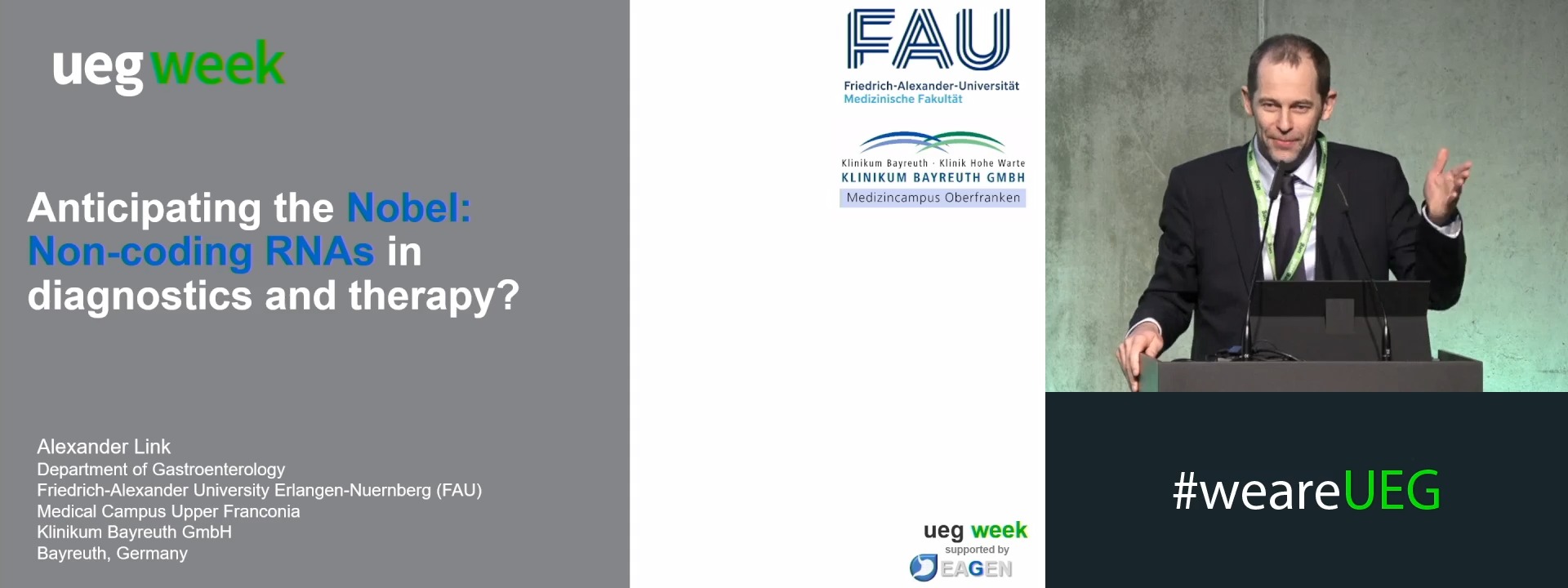
Anticipating the Nobel: Non-coding RNAs in diagnostics and therapy
Affiliations
1 Otto-von-Guericke University of Magdeburg, Magdeburg, Germany
Log in to continue.
This content is part of Gutflix. Log in with your myUEG account, or create one free, to watch it.
Not sure what you can access? Learn more about account types.
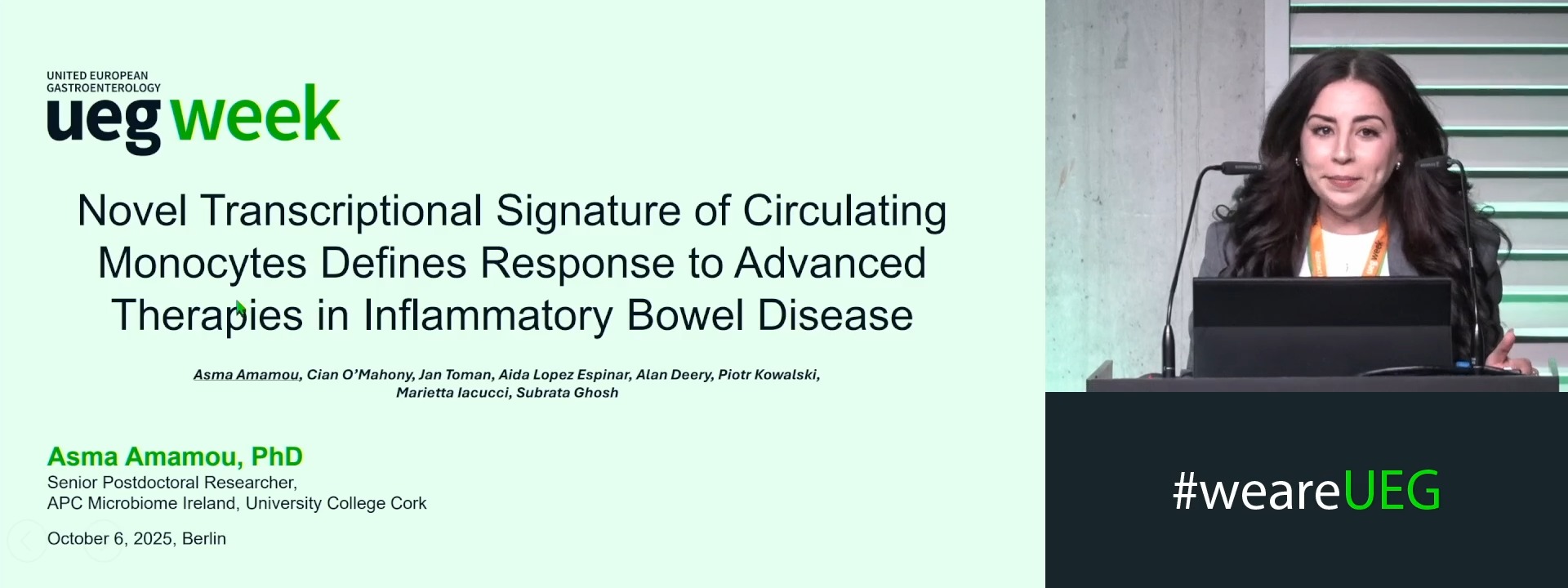
NOVEL TRANSCRIPTIONAL SIGNATURE OF CIRCULATING MONOCYTES DEFINES RESPONSE TO ADVANCED THERAPIES IN INFLAMMATORY BOWEL DISEASE
Asma Amamou 1, Cian O'Mahony 1, Jan Toman 1, Aida Lopez Espinar 2, Alan Deery 1, Piotr Kowalski 3, Marietta Iacucci 1, Subrata Ghosh 1
Affiliations
1 APC Microbiome Ireland, College of Medicine and Health, University College Cork, Cork, Ireland
2 School of Pharmacy, University College Cork, Cork, Ireland
3 APC Microbiome Ireland, College of Medicine and Health, University College Cork, Cork, Ireland|||School of Pharmacy, University College Cork, Cork, Ireland