UEG's educational platform for gastroenterology education bringing recordings, courses, guidelines, and more together in one place.
Trending on Gutflix
Rate for better recommendations!
Your feedback helps us show you more of what you like and less of what you dislike!
Log in to continue.
This content is part of Gutflix. Log in with your myUEG account, or create one free, to watch it.
Not sure what you can access? Learn more about account types.
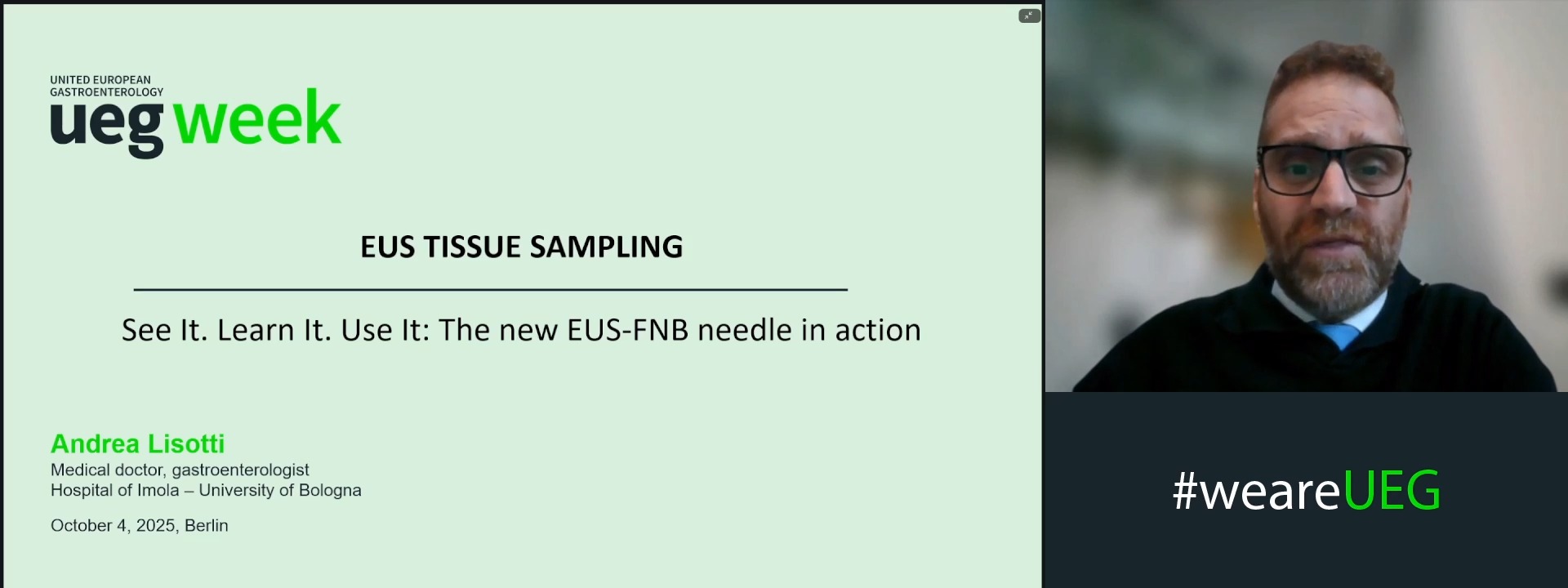
See It. Learn It. Use It: The new EUS-FNB needle in action
Affiliations
1 Hospital of Imola, University of Bologna, Bologna, Italy
Log in to continue.
This content is part of Gutflix. Log in with your myUEG account, or create one free, to watch it.
Not sure what you can access? Learn more about account types.
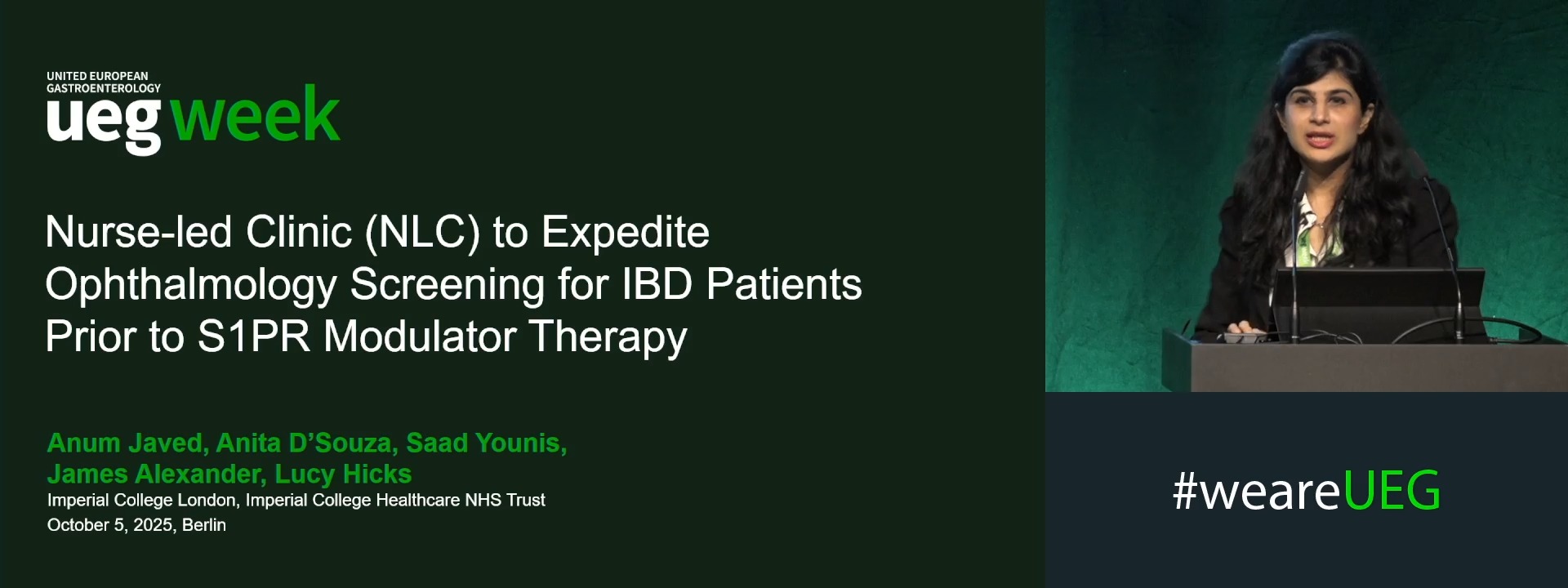
NURSE-LED CLINIC (NLC) TO STREAMLINE OPHTHALMOLOGY SCREENING FOR IBD PATIENTS PRIOR TO INITIATING SPHINGOSINE-1-PHOSPHATE RECEPTOR (S1PR) MODULATOR THERAPY
Affiliations
1 Imperial College Healthcare NHS Trust, London, United Kingdom

Log in to continue.
This content is part of Gutflix. Log in with your myUEG account, or create one free, to watch it.
Not sure what you can access? Learn more about account types.
Welcome
Affiliations
1 ESGENA Scientific Secretary, Ulm, Germany
2 Mater Misericordiae University Hospital, Dublin, Ireland

Log in to continue.
This content is part of Gutflix. Log in with your myUEG account, or create one free, to watch it.
Not sure what you can access? Learn more about account types.
Developing a nurse-led counselling service in hepatology across two hospitals
Affiliations
1 None, None, Switzerland