UEG's content platform for gastroenterology education bringing recordings, courses, guidelines, and more together in one place.
Trending on Gutflix
Rate for better recommendations!
Your feedback helps us show you more of what you like and less of what you dislike!
Log in to continue.
This content is part of Gutflix. Log in with your myUEG account, or create one free, to watch it.
Not sure what you can access? Learn more about account types.
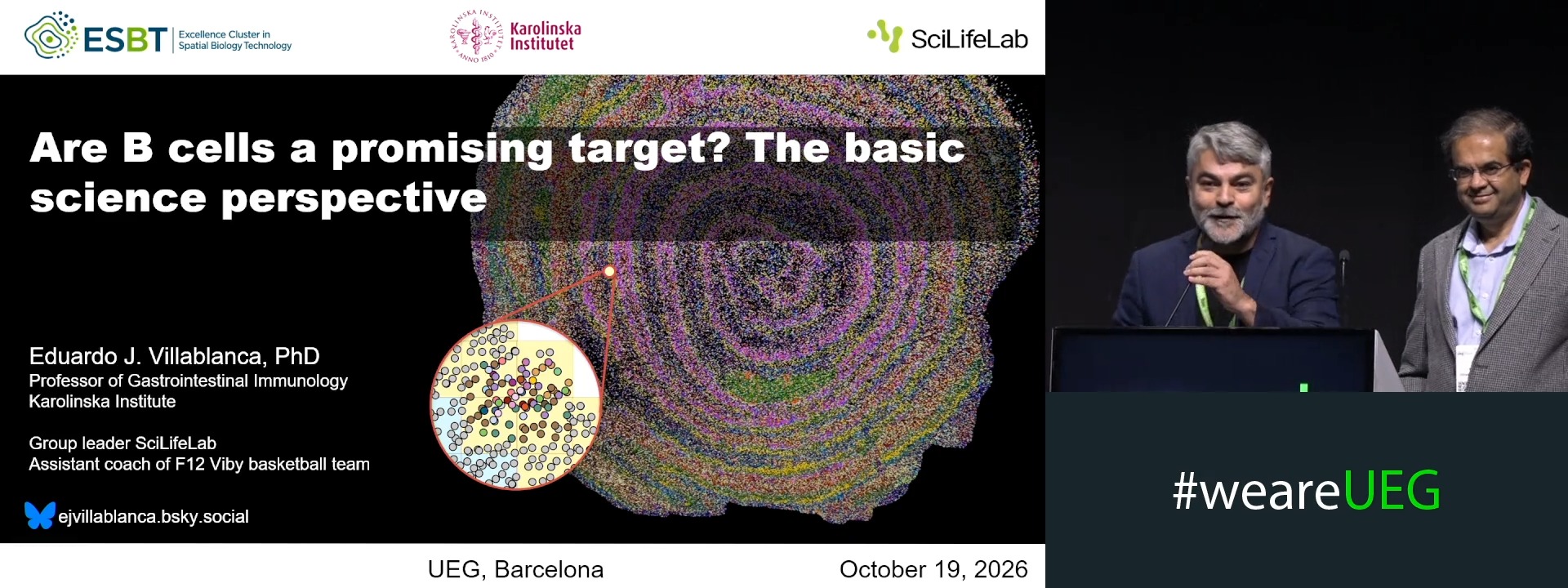
Are B cells a promising target? The clinical and basic science perspective
Affiliations
1 Icahn School of Medicine at Mount Sinai, New York, United States of America
2 Karolinska Institutet, Stockholm, Sweden
Log in to continue.
This content is part of Gutflix. Log in with your myUEG account, or create one free, to watch it.
Not sure what you can access? Learn more about account types.
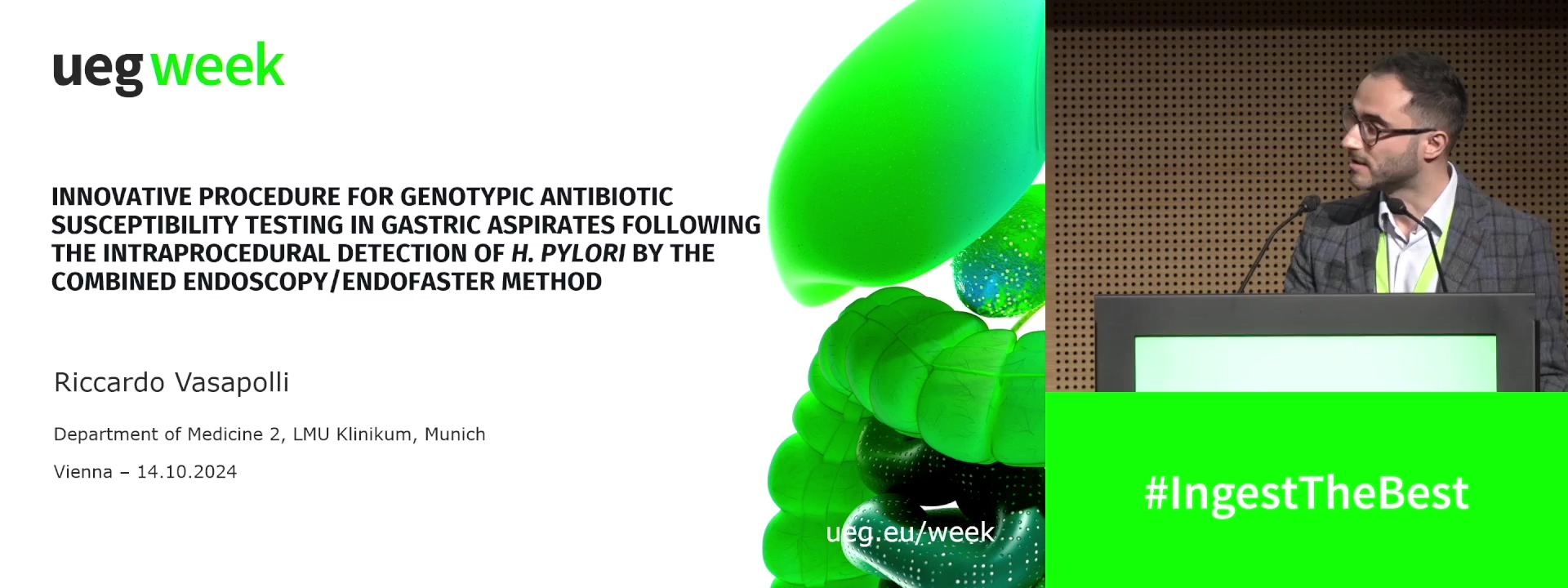
INNOVATIVE PROCEDURE FOR GENOTYPIC ANTIBIOTIC SUSCEPTIBILITY TESTING IN GASTRIC ASPIRATES FOLLOWING THE INTRAPROCEDURAL DETECTION OF H. PYLORI BY THE COMBINED ENDOSCOPY/ENDOFASTER METHOD
Riccardo Vasapolli 1,2, Florent Ailloud 3,4, Beate Spiessberger 3,4, Peter Malfertheiner 1, Sebastian Suerbaum 3,4,2, Christian Schulz 1,2
Affiliations
1 University Hospital LMU Munich, Munich, Germany
2 DZIF Deutsches Zentrum für Infektionsforschung, Partner Site Munich, Munich, Germany
3 Max von Pettenkofer Institute, Ludwig Maximilians University of Munich, Munich, Germany
4 National Reference Center for Helicobacter pylori, Munich, Germany
Log in to continue.
This content is part of Gutflix. Log in with your myUEG account, or create one free, to watch it.
Not sure what you can access? Learn more about account types.
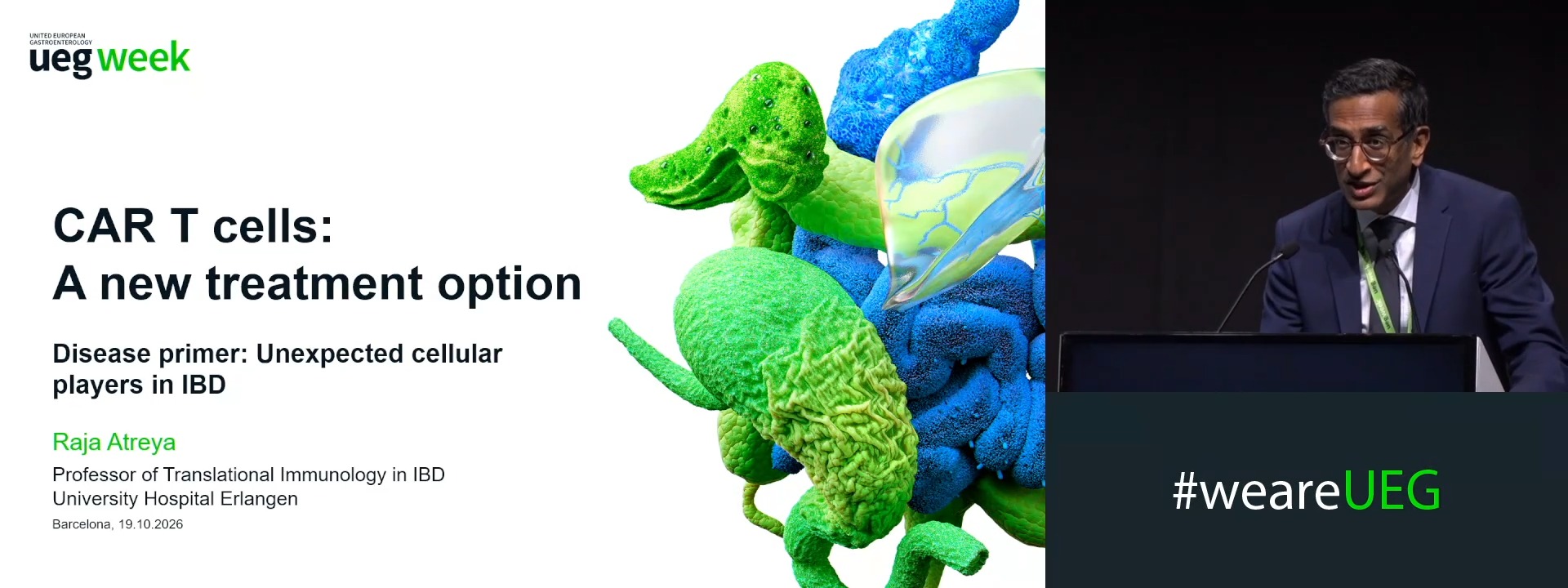
CAR T cells: A new treatment option
Affiliations
1 Friedrich-Alexander-Universität Erlangen-Nürnberg, Erlangen, Germany