UEG's content platform for gastroenterology education bringing recordings, courses, guidelines, and more together in one place.
Trending on Gutflix
Rate for better recommendations!
Your feedback helps us show you more of what you like and less of what you dislike!
Log in to continue.
This content is part of Gutflix. Log in with your myUEG account, or create one free, to watch it.
Not sure what you can access? Learn more about account types.
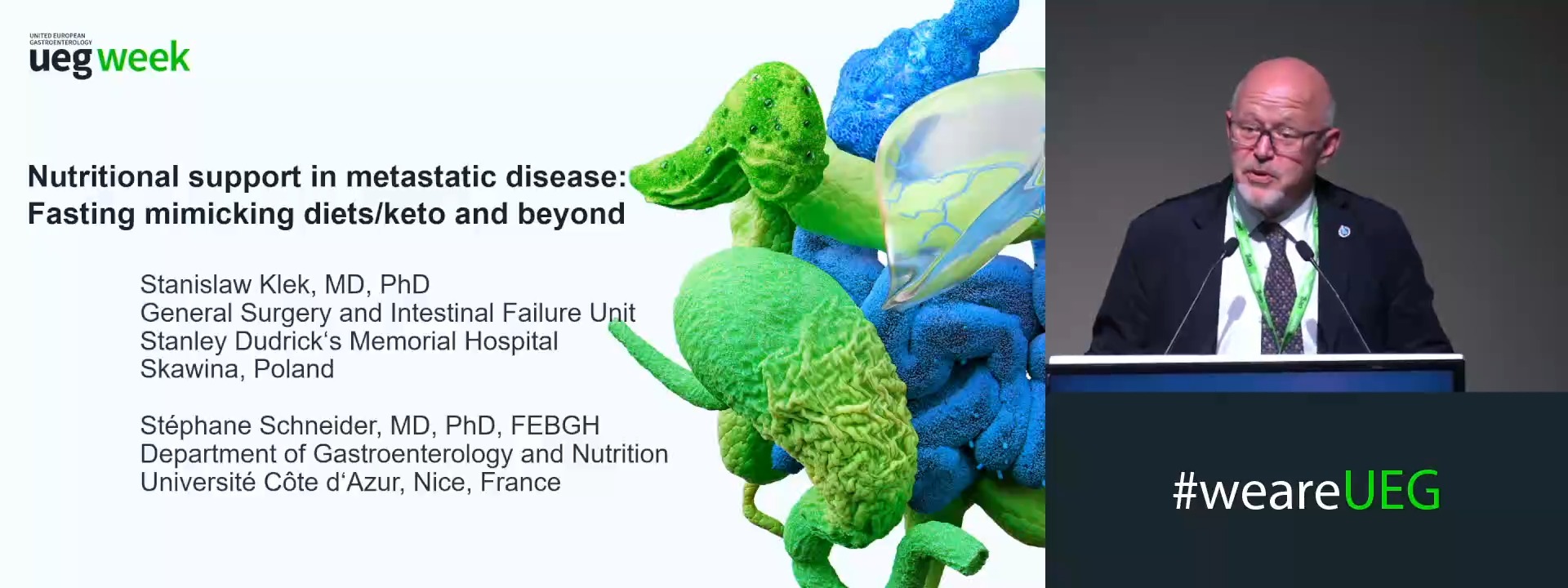
Nutritional support in metastatic disease: Fasting mimicking diets/keto and beyond
Affiliations
1 CHU de Nice - Archet, Nice, France
Log in to continue.
This content is part of Gutflix. Log in with your myUEG account, or create one free, to watch it.
Not sure what you can access? Learn more about account types.
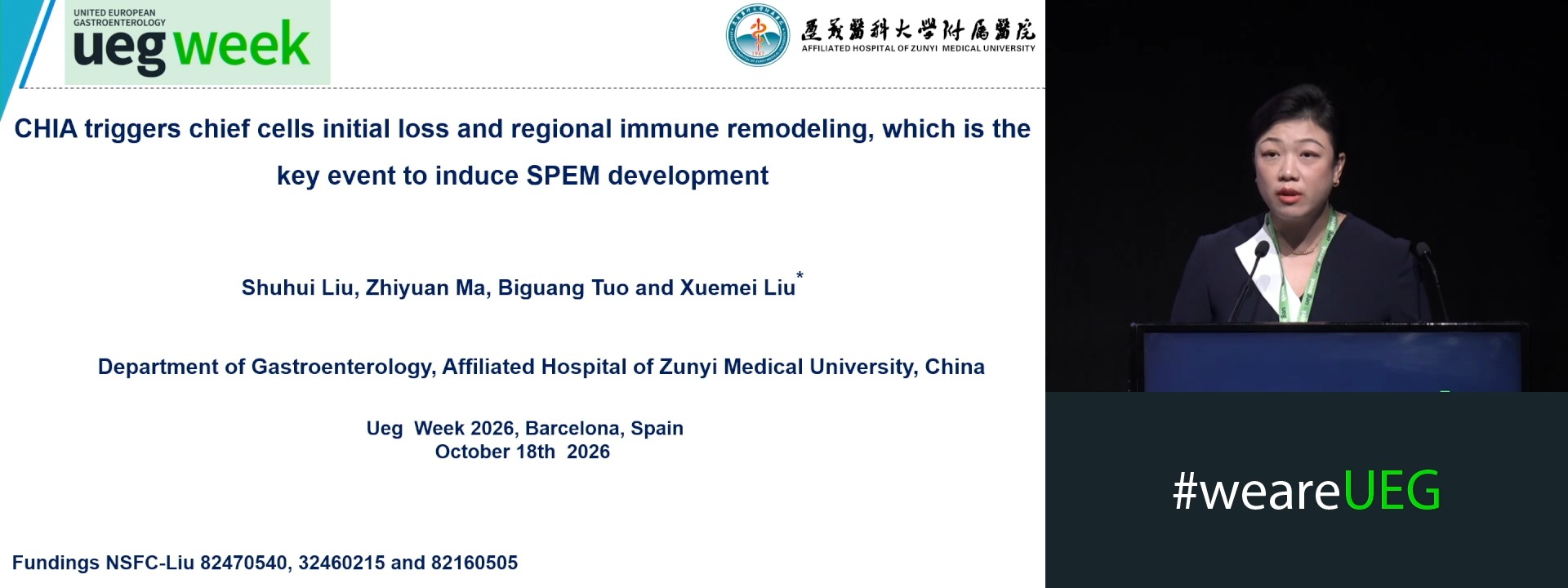
NON-ENZYMATIC ACTIVITY OF CHIA TRIGGERS CHIEF CELL INITIAL LOSS AND REGIONAL IMMUNE REMODELING, WHICH IS THE KEY EVENT TO INDUCE SPEM DEVELOPMENT
Affiliations
1 Department of Gastroenterology, Digestive Disease Hospital, Affiliated Hospital of Zunyi Medical University, Zunyi, China
2 Department of General Surgery, Department of Thyroid and Breast Surgery, Affiliated Hospital of Zunyi Medical University, Zunyi, China
Log in to continue.
This content is part of Gutflix. Log in with your myUEG account, or create one free, to watch it.
Not sure what you can access? Learn more about account types.
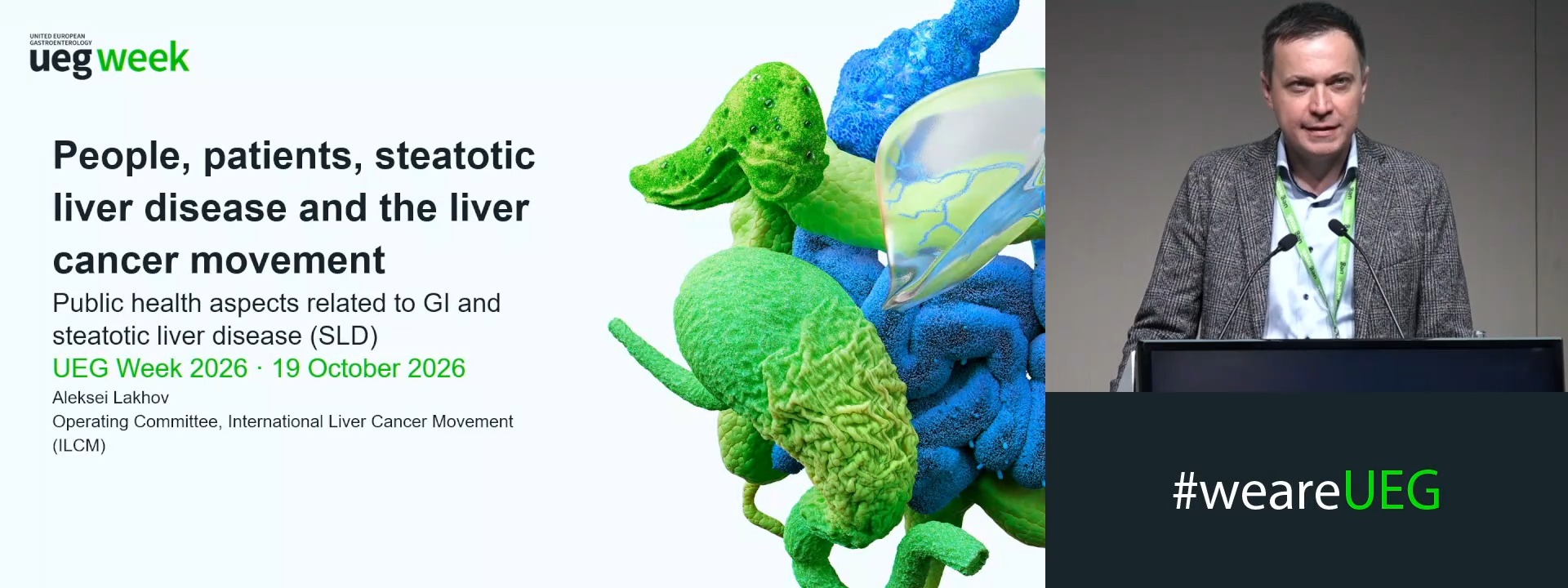
People, patients, steatotic liver disease and the liver cancer movement
Affiliations
1 International Liver Cancer Movement, None, Germany
Log in to continue.
This content is part of Gutflix. Log in with your myUEG account, or create one free, to watch it.
Not sure what you can access? Learn more about account types.
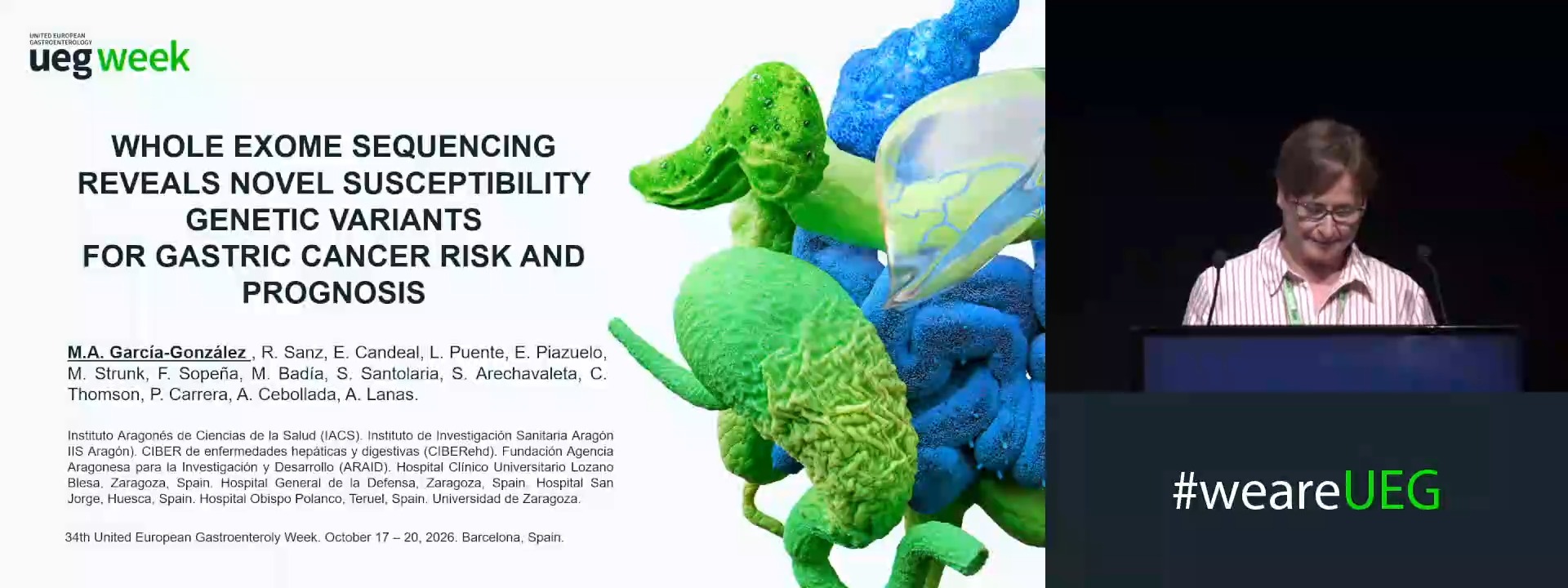
WHOLE EXOME SEQUENCING REVEALS NOVEL SUSCEPTIBILITY GENETIC VARIANTS FOR GASTRIC CANCER RISK AND PROGNOSIS
María Asunción García-González 1,2,3, Rebeca Sanz Pamplona 2,4, Eduardo Candeal Núñez 2, Laura Puente Santamaría 1, Elena Piazuelo Ortega 1,2,3, Mark Strunk 1, Federico Sopena 2,5,3, MARIA BADIA 6, Santos Santolaria Piedrafita 7, Samanta Arechavaleta 3,2, Concha Thomson Llisterri 8, Patricia Carrera-Lasfuentes 3, Alberto Cebollada 1, Angel Lanas 2,3,9
Affiliations
1 Instituto Aragonés de Ciencias de la Salud, Zaragoza, Spain
2 Instituto de Investigación Sanitaria Aragón, Zaragoza, Spain
3 CIBER de enfermedades hepáticas y digestivas (CIBERehd), Zaragoza, Spain
4 Fundación Agencia Aragonesa para la Investigación y Desarrollo (ARAID), Zaragoza, Spain
5 Hospital Clínico Universitario Lozano Blesa, Zaragoza, Spain
6 Hospital General de la Defensa, Zaragoza, Spain
7 Hospital San Jorge, Huesca, Spain
8 Hospital Obispo Polanco, Teruel, Spain
9 Universidad de Zaragoza, Zaragoza, Spain
Log in to continue.
This content is part of Gutflix. Log in with your myUEG account, or create one free, to watch it.
Not sure what you can access? Learn more about account types.
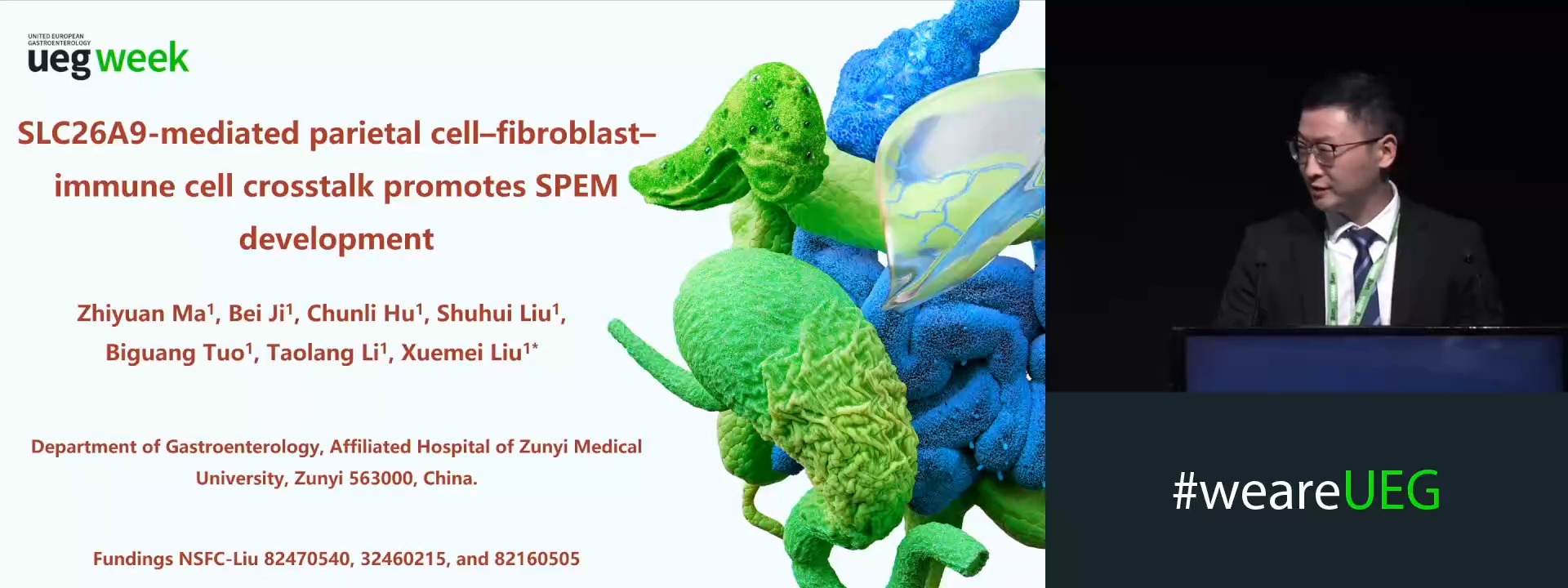
PARIETAL CELL-SPECIFIC SLC26A9 DELETION DRIVES SPEM VIA SPERMIDINE-STAT3-MEDIATED EXPANSION OF APOE+PDGFRA+ FIBROBLASTS
Affiliations
1 Affiliated Hospital of Zunyi Medical University, Zunyi, China
Log in to continue.
This content is part of Gutflix. Log in with your myUEG account, or create one free, to watch it.
Not sure what you can access? Learn more about account types.
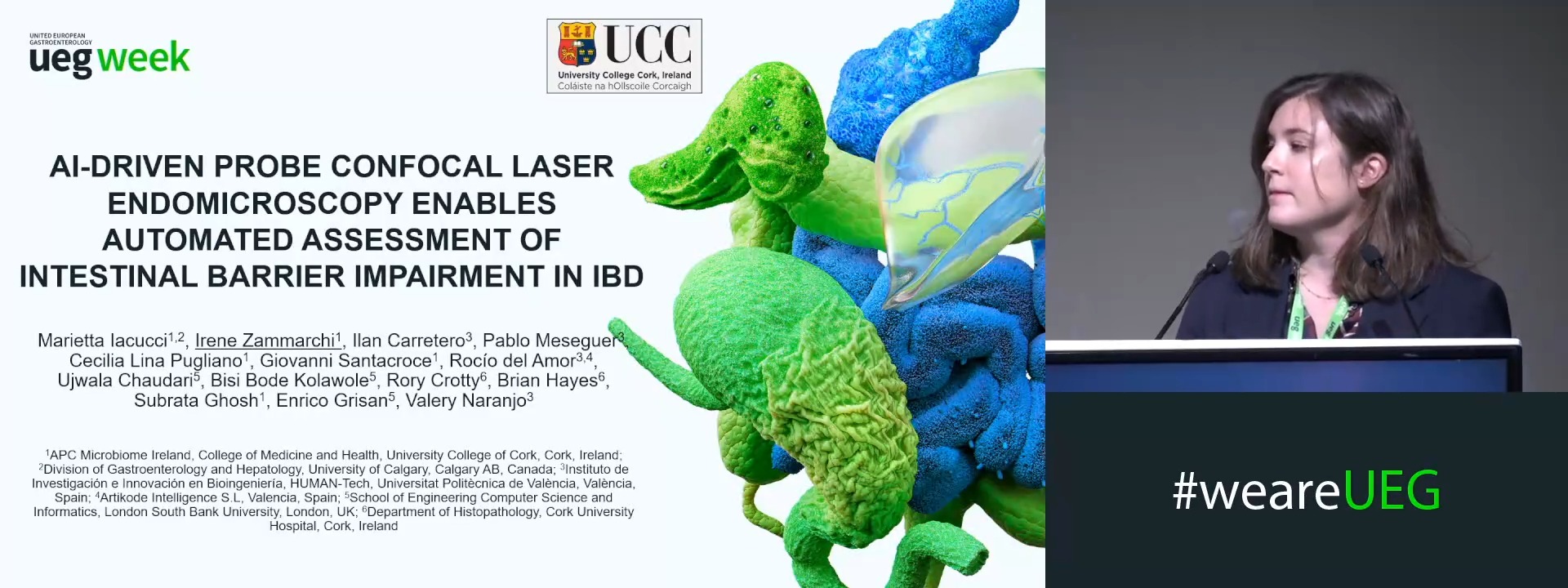
AI-DRIVEN PROBE CONFOCAL LASER ENDOMICROSCOPY ENABLES AUTOMATED ASSESSMENT OF INTESTINAL BARRIER IMPAIRMENT IN IBD
Marietta Iacucci 1,2, Irene Zammarchi 1, Ilan Carretero 3, Pablo Meseguer 3, Cecilia Lina Pugliano 1, Giovanni Santacroce 1, Rocio Del Amor 3,4, Ujwala Chaudhari 5, Bisi Bode Kolawole 5, Rory Crotty 6, Brian Hayes 6, Subrata Ghosh 1, Enrico Grisan 5, Valery Naranjo 3,4
Affiliations
1 University College Cork, Cork, Ireland
2 University of Calgary, Calgary, Canada
3 Universitat Politècnica de València, Valencia, Spain
4 Artikode Intelligence S.L., Valencia, Spain
5 London South Bank University, London, United Kingdom
6 Cork University Hospital, Cork, Ireland
Log in to continue.
This content is part of Gutflix. Log in with your myUEG account, or create one free, to watch it.
Not sure what you can access? Learn more about account types.
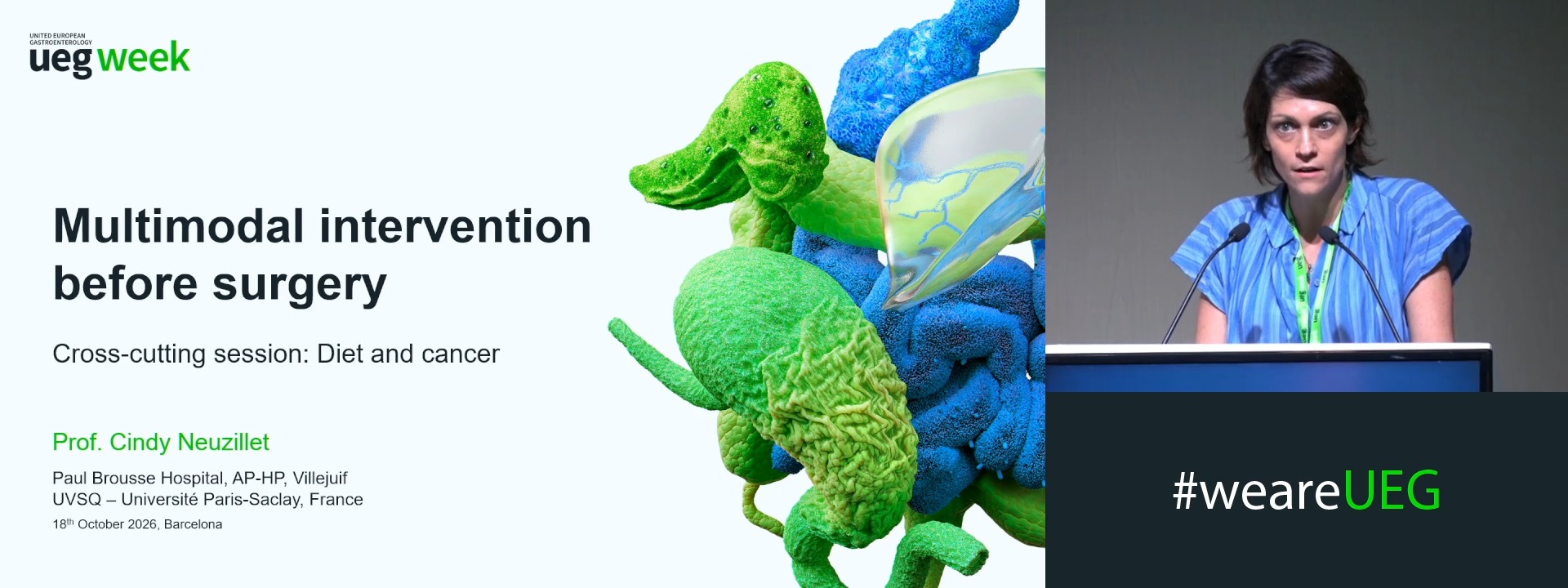
Multimodal intervention before surgery
Affiliations
1 Institut Curie, Paris, France