UEG's educational platform for gastroenterology education bringing recordings, courses, guidelines, and more together in one place.
Most popular content
Rate for better recommendations!
Your feedback helps us show you more of what you like and less of what you dislike!
Log in to access this content.
Free for all myUEG account holders. Your access level is set automatically based on your occupation. Medical professionals get full access to all content. If you are a non-medical user, you can only access UEG Week content from congresses you attended.
Not sure what you can access? Learn more about account types.

FACTORS ASSOCIATED WITH POST-ENDOSCOPIC PAPILLECTOMY BLEEDING
Takumi Onoyama 1, Taro Yamashita 1, Takuya Shimosaka 1, Yuri Sakamoto 1, Noriyuki Suto 1, Sachiyo Yamagata 1, Hajime Isomoto 1
1 Faculty of Medicine Tottori University, Yonago, Japan
Conference
Topics
Submission format
Session
Citation
Published
Log in to access this content.
Free for all myUEG account holders. Your access level is set automatically based on your occupation. Medical professionals get full access to all content. If you are a non-medical user, you can only access UEG Week content from congresses you attended.
Not sure what you can access? Learn more about account types.
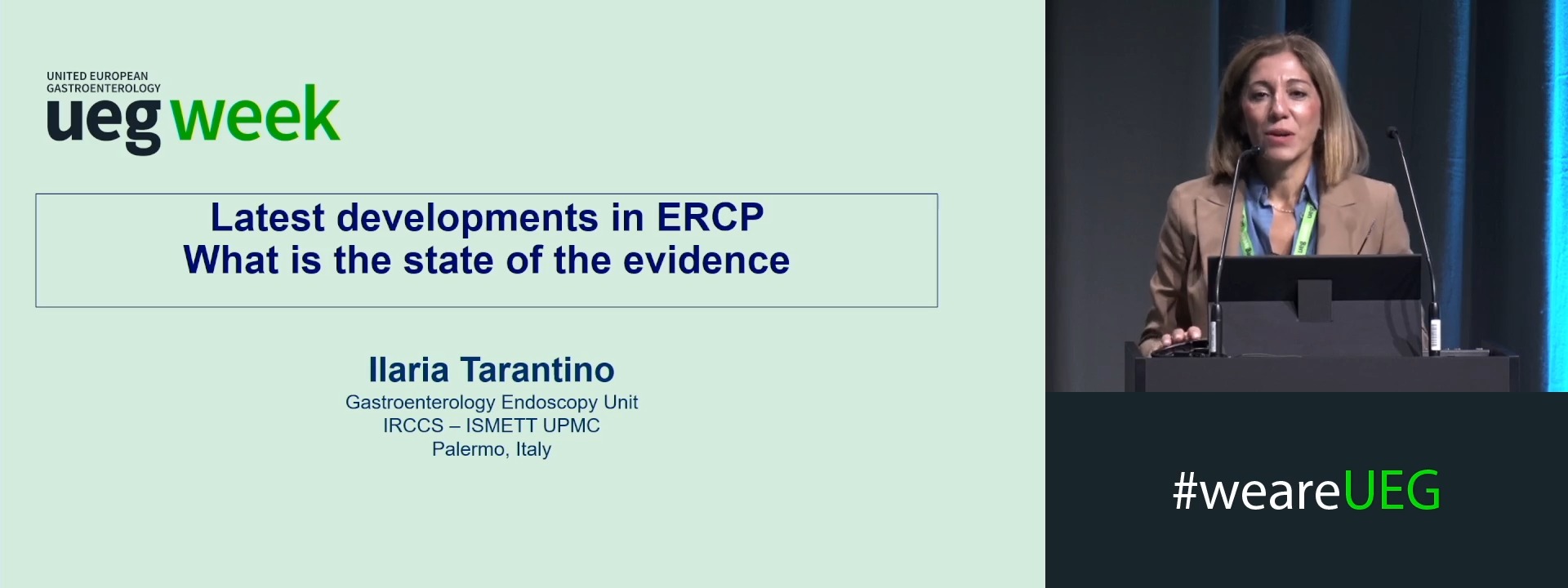
Latest developments in ERCP: What is the state of the evidence?
1 ISMETT, Palermo, Italy
Event
Citation
Published
Log in to access this content.
Free for all myUEG account holders. Your access level is set automatically based on your occupation. Medical professionals get full access to all content. If you are a non-medical user, you can only access UEG Week content from congresses you attended.
Not sure what you can access? Learn more about account types.
RITUXIMAB’S GUT BETRAYAL:COLONOSCOPY UNVEILS ENTEROCOLITIS YOU CAN’T IGNORE
1 Kasturba Medical College, Manipal, India
2 Kasturba Medical College, Manipal, India|||Kasturba Medical College, Manipal, India
Conference
Topics
Submission format
Session
Published
Log in to access this content.
Free for all myUEG account holders. Your access level is set automatically based on your occupation. Medical professionals get full access to all content. If you are a non-medical user, you can only access UEG Week content from congresses you attended.
Not sure what you can access? Learn more about account types.
ASPIRATION PNEUMONIA AFTER ERCP IN DEEP SEDATION:PREVALENCE, RISK FACTORS AND CLINICAL OUTCOMES OF AN UNDERESTIMATED COMPLICATION
Emilia Calderini 1, Nicolò de Pretis 1, Maria Vittoria Galli 1, Silvia Maria Mora 1, Camilla Cerioli 1, Stefano Francesco Crinò 1, Maria Cristina Conti Bellocchi 1, Armando Gabbrielli 2, Laura Bernardoni 1, Viola Fino 1, Marco Della Coletta 1, Luigi Martinelli 3, William Mantovani 3, Luca Frulloni 1
1 University of Verona - Gastroenterology and Endoscopy Unit, Verona, Italy
2 University of Trento, Trento, Italy
3 Azienda Provinciale Servizi Sanitari, Trento, Italy
Conference
Topics
Submission format
Citation
Published
Log in to access this content.
Free for all myUEG account holders. Your access level is set automatically based on your occupation. Medical professionals get full access to all content. If you are a non-medical user, you can only access UEG Week content from congresses you attended.
Not sure what you can access? Learn more about account types.
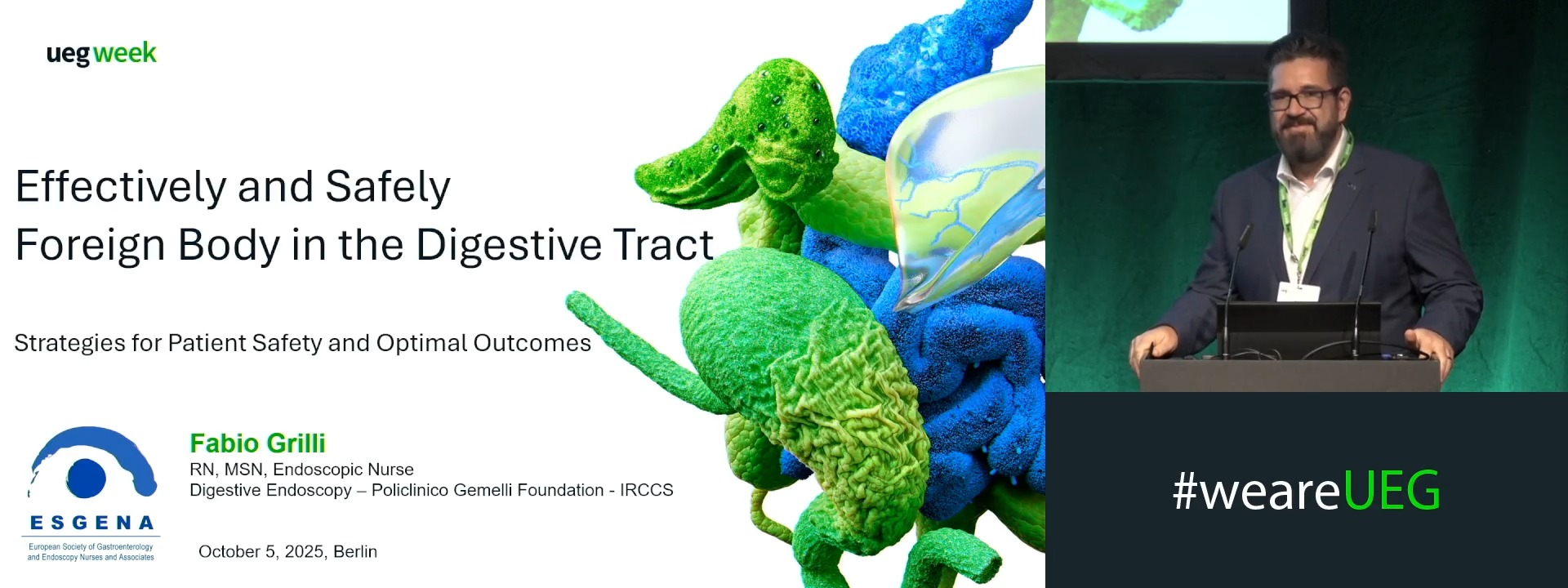
Effectively and safely- foreign body in the digestive tract
1 Fondazione Policlinico Universitario Agostino Gemelli IRCCS, Roma, Italy
Event
Topics
Citation
Published
Log in to access this content.
Free for all myUEG account holders. Your access level is set automatically based on your occupation. Medical professionals get full access to all content. If you are a non-medical user, you can only access UEG Week content from congresses you attended.
Not sure what you can access? Learn more about account types.
IMPOSTER POSING A DIAGNOSTIC DIFFICULTY – GREAT MASQUERADER OF PANCREATIC TUBERCULOSIS
1 Kasturba Medical College, Manipal, India
Conference
Topics
Submission format
Session
Published
Log in to access this content.
Free for all myUEG account holders. Your access level is set automatically based on your occupation. Medical professionals get full access to all content. If you are a non-medical user, you can only access UEG Week content from congresses you attended.
Not sure what you can access? Learn more about account types.
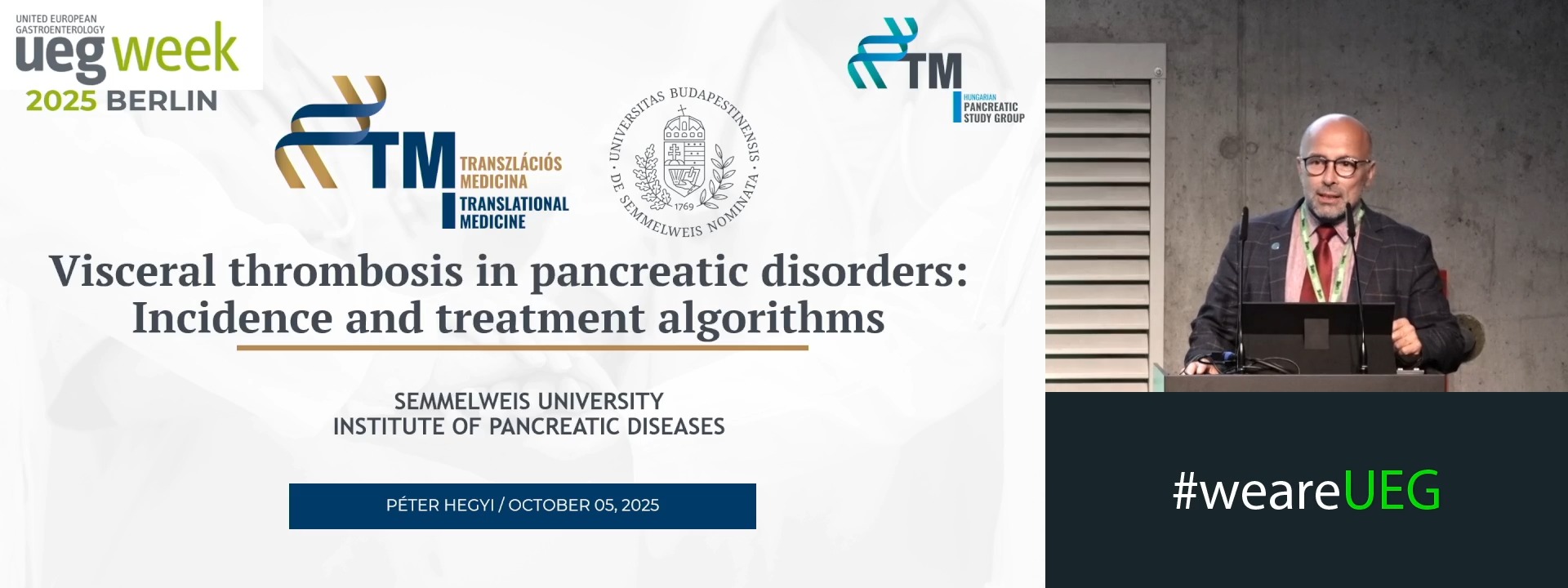
Visceral thrombosis in pancreatic disorders: Incidence and treatment algorithms
1 University of Pecs, Pecs, Hungary
Event
Topics