UEG's content platform for gastroenterology education bringing recordings, courses, guidelines, and more together in one place.
Trending on Gutflix
Rate for better recommendations!
Your feedback helps us show you more of what you like and less of what you dislike!
Log in to continue.
This content is part of Gutflix. Log in with your myUEG account, or create one free, to watch it.
Not sure what you can access? Learn more about account types.
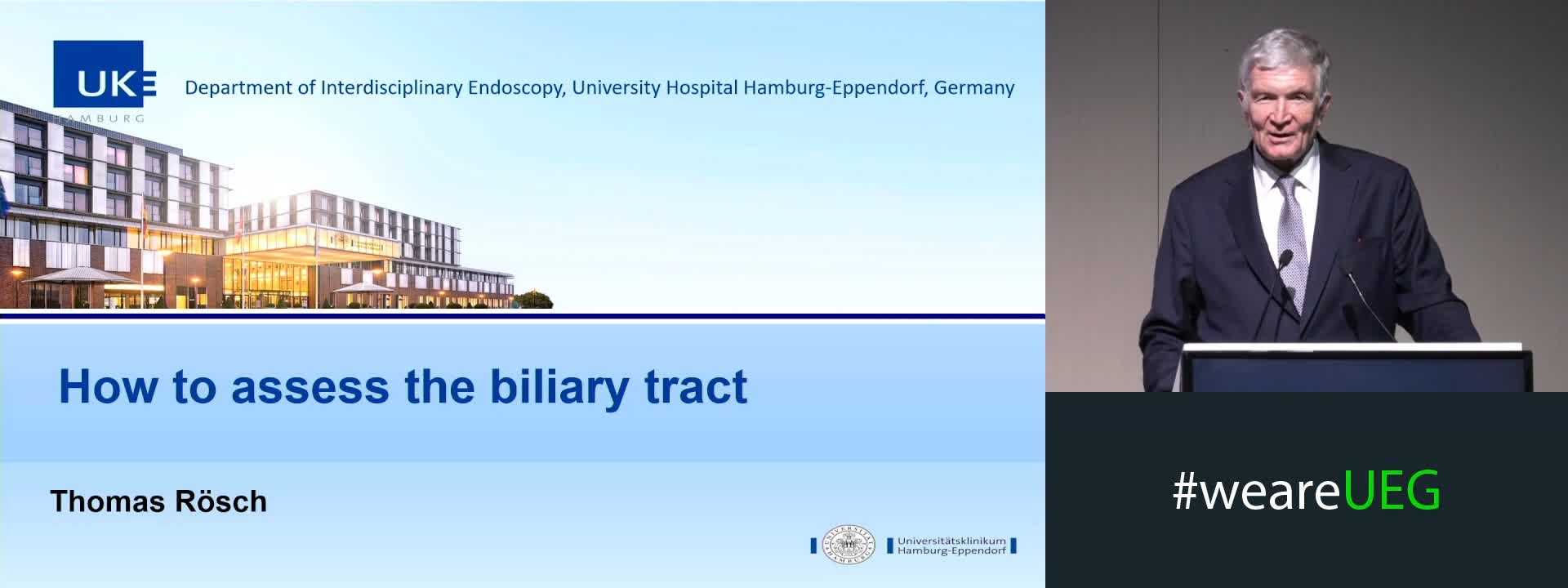
How to assess the biliary tract
Affiliations
1 Clinic for Interdisciplinary Endoscopy, Hamburg, Germany
Log in to continue.
This content is part of Gutflix. Log in with your myUEG account, or create one free, to watch it.
Not sure what you can access? Learn more about account types.
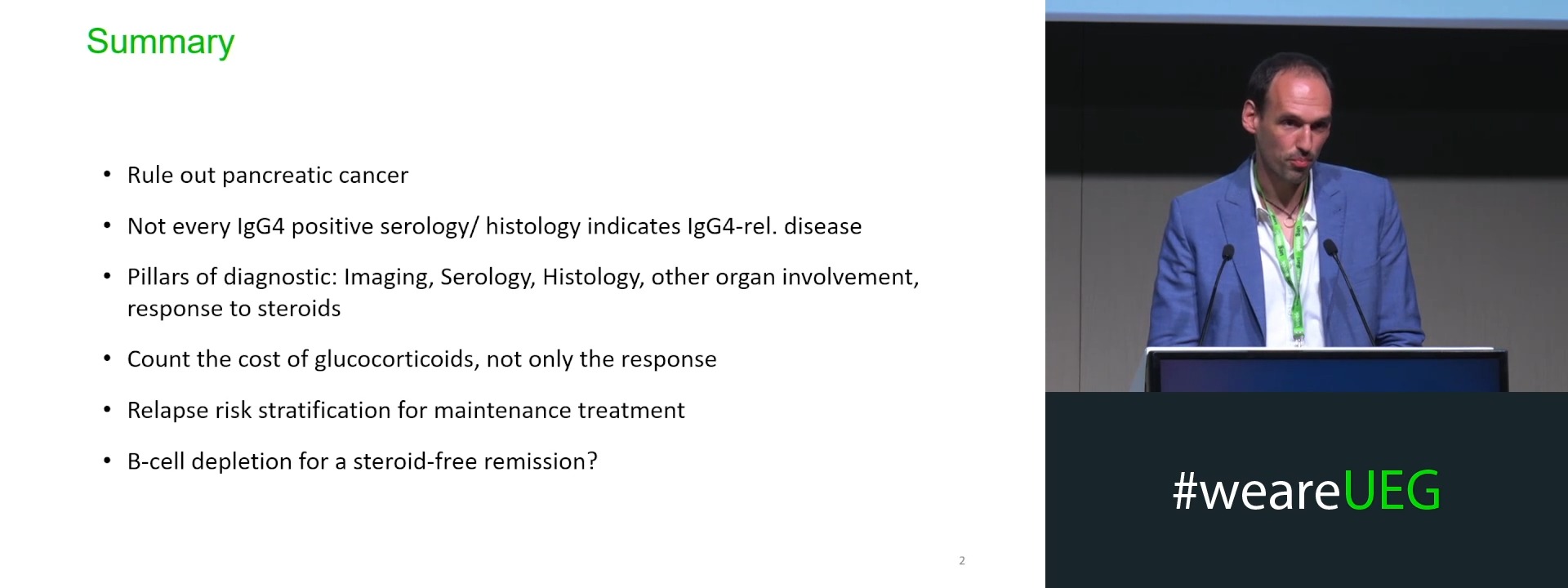
Summary: Autoimmune pancreatitis: Come, see, conquer
Affiliations
1 University Medical Centre Goettingen, Goettingen, Germany
Log in to continue.
This content is part of Gutflix. Log in with your myUEG account, or create one free, to watch it.
Not sure what you can access? Learn more about account types.
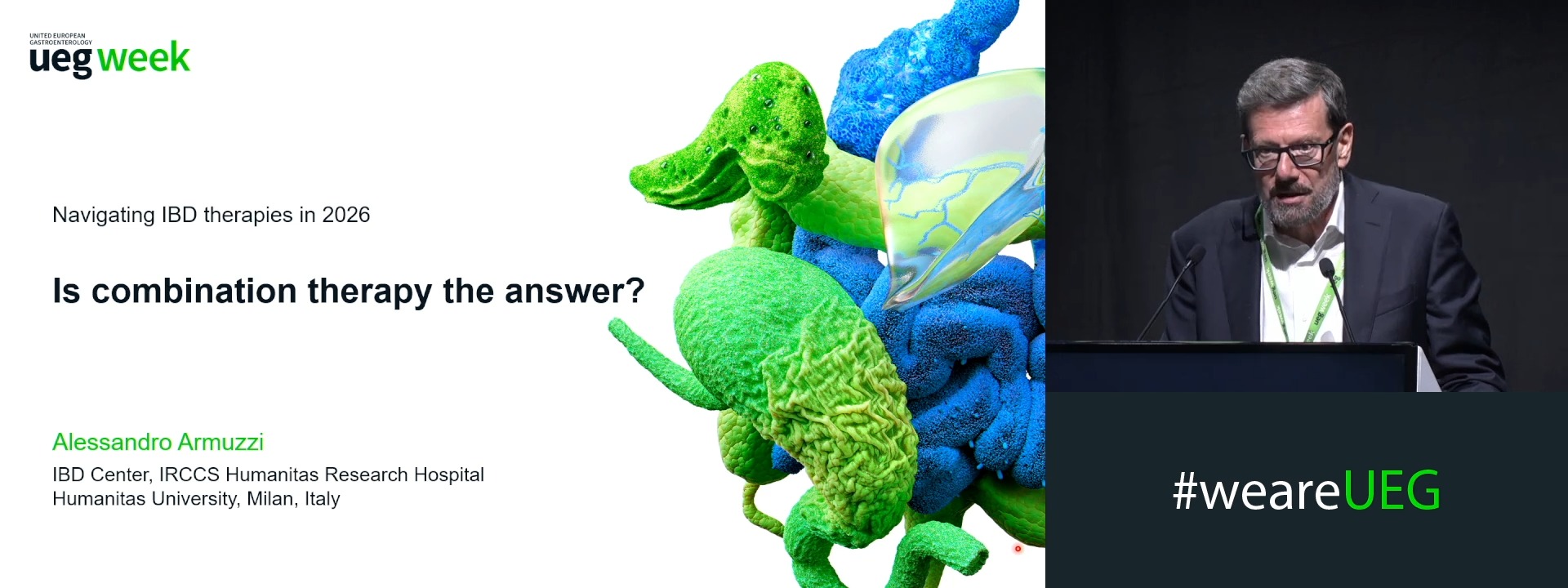
Is combination therapy the answer?
Affiliations
1 IBD Center, IRCCS Humanitas Research Hospital, Rozzano, Milan, Italy
Log in to continue.
This content is part of Gutflix. Log in with your myUEG account, or create one free, to watch it.
Not sure what you can access? Learn more about account types.
Panel discussion: Eating disorders and unexplained weight loss
Log in to continue.
This content is part of Gutflix. Log in with your myUEG account, or create one free, to watch it.
Not sure what you can access? Learn more about account types.
Introduction: Autoimmune pancreatitis: Come, see, conquer
Affiliations
1 Erasmus MC Cancer Institute, University Medical Center, Rotterdam, Netherlands
Log in to continue.
This content is part of Gutflix. Log in with your myUEG account, or create one free, to watch it.
Not sure what you can access? Learn more about account types.
Conquer: When response does not come easy
Affiliations
1 San Raffaele Hospital: IRCCS Ospedale San Raffaele, Milan, Italy
Log in to continue.
This content is part of Gutflix. Log in with your myUEG account, or create one free, to watch it.
Not sure what you can access? Learn more about account types.
Introduction: AI integration in my clinical practice today
Affiliations
1 University of Oslo / Showa University, Oslo, Norway