UEG's content platform for gastroenterology education bringing recordings, courses, guidelines, and more together in one place.
Trending on Gutflix
Rate for better recommendations!
Your feedback helps us show you more of what you like and less of what you dislike!
Log in to continue.
This content is part of Gutflix. Log in with your myUEG account, or create one free, to watch it.
Not sure what you can access? Learn more about account types.
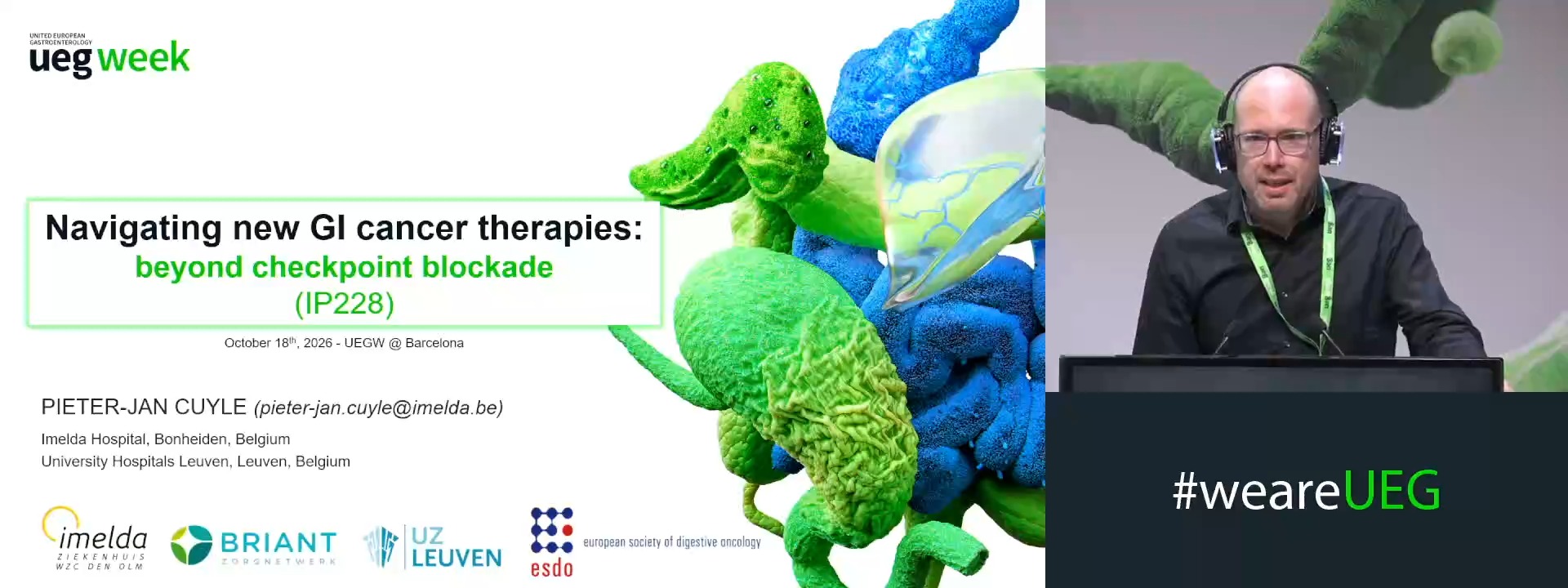
Navigating new GI cancer therapies: Beyond checkpoint blockade
Affiliations
1 UZ Leuven, Bonheiden, Belgium
Log in to continue.
This content is part of Gutflix. Log in with your myUEG account, or create one free, to watch it.
Not sure what you can access? Learn more about account types.
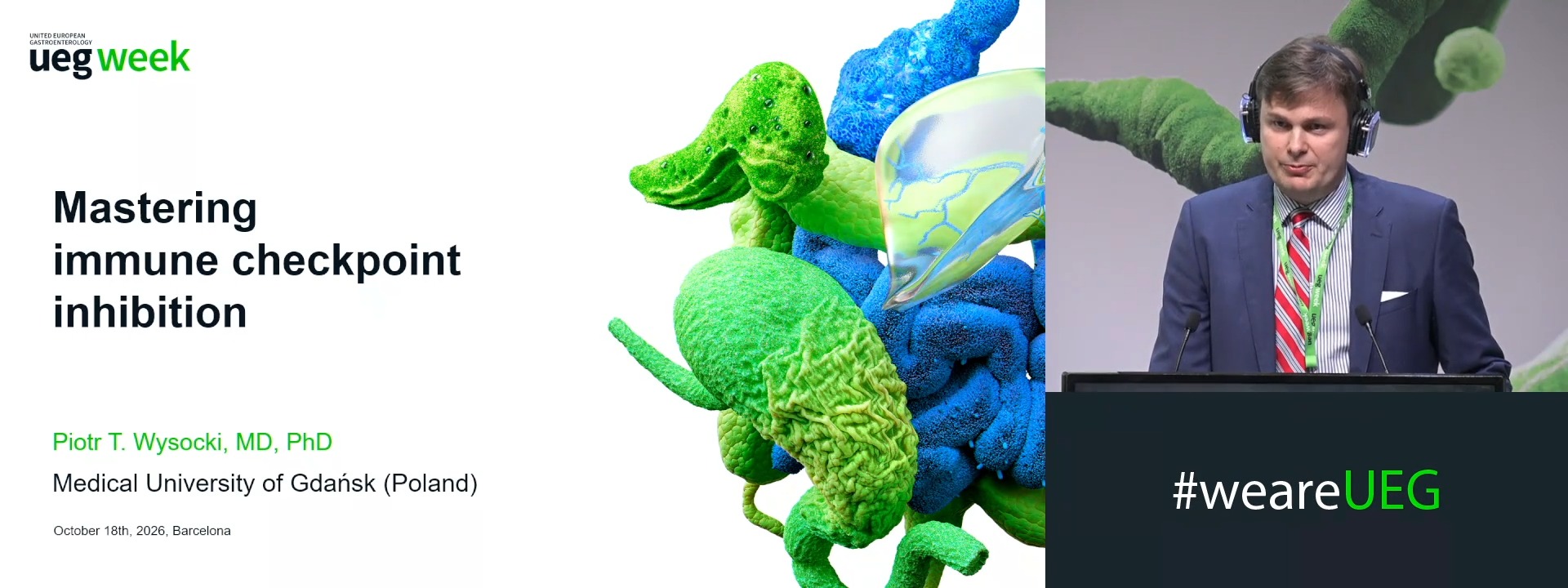
Mastering immune checkpoint inhibition
Affiliations
1 Medical University of Gdansk, Warsaw, Poland
Log in to continue.
This content is part of Gutflix. Log in with your myUEG account, or create one free, to watch it.
Not sure what you can access? Learn more about account types.
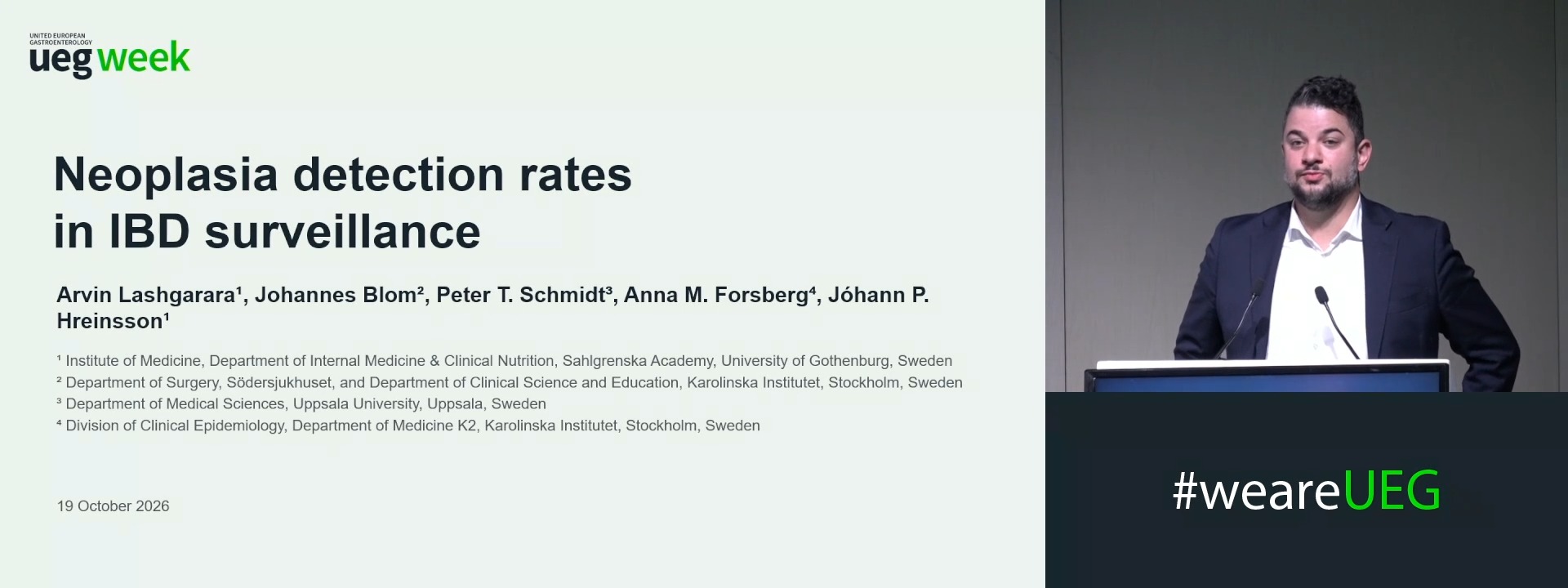
NEOPLASIA DETECTION RATES IN IBD SURVEILLANCE
Arvin Lashgarara 1,2, Johannes Blom 3,4, Peter Thelin Schmidt 5, Anna Forsberg 6, Jóhann Hreinsson 1,2
Affiliations
1 Sahlgrenska University Hospital, Gothenburg, Sweden
2 Gothenburg University, Sahlgrenska Academy, Institute of Medicine, Gothenburg, Sweden
3 Södersjukhuset, Stockholm, Sweden
4 Karolinska Institutet, Stockholm, Sweden
5 Uppsala University Hospital, Uppsala University, Uppsala, Sweden
6 Karolinska Institutet, Institute of Medicine, Stockholm, Sweden
Log in to continue.
This content is part of Gutflix. Log in with your myUEG account, or create one free, to watch it.
Not sure what you can access? Learn more about account types.
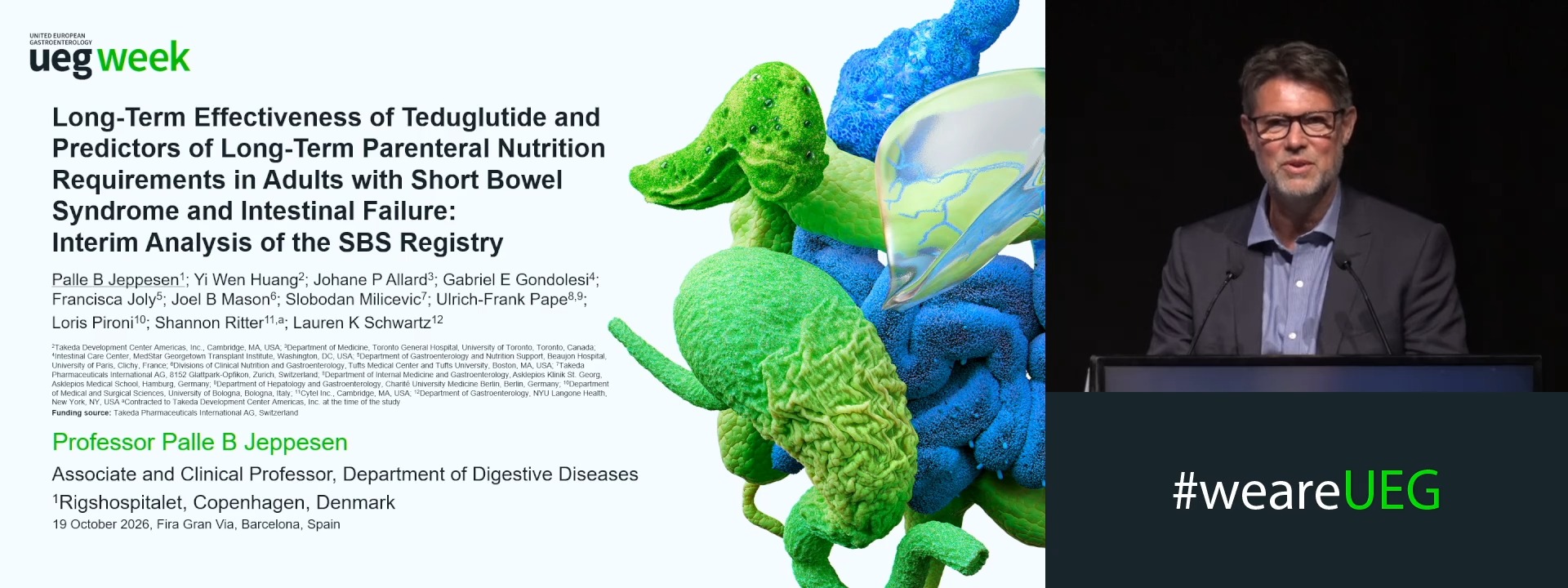
LONG-TERM EFFECTIVENESS OF TEDUGLUTIDE AND PREDICTORS OF LONG-TERM PARENTERAL NUTRITION REQUIREMENTS IN ADULTS WITH SHORT BOWEL SYNDROME AND INTESTINAL FAILURE: INTERIM ANALYSIS OF THE SBS REGISTRY
Palle Bekker Jeppesen 1, Yi Wen Huang 2, Johane Allard 3, Gabriel E Gondolesi 4, Francisca Joly 5, Joel B Mason 6, Slobodan Milicevic 7, Ulrich-Frank Pape 8,9, Loris Pironi 10, Shannon Ritter 11, Lauren K Schwartz 12
Affiliations
1 Rigshospitalet, Copenhagen, Denmark
2 Takeda Development Center Americas, Inc., Cambridge, United States
3 University of Toronto, Toronto, Canada
4 MedStar Georgetown Transplant Institute, Washington, United States
5 Beaujon Hospital, Clichy, France
6 Tufts Medical Center and Tufts University, Boston, United States
7 Takeda Pharmaceuticals International AG, Zurich, Switzerland
8 Asklepios Klinik St. Georg, Hamburg, Germany
9 Charité University Medicine Berlin, Berlin, Germany
10 University of Bologna, Bologna, Italy
11 Cytel Inc. [Contracted to Takeda Development Center Americas, Inc. at the time of the study], Cambridge, United States
12 NYU Langone Health, New York, United States
Log in to continue.
This content is part of Gutflix. Log in with your myUEG account, or create one free, to watch it.
Not sure what you can access? Learn more about account types.
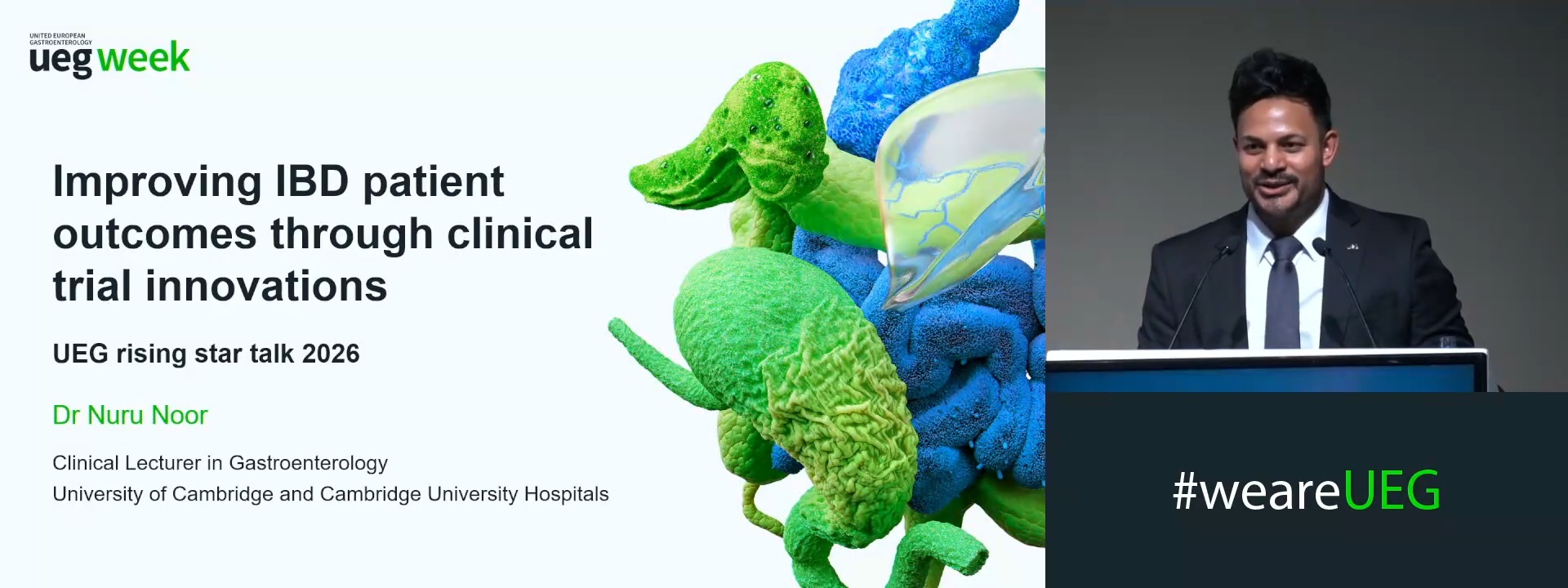
Improving patient outcomes through clinical trial innovations
Affiliations
1 Cambridge University Hospitals, Cambridge, United Kingdom
Log in to continue.
This content is part of Gutflix. Log in with your myUEG account, or create one free, to watch it.
Not sure what you can access? Learn more about account types.
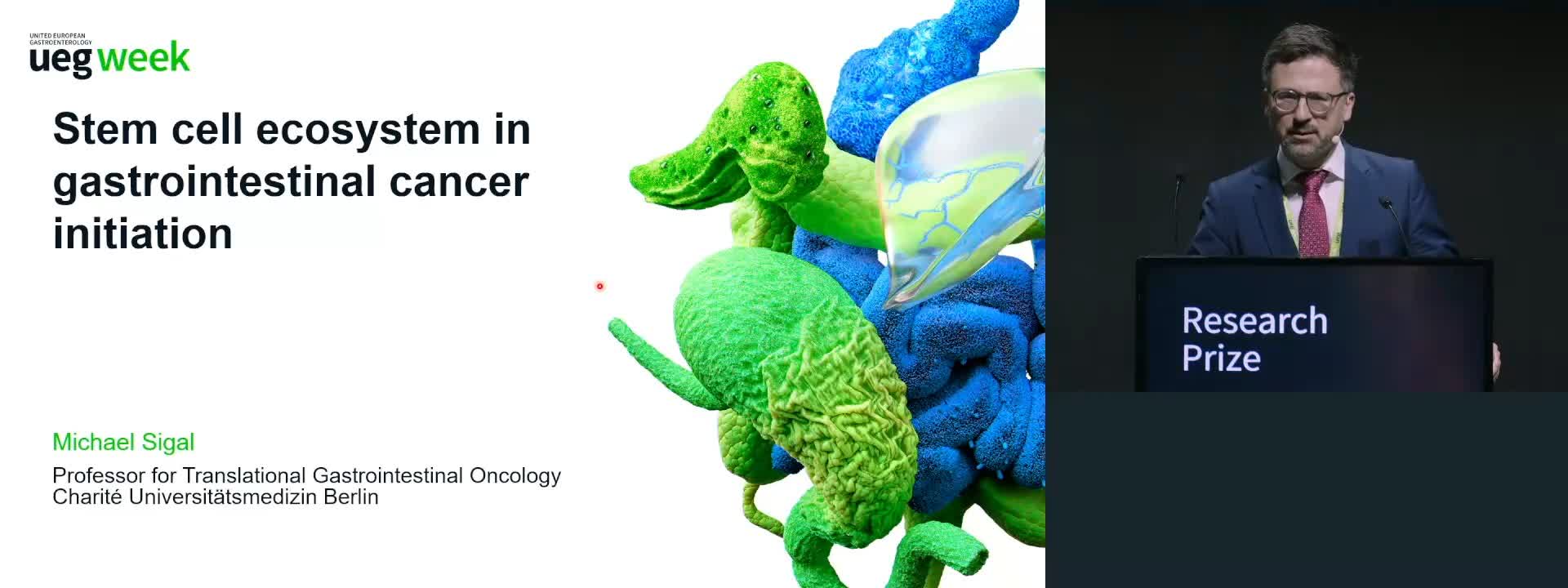
UEG Research Prize Award: Stem cell ecosystem in gastrointestinal cancer initiation – reciprocal interplay between stem cells and niche
Affiliations
1 Charité Universitätsmedizin Berlin, Berlin, Germany
Log in to continue.
This content is part of Gutflix. Log in with your myUEG account, or create one free, to watch it.
Not sure what you can access? Learn more about account types.
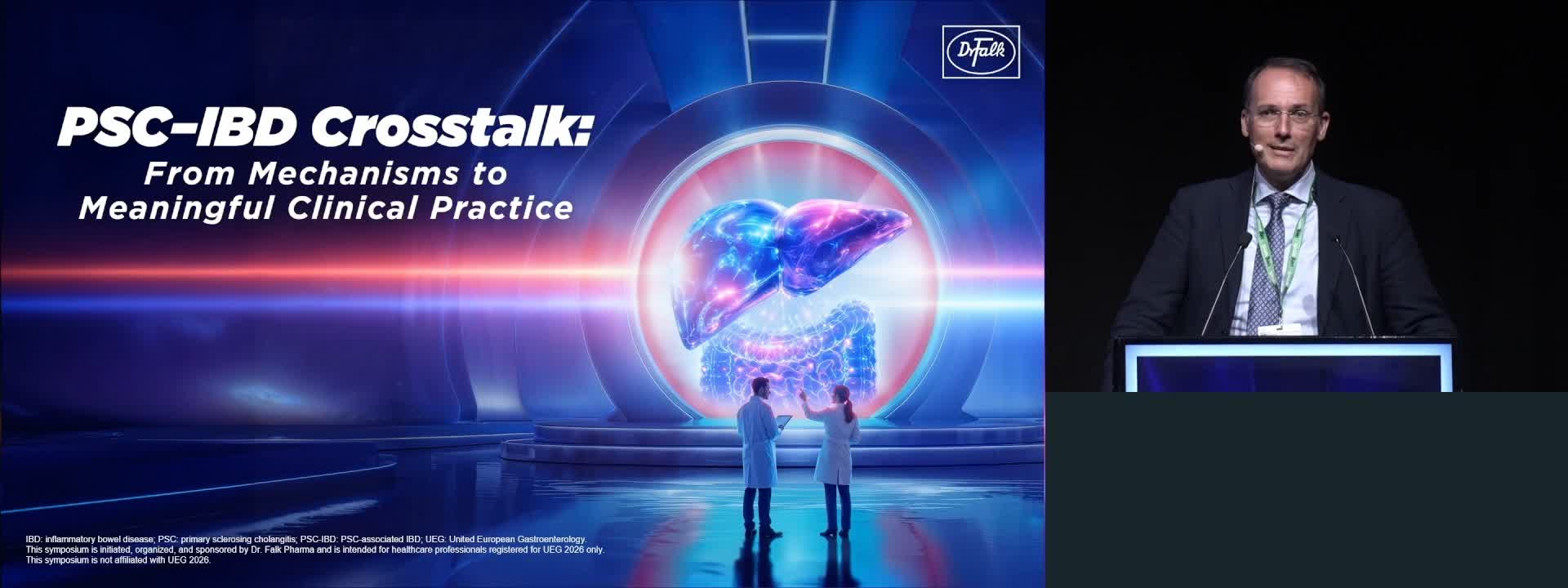
PSC-IBD crosstalk: From mechanisms to meaningful clinical practice (Dr. Falk Pharma) (Complete Session)
Affiliations
1 Charité - Universitätsmedizin, Berlin, Germany
2 Medical University of Vienna, Vienna, Austria
3 John Radcliffe Hospital, Oxford, Oxford, United Kingdom
4 University of Birmingham, Birmingham, United Kingdom