UEG Week Recordings UEG Week Posters Online courses Guidelines Mistakes in... Podcasts Webinars
new
Gut Guide online
Visit ueg.eu Create myUEG account Log In

Filters:

UEG Mistakes In Articles
Share via Email Share on Facebook Share on X Share on LinkedIn Share on Bluesky

Log in to access this content.

Free for all myUEG account holders. Your access level is set automatically based on your occupation. Medical professionals get full access to all content. If you are a non-medical user, you can only access UEG Week content from congresses you attended.

Log In Create a free account

Not sure what you can access? Learn more about account types.
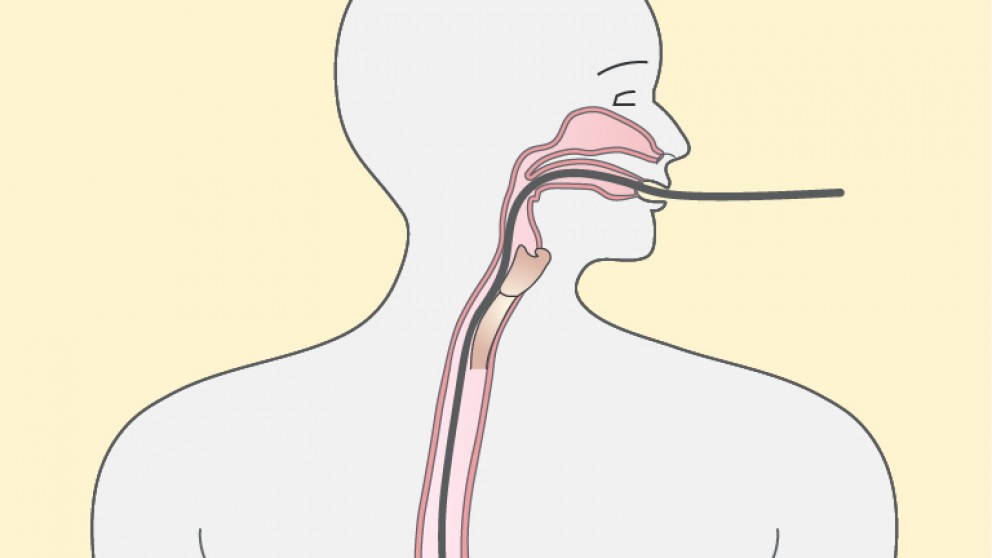
 Upper GI-endoscopy is one of gastroenterology's most frequently performed diagnostic and interventional methods. Even though gastroscopy is believed to be a routine investigation - which is the greatest mistake of all - several pitfalls in performance can cause serious problems or misdiagnoses. Struggles in accurately describing and classifying abnormal findings can occur and concern the correct basic technique of endoscope introduction, and the correct way of investigating the mucosal surface in total, with several available imaging modalities such as virtual chromoendoscopy or magnification. Which classification systems should be used? The decision to perform additional workup needs to be made immediately during the ongoing endoscopy. Is it necessary to take biopsies, or should it even be avoided due to potential interference with a later endoscopic resection? This article answers the questions, highlights the most common mistakes with clinical relevance and expands on how to avoid them.

Mistakes in gastroscopy and how to avoid them

Mistakes in gastroscopy and how to avoid them

Arne Kandulski, Jochen Weigt

Topics

Endoscopy

Citation

Weigt J and Kandulski A. Mistakes in gastroscopy and how to avoid them. UEG Education 2022; 22: 21–25.

Published

2022
UEG Podcast Episode
UEG Podcast
Share via Email Share on Facebook Share on X Share on LinkedIn Share on Bluesky

Log in to access this content.

Free for all myUEG account holders. Your access level is set automatically based on your occupation. Medical professionals get full access to all content. If you are a non-medical user, you can only access UEG Week content from congresses you attended.

Log In Create a free account

Not sure what you can access? Learn more about account types.

Coeliac disease with David Sanders

David S. Sanders, Pradeep Mundre

Topics

Small Intestine & Nutrition

Published

2026
UEG Podcast Episode
Journal Podcast
Share via Email Share on Facebook Share on X Share on LinkedIn Share on Bluesky

Log in to access this content.

Free for all myUEG account holders. Your access level is set automatically based on your occupation. Medical professionals get full access to all content. If you are a non-medical user, you can only access UEG Week content from congresses you attended.

Log In Create a free account

Not sure what you can access? Learn more about account types.

Episode 6: UEG Journal October Spotlight

Mohsan Subhani, Maria Manuela Estevinho

Topics

Endoscopy Hepatobiliary IBD Pancreas

Published

2025
UEG Podcast Episode
UEG Podcast
Share via Email Share on Facebook Share on X Share on LinkedIn Share on Bluesky

Log in to access this content.

Free for all myUEG account holders. Your access level is set automatically based on your occupation. Medical professionals get full access to all content. If you are a non-medical user, you can only access UEG Week content from congresses you attended.

Log In Create a free account

Not sure what you can access? Learn more about account types.

Oesophageal cancer with Massimiliano di Pietro (Part 2)

Massimiliano di Pietro, Pradeep Mundre

Topics

Digestive Oncology Endoscopy Oesophagus

Published

2025
UEG Podcast Episode
UEG Podcast
Share via Email Share on Facebook Share on X Share on LinkedIn Share on Bluesky

Log in to access this content.

Free for all myUEG account holders. Your access level is set automatically based on your occupation. Medical professionals get full access to all content. If you are a non-medical user, you can only access UEG Week content from congresses you attended.

Log In Create a free account

Not sure what you can access? Learn more about account types.

Complications in endoscopy with Srisha Hebbar Part 2

Srisha Hebbar, Pradeep Mundre

Topics

Endoscopy

Published

2025
UEG Mistakes In Articles
Share via Email Share on Facebook Share on X Share on LinkedIn Share on Bluesky

Log in to access this content.

Free for all myUEG account holders. Your access level is set automatically based on your occupation. Medical professionals get full access to all content. If you are a non-medical user, you can only access UEG Week content from congresses you attended.

Log In Create a free account

Not sure what you can access? Learn more about account types.

Adequate nutrition is essential for the homeostasis of fluids and nutrients, growth and thriving, especially in children. While the underlying principle of percutaneous endoscopic gastrostomy (PEG) placement is the same for both adults and children—providing a means of enteral feeding through the stomach—the indications, considerations and techniques differ owing to anatomical differences, age-dependent physiological concerns, and the age- and disease-specific needs of the child.

If feeding via nasogastric tube (NGT) or naso-jejunal tube (NJT) is necessary for a prolonged time, placement of a PEG or percutaneous endoscopic gastro-jejunal (PEG-J) tube should be considered. A PEG tube also allows the delivery of medications and venting of the stomach when needed. Nutrition via PEG facilitates the transition to out-of-hospital care and improves the quality of life (QoL) for children and families while improving the outcome of children with chronic diseases.

There are recent clinical guidelines providing guidance for PEG tube placement in children, but little advice on, e.g., choosing the right device for the right patient, details on postoperative management, removal of the PEG tube and other specific cases. The following article provides a combination of evidence-based data and the authors’ clinical experience.

Mistakes in gastrostomy insertion in children and adolescents and how to avoid them

Mistakes in gastrostomy insertion in children and adolescents and how to avoid them

Christos Tzivinikos, Ilse Broekaert, Jorge Amil Dias, Matjaz Homan

Topics

Paediatrics Small Intestine & Nutrition Stomach & H. Pylori

Citation

Broekaert I.J, Dias J.A, Homan M and Tzivinikos C. Mistakes in gastrostomy insertion in children and adolescents and how to avoid them. UEG Education 2024; 24: 34-38.

Published

2024
UEG Standards and Guidelines
Clinical Practice Guideline
Share via Email Share on Facebook Share on X Share on LinkedIn Share on Bluesky

Log in to access this content.

Free for all myUEG account holders. Your access level is set automatically based on your occupation. Medical professionals get full access to all content. If you are a non-medical user, you can only access UEG Week content from congresses you attended.

Log In Create a free account

Not sure what you can access? Learn more about account types.

Summary

Recent years have witnessed significant advances in the imaging, molecular profiling, and systemic treatment of cholangiocarcinoma (CCA). Despite this progress, the early detection, precise classification, and effective management of CCA remain challenging. Owing to recent developments and the significant differences in CCA subtypes, EASL commissioned a panel of experts to draft evidence-based recommendations on the management of extrahepatic CCA, comprising distal and perihilar CCA. Particular attention is given to the need for accurate classification systems, the integration of emerging molecular insights, and practical strategies for diagnosis and treatment that reflect real-world clinical scenarios.

EASL Clinical Practice Guidelines on the management of extrahepatic cholangiocarcinoma

EASL Clinical Practice Guidelines on the management of extrahepatic cholangiocarcinoma

Publisher

European Association for the Study of the Liver logo
European Association for the Study of the Liver

Guideline

Clinical Practice Guideline

Topics

Digestive Oncology Hepatobiliary

Citation

Journal of Hepatology, Volume 83, Issue 1, 211 - 238

Published

2025
Login to access

The global reference point for the digestive health community

Platform Publisher

United European Gastroenterology

Wickenburggasse 1 1080 Vienna, Austria

Contact us

support@ueg.eu

ueg.eu

T: +43 1 997 1639

Legal

Terms & Conditions

Imprint

Privacy Policy

Explore

My Bookmarks

My recommendations

My fields of interest

© 2026 United European Gastroenterology

Change fields of interest

These fields are selected based on the interests in your myUEG profile.
Click the item to unselect it. You can select multiple items.