UEG Week Recordings UEG Week Posters Online courses Guidelines Mistakes in... Podcasts Webinars
Visit ueg.eu Create myUEG account Log In

Filters:

UEG Presentation
Share via Email Share on Facebook Share on X Share on LinkedIn Share on Bluesky
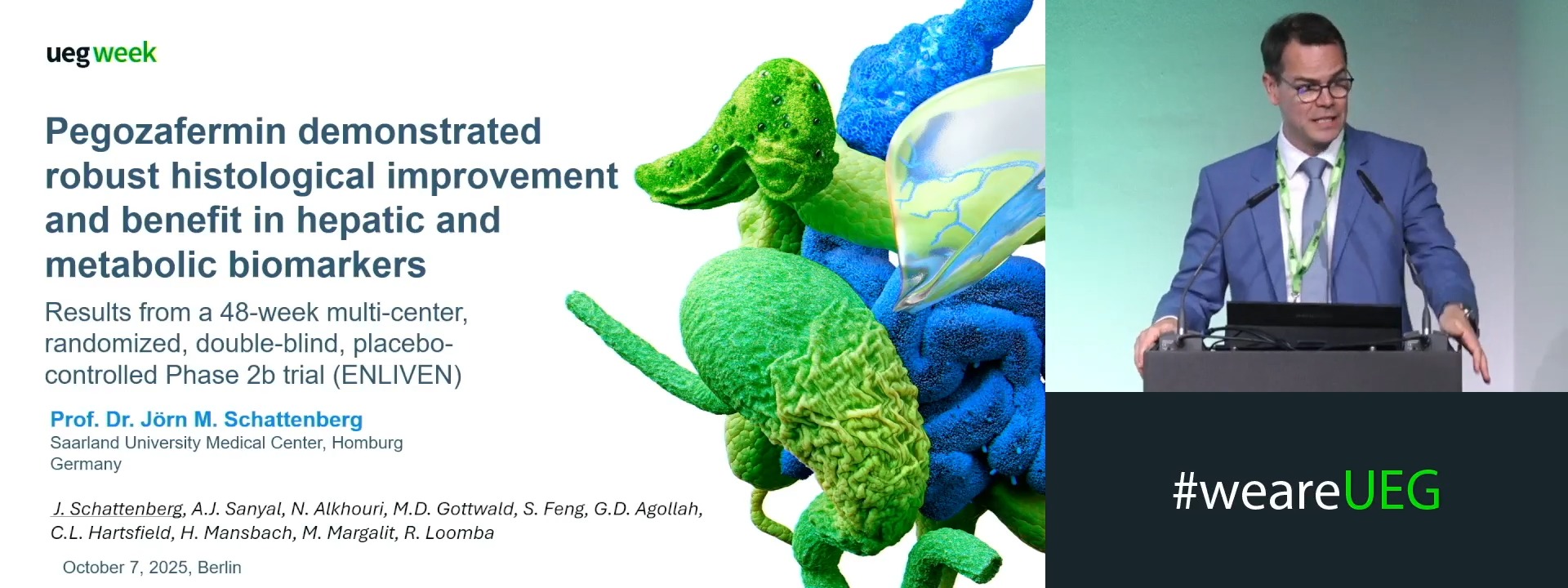
PEGOZAFERMIN DEMONSTRATED ROBUST HISTOLOGICAL IMPROVEMENT AND BENEFIT IN HEPATIC AND METABOLIC BIOMARKERS: RESULTS FROM A 48-WEEK MULTI-CENTER, RANDOMIZED, DOUBLE-BLIND, PLACEBO-CONTROLLED PHASE 2B TRIAL (ENLIVEN)

Log in to access this content.

Free for all myUEG account holders. Your access level is set automatically based on your occupation. Medical professionals get full access to all content. If you are a non-medical user, you can only access UEG Week content from congresses you attended.

Log In Create a free account

Not sure what you can access? Learn more about account types.

Introduction

Metabolic dysfunction-associated steatohepatitis (MASH) is often associated with metabolic disorders such as obesity, metabolic syndrome, and/or diabetes. FGF21 analogs are promising therapies for MASH due to their direct anti-fibrotic effects as well as additional hepatic and extrahepatic benefits. Pegozafermin (PGZ), an FGF21 analog, was evaluated for safety and efficacy in a Phase 2b trial (ENLIVEN) with either weekly (QW) or every two-week (Q2W) dosing versus matching placebo in MASH patients with biopsy-proven F2/F3 fibrosis. Primary histology endpoints and non-invasive tests (NITs) were assessed at week 24, followed by additional NIT evaluation at the end of a 24-week blinded extension for a total of 48 weeks.

Aims & Methods

Patients were randomized to PGZ 15mg QW, 30mg QW, or 44mg Q2W or placebo for 24 weeks (histology-based primary endpoints). During the 24-week extension, most patients continued their assigned treatment with the exception of a subset of placebo patients who were re-randomized to receive PGZ 30mg QW. The full analysis set includes F2/F3 patients with NAFLD activity score (NAS) ≥4 at baseline (n=192).

Results

At 24-weeks, PGZ 30mg QW or 44mg Q2W led to statistically significant and clinical meaningful improvement in both primary histological endpoints (one stage of fibrosis improvement without worsening of MASH and MASH resolution without worsening of fibrosis) compared to placebo. Non-invasive testing at weeks 24 and 48 demonstrated that PGZ treatment was associated with robust and sustained reductions in liver fat content (MRI-PDFF), biomarkers of fibrosis (VCTE, ELF, PRO-C3) and liver injury (ALT, AST). PGZ also improved metabolic parameters such as lipids and HbA1c at both 24 and 48 weeks. PGZ was generally safe and well tolerated with the most common treatment emergent adverse events (TEAEs) being mild/moderate nausea and diarrhea. No deaths occurred; six early terminations for TEAEs including one drug-related serious AE occurred.

Conclusion

At 24 weeks, treatment with PGZ in MASH patients with F2/F3 fibrosis led to significant fibrosis regression and MASH resolution, which was corroborated by improvement across a variety of non-invasive tests including liver fat, inflammation, fibrosis, and metabolic markers. Benefits on NITs were sustained over the full 48-weeks of the study, with favorable safety and tolerability. PGZ is the first therapy to achieve fibrosis regression and MASH resolution with a Q2W dosing regimen. Phase 3 studies in noncirrhotic (ENLIGHTEN-Fibrosis) and cirrhotic (ENLIGHTEN-cirrhosis) patients are currently underway to confirm these results.

Disclosure

Jörn Schattenberg: Consultant: Akero, Alentis Therapeutics, Astra Zeneca, 89Bio, Boehringer Ingelheim, GSK, Ipsen, Inventiva Pharma, Madrigal, MSD, Northsea Therapeutics, Novartis, Novo Nordisk, Pfizer, Roche, Sanofi, Siemens Healthineers; Speaker: Gilead Sciences, Advanz, Echosens, MedPublico GmbH; Grants: Boehringer Ingelheim, Siemens Healthcare GmbH; Stock Options: AGED diagnostics, Hepta Bio
Arun J Sanyal: Consulting: Genefit, Gilead, Malinckrodt, Pfizer, Salix, Boehringer Ingelheim, Novartis, Bristol Meyers Squibb, Merck, Hemoshear, Lilly, Novo Nordisk, Terns, Albireo, Jannsen, Poxel, 89bio, Siemens, AstraZeneca, NGM Bio, Amgen, Regeneron, Genentech, Alnylam, Roche, Madrigal, Inventiva, Covance, Prosciento, HistoIndex, PathAI; Grants: Gilead, Malinckrodt, Boehringer Ingelheim, Novartis, Bristol Meyers Squibb, Merck, Lilly, Novo Nordisk, Fractyl, Madrigal, Inventiva; Stock holder: Exhalenz, GenFit, Hemoshear, Durect, Indalo, NorthSea, Tiziana, Rivus
Naim Alkhouri: Research funding: 89Bio, AbbVie/Allergan, Akero, Better Therapeutics, Boehringer Ingelheim, Bristol-Myers Squibb, Corcept, DSM, Galectin, Genentech, Genfit, Gilead, Hepagene, Healio, Intercept, Inventiva, Ionis, Madrigal, Merck, NGM, Noom, NorthSea, Novo Nordisk, Perspectum, Pfizer, Poxel, Viking, and Zydus; Speaker bureau: AbbVie/Allergan, Alexion, Echosens, Eisai, Exelixis, Gilead, Intercept, Perspectum, Salix, and Theratechnologies; Consultant: 89Bio, AbbVie/Allergan, Echosens, Fibronostics, Gilead, Intercept, Madrigal, Novo Nordisk, Perspectum, Pfizer, and Zydus.
Rohit Loomba: Consultant: Aardvark Therapeutics, Altimmune, Anylam/Regeneron, Amgen, Arrowhead Pharmaceuticals, AstraZeneca, Boston Pharmaceuticals, Bristol-Meyers Squibb, CohBar, Eli Lilly, Galmed, Gilead, Glympse Bio, Hightide, Inipharma, Intercept, Inventiva, Ionis, Janssen Inc., Madrigal, Metacrine, Inc., NGM Biopharmaceuticals, Novartis, Novo Nordisk, Merck, Pfizer, Sagimet, Theratechnologies, 89bio, Terns Pharmaceuticals and Viking Therapeutics; Grants: Arrowhead Pharmacetuicals, AstraZeneca, Boegringer-Ingelheim, Bristol-Meyers Squibb, Eli Lilly, Galectin Therapeutics, Galmeed Pharmaceuticals, Gilead, Hanmi, Intercept, Inventiva, Ionis, Janssen, Madrigal Pharmaceuticals, Merck, NGM Biopharmaceuticals, Novo Nordisk, Pfizer, Sonic Incytes and Terns Pharmaceuticals; Stockholder: Co-founder LipoNexus, Inc
Mildred D Gottwald, Shibao Feng, Germaine D Agollah, Cynthia L Hartsfield, Hank Mansbach, Maya Margalit: 89bio employee and stock holder

PEGOZAFERMIN DEMONSTRATED ROBUST HISTOLOGICAL IMPROVEMENT AND BENEFIT IN HEPATIC AND METABOLIC BIOMARKERS: RESULTS FROM A 48-WEEK MULTI-CENTER, RANDOMIZED, DOUBLE-BLIND, PLACEBO-CONTROLLED PHASE 2B TRIAL (ENLIVEN)

Jörn Schattenberg 1, Arun J Sanyal 2, Naim Alkhouri 3, Mildred D. Gottwald 4, Shibao Feng 4, Germaine D. Agollah 4, Cynthia L Hartsfield 4, Hank Mansbach 4, Maya Margalit 5, Rohit Loomba 6

1 Universitätsklinikum des Saarlandes und Medizinische Fakultät der Universität des Saarlandes, Homburg, Germany

2 Virginia Commonwealth University School of Medicine, Richmond, United States

3 Arizona Liver Health, Phoenix, United States

4 89bio, San Francisco, United States

5 89bio, Rehovot, Israel

6 University of California San Diego MASLD Research Center, San Diego, United States
Event

UEG Week Berlin 2025

Topics

Hepatobiliary

Submission format

Abstract

Session

Lifestyle management and therapy in MASLD

Citation

United European Gastroenterology Journal 2025; 13 (Supplement 8)

Published

2025
UEG Presentation
Share via Email Share on Facebook Share on X Share on LinkedIn Share on Bluesky
CONCOMITANT ATOPY INFLUENCES RESPONSE TO PROTON-PUMP INHIBITORS IN EOSINOPHILIC ESOPHAGITIS: AN ANALYSIS OF THE EOE CONNECT REGISTRY

Log in to access this content.

Free for all myUEG account holders. Your access level is set automatically based on your occupation. Medical professionals get full access to all content. If you are a non-medical user, you can only access UEG Week content from congresses you attended.

Log In Create a free account

Not sure what you can access? Learn more about account types.

Introduction

Eosinophilic esophagitis (EoE) is type-2 chronic inflammatory disorder usually accompanied by other atopic conditions including rhinitis, conjunctivitis, bronchial asthma, dermatitis, hives or chronic rhinosinusitis with nasal polyps. The influence of these atopies in the response to the EoE therapy has been barely investigated, with opposite results in small cohorts (1,2).

Aims & Methods

We aim to describe atopic concomitances in European EoE patients and to evaluate its influence on effectiveness of first-line therapy, consisting in proton-pump inhibitors (PPIs), swallowed topical corticosteroids (STCs) and food-elimination diets (FEDs).
A cross-sectional analysis of the multicenter EoE CONNECT registry (3) was performed. Demographic and clinical data from patients recruited at 42 hospitals in 4 European countries were extracted on March 25th, 2025. Concomitant atopies were classified as seasonal or persistent. Clinico-histological response (CHR) was defined as the simultaneous presence of symptomatic remission and a peak eosinophil count <15 eosinophils per high power field after therapy.

Results

Overall, 3,900 patients (75.6% males, mean age 33.3 ±15.1 years) were analyzed (Table). CHR rate after first-line monotherapy with PPIs, STCs or FEDs was 50.4% (n=2,685). PPIs was the only treatment affected by concomitant atopy: presence of asthma and hives significantly reduced CHR rates to PPIs (42.7% vs 49.7%, p=0.005, and 39.3% vs 48%, p=0.044, respectively), and CHR also tended to be lower in presence of conjunctivitis (43.6% vs 48.4, p=0.067) and dermatitis (43.2% vs 48.3%, p=0.081). Seasonal or persistent presentation of atopy did not influence response to treatment. Taking into account age at diagnosis, the effect of concomitant atopy in reducing CHR to PPIs was exclusively observed in adults (≥18 years old) for asthma (43.8% vs 51.3%, p=0.007) and dermatitis (42.6% vs 50.3%, p=0.026), and in children (<18 years old) for hives (17.4% vs 39.9%, p=0.032).
We next analyzed whether the number of concomitant atopies influenced CHR to first-line therapy. While no differences were found among patients who presented only one atopic condition, the presence of 2 or more atopies reduced PPI effectiveness in adults (45.0% vs 50.7%, p=0.032) and to FEDs in children (23.5% vs 59.3%, p=0.020). A reduction in CHR rate after PPI therapy was even greater in adults with 3 or more atopies concomitant to EoE (39.0% vs 50.4%, p=0.001). Effectiveness of first-line STCs were not affected in any of these comparisons.

Age at diagnosis (n=3,705)<18 years: 19.4%; ≥18 years: 80.6%
Rhinitis (n=3,558)49.4 %; Seasonal 77.3 %; Persistent 22.7%
Conjunctivitis (n=3,499)23.8%; Seasonal 88.5%; Persistent 11.5%
Asthma (n=3,526)28.6%; Seasonal 63.8%; Persistent 36.2%
Dermatitis (n=3,507)18.7%; Seasonal 43.4%; Persistent 56.6%
Hives (n=3,403)7.1%; Seasonal 50.7 %; Persistent 49.3%
Chronic rhinosinusitis with nasal polyps (n=3,461)2.1%; Persistent: 100%
Number of allergies (n=3,353)At least 1 allergy: 64.7%; ≥2 allergies: 39.1%; ≥3 allergies: 17.4%
Response to 1st treatment option in monotherapy evaluated (n=3,266)PPI: 82.6%; STC: 11.9%; FED: 5.5%

Conclusion

The coexistence of asthma, dermatitis and hives determined lower response to PPI therapy for EoE. Association of 2 or more atopic condition further decreased effectiveness of PPIs in adults and of FEDs in children.

References

1. Ancellin M, Ricolfi-Waligova L, Clerc-Urmès I, et al. Management of eosinophilic esophagitis in children according to atopic status: a retrospective cohort in northeast of France. Arch Pediatr. 2020;27(3):122-127.
2. Reed WD, Ocampo AA, Xue Z, et al. Eosinophilic esophagitis patients with multiple atopic conditions: clinical characteristics and treatment response to topical steroids. Ann Allergy Asthma Immunol. 2023;131(1): 109-115.e2.
3. Lucendo AJ, Santander C, Savarino E, et al. EoE CONNECT, the European Registry of Clinical, Environmental, and Genetic Determinants in Eosinophilic Esophagitis: rationale, design, and study protocol of a large-scale epidemiological study in Europe. Therap Adv Gastroenterol. 2022;15:17562848221074204.

CONCOMITANT ATOPY INFLUENCES RESPONSE TO PROTON-PUMP INHIBITORS IN EOSINOPHILIC ESOPHAGITIS: AN ANALYSIS OF THE EOE CONNECT REGISTRY

Leticia Rodríguez-Alcolado 1, Emilio Jose Laserna-Mendieta 2, Victoria Úbeda Vargas 3, Sergio Casabona-Francés 4, Edurne Amorena Muro 5, Leonardo Blas 6, Edoardo Vincenzo Savarino 7, Isabel Pérez-Martínez 8, Jesús Barrio Andrés 9, Antonio Guardiola Arevalo 10, Danila Guagnozzi 11, Marina Coletta 12, Laura Martín Asenjo 13, Luisa de la Peña Negro 14, Gaia Pellegatta 15, Alejandro García-Díaz 16, Elena Betoré 17, Anne Lund Krarup 18, Susana de la Riva 19, Silvia Carrión Bolorino 20, María Pipa 21, Sonia Fernandez-Fernandez 22, Carlos Teruel Sanchez - Vegazo 23, Juan Enrique Naves 24, BLANCA BELLOC 25, Salvatore Oliva 26, Mónica Llorente-Barrio 27, Carlo Maria Rossi 28, Juan Armando Rodríguez Oballe 29, Maria Luisa Masiques-Mas 30, Raúl Honrubia-López 31, Raffaella Dainese Plichon 32, Alexis González Almeida 33, Luis Bujanda Fernández de Piérola 34, Juan Khaled Bisso Zein 35, Alba Juan-Juan 36, Sara Feo Ortega 3, Verónica Martín Domínguez 4, Jennifer Fernández-Pacheco 4, Oscar Nantes Castillejo 5, Julia Nicolay Maneru 5, Marta Álvarez-García 6, Matteo Ghisa 7, Carmen Díaz-Donado 37, Paula Gil Simón 9, Alicia Granja 10, Ronald Llerena Castro 11, Roberto Penagini 12, Cecilio Santander 4, Alfredo J. Lucendo 2

1 Hospital General de Tomelloso, Instituto de Investigación Sanitaria de Castilla-La Mancha (IDISCAM), Tomelloso, Spain|||University of Alcalá, Alcalá de Henares, Spain

2 Hospital General de Tomelloso, Instituto de Investigación Sanitaria de Castilla-La Mancha (IDISCAM), Tomelloso, Spain|||Centro de Investigación Biomédica en Red de Enfermedades Hepáticas y Digestivas (CIBERehd), Madrid, Spain

3 Hospital General de Tomelloso, Instituto de Investigación Sanitaria de Castilla-La Mancha (IDISCAM), Tomelloso, Spain

4 Hospital Universitario de La Princesa, Madrid, Spain|||Instituto de Investigación Sanitaria La Princesa, Madrid, Spain

5 Hospital Universitario de Navarra. Instituto de Investigación Sanitaria de Navarra (IdiSNA), Pamplona, Spain

6 Fundacion Jiménez Díaz, Madrid, Spain

7 Azienda Ospedaliera Università di Padova, Padua, Italy

8 Hospital Universitario Central de Asturias, Oviedo, Spain|||Instituto de Investigación Sanitaria del Principado de Asturias (ISPA), Oviedo, Spain

9 Hospital Universitario Rio Hortega, Valladolid, Spain

10 Hospital Universitario de Fuenlabrada, Fuenlabrada, Spain

11 Hospital Vall d'Hebrón, Barcelona, Spain

12 Fondazione IRCCS Cà Granda - Ospedale Maggiore Policlinico, Milan, Italy

13 Hospital Universitario de Álava, Vitoria, Spain

14 Hospital de Viladecans, Viladecans, Spain

15 Humanitas Research Hospital, Rozzano, Italy

16 Hospital Universitario Puerta de Hierro, Majadahonda, Spain

17 Hospital Universitario Miguel Servet, Zaragoza, Spain

18 The North Danish Regional Hospital, Hjørring, Denmark

19 Clínica Universidad de Navarra, Pamplona, Spain

20 Centro de Investigación Biomédica en Red de Enfermedades Hepáticas y Digestivas (CIBERehd), Madrid, Spain|||Hospital de Mataró, Mataró, Spain

21 Hospital Universitario de Cabueñes, Gijón, Spain

22 Hospital Universitario Severo Ochoa, Leganés, Spain

23 Hospital Universitario Ramón y Cajal, Madrid, Spain

24 Hospital del Mar, Barcelona, Spain

25 Hospital General de la Defensa, Zaragoza, Spain

26 University Hospital Umberto I - Sapienza University of Rome, Roma, Italy

27 Hospital Santa Bárbara, Soria, Spain

28 Fondazione IRCCS Policlinico San Matteo, Pavia, Italy

29 Hospital Universitario Santa María, Lérida, Spain

30 Hospital de Granollers, Granollers, Spain

31 Hospital Universitario Infanta Sofía, San Sebastián de los Reyes, Spain

32 Centre Hospitalier d’Antibes Juan-les-Pins, Antibes, France

33 Complejo Hospitalario Universitario Insular Materno Infantil, Las Palmas de Gran Canaria, Spain
34 Hospital Universitario de Donostia-Instituto Biodonostia, San Sebastián, Spain

35 Hospital Universitario Costa del Sol, Marbella, Spain

36 Hospital Sant Joan Despí Moisès Broggi, Sant Joan Despí, Spain

37 Hospital Universitario Central de Asturias, Oviedo, Spain

Event

UEG Week Berlin 2025

Topics

Histopathology Mechanisms & Personalised Medicine Oesophagus

Submission format

Abstract

Session

EoE: From gene to clinic

Citation

United European Gastroenterology Journal 2025; 13 (Supplement 8)

Published

2025
UEG Presentation
Share via Email Share on Facebook Share on X Share on LinkedIn Share on Bluesky
Diverticulitis: When not to be worried?

Log in to access this content.

Free for all myUEG account holders. Your access level is set automatically based on your occupation. Medical professionals get full access to all content. If you are a non-medical user, you can only access UEG Week content from congresses you attended.

Log In Create a free account

Not sure what you can access? Learn more about account types.

Diverticulitis: When not to be worried?

Johannes Kurt Schultz 1

1 Univertsity of Oslo, Oslo, Norway

Event

UEG Week Berlin 2025

Topics

Colorectal Hepatobiliary Pancreas

Session

Predicting disease severity

Citation

United European Gastroenterology Journal 2025; 13 (Supplement 8)

Published

2025
UEG Presentation
Share via Email Share on Facebook Share on X Share on LinkedIn Share on Bluesky
Diverticulitis

Log in to access this content.

Free for all myUEG account holders. Your access level is set automatically based on your occupation. Medical professionals get full access to all content. If you are a non-medical user, you can only access UEG Week content from congresses you attended.

Log In Create a free account

Not sure what you can access? Learn more about account types.

Diverticulitis

Johannes Kurt Schultz 1

1 Univertsity of Oslo, Oslo, Norway

Event

UEG Week Berlin 2025

Topics

Colorectal Hepatobiliary Primary Care

Session

Cross-cutting: Management changes in high prevalence problems

Citation

United European Gastroenterology Journal 2025; 13 (Supplement 8)

Published

2025
UEG Presentation
Share via Email Share on Facebook Share on X Share on LinkedIn Share on Bluesky
Panel discussion: Therapy update - EoE

Log in to access this content.

Free for all myUEG account holders. Your access level is set automatically based on your occupation. Medical professionals get full access to all content. If you are a non-medical user, you can only access UEG Week content from congresses you attended.

Log In Create a free account

Not sure what you can access? Learn more about account types.

Panel discussion: Therapy update - EoE

Event

UEG Week Berlin 2025

Topics

Mechanisms & Personalised Medicine Small Intestine & Nutrition Oesophagus Paediatrics

Session

Therapy update: EoE

Citation

United European Gastroenterology Journal 2025; 13 (Supplement 8)

Published

2025
UEG Presentation
Share via Email Share on Facebook Share on X Share on LinkedIn Share on Bluesky
COMPARING TRIPLE RECTAL ULTRASOUND IMAGING TECHNOLOGY IN PREDICTING RECTAL HISTOENDOSCOPIC REMISSION IN ULCERATIVE COLITIS (THE TRINITY STUDY): TRANS ABDOMINAL, TRANS-PERINEAL AND ENDOSCOPIC ULTRASOUND (NCT06717906)

Log in to access this content.

Free for all myUEG account holders. Your access level is set automatically based on your occupation. Medical professionals get full access to all content. If you are a non-medical user, you can only access UEG Week content from congresses you attended.

Log In Create a free account

Not sure what you can access? Learn more about account types.

Introduction

While trans-perineal ultrasound (TPUS) is promising, its accuracy compared to trans-abdominal ultrasound (TAS) and endoscopic ultrasound (EUS) in predicting rectal histoendoscopic activity in ulcerative colitis (UC) is unclear.

Aims & Methods

We aimed to evaluate the reliability of TPUS in predicting rectal histoendoscopic activity in UC using EUS as the reference standard. This prospective study included adult UC patients who underwent TAS and TPUS, followed by EUS. Rectal total wall thickness (TWT) and vascularity (Modified Limberg Score, MLS) were measured on all modalities. Additionally, mucosal thickness (MT) and submucosal thickness (SMT) were assessed on EUS. Receiver operating characteristic (ROC) analysis was performed to determine the area under the curve (AUC) for predicting endoscopic activity (Ulcerative Colitis Endoscopic Index of Severity, UCEIS >1) and histologic activity (Nancy Index >1).

Results

A total of 142 UC patients (33.8% female, median age 40 years, BMI 22.5 kg/m²) were included. Disease extent was proctitis (12%), proctosigmoiditis (58%), and extensive colitis (30%). The median SCCAI score was 3 (range: 0-8). Most patients were on 5-ASA (90.8%), azathioprine (31%), and tofacitinib (10.6%).
The median rectal length visualized on TPUS was 3.9 cm (2.4-6.3 cm). Endoscopic remission (UCEIS ≤1) was observed in 49.3% of patients, and histologic remission (NHI ≤1) in 38.7%.
For endoscopic activity, EUS had the highest accuracy, with MT >0.95 mm (AUC: 0.96, sensitivity: 98.6%, specificity: 87%) and MLS >1 (AUC: 0.95, sensitivity: 81.7%, specificity: 94%). TPUS had moderate accuracy(TWT >5.4 mm, AUC: 0.73), while TAS performed poorly (TWT >5.8 mm, AUC: 0.63).
For histologic remission, EUS vascularity (MLS >1) was most predictive (AUC: 0.91, sensitivity: 66.3%, specificity: 98.1%), followed by rectal TWT ≥4 mm (AUC: 0.83) and MT ≥0.95 mm (AUC: 0.86). Among non-EUS techniques, TPUS (TWT ≥6.1 mm, AUC: 0.66) showed moderate accuracy, while TAS was the least predictive (AUC: 0.62).
The Milan Ultrasound Criteria (MUC) demonstrated highest accuracy for endoscopic remission with EUS MUC ≥8 (AUC: 0.94), followed by TPUS (AUC: 0.78) and TAS (AUC: 0.67). For histologic remission, EUS MUC >7 had the highest accuracy (AUC: 0.87), followed by TPUS (MUC ≥9.7, AUC: 0.70) and TAS (AUC: 0.64) (Table 1). BMI-based comparisons showed no significant differences in MUC scores.


Measure
Sensitivity
Specificity
AUC
p-value
95% CI

Endoscopic Activity
TAS (MUC) (≥8.5)
67.6%
60.9%
0.67
<0.001
0.59-0.76
TPUS (MUC) (≥8)
86%
62.3%
0.78
<0.001
0.70-0.86
EUS (MUC) (≥8)
81.7%
81.2%
0.94
<0.001
0.85-0.95

Histologic activity
TAS (MUC) (>8.6)
62.8%
66%
0.64
0.005
0.54-0.74
TPUS (MUC) (≥9.7)
59.3%
79.6%
0.70
<0.001
0.61-0.79
EUS (MUC) (>7)
83.7%
81.5%
0.87
<0.001
0.81-0.93

Correlation analysis showed a strong correlation between TPUS and EUS TWT (r=0.371, p<0.001). TPUS and TAS had moderate correlation (r=0.309, p<0.001), while TAS and EUS showed weaker correlation (r=0.264, p=0.002 for average TWT, r=0.234, p=0.005 for lower rectal TWT). MUC scores correlated best between EUS and TPUS (r=0.425, p<0.001).

Conclusion

While EUS remains the most accurate, TPUS shows moderate accuracy for assessing rectal inflammation in UC. However, TPUS is limited to the lower rectum and needs further validation for better reproducibility. Standardized cutoffs and integration into routine UC monitoring could enhance non-invasive assessment, reducing endoscopy reliance and improving patient management.(NCT06717906).

References

1. Sagami S, Kobayashi T, Aihara K, Umeda M, Morikubo H, Matsubayashi M, Kiyohara H, Nakano M, Ohbu M, Hibi T. Transperineal ultrasound predicts endoscopic and histological healing in ulcerative colitis. Aliment Pharmacol Ther. 2020;51(12):1373-1383. [10.1111/apt.15767]
2. Sagami S, Kobayashi T, Aihara K, Umeda M, Odajima K, Morikubo H, Asonuma K, Miyatani Y, Fukuda T, Matsubayashi M, Kiyohara H, Nakano M, Hibi T. Early improvement in bowel wall thickness on transperineal ultrasonography predicts treatment success in active ulcerative colitis. Aliment Pharmacol Ther. 2022;55(10):1320-1329. [10.1111/apt.16817]

COMPARING TRIPLE RECTAL ULTRASOUND IMAGING TECHNOLOGY IN PREDICTING RECTAL HISTOENDOSCOPIC REMISSION IN ULCERATIVE COLITIS (THE TRINITY STUDY): TRANS ABDOMINAL, TRANS-PERINEAL AND ENDOSCOPIC ULTRASOUND (NCT06717906)

Partha Pal 1, Mohammad Abdul Mateen 1, Anuradha Sekaran 1, Kanapuram Pooja 1, Arzeena Kaleemuddin 1, Thanmayee Rangineni 1, Jahangeer Basha 1, Rajesh Gupta 1, Manu Tandan 1, Sundeep Lakhtakia 1, D. Nageshwar Reddy 1

1 Asian Institute of Gastroenterology, Hyderabad, India

Event

UEG Week Berlin 2025

Topics

IBD Radiology & Imaging

Submission format

Abstract

Session

Monitoring IBD by imaging

Citation

United European Gastroenterology Journal 2025; 13 (Supplement 8)

Published

2025
UEG Presentation
Share via Email Share on Facebook Share on X Share on LinkedIn Share on Bluesky
RANDOMIZED CONTROLLED TRIAL COMPARING ENDOSCOPIC BALLOON DILATION VERSUS ENDOSCOPIC STRICTUROTOMY FOR SHORT STRICTURES (&LT; 3 CM) RELATED TO CROHN’S DISEASE (THE BEST-CD TRIAL) (NCT05521867)

Log in to access this content.

Free for all myUEG account holders. Your access level is set automatically based on your occupation. Medical professionals get full access to all content. If you are a non-medical user, you can only access UEG Week content from congresses you attended.

Log In Create a free account

Not sure what you can access? Learn more about account types.

Introduction

Although endoscopic balloon dilation (EBD) remains the standard intervention for Crohn’s disease (CD)-associated strictures, its efficacy is limited by high recurrence and surgery rates. Retrospective analyses suggest endoscopic stricturotomy (ES) may offer superior outcomes, particularly in anastomotic strictures. However, no randomized trials have directly compared EBD and ES for short CD-related strictures.

Aims & Methods

This single-center, randomized controlled trial (August 2022–March 2025) enrolled adult CD patients (18–65 years) with symptomatic, predominantly fibrotic or mixed, short strictures (<3 cm), including both de novo and anastomotic types, accessible via standard endoscopy. Patients with multiple (>2) strictures, strictures beyond endoscopic reach, or prior stricturotomy were excluded. Participants were randomized to undergo either EBD or ES. The primary outcome was clinical recurrence at 1 year. Secondary outcomes included re-intervention, surgery, emergency visits, hospitalization, technical success, and adverse events.

Results

Out of 70 randomized patients, 69 were analyzed (EBD: 35; ES: 34). Baseline characteristics were comparable between groups. Technical success was similar (EBD: 91.4%, ES: 94.1%). On time to event analysis, clinical recurrence was significantly lower in the ES group (OR=0.343, 95% CI: 0.134–0.881; p=0.026). Re-intervention rates favored ES (EBD: 25.7%, ES: 8.8%; OR=0.337, 95% CI: 0.131–0.870; p=0.025). Surgery rates were numerically lower with ES (EBD: 11.4%, ES: 5.9%) but not statistically significant (p=0.581). Hospitalization was significantly more frequent in the EBD arm (OR=0.276, 95% CI: 0.091–0.840; p=0.023). ED visits also trended lower with ES, though not statistically significant (p=0.062) (see table). Adverse events occurred in 25.7% of EBD patients (bleeding n=3 [1 hemoclip], pain with admission n=3, micro-perforation n=1, post-procedure pain n=2) and 14.7% of ES patients (bleeding n=3 [1 self-limited, 1 coagrasper, 1 hemoclip], none required transfusion, suspected perforation n=1, mild pain n=1).

Outcome
EBD (n=35)
ES (n=34)
p-value
Odds Ratio (95% CI)
Technical Success (%)
91.4% (32/35)
94.1% (32/34)
0.70
-
Clinical Recurrence (%)
48.6%
23.5%
0.026
0.343 (0.134–0.881)
Re-intervention Rate (%)
25.7%
8.8%
0.025
0.337 (0.131–0.870)
Surgery (%)
11.4%
5.9%
0.581
0.707 (0.207–2.422)
Stricture-related ED Visits (%)
20.0%
11.8%
0.062
0.404 (0.156–1.047)
Stricture-related Hospitalizations (%)
25.7%
8.8%
0.023
0.276 (0.091–0.840)
Any Adverse Event (%)
25.7% (9/35)
14.7% (5/34)
0.45
-

Conclusion

In this interim analysis, ES was associated with significantly lower clinical recurrence, re-intervention, and hospitalization compared to EBD for short CD-related strictures, with similar safety outcomes. These findings support ES as a potentially superior first-line endoscopic strategy over EBD in selected patients with Crohn’s disease strictures. (NCT05521867)

References

Lan N, Shen B. Endoscopic Stricturotomy Versus Balloon Dilation in the Treatment of Anastomotic Strictures in Crohn's Disease. Inflamm Bowel Dis. 2018 Mar 19;24(4):897-907. doi: 10.1093/ibd/izx085. PMID: 29546384.

RANDOMIZED CONTROLLED TRIAL COMPARING ENDOSCOPIC BALLOON DILATION VERSUS ENDOSCOPIC STRICTUROTOMY FOR SHORT STRICTURES (&LT; 3 CM) RELATED TO CROHN’S DISEASE (THE BEST-CD TRIAL) (NCT05521867)

Partha Pal 1, Kanapuram Pooja 1, Rajesh Gupta 1, Manu Tandan 1, D. Nageshwar Reddy 1

1 Asian Institute of Gastroenterology, Hyderabad, India

Event

UEG Week Berlin 2025

Topics

Endoscopy Radiology & Imaging IBD

Submission format

Abstract

Session

Advances in the investigation of the small bowel

Citation

United European Gastroenterology Journal 2025; 13 (Supplement 8)

Published

2025

The global reference point for the digestive health community

Platform Publisher

United European Gastroenterology

Wickenburggasse 1 1080 Vienna, Austria

Contact us

support@ueg.eu

ueg.eu

T: +43 1 997 1639

Legal

Terms & Conditions

Imprint

Privacy Policy

Explore

My Bookmarks

My recommendations

My fields of interest

© 2026 United European Gastroenterology

Change fields of interest

These fields are selected based on the interests in your myUEG profile.
Click the item to unselect it. You can select multiple items.