UEG Week Recordings UEG Week Posters Online courses Guidelines Mistakes in... Podcasts Webinars
Visit ueg.eu Create myUEG account Log In

Filters:

UEG Mistakes In Articles
Share via Email Share on Facebook Share on X Share on LinkedIn Share on Bluesky

Log in to access this content.

Free for all myUEG account holders. Your access level is set automatically based on your occupation. Medical professionals get full access to all content. If you are a non-medical user, you can only access UEG Week content from congresses you attended.

Log In Create a free account

Not sure what you can access? Learn more about account types.
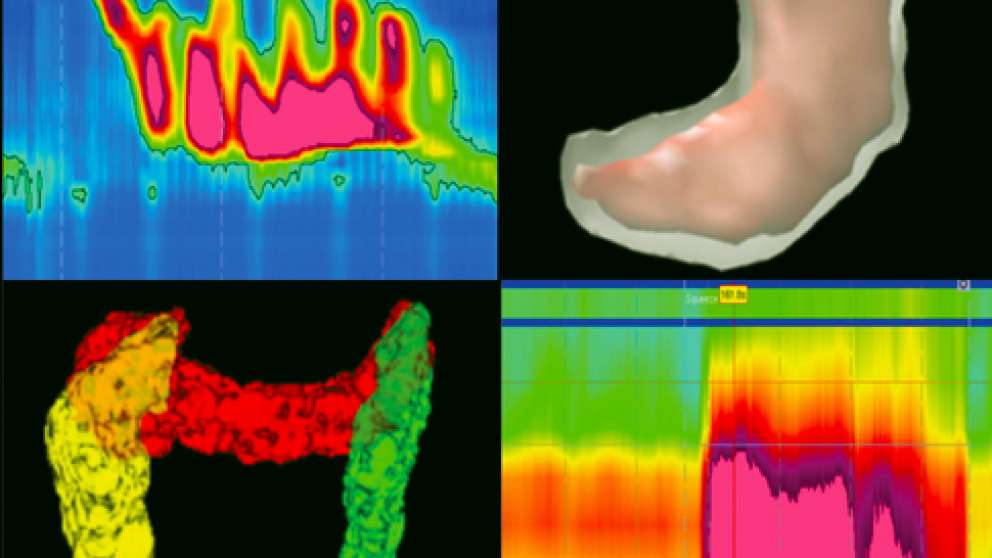
A recent UEG survey indicated that dysphagia, heartburn, bloating, abdominal pain and changes to bowel habit are each reported by 5–15% of the general population.1 For patients with mild symptoms, negative tests provide reassurance and simple, symptomatic management might be all that is required (e.g. acid suppression, stool regulation). However, for those with severe symptoms that persist on therapy, ruling out life-threatening disease is not sufficient, and referral to the neurogastroenterology and motility (NGM) laboratory for physiological measurements is often indicated. Clinical investigations aim to explain the cause of symptoms and establish a diagnosis that can guide rational treatment. Until recently, it could be argued that manometry, scintigraphy, breath tests and related tests rarely provided this information. As a result, only patients with suspected major motility disorders (e.g. achalasia, severe reflux disease or faecal incontinence) were routinely referred to the NGM laboratory for tests. Technological advances, such as high-resolution manometry (HRM), now provide objective measurements not only of motility, but also of function in terms of the movement (and digestion) of ingested material within the gastrointestinal tract. Furthermore, the ability to associate events (such as bolus retention, reflux or gas production) with symptoms provides an indication of visceral sensitivity and can identify what is causing patient complaints. Here, I discuss frequent mistakes in clinical investigation of gastrointestinal motility and function based on a series of consensus documents published by members of the International Working Group for Disorders of Gastrointestinal Motility and Function.

Mistakes in clinical investigation of gastrointestinal motility and function

Mistakes in clinical investigation of gastrointestinal motility and function

Mark Fox

Topics

Neurogastroenterology & Motility

Citation

Fox M. Mistakes in clinical investigation of gastrointestinal motility and function. UEG Education 2018; 18: 15–20.

Published

2024
UEG Standards and Guidelines
Consensus
Share via Email Share on Facebook Share on X Share on LinkedIn Share on Bluesky

Log in to access this content.

Free for all myUEG account holders. Your access level is set automatically based on your occupation. Medical professionals get full access to all content. If you are a non-medical user, you can only access UEG Week content from congresses you attended.

Log In Create a free account

Not sure what you can access? Learn more about account types.

ABSTRACT

Introduction

Chronic nausea and vomiting are symptoms of a wide range of gastrointestinal and non-gastrointestinal conditions. Diagnosis can be challenging and requires a systematic and well-structured approach. If the initial investigation for structural, toxic and metabolic disorders is negative, digestive motility and gut-brain interaction disorders should be assessed. United European Gastroenterology (UEG) and the European Society for Neurogastroenterology and Motility (ESNM) identified the need for an updated, evidence-based clinical guideline for the management of chronic nausea and vomiting.

Methods

A multidisciplinary team of experts in the field, including European specialists and national societies, participated in the development of the guideline. Relevant questions were addressed through a literature review and statements were developed and voted on according to a Delphi process.

Results

Ninety-eight statements were identified and voted following the Delphi process. Overall agreement was high, although the grade of scientific evidence was low in many areas. Disagreement was more evident for some pharmacological treatment options. A diagnostic algorithm was developed, focussing on the differentiating features between gastrointestinal motility and gut-brain interaction disorders with predominant nausea and vomiting.

Conclusion

These guidelines provide an evidence-based framework for the evaluation and treatment of patients with chronic nausea and vomiting.

European Guideline on Chronic Nausea and Vomiting—A UEG and ESNM Consensus for Clinical Management

European Guideline on Chronic Nausea and Vomiting—A UEG and ESNM Consensus for Clinical Management

Carolina Malagelada

Publisher

European Society of Neurogastroenterology and Motility logo
European Society of Neurogastroenterology and Motility

Guideline

Consensus

Topics

Neurogastroenterology & Motility Paediatrics Primary Care Stomach & H. Pylori

Citation

United European Gastroenterol J.

Published

2025
Login to access
UEG Mistakes In Articles
Share via Email Share on Facebook Share on X Share on LinkedIn Share on Bluesky

Log in to access this content.

Free for all myUEG account holders. Your access level is set automatically based on your occupation. Medical professionals get full access to all content. If you are a non-medical user, you can only access UEG Week content from congresses you attended.

Log In Create a free account

Not sure what you can access? Learn more about account types.
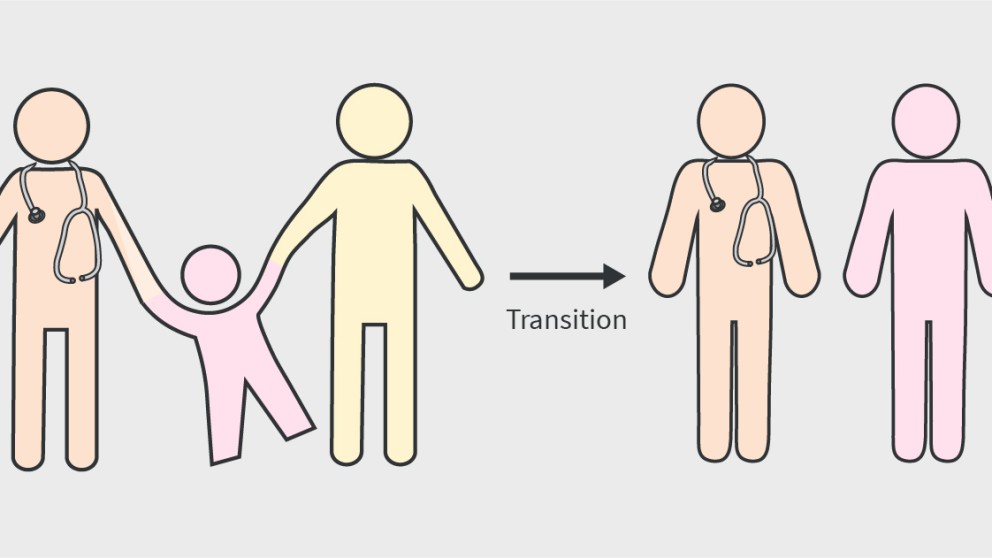
Children and adolescents with chronic diseases requiring lifelong care face unique challenges that affect their daily lives and those of their families. Initially, these patients receive specialized care in pediatric facilities, where parents play a key role in treatment decisions. However, transitioning to adult healthcare facilities is inevitable, and this process, recognized as crucial years ago, involves moving adolescents with chronic conditions from child-centered to adult-oriented care. This transition can be complicated by varying age limits for pediatric care and the scarcity of adult care centers with specific expertise. The transition often requires cooperation between different centers or even countries due to patient mobility. The transition phase is critical, as it can lead to loss of follow-up, treatment suspension, and increased risks of complications or disease relapse. Beyond medical management, various factors influence the long-term prognosis of chronic conditions, making a well-organized transition program essential. While many hospitals have implemented transition models with mixed results in satisfaction, disease control, and follow-up adherence, there are frequent shortcomings in the process. This Mistakes In article will outline eight common mistakes made during the transition from pediatric to adult care, supported by literature and professional experience.

Mistakes in transitional care for children and young adults and how  to avoid them

Mistakes in transitional care for children and young adults and how to avoid them

Patrizia Burra, Hans Törnblom, Jorge Amil Dias, Moriam Mustapha

Topics

Primary Care

Citation

Jorge Amil-Dias, Hans Törnblom, Moriam Mustapha and Patrizia Burra. Mistakes in transitional care for children and young adults and how to avoid them. UEG Education 2023; 23: 22-25.

Published

2023
UEG Podcast Episode
UEG Podcast
Share via Email Share on Facebook Share on X Share on LinkedIn Share on Bluesky

Log in to access this content.

Free for all myUEG account holders. Your access level is set automatically based on your occupation. Medical professionals get full access to all content. If you are a non-medical user, you can only access UEG Week content from congresses you attended.

Log In Create a free account

Not sure what you can access? Learn more about account types.

Management of gastric preneoplastic lesions (MAPS 3) - what’s new? With Mario Dinis-Ribeiro (Part 2)

Mario Dinis-Ribeiro, Pradeep Mundre

Topics

Stomach & H. Pylori

Published

2025
UEG Standards and Guidelines
Clinical Practice Guideline
Share via Email Share on Facebook Share on X Share on LinkedIn Share on Bluesky

Log in to access this content.

Free for all myUEG account holders. Your access level is set automatically based on your occupation. Medical professionals get full access to all content. If you are a non-medical user, you can only access UEG Week content from congresses you attended.

Log In Create a free account

Not sure what you can access? Learn more about account types.

Summary

Haemochromatosis is characterised by elevated transferrin saturation (TSAT) and progressive iron loading that mainly affects the liver. Early diagnosis and treatment by phlebotomy can prevent cirrhosis, hepatocellular carcinoma, diabetes, arthropathy and other complications. In patients homozygous for p.Cys282Tyr in HFE, provisional iron overload based on serum iron parameters (TSAT >45% and ferritin >200 lg/L in females and TSAT >50% and ferritin >300 lg/L in males and postmenopausal women) is sufficient to diagnose haemochromatosis. In patients with high TSAT and elevated ferritin but other HFE genotypes, diagnosis requires the presence of hepatic iron overload on MRI or liver biopsy. The stage of liver fibrosis and other end-organ damage should be carefully assessed at diagnosis because they determine disease management. Patients with advanced fibrosis should be included in a screening programme for hepatocellular carcinoma. Treatment targets for phlebotomy are ferritin.

EASL Clinical Practice Guidelines on haemochromatosis

EASL Clinical Practice Guidelines on haemochromatosis

Publisher

European Association for the Study of the Liver logo
European Association for the Study of the Liver

Guideline

Clinical Practice Guideline

Topics

Hepatobiliary

Citation

Journal of Hepatology, Volume 77, Issue 2, 479 - 502

Published

2022
Login to access
UEG Standards and Guidelines
Clinical Practice Guideline
Share via Email Share on Facebook Share on X Share on LinkedIn Share on Bluesky

Log in to access this content.

Free for all myUEG account holders. Your access level is set automatically based on your occupation. Medical professionals get full access to all content. If you are a non-medical user, you can only access UEG Week content from congresses you attended.

Log In Create a free account

Not sure what you can access? Learn more about account types.

Abstract

Background

There are several options for the surgical management of GERD in adults. Previous guidelines and systematic reviews have compared the effects of total fundoplication versus pooled effects of different techniques of partial fundoplication.

Objective

To develop evidence-informed, trustworthy, pertinent recommendations on the use of total, posterior partial and anterior partial fundoplications for the management of GERD in adults.

Methods

We performed an update systematic review, network meta-analysis, and evidence appraisal using the GRADE and the Confidence in Network Meta-Analysis methodologies. An international, multidisciplinary panel of surgeons, gastroenterologists, and a patient representative reached unanimous consensus through an evidence-to-decision framework to select among multiple interventions, and a Delphi process to formulate the recommendation. The project was developed in an online authoring and publication platform (MAGICapp), and was overseen by an external auditor.

Results

We suggest posterior partial fundoplication over total posterior or anterior 90° fundoplication in adult patients with GERD. We suggest anterior >90° fundoplication as an alternative, although relevant comparative evidence is limited (weak recommendation). The guideline, with recommendations, evidence summaries and decision aids in user friendly formats can also be accessed in MAGICapp: https://app.magicapp.org/#/guideline/j20X4n.

Conclusion

This rapid guideline was developed in line with highest methodological standards and provides evidence-informed recommendations on the surgical management of GERD. It provides user-friendly decision aids to inform healthcare professionals' and patients' decision making.

Key summary

  • Various surgical options exist for the management of GERD in adults.
  • We summarized evidence through network meta-analysis of interventions.
  • We suggest partial posterior fundoplication over total posterior or anterior 90° fundoplication.
  • We suggest anterior >90 degrees may be an alternative.

Keywords: AGREE‐S, fundoplication, GERD, guideline, Nissen, Toupét

UEG and EAES rapid guideline: Update systematic review, network meta-analysis, CINeMA and GRADE assessment, and evidence-informed European recommendations on surgical management of GERD

UEG and EAES rapid guideline: Update systematic review, network meta-analysis, CINeMA and GRADE assessment, and evidence-informed European recommendations on surgical management of GERD

Sheraz Markar

Publishers

European Society for Paediatric Gastroenterology, Hepatology and Nutrition logoEuropean Association for Endoscopic Surgery and other interventional techniques logo
European Society for Paediatric Gastroenterology, Hepatology and Nutrition, European Association for Endoscopic Surgery and other interventional techniques

Guideline

Clinical Practice Guideline

Topics

Oesophagus Stomach & H. Pylori Surgery

Citation

United European Gastroenterol J. 2022; 10( 9): 983– 98

Published

2022
Login to access
UEG Standards and Guidelines
Clinical Practice Guideline
Share via Email Share on Facebook Share on X Share on LinkedIn Share on Bluesky

Log in to access this content.

Free for all myUEG account holders. Your access level is set automatically based on your occupation. Medical professionals get full access to all content. If you are a non-medical user, you can only access UEG Week content from congresses you attended.

Log In Create a free account

Not sure what you can access? Learn more about account types.

Abstract

Background
Malnutrition and dehydration are widespread in older people, and obesity is an increasing problem. In clinical practice, it is often unclear which strategies are suitable and effective in counteracting these key health threats.

Aim
To provide evidence-based recommendations for clinical nutrition and hydration in older persons in order to prevent and/or treat malnutrition and dehydration. Further, to address whether weight-reducing interventions are appropriate for overweight or obese older persons.

Methods
This guideline was developed according to the standard operating procedure for ESPEN guidelines and consensus papers. A systematic literature search for systematic reviews and primary studies was performed based on 33 clinical questions in PICO format. Existing evidence was graded according to the SIGN grading system. Recommendations were developed and agreed in a multistage consensus process.

Results
We provide eighty-two evidence-based recommendations for nutritional care in older persons, covering four main topics: Basic questions and general principles, recommendations for older persons with malnutrition or at risk of malnutrition, recommendations for older patients with specific diseases, and recommendations to prevent, identify and treat dehydration. Overall, we recommend that all older persons shall routinely be screened for malnutrition in order to identify an existing risk early. Oral nutrition can be supported by nursing interventions, education, nutritional counseling, food modification and oral nutritional supplements. Enteral nutrition should be initiated if oral, and parenteral if enteral nutrition is insufficient or impossible and the general prognosis is altogether favorable. Dietary restrictions should generally be avoided, and weight-reducing diets shall only be considered in obese older persons with weight-related health problems and combined with physical exercise. All older persons should be considered to be at risk of low-intake dehydration and encouraged to consume adequate amounts of drinks. Generally, interventions shall be individualized, comprehensive and part of a multimodal and multidisciplinary team approach.

Conclusion
A range of effective interventions is available to support adequate nutrition and hydration in older persons in order to maintain or improve nutritional status and improve clinical course and quality of life. These interventions should be implemented in clinical practice and routinely used.

Keywords: guideline; recommendations; geriatrics; nutritional care; malnutrition; dehydration

ESPEN guideline on clinical nutrition and hydration in geriatrics

ESPEN guideline on clinical nutrition and hydration in geriatrics

Dorothee Volkert, Anne Marie Beck, Tommy Cederholm, Alfonso Cruz-Jentoft, Sabine Goisser, Lee Hooper, Eva Kiesswetter, Marcello Maggio, Agathe Raynaud-Simon, C. Sieber, Lubos Sobotka, Dieneke van Asselt, Rainer Wirth, Stephan Bischoff

Publisher

The European Society for Clinical Nutrition and Metabolism logo
The European Society for Clinical Nutrition and Metabolism

Guideline

Clinical Practice Guideline

Topics

Primary Care Small Intestine & Nutrition

Citation

Clinical Nutrition 38 (2019) 10-47

Published

2019
Login to access

The global reference point for the digestive health community

Platform Publisher

United European Gastroenterology

Wickenburggasse 1 1080 Vienna, Austria

Contact us

support@ueg.eu

ueg.eu

T: +43 1 997 1639

Legal

Terms & Conditions

Imprint

Privacy Policy

Explore

My Bookmarks

My recommendations

My fields of interest

© 2026 United European Gastroenterology

Change fields of interest

These fields are selected based on the interests in your myUEG profile.
Click the item to unselect it. You can select multiple items.