UEG's content platform for gastroenterology education bringing recordings, courses, guidelines, and more together in one place.
Trending on Gutflix
Rate for better recommendations!
Your feedback helps us show you more of what you like and less of what you dislike!
Log in to continue.
This content is part of Gutflix. Log in with your myUEG account, or create one free, to watch it.
Not sure what you can access? Learn more about account types.
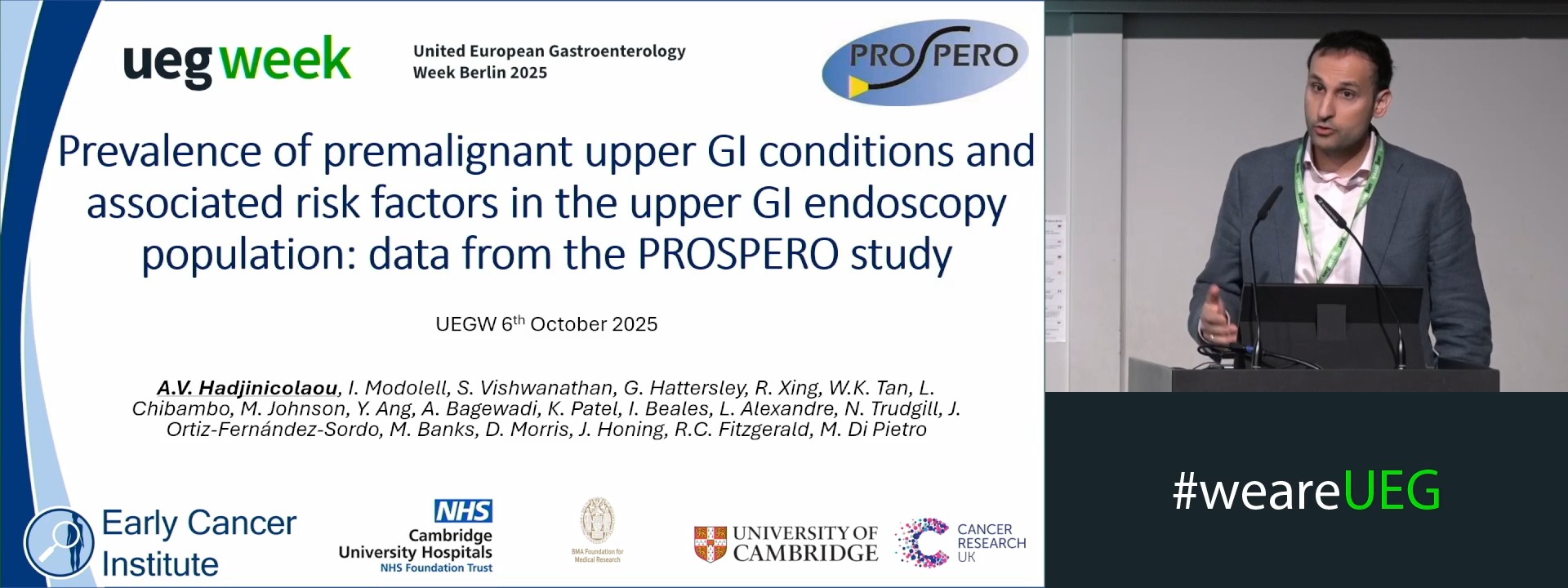
PREVALENCE OF PREMALIGNANT UPPER GI CONDITIONS AND ASSOCIATED RISK FACTORS IN THE UPPER GI ENDOSCOPY POPULATION: DATA FROM THE PROSPERO STUDY
Andreas V Hadjinicolaou 1, Ines Modolell 2, Shriya Vishwanathan 3, Grace Hattersley 3, Raina Xing 3, W. Keith Tan 3, Leona Chibambo 4, Matthew Johnson 5, Yeng Ang 6, Abhay Bagewadi 7, Krashna Patel 8, Ian Beales 9, Leo Alexandre 9, Nigel Trudgill 10, Jacobo Ortiz-Fernández-Sordo 11, Matthew Banks 12, Danielle Morris 13, Judith Honing 3, Massimiliano di Pietro 3
Affiliations
1 Early Cancer Institute, University Of Cambridge, Cambridge, United Kingdom|||Department of Gastroenterology, Cambridge University Hospitals NHS Trust, Cambridge, United Kingdom
2 Department of Gastroenterology, Cambridge University Hospitals NHS Trust, Cambridge, United Kingdom
3 Early Cancer Institute, University Of Cambridge, Cambridge, United Kingdom
4 Maidstone and Tunbridge Wells NHS Trust, Kent, United Kingdom
5 The Luton & Dunstable University Hospital, Luton, Bedfordshire, United Kingdom
6 Salford Royal NHS Trust, Salford, United Kingdom
7 Queen Elizabeth Hospital NHS Trust, Kings Lynn, United Kingdom
8 West Suffolk NHS Trust, Suffolk, United Kingdom
9 Norfolk & Norwich University Hospital, Norwich, United Kingdom
10 Sandwell and West Birmingham NHS Trust, West Bromwich, United Kingdom
11 Nottingham University Hospitals NHS Trust, Nottimgham, United Kingdom
12 University College London Hospital NHS Trust, London, United Kingdom
13 Lister Hospital, East and North Herts NHS Trust, Stevenage, United Kingdom
Log in to continue.
This content is part of Gutflix. Log in with your myUEG account, or create one free, to watch it.
Not sure what you can access? Learn more about account types.
Conclusion Mistakes in …: Upper GI
Affiliations
1 Stadtspital Triemli, Zürich, Switzerland
Log in to continue.
This content is part of Gutflix. Log in with your myUEG account, or create one free, to watch it.
Not sure what you can access? Learn more about account types.
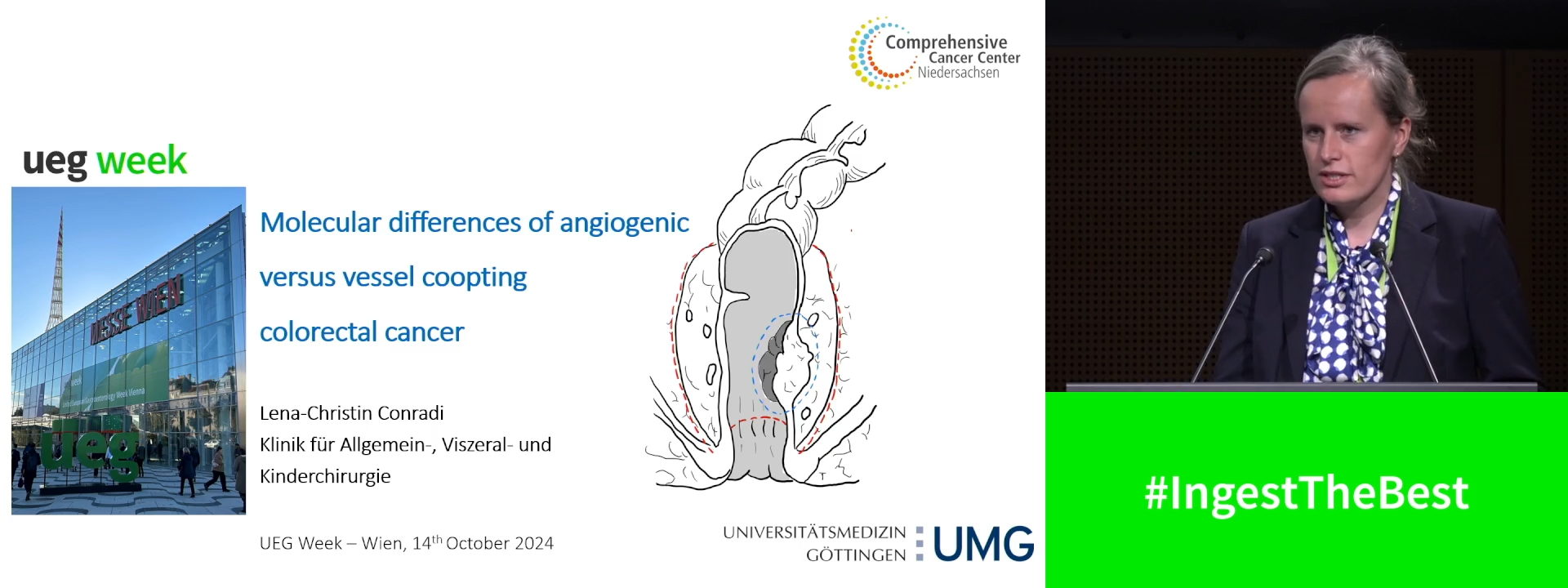
Molecular differences of angiogenic versus vessel co-opting colorectal cancer
Affiliations
1 Universitätsmedizin Göttingen, Göttingen, Germany
Log in to continue.
This content is part of Gutflix. Log in with your myUEG account, or create one free, to watch it.
Not sure what you can access? Learn more about account types.
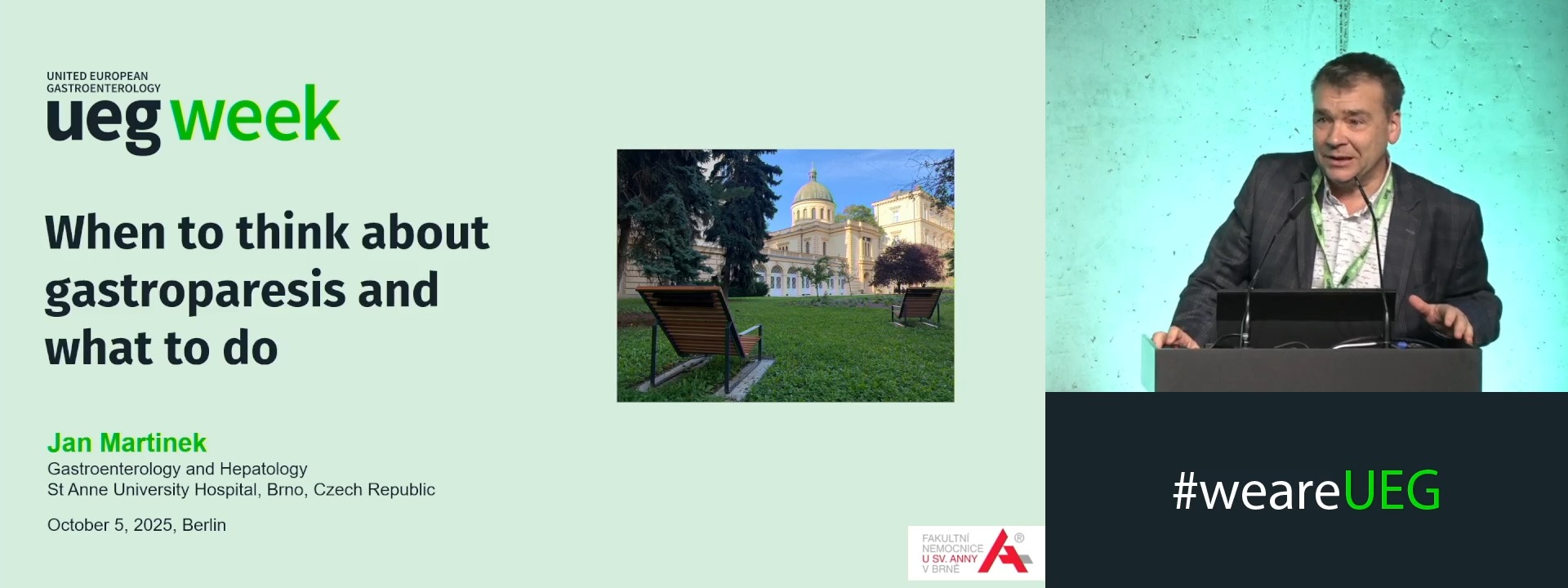
When to think about gastroparesis and what to do
Affiliations
1 Institute for Clinical and Experimental Medicine Gastroenterology & Hepatology, Praha, Czech Republic