UEG's content platform for gastroenterology education bringing recordings, courses, guidelines, and more together in one place.
Trending on Gutflix
Rate for better recommendations!
Your feedback helps us show you more of what you like and less of what you dislike!
Log in to continue.
This content is part of Gutflix. Log in with your myUEG account, or create one free, to watch it.
Not sure what you can access? Learn more about account types.
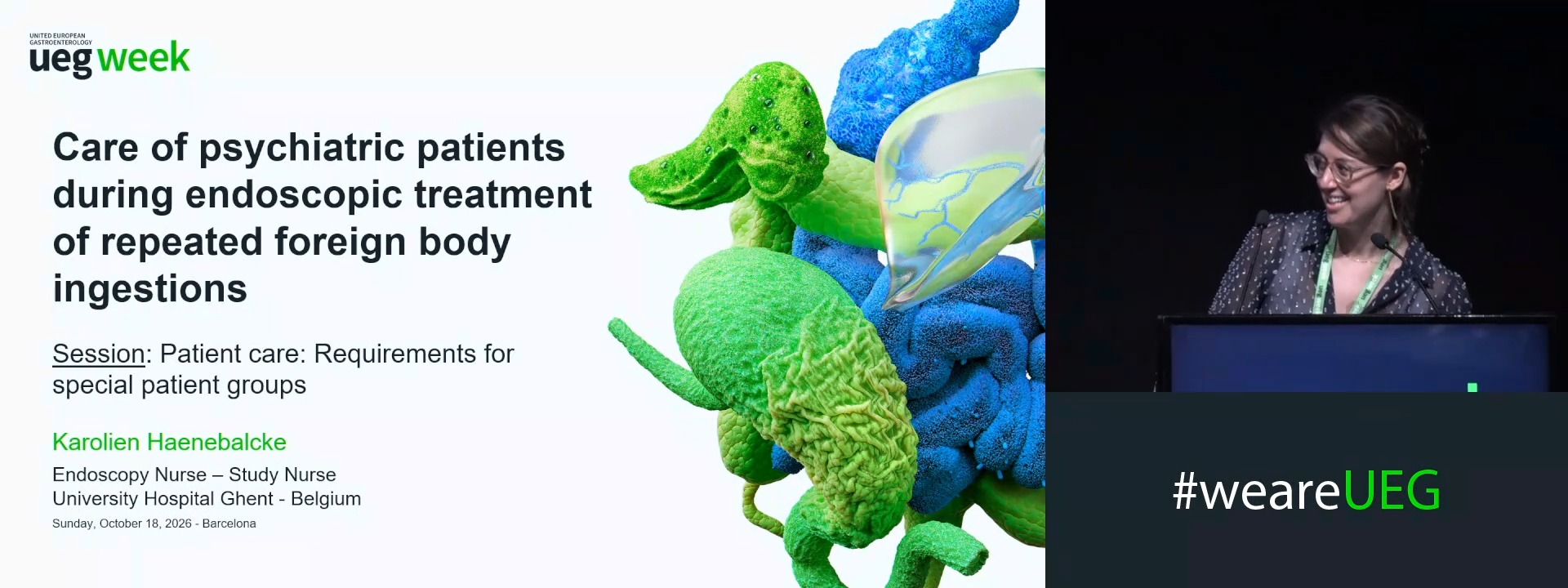
Care of psychiatric patients during endoscopic treatment of repeated foreign body ingestions
Affiliations
1 None, None, Belgium
Log in to continue.
This content is part of Gutflix. Log in with your myUEG account, or create one free, to watch it.
Not sure what you can access? Learn more about account types.
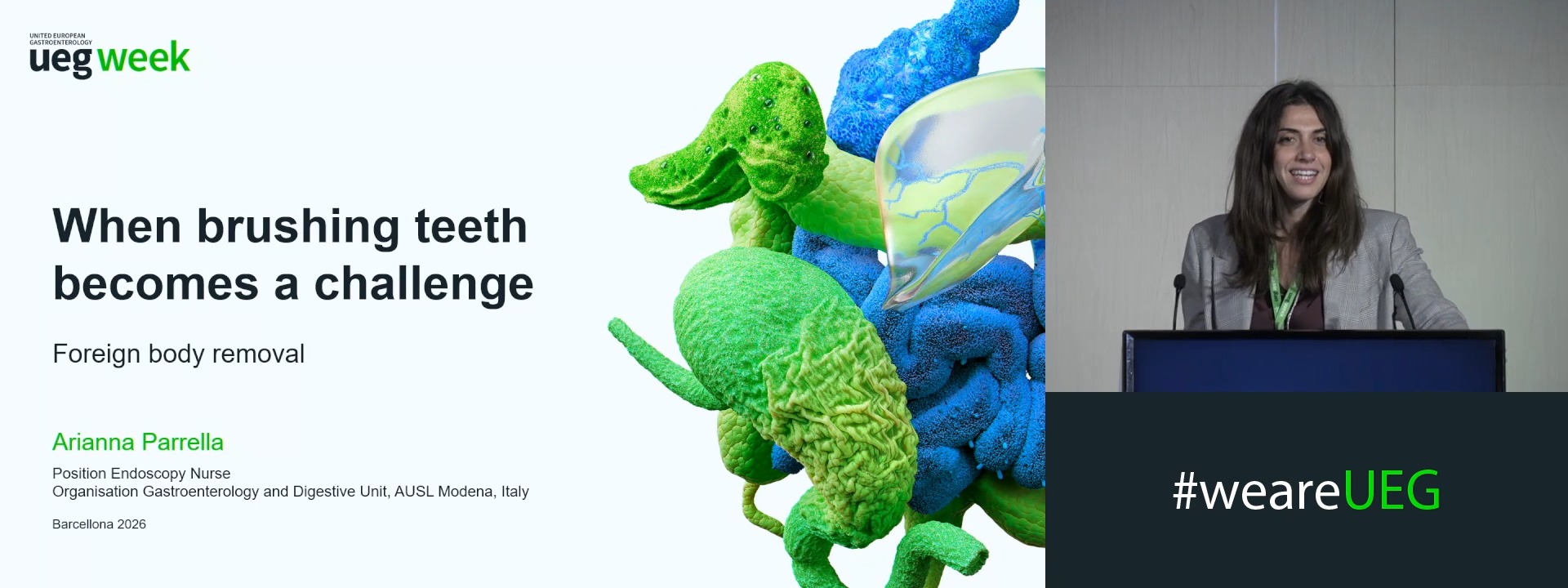
When brushing teeth becomes a challenge: Foreign body removal
Affiliations
1 Ramazzini Hospital, Carpi, Italy
Log in to continue.
This content is part of Gutflix. Log in with your myUEG account, or create one free, to watch it.
Not sure what you can access? Learn more about account types.
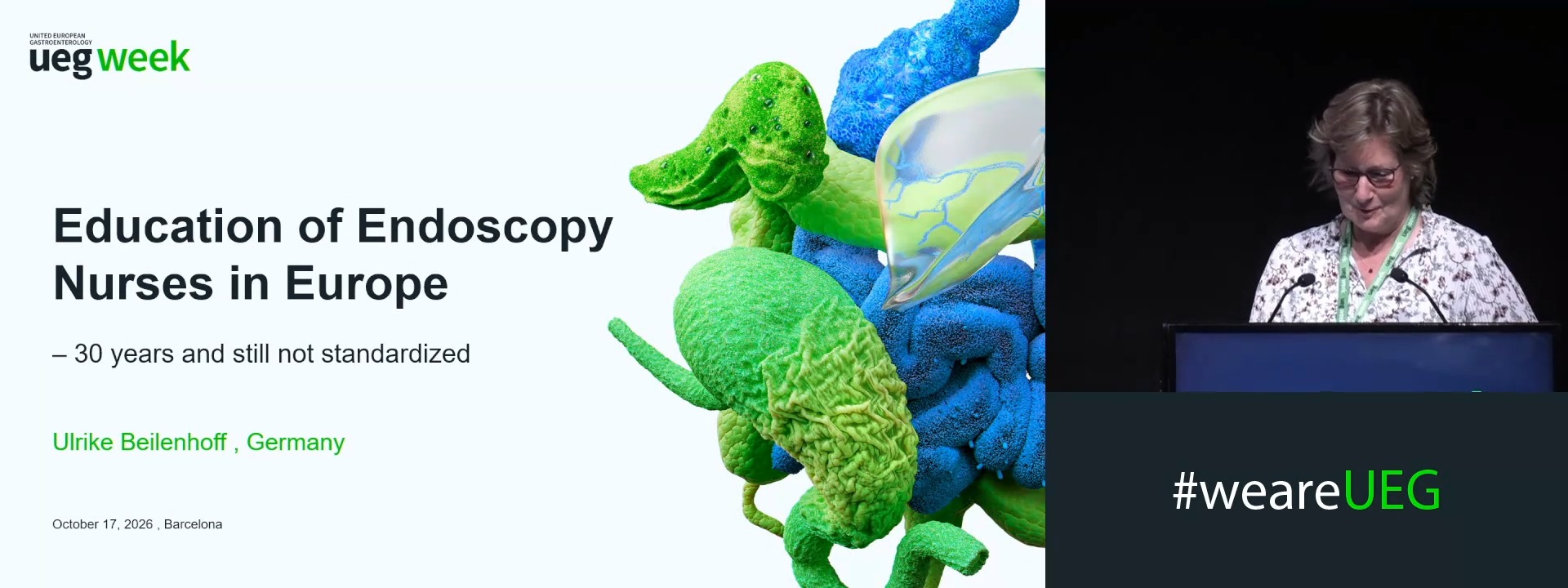
Education of endoscopy nurses in Europe – 30 years and still not standardised
Affiliations
1 ESGENA Scientific Secretary, Ulm, Germany
Log in to continue.
This content is part of Gutflix. Log in with your myUEG account, or create one free, to watch it.
Not sure what you can access? Learn more about account types.
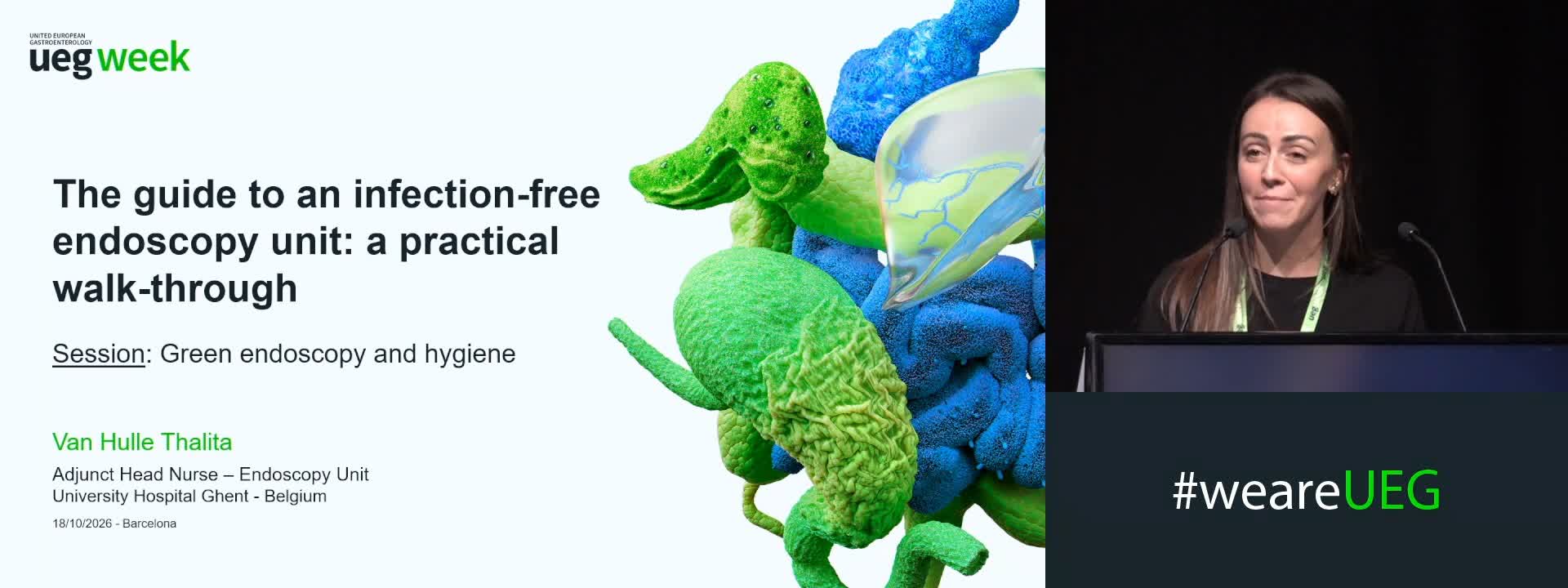
The guide to infection-free endoscopy in UZ Ghent
Affiliations
1 None, None, Belgium

Log in to continue.
This content is part of Gutflix. Log in with your myUEG account, or create one free, to watch it.
Not sure what you can access? Learn more about account types.
Bacterial consortia
Affiliations
1 Saint-Antoine Hospital, Paris, France

Log in to continue.
This content is part of Gutflix. Log in with your myUEG account, or create one free, to watch it.
Not sure what you can access? Learn more about account types.
SINGLE USE DUODENOSCOPES ARE COMPARABLE TO REUSABLE DUODENOSCOPES WITH DISPOSABLE END CAP: AN INTERNATIONAL, MULTICENTER STUDY
Marina Kim 1, Romy Bareket 2, Andrew Canakis 3, Monica Gaidhane 4, Amy Tyberg 5, Avik Sarkar 4, Enrique Vazquez Sequeiros 6, Miguel Puga-Tejada 7, Jorge Baquerizo-Burgos 8, Carlos Robles-Medranda 8, Carlos Robles-Medranda 8, Martha Graciela Arevalo Mora 8, Michel Kahaleh 9, Carlos Robles-Medranda 10, Haroon Shahid 4, Michel Kahaleh 4
Affiliations
1 St.Louis University, St. Louis, United States
2 Robert Wood Johnson University Hospital, New Brunswick, United States
3 University of Maryland Medical System, Baltimore, United States
4 Robert Wood Johnson Medical School Rutgers University, New Brunswick, United States
5 Rutgers Robert Wood Johnson, New Brunswick, United States
6 Hospital Ramon y Cajal Unidad de Medicina Tropical, Madrid, Spain
7 Instituto Ecuatoriano de Enfermedades Digestivas, Guayaquil, Ecuador
8 Instituto Ecuatoriano de Enfermedades Digestivas (IECED), Guayaquil, Ecuador
9 NYU Langone, Mineola, United States
10 Instituto Ecuatoriano De Enfermedades Digestivas (IECED) -University Hospital Omni, Guayaquil, Ecuador