UEG's educational platform for gastroenterology education bringing recordings, courses, guidelines, and more together in one place.
Most popular content
Rate for better recommendations!
Your feedback helps us show you more of what you like and less of what you dislike!
Log in to access this content.
Free for all myUEG account holders. Your access level is set automatically based on your occupation. Medical professionals get full access to all content. If you are a non-medical user, you can only access UEG Week content from congresses you attended.
Not sure what you can access? Learn more about account types.

REAL‑WORLD PERSISTENCE OF BIOLOGIC AND SMALL‑MOLECULE THERAPY IN CHRONIC POUCH INFLAMMATION AFTER IPAA: A PROSPECTIVE COHORT STUDY
Maya Fischman 1, Lihi Godny 2, Revital Barkan 2, Ian White 3, Nir Wasserberg 3, Irit Avni-Biron 4, Hagar Banai Eran 4, Yifat Snir 4, Henit Yanai 2, Iris Dotan 2, Jacob E. Ollech 2
1 Rabin Medical Center, Petah Tikva, Israel|||Hebrew University of Jerusalem, Jerusalem, Israel
2 Rabin Medical Center, Petah Tikva, Israel|||Tel Aviv University, Tel Aviv, Israel
3 Tel Aviv University, Tel Aviv, Israel|||Rabin Medical Center, Petah Tikva, Israel
4 Rabin Medical Center, Petah Tikva, Israel
Conference
Topics
Submission format
Citation
Published
Log in to access this content.
Free for all myUEG account holders. Your access level is set automatically based on your occupation. Medical professionals get full access to all content. If you are a non-medical user, you can only access UEG Week content from congresses you attended.
Not sure what you can access? Learn more about account types.
Summary: Is there really an added value for all new EUS/ERCP techniques?
1 Leiden University Medical Center, Leiden, Netherlands
Event
Citation
Published
Log in to access this content.
Free for all myUEG account holders. Your access level is set automatically based on your occupation. Medical professionals get full access to all content. If you are a non-medical user, you can only access UEG Week content from congresses you attended.
Not sure what you can access? Learn more about account types.
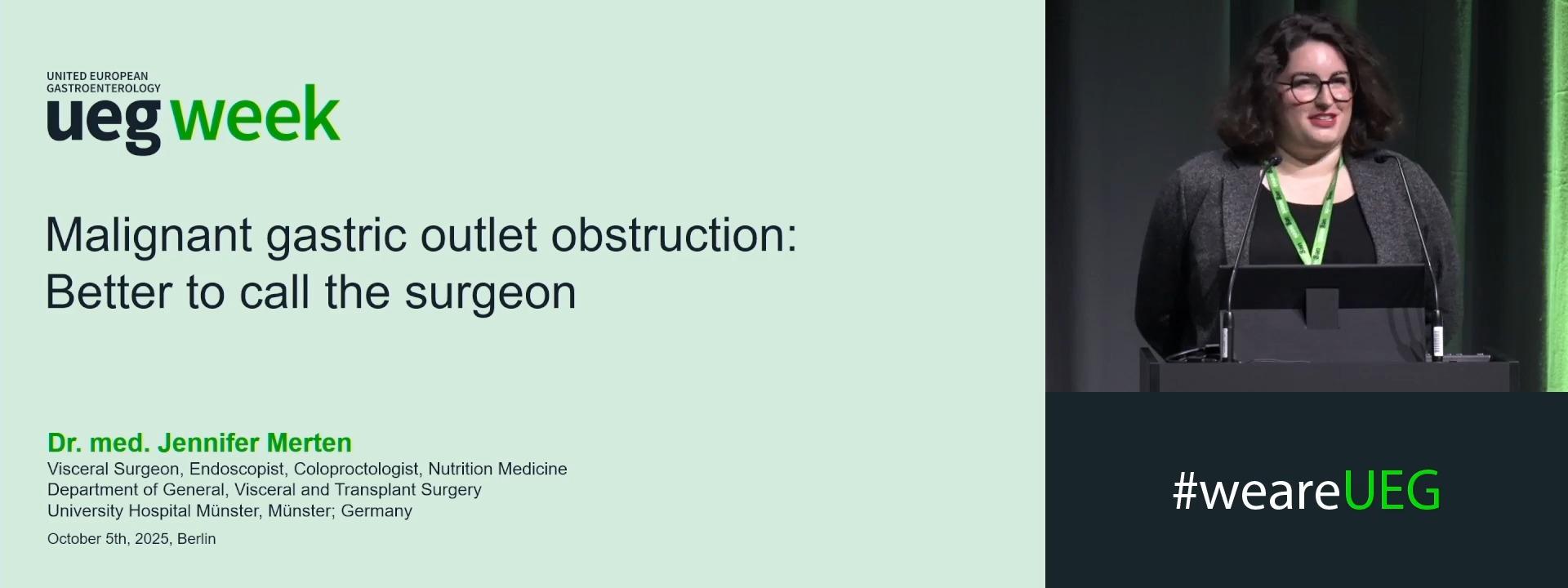
Malignant gastric outlet obstruction: Should it be treated surgically?
1 University Hospital Muenster; Georg-August Universität Göttingen, Göttingen, Germany
2 Univ. Medisch Centrum Utrecht, Utrecht, Netherlands
Event
Citation
Published
Log in to access this content.
Free for all myUEG account holders. Your access level is set automatically based on your occupation. Medical professionals get full access to all content. If you are a non-medical user, you can only access UEG Week content from congresses you attended.
Not sure what you can access? Learn more about account types.
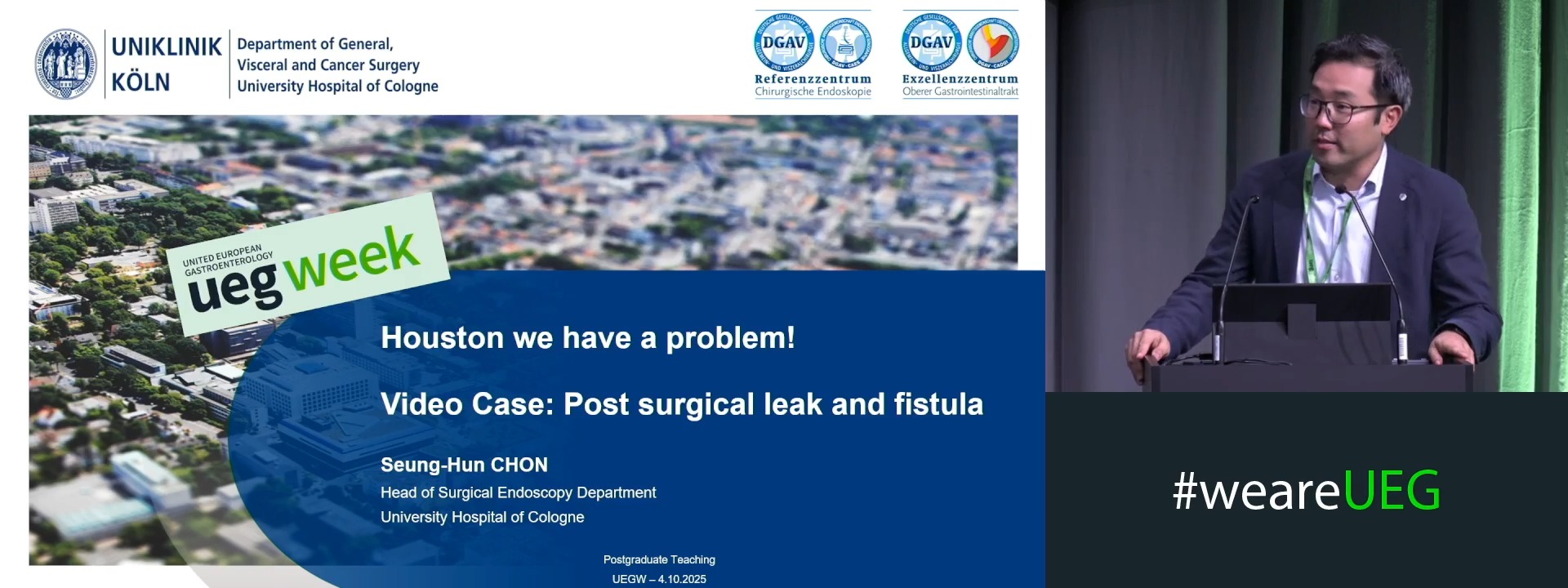
Video Case: Post surgical leak and fistula
1 University Hospital of Cologne, Cologne, Germany
Event
Citation
Published
Log in to access this content.
Free for all myUEG account holders. Your access level is set automatically based on your occupation. Medical professionals get full access to all content. If you are a non-medical user, you can only access UEG Week content from congresses you attended.
Not sure what you can access? Learn more about account types.
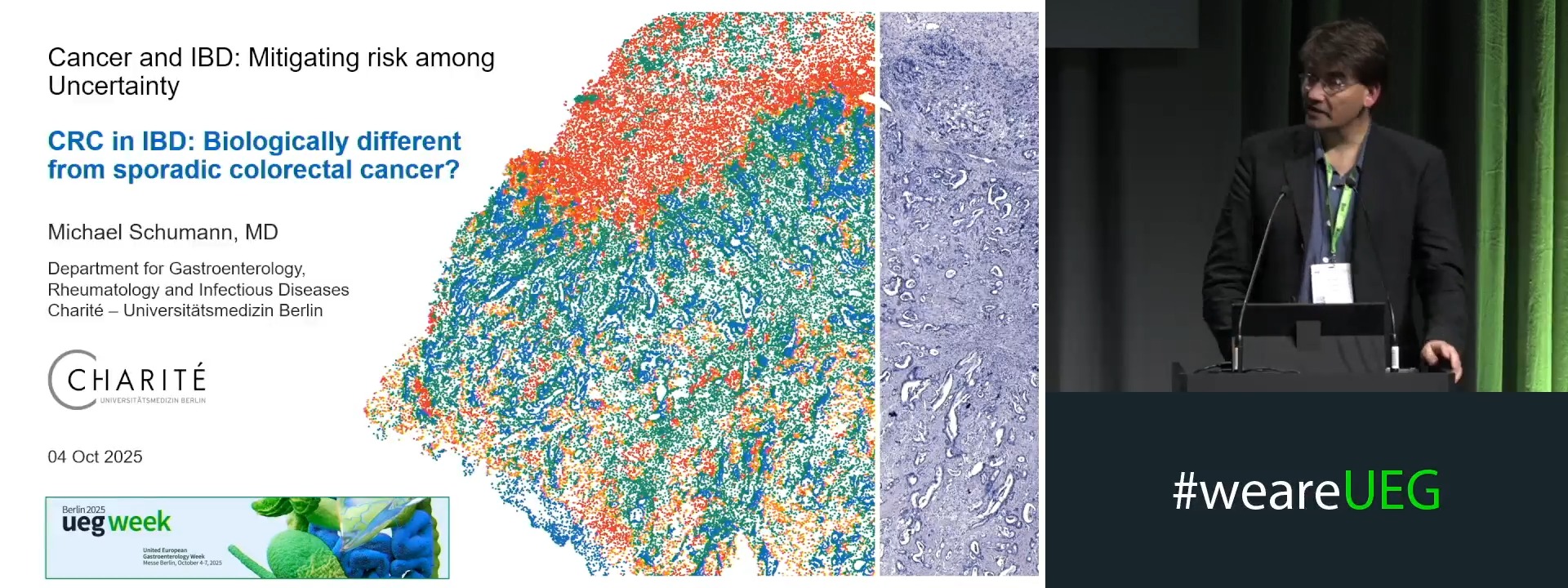
CRC in IBD: Biologically different from sporadic colorectal cancer?
1 Charité Berlin, Berlin, Germany
Event
Topics
Citation
Published
Log in to access this content.
Free for all myUEG account holders. Your access level is set automatically based on your occupation. Medical professionals get full access to all content. If you are a non-medical user, you can only access UEG Week content from congresses you attended.
Not sure what you can access? Learn more about account types.
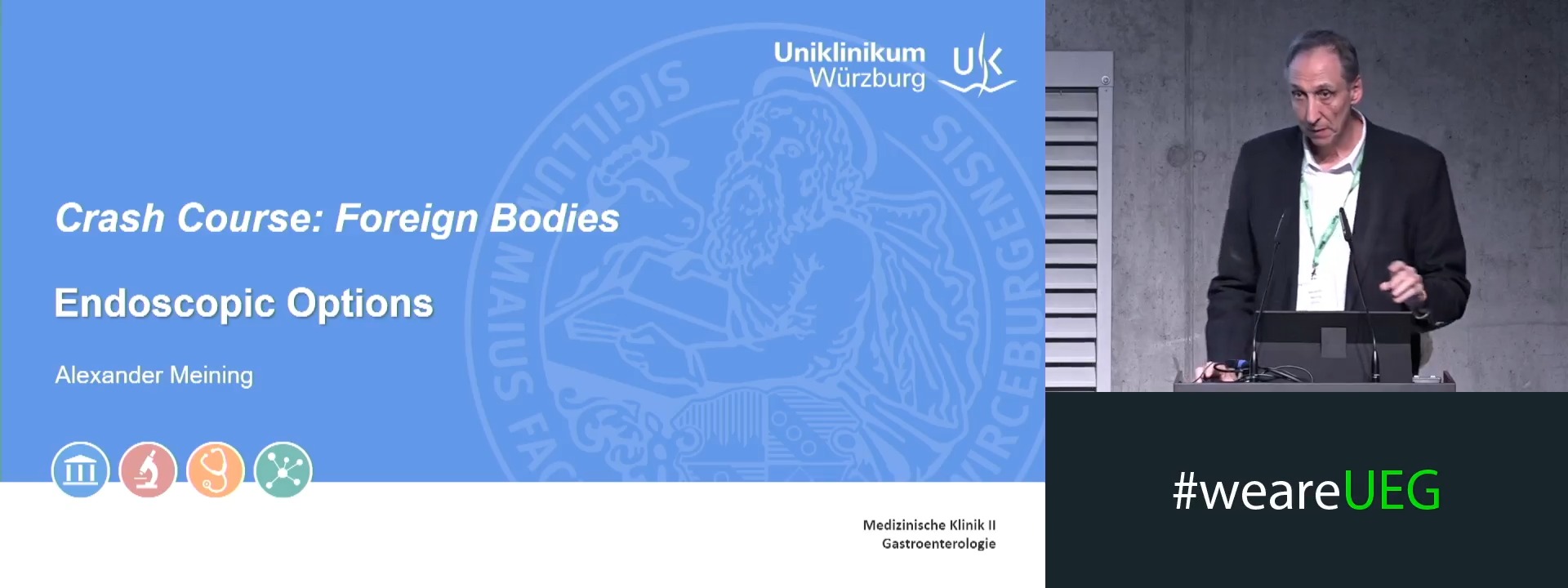
Endoscopic options
1 Bavarian Cancer Research Center (BZKF), Würzburg, Germany
Event
Topics
Session
Citation
Published
Log in to access this content.
Free for all myUEG account holders. Your access level is set automatically based on your occupation. Medical professionals get full access to all content. If you are a non-medical user, you can only access UEG Week content from congresses you attended.
Not sure what you can access? Learn more about account types.
MICROSCOPIC COLITIS: A COMPARATIVE STUDY OF CLINICAL SYMPTOMS AND HISTOPATHOLOGICAL FEATURES
Chaimae Haddad Hachimi 1, Mariam Konso 2, Chaimae Hiji 1, Hayat Ennoufous Krami 3, Mouna Tamzaourte 1
1 Mohamed V Military Training Hospital, Rabat, Morocco
2 Faculty of Medicine and Pharmacy of Rabat, Rabat, Morocco
3 Private Practice, Rabat, Morocco
Conference
Topics
Submission format
Session