UEG's content platform for gastroenterology education bringing recordings, courses, guidelines, and more together in one place.
Trending on Gutflix
Rate for better recommendations!
Your feedback helps us show you more of what you like and less of what you dislike!
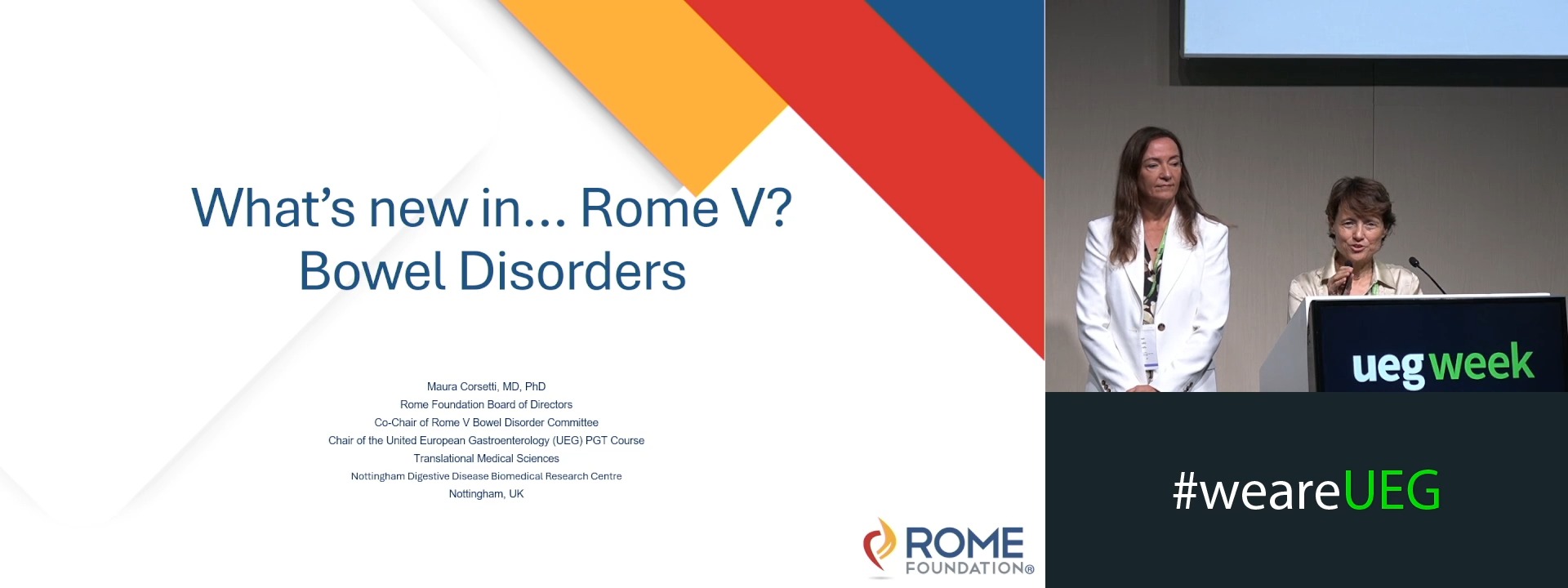
Log in to continue.
This content is part of Gutflix. Log in with your myUEG account, or create one free, to watch it.
Not sure what you can access? Learn more about account types.
Lower GI disorders
Affiliations
1 University of Nottingham, Nottingham, United Kingdom
Log in to continue.
This content is part of Gutflix. Log in with your myUEG account, or create one free, to watch it.
Not sure what you can access? Learn more about account types.
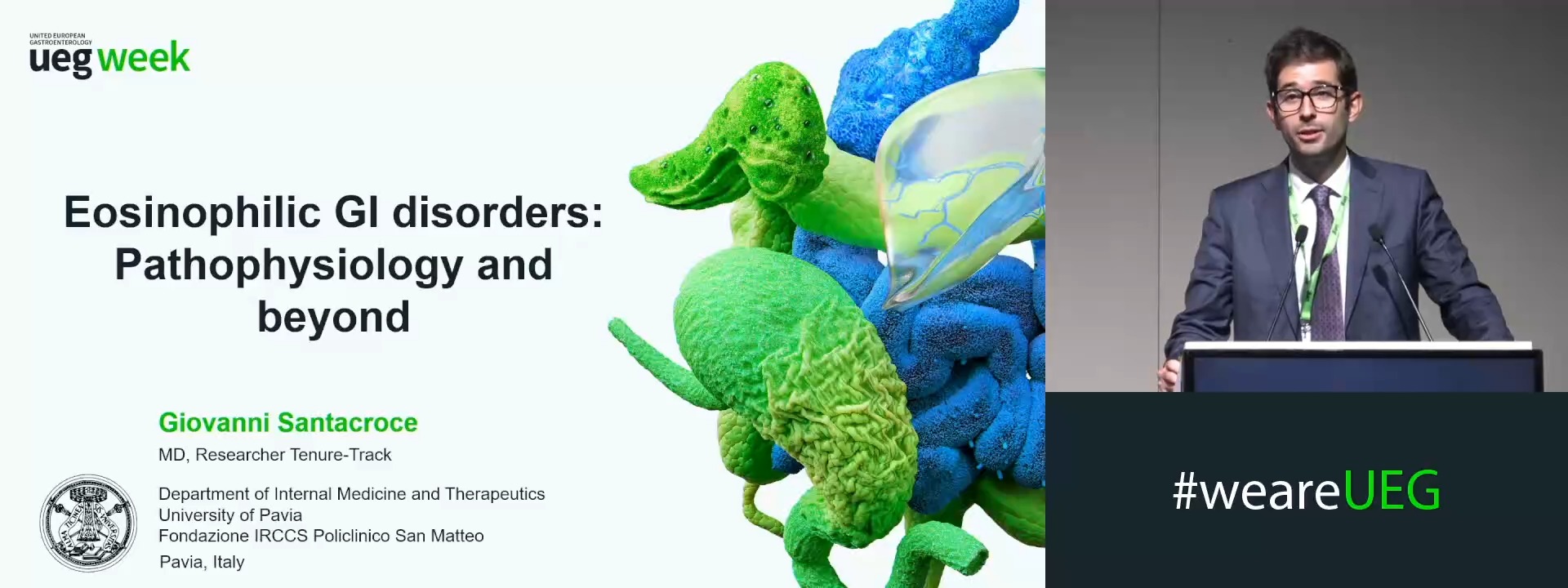
Eosinophilic GI disorders: Pathophysiology and beyond – are drugs for eosinophilia enough?
Affiliations
1 University of Pavia, Pavia, Italy
2 Amsterdam University Medical Center, Amsterdam, Netherlands
Log in to continue.
This content is part of Gutflix. Log in with your myUEG account, or create one free, to watch it.
Not sure what you can access? Learn more about account types.
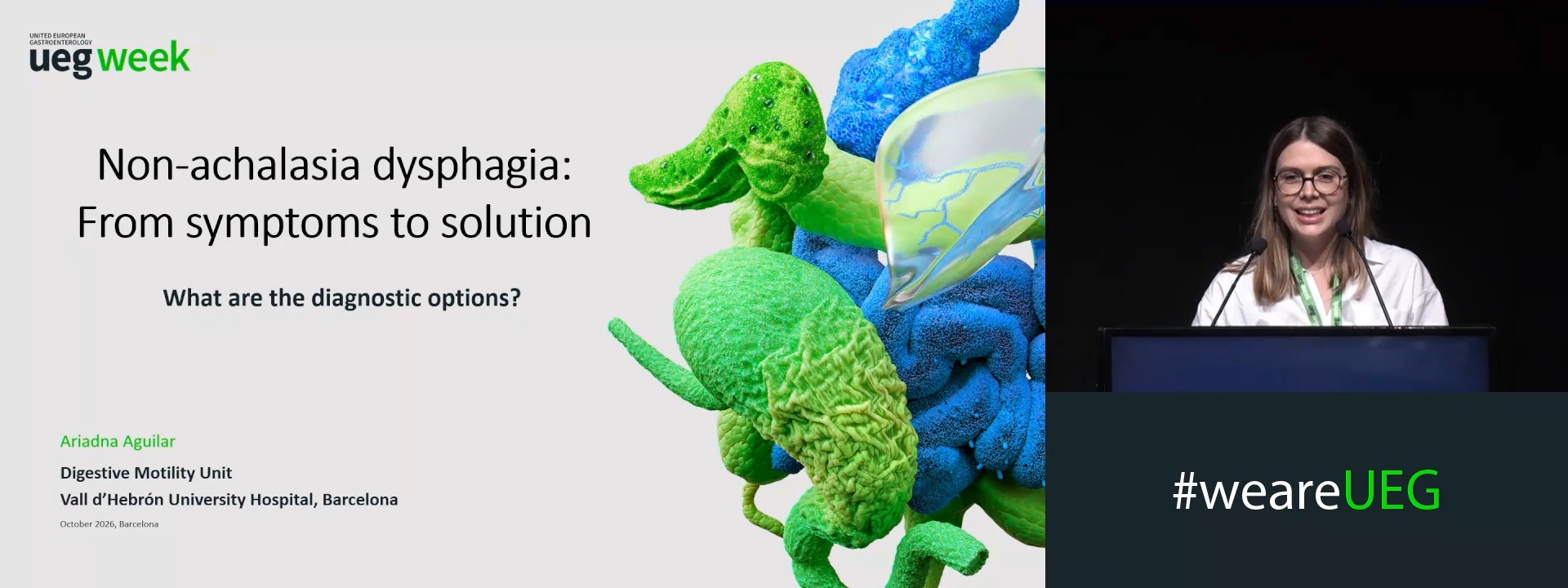
What are the diagnostic options?
Affiliations
1 Hospital Universitari Vall d'Hebrón, Barcelona, Spain
Log in to continue.
This content is part of Gutflix. Log in with your myUEG account, or create one free, to watch it.
Not sure what you can access? Learn more about account types.
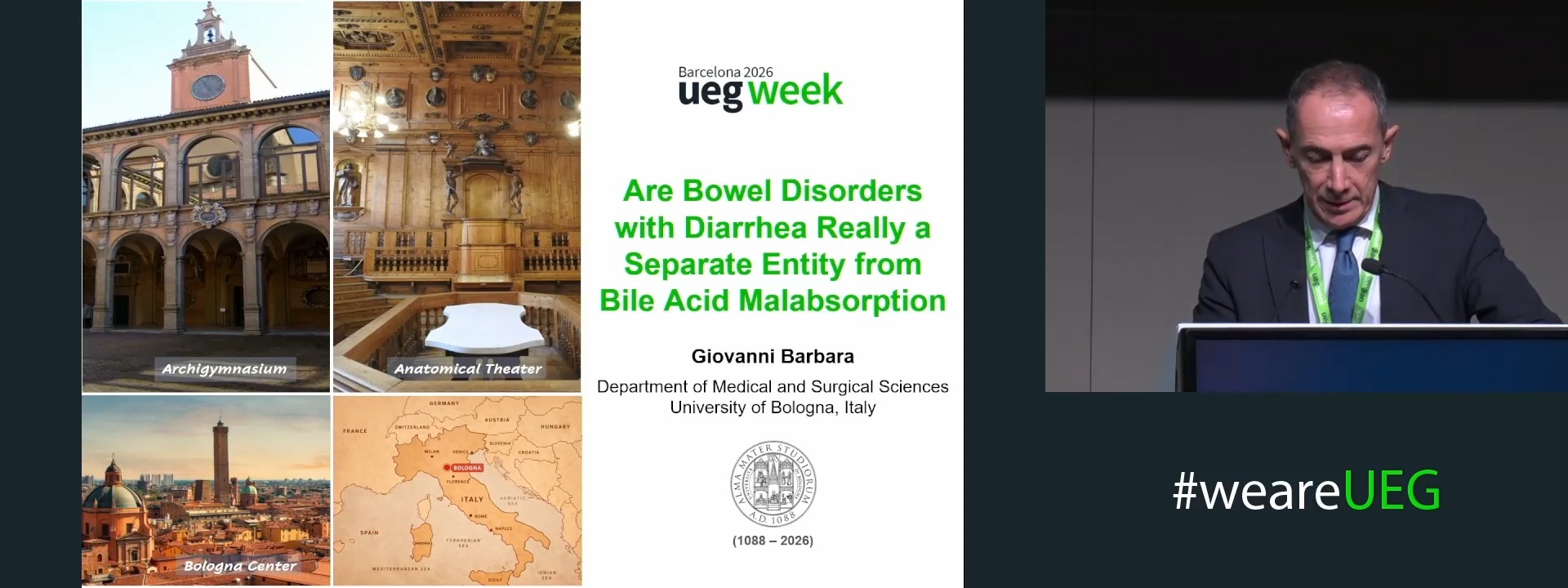
Are bowel disorders with diarrhoea really a separate entity from bile acid malabsorption?
Affiliations
1 University of Bologna, Bologna, Italy

Log in to continue.
This content is part of Gutflix. Log in with your myUEG account, or create one free, to watch it.
Not sure what you can access? Learn more about account types.
CADAVERINE, A GUT MICROBIOTA-DERIVED POLYAMINE, TRIGGERS METABOLIC REPROGRAMMING TOWARDS OXPHOS IN MONOCYTES/MACROPHAGES IN VITRO AND DURING INTESTINAL INFLAMMATION
Rodrigo De Oliveira Formiga 1, Qing Li 1, Virginie Pisano Puchois 1, Iria Alonso Salgueiro 1, Laura Creusot 1, Salomé Amouyal 1, Marius Bredon 1, Yining Zhao 2, Tatiana Ledent 1, Camille Danne 1, Marie-Laure Michel 3, Patrick Emond 4, Guillaume Chevreux 5, Hang Phuong Pham 6, Rafael Jose Argüello 7, nathalie Rolhion 1, Timothy Wai 2, Harry Sokol 1,5
Affiliations
1 Sorbonne University, Paris, France
2 Pasteur Institute, Paris, France
3 Paris-Saclay University, Jouy-en-Josas, France
4 Tours University, Tours, France
5 Paris Cité University, Paris, France
6 Parean Biotechnologies, Saint Malo, France
7 Aix Marseille University, Marseille, France

Log in to continue.
This content is part of Gutflix. Log in with your myUEG account, or create one free, to watch it.
Not sure what you can access? Learn more about account types.
Functional abdominal pain: Paediatric and adult gastroenterologist
Affiliations
1 University of Bologna, Bologna, Italy
2 UMC Maribor, Maribor, Slovenia