UEG's content platform for gastroenterology education bringing recordings, courses, guidelines, and more together in one place.
Trending on Gutflix
Rate for better recommendations!
Your feedback helps us show you more of what you like and less of what you dislike!
Log in to continue.
This content is part of Gutflix. Log in with your myUEG account, or create one free, to watch it.
Not sure what you can access? Learn more about account types.
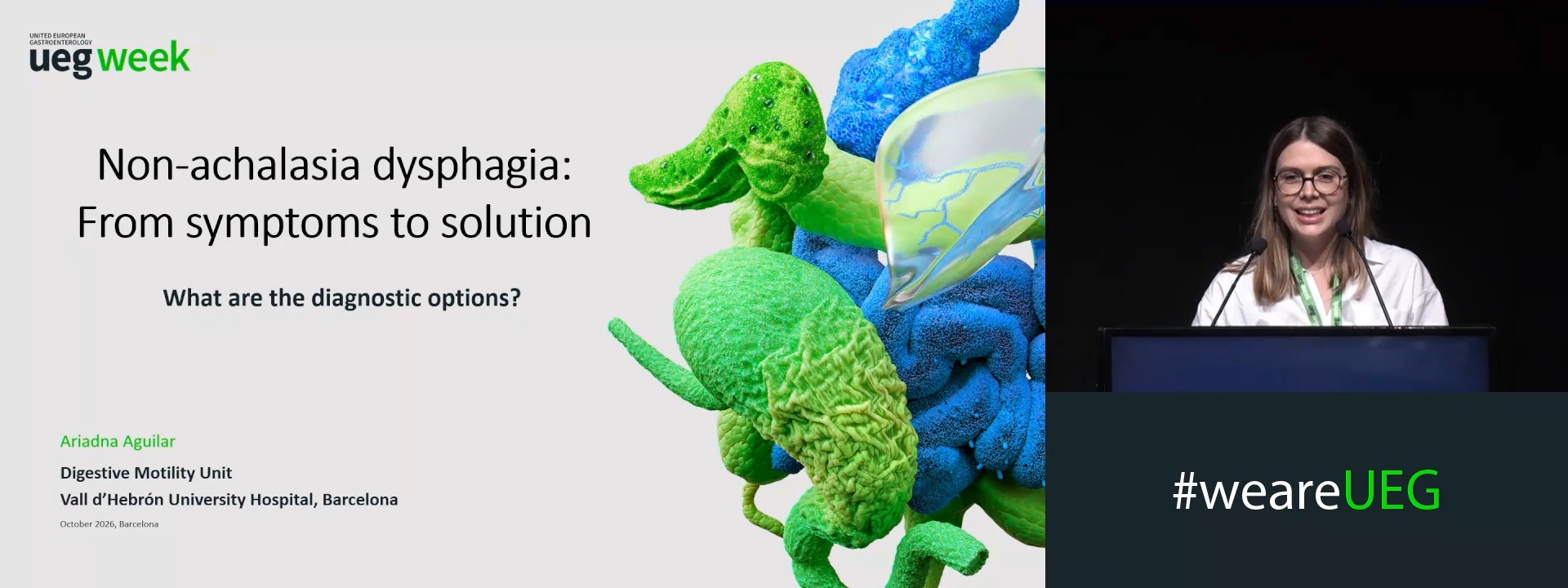
What are the diagnostic options?
Affiliations
1 Hospital Universitari Vall d'Hebrón, Barcelona, Spain
Log in to continue.
This content is part of Gutflix. Log in with your myUEG account, or create one free, to watch it.
Not sure what you can access? Learn more about account types.
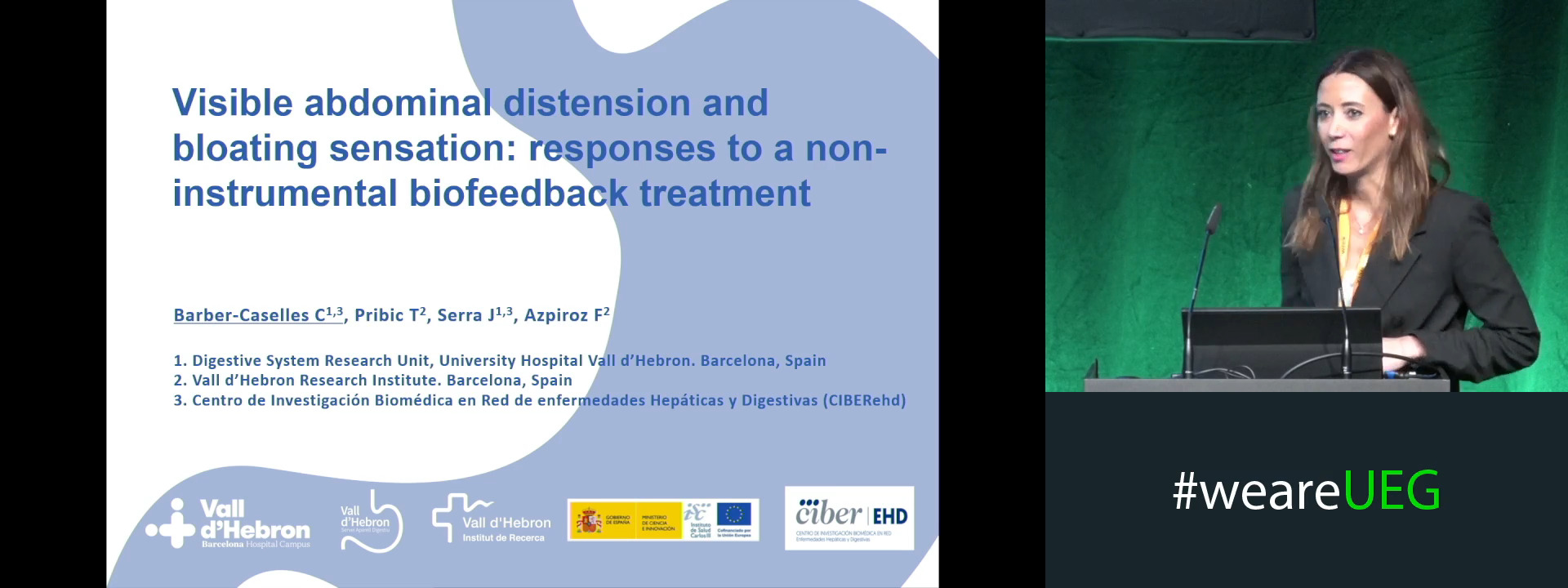
VISIBLE ABDOMINAL DISTENSION AND BLOATING SENSATION: RESPONSES TO A NON-INSTRUMENTAL BIOFEEDBACK TREATMENT.
Affiliations
1 University Hospital Vall d'Hebron, Barcelona, Spain
2 Vall D'Hebron Research Institute, Barcelona, Spain
Log in to continue.
This content is part of Gutflix. Log in with your myUEG account, or create one free, to watch it.
Not sure what you can access? Learn more about account types.
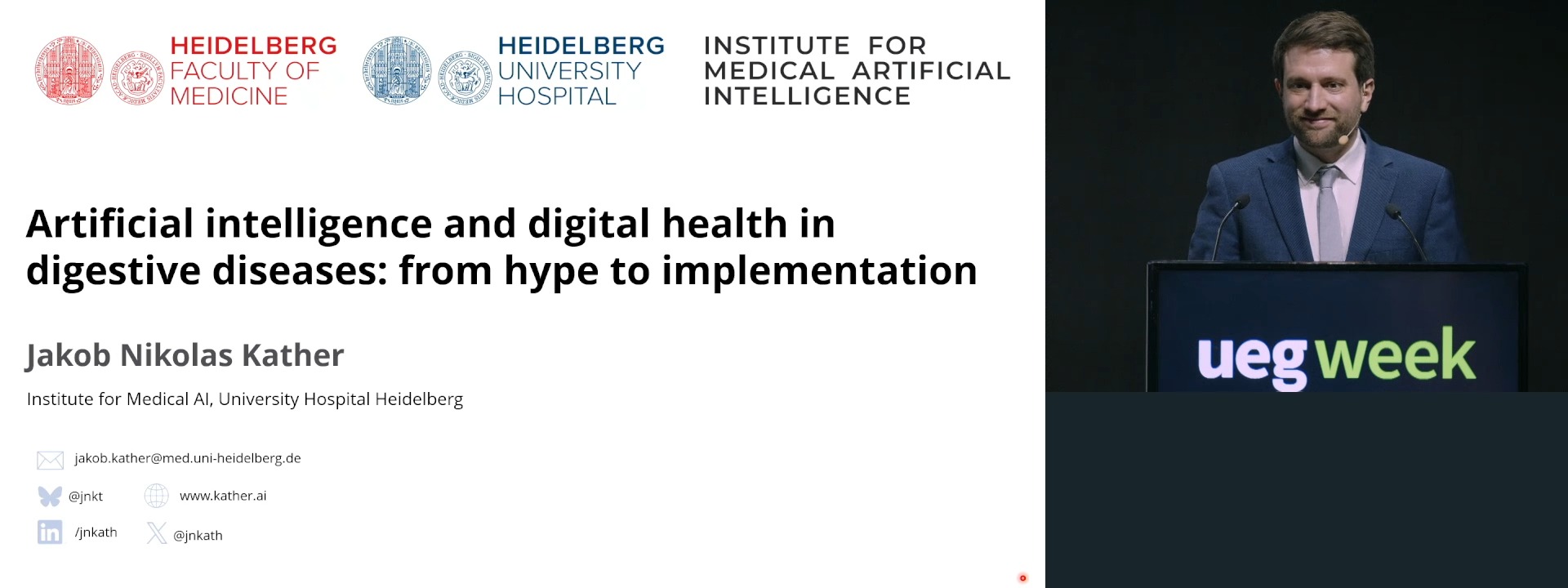
Artificial intelligence and digital health in digestive diseases: From hype to implementation
Affiliations
1 Dresden University of Technology, Dresden, Germany
Log in to continue.
This content is part of Gutflix. Log in with your myUEG account, or create one free, to watch it.
Not sure what you can access? Learn more about account types.
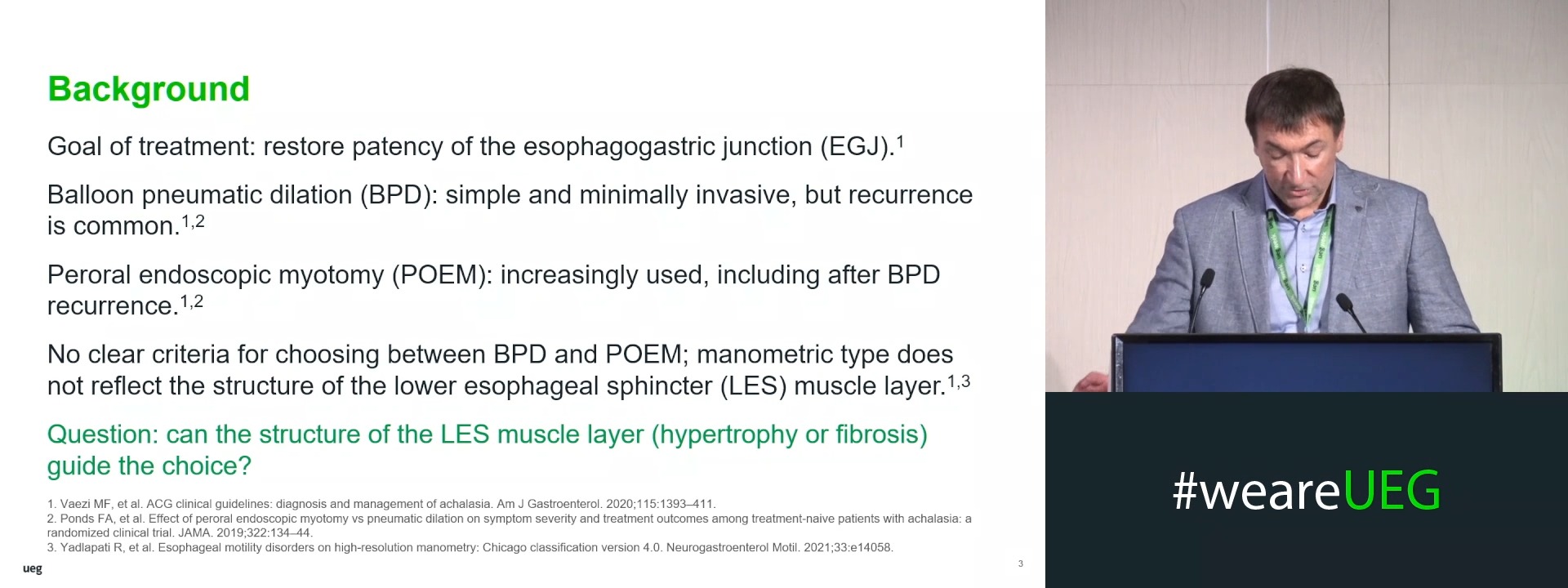
A DIFFERENTIATED APPROACH TO SELECTING THE ENDOSCOPIC SURGICAL TECHNIQUE FOR THE TREATMENT OF ESOPHAGEAL ACHALASIA
Affiliations
1 SI “Institute of Gastroenterology of the National Academy of Medical Sciences of Ukraine”, Dnipro, Ukraine