UEG's educational platform for gastroenterology education bringing recordings, courses, guidelines, and more together in one place.
Most popular content
Rate for better recommendations!
Your feedback helps us show you more of what you like and less of what you dislike!
Log in to access this content.
Free for all myUEG account holders. Your access level is set automatically based on your occupation. Medical professionals get full access to all content. If you are a non-medical user, you can only access UEG Week content from congresses you attended.
Not sure what you can access? Learn more about account types.

COMPARATIVE RISK OF ADVANCED BIOLOGICAL AGENTS FOR CARDIOVASCULAR AND THROMBOTIC EVENTS IN PATIENTS WITH INFLAMMATORY BOWEL DISEASE: DATA FROM A REAL WORLD COHORT
Dhruv Ahuja 1, Kuan-Hung Yeh 2, Claudia Dziegielewski 2, Soo-Kyung Park 3, Sagar B. Patel 2, Shane W. Goodwin 4, Christopher Ma 5, Ashwin N. Ananthakrishnan 6, Namrata Singh 7, Ronghui Xu 2, Siddharth Singh 2
1 University of California, San Diego, United States|||Indira Gandhi Hospital, New Delhi, India
2 University of California, San Diego, United States
3 University of California, La Jolla, San Diego, United States|||Samsung Kangbuk Hospital, Sungkyunkwan University School of Medicine, Seoul, None
4 Western University, Ontario, Canada
5 University of Caglary, Calgary, Canada
6 Harvard Medical Schools, Boston, United States
7 University of Washington, Seattle, United States
Conference
Topics
Submission format
Citation
Published
Log in to access this content.
Free for all myUEG account holders. Your access level is set automatically based on your occupation. Medical professionals get full access to all content. If you are a non-medical user, you can only access UEG Week content from congresses you attended.
Not sure what you can access? Learn more about account types.
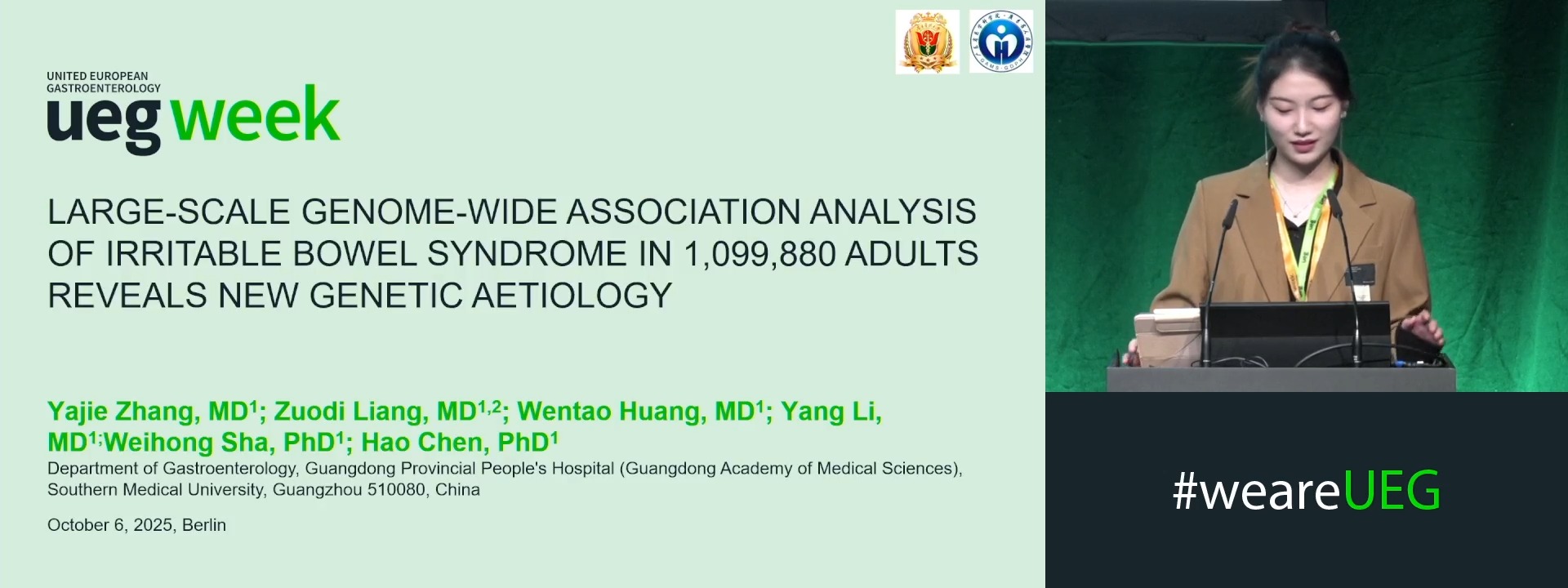
LARGE-SCALE GENOME-WIDE ASSOCIATION ANALYSIS OF IRRITABLE BOWEL SYNDROME IN 1,099,880 ADULTS REVEALS NEW GENETIC AETIOLOGY
1 Department of Gastroenterology, Guangdong Provincial People's Hospital (Guangdong Academy of Medical Sciences), Southern Medical University, Guang Zhou, China
2 School of Medicine of South China University of Technology, Guang Zhou, China|||Department of Gastroenterology, Guangdong Provincial People's Hospital (Guangdong Academy of Medical Sciences), Southern Medical University, Guang Zhou, China
Event
Topics
Submission format
Session
Citation
Published
Log in to access this content.
Free for all myUEG account holders. Your access level is set automatically based on your occupation. Medical professionals get full access to all content. If you are a non-medical user, you can only access UEG Week content from congresses you attended.
Not sure what you can access? Learn more about account types.
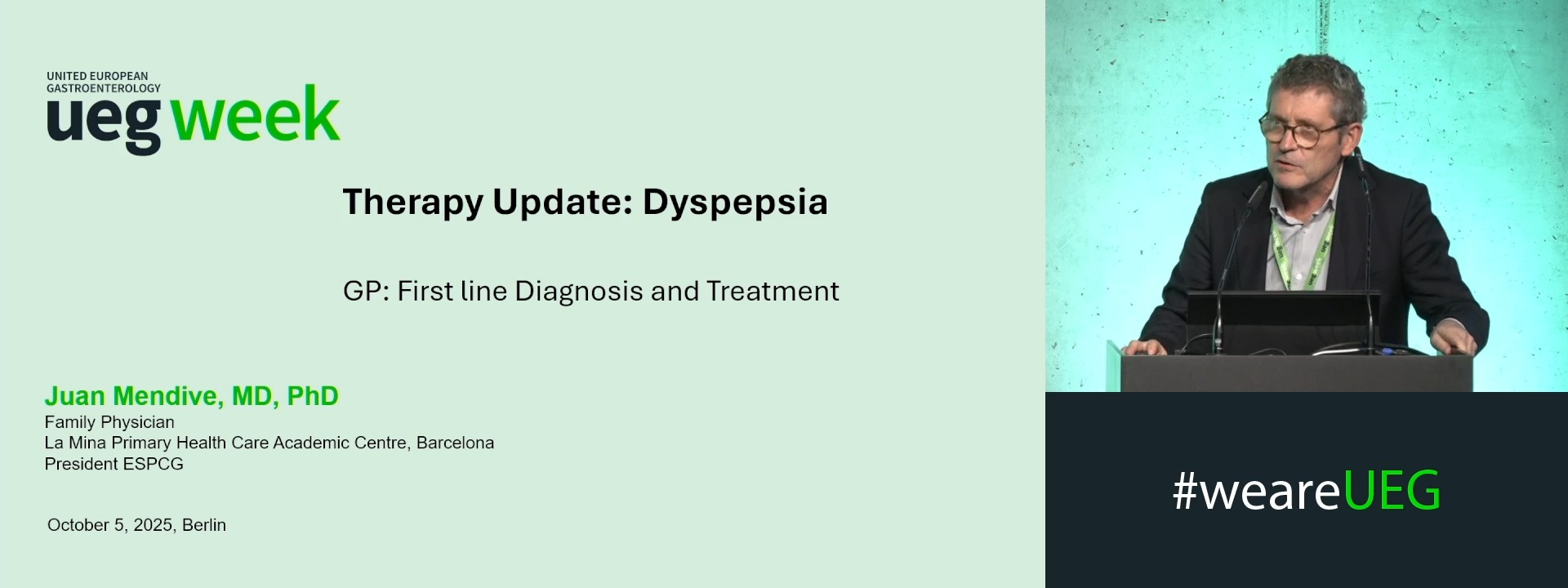
GP: First line diagnosis and treatment
1 European Society for Primary Care Gastroenterology (ESPCG), Sant Adrià de Besòs ( Barcelona), Spain
Event
Session
Citation
Published
Log in to access this content.
Free for all myUEG account holders. Your access level is set automatically based on your occupation. Medical professionals get full access to all content. If you are a non-medical user, you can only access UEG Week content from congresses you attended.
Not sure what you can access? Learn more about account types.
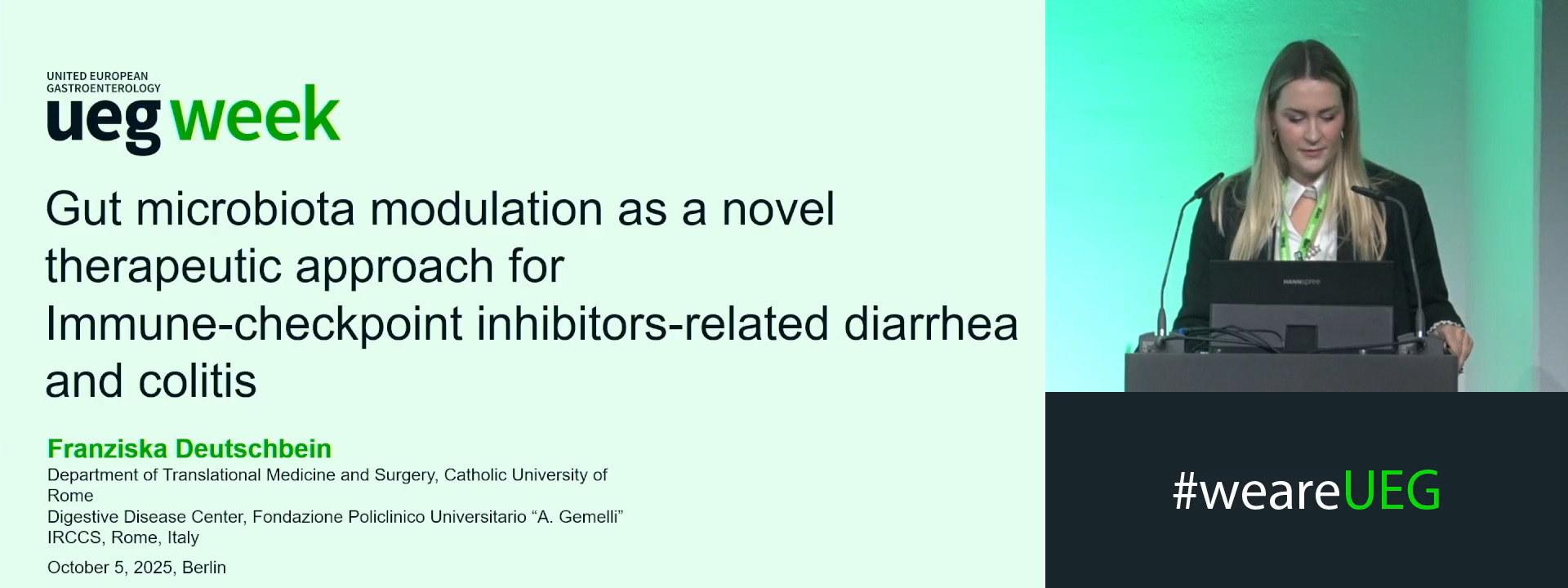
GUT MICROBIOTA MODULATION AS A NOVEL THERAPEUTIC APPROACH FOR IMMUNE-CHECKPOINT INHIBITORS-RELATED DIARRHEA AND COLITIS
Serena Porcari 1, Franziska Deutschbein 1, William Fusco 1, Andrea Severino 1, Debora Rondinella 1, Irene Venturini 1, Antonio Di Sabatino 2, Marco Vincenzo Lenti 2, Ettore D'Argento 1, Emilio Bria 1, Giovanni Schinzari 1, Eleonora Palluzzi 1, Olga Martelli 1, Mariagrazia Distefano 1, Carolina Maria Sassu 1, Serena Maria Boccia 1, Laura Vertechy 1, Ida Paris 1, Roberto Iacovelli 1, Chiara Ciccarese 1, Francesca Romana Ponziani 1, Claudia Marchetti 3, Giampaolo Tortora 1, Antonio Gasbarrini 1, Giovanni Cammarota 1, Gianluca Ianiro 1
1 Fondazione Policlinico Universitario 'A.Gemelli' - IRCCS, Roma, Italy
2 IRCCS Policlinico S. Matteo, Pavia, Italy
3 Fondazione Policlinico Universitario 'A.Gemelli' - IRCCS, Roma, Italy|||Università Cattolica del Sacro cuore, Roma, Italy
Event
Submission format
Session
Citation
Published
Log in to access this content.
Free for all myUEG account holders. Your access level is set automatically based on your occupation. Medical professionals get full access to all content. If you are a non-medical user, you can only access UEG Week content from congresses you attended.
Not sure what you can access? Learn more about account types.
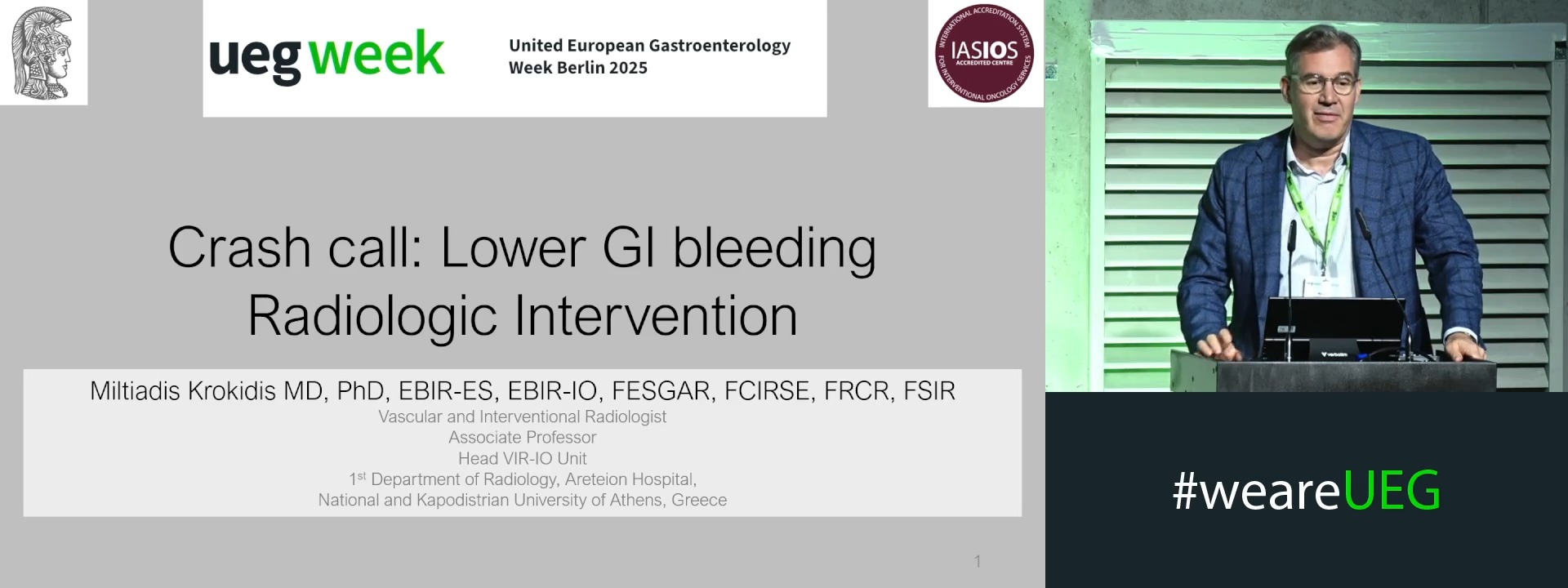
Radiologic intervention
1 National and Kapodistrian University of Athens, Athens, Greece
Event
Topics
Session
Citation
Published
Log in to access this content.
Free for all myUEG account holders. Your access level is set automatically based on your occupation. Medical professionals get full access to all content. If you are a non-medical user, you can only access UEG Week content from congresses you attended.
Not sure what you can access? Learn more about account types.
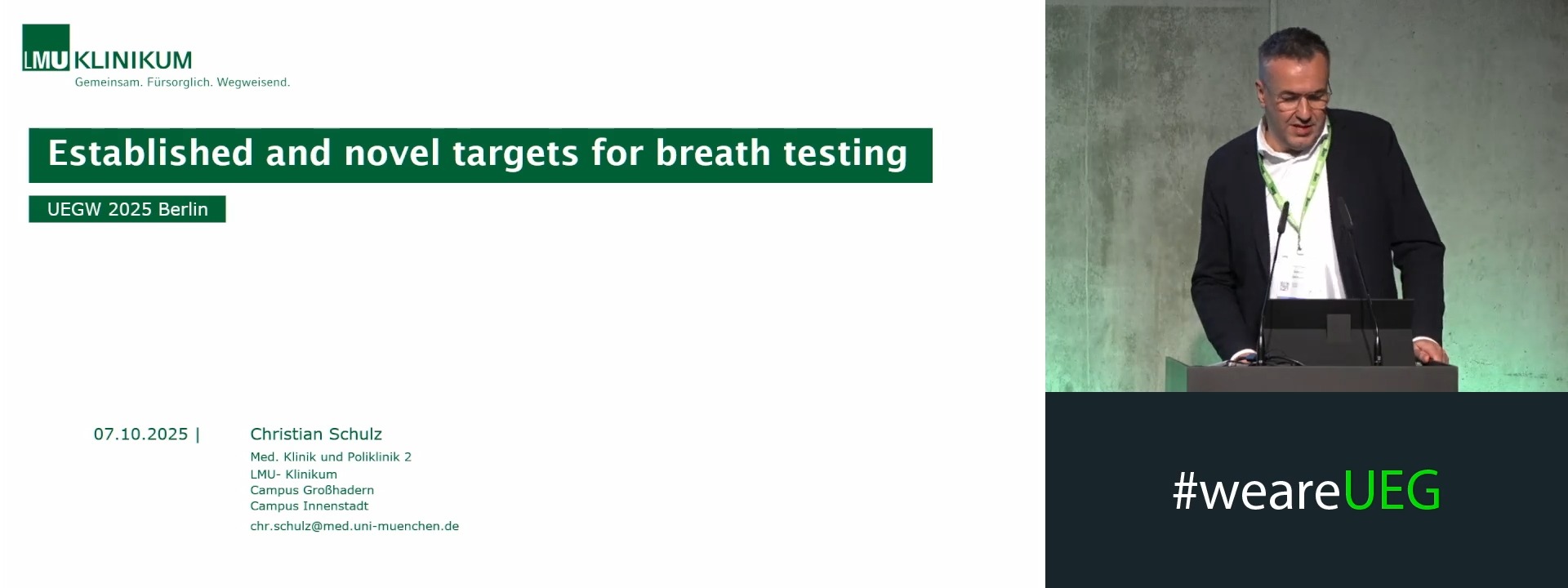
Established and novel targets for breath testing
1 Ludwig Maximilian University, Munich, Germany
Event
Citation
Published

Log in to access this content.
Free for all myUEG account holders. Your access level is set automatically based on your occupation. Medical professionals get full access to all content. If you are a non-medical user, you can only access UEG Week content from congresses you attended.
Not sure what you can access? Learn more about account types.
Metabolic dysfunction-associated fatty liver disease (MASLD)
1 University of Birmingham, Birmingham, United Kingdom